
Ethiopian Airlines Unlocks New African Tourism Gateway with Direct Flights to Mauritius

Published
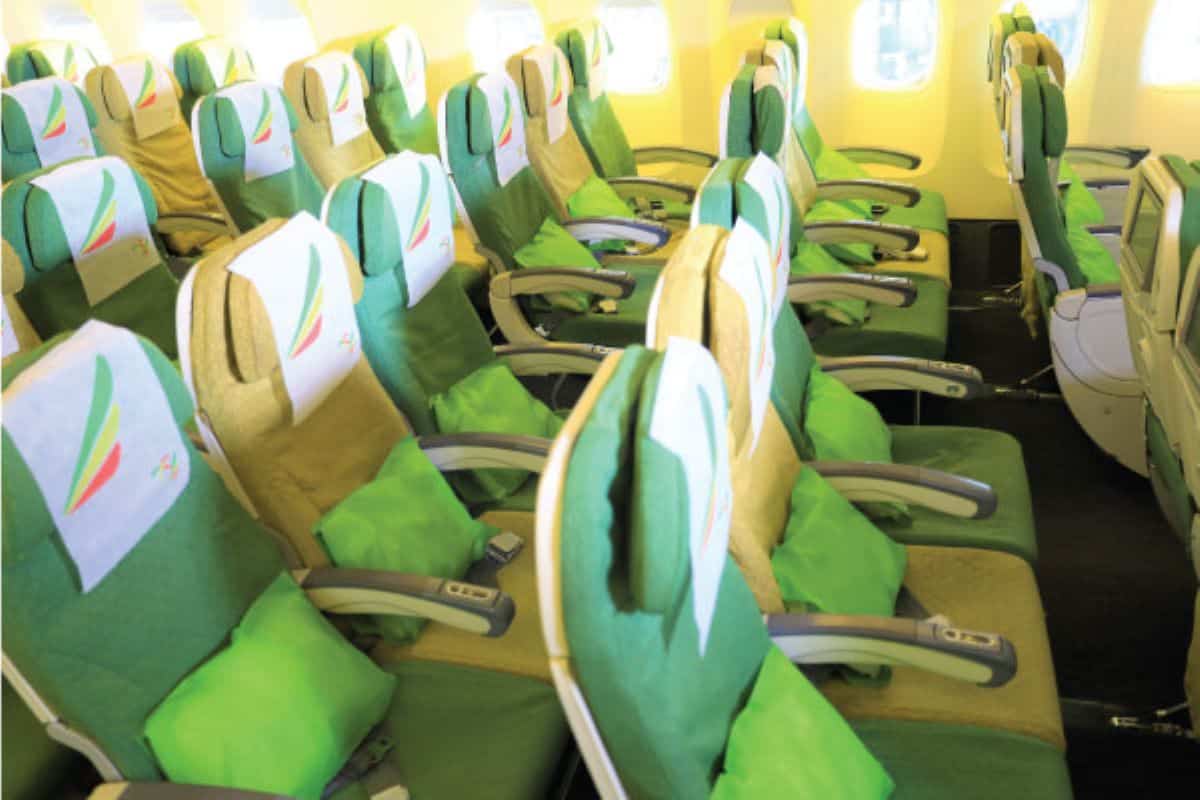
Mauritius is now connected to Africa in a way because Ethiopian Airlines is starting to fly from Addis Ababa three times a week.Mauritius is an island. It needs good connections to other countries to get more tourists and to trade with other countries.
The flights from Ethiopian Airlines are important because people can now travel to places in Africa and other parts of the world without having to take long routes.
Advertisement
Advertisement
This new flight is starting at a time because many people are visiting Mauritius again and the country is making more money from tourism.
Mauritius still gets most of its tourists from Europe.
Advertisement
Advertisement
So the new Ethiopian Airlines flights are not a new route they are a way to test if Mauritius can get tourists and trade from other parts of the world like Africa.
The Ethiopian Airlines flights from Addis Ababa, to Mauritius are a way for Mauritius to try and get more people to visit and to trade with countries.
Advertisement
Advertisement
Ethiopian Airlines Opens a Direct Gateway Between Addis Ababa and Mauritius
Ethiopian Airlines inaugurated its new passenger service between Addis Ababa and Mauritius on 12 July 2026, adding another African destination to the government-owned carrier’s extensive international network. The airline had formally announced the route on 1 June, giving passengers, travel agencies and tourism businesses more than a month to prepare for the launch.
According to the official Ethiopian Airlines announcement, the service operates three times a week on Wednesdays, Fridays and Sundays. The scheduled operation uses a Boeing 737-8, identified in the airline’s timetable by the sub fleet code 7M8.
Flight ET887 departs Addis Ababa Bole International Airport at 08:50 and reaches Mauritius at 15:20. The return flight, ET886, leaves Mauritius at 16:15 and arrives in Addis Ababa at 20:45. Published times are local. The timetable gives the aircraft a 55-minute scheduled turnaround in Mauritius.
The airline’s official inauguration statement confirmed that operations began on 12 July. This official confirmation is important because the original article supplied for this report was published on 9 August, after the requested verification cut-off. The central development was nevertheless publicly verified through Ethiopian Airlines before 4 August 2026.
The Addis Ababa–Mauritius flights are not merely an airport-to-airport connection. Ethiopian Airlines operates Addis Ababa as a major transfer hub. The carrier says Mauritius can now connect through the Ethiopian capital with destinations across Africa, Asia, Europe, the Middle East and the Americas.
Official Schedule for the Addis Ababa–Mauritius Flights
| Flight | Route | Departure | Arrival | Frequency | Aircraft |
|---|---|---|---|---|---|
| ET887 | Addis Ababa–Mauritius | 08:50 | 15:20 | Wednesday, Friday, Sunday | Boeing 737-8 |
| ET886 | Mauritius–Addis Ababa | 16:15 | 20:45 | Wednesday, Friday, Sunday | Boeing 737-8 |
The airline describes the operation as a direct passenger service. Its published timetable indicates a scheduled journey of five hours and 30 minutes in each direction. Actual journey times may vary according to operational, air-traffic and weather conditions.
Advertisement
Advertisement
Three weekly rotations provide six one-way sectors each week. The frequency is more limited than a daily service, but the spread across Wednesday, Friday and Sunday offers options for midweek journeys, weekend departures and connecting itineraries.
Travellers should always reconfirm schedules through Ethiopian Airlines before departure. Airlines can change aircraft, timings or frequencies for commercial and operational reasons. The official schedule establishes the launch plan but does not guarantee that every future flight will retain the same timing or equipment.
Why the Route Matters to Mauritius Tourism
Mauritius is an island destination whose visitor economy depends heavily on air transport. Travellers cannot reach it by road or rail, while sea arrivals form only a small portion of total tourism volumes. That makes air connectivity a fundamental part of the country’s tourism infrastructure.
Statistics Mauritius recorded 1,436,250 tourist arrivals in 2025, representing growth of 3.9% from 1,382,177 in 2024. Of the 2025 total, 1,411,791 tourists arrived by air. Only 24,459 arrived by sea. Air arrivals therefore accounted for approximately 98% of the country’s tourist total.
This dependence means every viable new international connection can affect how easily travellers reach the country, which markets tour operators can package and how airlines distribute demand. The arrival of Ethiopian Airlines introduces another network option instead of simply adding seats from one isolated origin.
Previously, Ethiopian Airlines said it served Mauritius through interline and code share arrangements involving Johannesburg, Nairobi and Antananarivo. Those arrangements could connect passengers to Mauritius, but they required travel through partner networks and other regional gateways.
Advertisement
Advertisement
The direct Addis Ababa service places Mauritius within Ethiopian Airlines’ own network. It can reduce the number of separate airline arrangements involved in an itinerary and provide passengers with another connecting point. The precise benefit will vary according to origin, connection time, fare, baggage arrangements and schedule.
The strongest tourism argument is therefore not that Ethiopia alone will suddenly become one of Mauritius’s largest source markets. No official evidence available by 4 August establishes such an outcome. The more defensible significance lies in Ethiopian Airlines’ ability to feed the route from multiple cities through Addis Ababa.
Mauritius Enters Ethiopian Airlines’ Extensive Network
Ethiopian Airlines states that it operates to more than 160 domestic and international passenger and cargo destinations across five continents. Its official destination list includes cities throughout Africa as well as points in Europe, Asia, the Middle East and the Americas.
The network includes African business and tourism centres such as Accra, Cairo, Cape Town, Dakar, Johannesburg, Kigali, Lagos, Lusaka, Nairobi, Windhoek, Zanzibar and Victoria Falls. It also reaches major international gateways including Bangkok, Beijing, Delhi, Dubai, Frankfurt, London, Mumbai, Paris, Rome, Singapore, Toronto and Washington.
Not every listed destination will provide an equally convenient connection to Mauritius. A city’s presence in the network does not automatically establish a short or commercially attractive itinerary. Connection quality depends on the alignment between inbound flights, ET887’s departure and the return service.
Nevertheless, Ethiopian’s hub structure gives the route a broader potential catchment than a simple Ethiopia–Mauritius local market. A traveller starting elsewhere in Africa may be able to reach Mauritius through Addis Ababa under one airline network rather than using a European or Middle Eastern transfer point.
Advertisement
Advertisement
That possibility supports intra-African tourism, a policy area highlighted by the Mauritius Ministry of Tourism. The ministry’s performance reporting says Mauritius should deepen tourism ties across Africa and the Indian Ocean as global air travel costs rise.
The new connection also gives Mauritian residents another gateway for journeys beyond Ethiopia. Outbound travel matters to airlines because a route cannot depend entirely on inbound holiday demand. Resident travellers, business passengers, visiting friends and relatives, students, officials and connecting passengers can all contribute to traffic.
Official Tourism Figures Show Recovery With Important Warning Signs
The route entered a market showing both resilience and volatility. Statistics Mauritius reported 348,445 tourist arrivals during the first quarter of 2026. That was 6.8% higher than the 326,389 arrivals registered in the same quarter of 2025.
Air arrivals increased by 5.1%, from 316,604 to 332,632. Sea arrivals rose by 61.6%, from 9,785 to 15,813. Despite faster percentage growth at sea, aviation still supplied the overwhelming majority of visitors.
The first-quarter improvement did not produce uniform growth across every month or market. Official monthly data show that Mauritius received 89,098 tourists in June 2026, down from 97,273 in June 2025. That represented a year-on-year reduction of approximately 8.4%.
This June decline is relevant because Ethiopian Airlines began flying in July. The route entered service after a weaker month and during a period when authorities were seeking to reinforce connectivity and protect national growth amid external uncertainties.
Advertisement
Advertisement
It would be inaccurate to credit the new flights with any immediate tourism recovery. No official passenger, load-factor or visitor-arrival data for the route were available within the 4 August cut-off. The service was only a little over three weeks old at that point.
Its performance must instead be assessed over a longer period. Relevant indicators would include the number of passengers carried, connection origins, fare competitiveness, length of stay, hotel use, tourism receipts and whether the service is maintained or expanded.
Mauritius Recorded Stronger Tourism Earnings in 2025
Tourist numbers alone do not reveal the full economic value of tourism. Official figures show that Mauritius generated gross tourism earnings of 103.351 billion Mauritian rupees in 2025. That was 10.4% higher than the Rs93.574 billion recorded in 2024.
Average tourism earnings per tourist increased from Rs67,700 to Rs71,959, a rise of 6.3%. Tourist nights increased by 3%, from 15,420,230 to 15,876,593. However, average length of stay eased slightly from 11.4 nights to 11.3 nights.
These figures indicate that tourism earnings grew faster than arrival numbers. That pattern matters when evaluating Mauritius tourism growth. An island with limited land, infrastructure and environmental capacity cannot rely indefinitely on increasing visitor volumes without considering spending, length of stay and pressure on local resources.
A new air route can contribute economic value if it attracts travellers who stay in licensed accommodation, use local transport, visit attractions, purchase services and support restaurants and other businesses. It can also generate value through business travel, conferences and trade.
Advertisement
Advertisement
However, the addition of flights does not guarantee these outcomes. Visitors may stay for shorter periods, use informal accommodation or spend differently from established markets. Measuring the route’s economic effect will require official data rather than assumptions based on available seats.
India’s Growth Shows the Value of Diversified Connections
The first quarter of 2026 produced strong growth from several markets. Arrivals from India increased by 21.1%, rising from 12,376 in the first quarter of 2025 to 14,990. Germany increased by 50.3%, from 23,290 to 35,007. Russia rose by 15.9%, from 9,970 to 11,551.
France remained Mauritius’s largest listed source market, producing 83,557 arrivals during the quarter. That was only 0.7% higher than the corresponding 2025 figure. The United Kingdom declined by 4.5%, from 30,527 to 29,162.
India’s performance is particularly relevant to the new route because Ethiopian Airlines serves several Indian cities. Its official network includes Delhi, Mumbai, Bengaluru, Chennai and Hyderabad. Whether Addis Ababa becomes an attractive transfer point for India–Mauritius passengers will depend on timetables and fares.
The route should not automatically be described as a major new India connection. Mauritius already has other air services and established travel patterns involving India. Nevertheless, Ethiopian Airlines introduces an additional network pathway that may give travel sellers and passengers more itinerary choices.
The same logic applies to other Asian and African markets. An additional connection can improve competition and resilience even when it does not immediately become the dominant route.
Advertisement
Advertisement
Traditional European Markets Still Dominate Mauritius Arrivals
Mauritius remains substantially dependent on a limited group of established source markets. In 2025, France generated 337,502 arrivals, the United Kingdom 154,990, Reunion Island 145,029, Germany 122,166 and South Africa 110,287.
The country’s usual principal markets accounted for 68.4% of tourist arrivals in 2025. That was slightly below their 69.5% share in 2024, but it still demonstrated considerable concentration.
France recorded a small decline of 0.6% in 2025. The United Kingdom fell by 2%, while Germany decreased by 1.3%. Growth from India, Italy, Reunion Island, South Africa and Switzerland helped support the overall increase.
India registered one of the most significant changes. Arrivals rose by 33.5%, or 19,020 visitors, during 2025. This created a stronger base before the additional Ethiopian network option began.
The Mauritius Ministry of Tourism’s official performance report identifies excessive dependence on France, the United Kingdom and Reunion Island as a vulnerability. Economic weakness, policy changes or travel restrictions in a small number of markets can quickly affect arrivals.
The report calls for diversification towards emerging markets, particularly in Africa and the Indian Ocean. The Addis Ababa–Mauritius flights fit that strategic direction because they widen the island’s network access through an African hub.
Advertisement
Advertisement
Hotel Occupancy Shows Why Additional Demand Matters
Mauritius had 111 licensed hotels at the end of December 2025, according to Statistics Mauritius. One was temporarily closed and another was closed for renovation. The 109 operating properties offered 14,112 rooms and 31,952 bed places.
The room occupancy rate averaged 74% during 2025, up from 72% in 2024. Bed occupancy increased from 65% to 67%. These national averages may conceal substantial seasonal and regional variations, but they indicate stronger utilisation.
Large hotels remained central to the formal accommodation market. Statistics Mauritius classified 61 operating properties as large hotels, meaning established beach hotels with more than 80 rooms. They represented 56% of operating licensed hotels but controlled 81% of room capacity and 82% of bed places.
A new route can help hotels if it brings incremental demand during periods of lower occupancy. Three weekly frequencies may also support packages based on set lengths of stay, although commercial products will depend on tour operators and accommodation partners.
Small hotels, guesthouses, tourist residences, restaurants, guides and transport businesses could also benefit if demand disperses beyond major resorts. Yet there is no official evidence that the Ethiopian service had produced measurable accommodation gains by 4 August.
The appropriate editorial conclusion is that the route creates an opportunity. It does not prove an outcome. Hotel occupancy, average rates and visitor spending will determine whether the opportunity becomes meaningful.
Advertisement
Advertisement
Tourism Employment Raises the Stakes for Connectivity
Tourism influences employment across accommodation, food services, transport, entertainment and travel-related businesses. Statistics Mauritius reported that employment in food service, hotels, travel and other tourism-related establishments with at least ten workers reached 28,834 in March 2025.
That represented a 2.2% increase from 28,217 in March 2024. The figure does not cover every tourism worker or small informal business, but it demonstrates the sector’s direct employment importance.
Reliable aviation supports these jobs by enabling visitors to reach the destination. Airlines, airports, ground handlers, caterers, hotels and travel agencies also require staff to serve additional operations.
Three weekly flights will not transform national employment by themselves. Any claim of large job creation would require official evidence. However, maintaining a diversified route network can protect businesses from dependence on a narrow set of countries and carriers.
For travel companies, the new service creates product-development work. Agencies must understand Ethiopian’s timetable, connection possibilities, baggage rules, fare conditions and entry requirements. Destination management companies may seek partnerships that serve African and connecting international travellers.
The route could also support the meetings and business travel market, especially where Addis Ababa provides workable connections. Mauritius has positioned itself as both a leisure destination and an international business jurisdiction, meaning passenger demand need not come exclusively from holidaymakers.
Advertisement
Advertisement
Trade and Business Travel Form a Second Economic Pillar
Ethiopian Airlines presented the service as a route that could support trade, tourism and stronger people-to-people relations. Its chief executive, mes fin Tasew, said in the official launch announcement that the direct connection would offer convenient travel while bringing Mauritius closer to the airline’s global network.
Passenger flights can carry time-sensitive goods in their belly holds, subject to aircraft capacity, cargo demand and regulatory requirements. The Boeing 737-8 is primarily a passenger aircraft, so the route should not be portrayed as a dedicated freight service.
Nevertheless, regular passenger connectivity can help business travellers, officials, investors and smaller consignments. Mauritius and Ethiopia also participate in wider African institutions and regional economic initiatives, making direct travel operationally useful even where bilateral passenger volumes remain modest.
The business value will depend on reliability. A three-times-weekly schedule can support planned visits, but missed connections or cancellations may have greater consequences when alternative departures are several days apart. Airlines and travel managers will need appropriate contingency planning.
Trade gains cannot be assumed from the launch alone. Official customs, cargo and bilateral trade data will be needed to determine whether the new link changes commercial flows. Ethiopian Airlines’ statement expresses the route’s intended role, not a measured result.
Mauritius Wants Stronger Regional and Intra-African Tourism
Mauritius’s official tourism reporting explicitly identifies regional tourism as a strategic opportunity. The Ministry of Tourism says rising global air travel costs strengthen the case for closer links within Africa and the Indian Ocean.
Advertisement
Advertisement
It recommends using Mauritius’s position within the African Union and Vanilla Islands framework to attract regional travellers and diaspora markets. The objective is to build a more resilient and sustainable tourism economy.
The Ethiopian service supports this goal in two ways. First, it establishes a direct scheduled link with Addis Ababa. Second, it opens possible connections to Ethiopian’s wider African network.
Many African journeys still require indirect routings because direct links between cities are limited. A strong hub can therefore be useful even when passengers do not begin or end their journeys in the hub country.
The service may also make multi-destination itineraries easier to sell. Travellers could combine Mauritius with Ethiopia or other African destinations where schedules and entry requirements allow. Tour operators would need to construct such programmes responsibly and avoid promising seamless connections without checking current timetables.
Regional growth could help Mauritius balance seasonal demand from long-haul European markets. It could also broaden the visitor mix. However, regional travel remains sensitive to fares, visa requirements, currency conditions and limited disposable income.
Air Connectivity Is an Officially Recognised Constraint
Mauritius’s tourism authorities have acknowledged that limited air and sea connectivity restricts visitor growth, raises travel costs and reduces direct access from emerging markets. This makes the Ethiopian launch relevant to an existing structural challenge rather than an isolated route announcement.
Advertisement
Advertisement
An island destination needs enough capacity to support tourism without creating damaging oversupply. Excessive capacity can make routes financially unsustainable, while insufficient competition can produce high fares and limited choice.
The government’s task is therefore more complex than pursuing the largest possible number of flights. It must encourage viable access that serves national economic goals while preserving aviation safety, tourism quality and environmental resilience.
Ethiopian Airlines brings a large connecting network, but the route’s long-term survival will depend on passenger demand and commercial performance. The official announcements did not publish expected annual passenger numbers, load factors, fare levels or revenue targets.
These omissions should prevent unsupported predictions. The service has strategic logic, but its commercial results remain to be demonstrated.
Sustainability Must Remain Part of the Growth Debate
Mauritius’s tourism advantages are closely connected to its beaches, lagoons, biodiversity, landscapes and marine environment. Those assets are also vulnerable to coastal erosion, coral bleaching, freshwater pressure and climate change.
The Ministry of Tourism’s performance report identifies climate vulnerability and environmental degradation as serious long-term risks. It also warns that unregulated growth in a small island developing state can create overcrowding and place pressure on limited natural resources.
Advertisement
Advertisement
New African air connectivity should therefore be evaluated by economic quality as well as passenger volume. High-value, longer-stay and geographically dispersed tourism may produce stronger benefits than unmanaged concentration in already busy locations.
Aviation itself carries an environmental cost. The official route announcements did not publish route-specific emissions estimates, sustainable aviation fuel commitments or carbon-reduction measures. Those details should not be invented or inferred.
Sustainable tourism policy will need to connect air access with resource-efficient hotels, coastal protection, waste management, water security, local employment and responsible visitor behaviour. Connectivity supplies access; it does not automatically deliver sustainability.
Mauritius Faces Competition Across the Indian Ocean
Statistics Mauritius compared the country’s 2025 performance with other Indian Ocean destinations. Sri Lanka received 2,362,521 visitors, an increase of 15.1%. The Maldives welcomed 2,254,779, up 9.5%, while Seychelles reached 398,841, an increase of 13.1%.
Mauritius grew by 3.9% to 1,436,250. These destinations differ substantially in geography, capacity, source markets and tourism models, so simple ranking can mislead. Nevertheless, the comparison shows that regional destinations compete for airline capacity and traveller spending.
Connectivity influences this competition. A destination with convenient routes, well-timed connections and resilient airline partnerships may be easier for travel businesses to sell.
Advertisement
Advertisement
Mauritius also needs to distinguish itself through service quality, culture, nature, food, wellness, heritage, business travel and responsible tourism rather than relying only on beach imagery. Ethiopian’s network can open access, but destination marketing must convert that access into demand.
The route may be especially useful where travellers previously faced inconvenient regional transfers. Its effect will be clearer when official data show passenger origins and visitor behaviour.
What the New Flights Mean for Travellers
Passengers now have another officially scheduled way to travel between Mauritius and Ethiopia. They may also use Addis Ababa as a transfer point, subject to itinerary availability.
Before booking, travellers should examine the complete journey rather than only the first flight. Key considerations include total connection time, terminal procedures, baggage transfer, minimum connection requirements, fare restrictions and the consequences of schedule disruption.
Entry and transit requirements depend on nationality, purpose of travel and length of stay. A flight launch does not change immigration rules. Passengers should consult official immigration authorities and Ethiopian Airlines before travel instead of relying on social-media posts or unofficial visa summaries.
Travellers should also check health requirements, passport validity, travel insurance and any rules applying to minors. Those travelling for work or business may need different permission from holiday visitors.
Advertisement
Advertisement
The Wednesday, Friday and Sunday frequency can suit some itineraries but offers less flexibility than a daily flight. Travellers should consider a buffer for time-sensitive events, cruises, meetings or separately ticketed onward flights.
What the Route Means for Travel Agencies and Tour Operators
For the travel trade, the new service creates an additional distribution and packaging option. Agencies can test demand from African cities served through Addis Ababa and compare total journey times against existing routings.
Tour operators can also evaluate Mauritius packages that use three-, seven-, ten- or 14-night structures compatible with the flight pattern. Any package must reflect current inventory and should not assume that the launch aircraft or schedule will remain unchanged indefinitely.
Destination management companies may need to adapt products for new market segments. African and connecting international travellers will not necessarily share the same preferences, budgets or booking windows as established European visitors.
Hotels can work with airlines and tour operators on seasonal campaigns, but promotional cooperation should be judged against measurable results. Discounting without incremental demand can weaken yields.
Travel sellers should clearly distinguish between a direct flight and a nonstop itinerary where relevant. They should also verify which connections are sold on one ticket and which require separate arrangements.
Advertisement
Advertisement
What Success Should Look Like
The route should be assessed using evidence across several categories. The first is operational continuity: whether Ethiopian Airlines maintains the three weekly services and published timetable.
The second is passenger performance. Useful measures include seats offered, passengers carried, load factor, connecting traffic and the balance between inbound and outbound demand. Ethiopian Airlines had not published these figures by 4 August.
The third is tourism value. Official indicators should examine visitor arrivals from Ethiopia and connected markets, nights spent, accommodation use and tourism earnings.
The fourth is market diversification. The route would hold greater strategic value if it helps Mauritius reduce excessive dependence on a small group of European sources while adding genuinely incremental demand.
The fifth is wider economic activity. Business journeys, trade, cargo and institutional links may add value beyond leisure travel.
Finally, performance should be considered alongside environmental and social effects. Growth that strains water, coastlines or communities would not meet the government’s stated sustainability priorities.
Advertisement
Advertisement
Future Outlook for Addis Ababa–Mauritius Flights
The immediate outlook is defined by three weekly operations and access to Ethiopian Airlines’ hub. No official announcement available by 4 August confirmed a frequency increase, larger aircraft or additional Mauritius routes.
It would therefore be speculative to predict daily flights or rapid expansion. Airlines usually evaluate new routes through bookings, yields, operational costs, seasonal demand and network contribution.
Mauritius’s government is meanwhile seeking stronger air connectivity and reviewing access as part of its response to external economic pressures. Official statements in July indicated that national authorities expected approximately 1.47 million tourist arrivals in 2026 while reinforcing flight access.
That forecast is not a guarantee. June arrivals were weaker than a year earlier, and tourism remains exposed to energy prices, geopolitical events, inflation, exchange rates and airline capacity.
The Ethiopian route gives Mauritius another tool with which to respond. It can diversify gateways, support African access and widen connecting options. Whether it becomes a lasting tourism and trade corridor will be determined by verified performance rather than launch publicity.
Conclusion
The flights between Addis Ababa and Mauritius give Mauritius a verified link to Ethiopia’s large African and international network. Their value will depend on flights, good connections, fair prices and demand that leads to longer visits, more spending and business activity. Official data already show that tourism is coming back earnings are higher. Demand from India is increasing, but there is also weakness in June and the country still relies a lot on traditional European markets. The route directly helps the governments goals of connections, regional tourism and expanding markets. It should be judged by results, including how many people travel, where they come from how hotels are doing and how much money is being made, instead of just what is promised in advertisements, over time.
Advertisement
Advertisement
[Source:- Traicy]
Image Credit:- Ethiopian Airlines
Advertisement
