
Toronto Pearson Airport Faces Widespread Travel Disruption as Air Canada, WestJet, Jazz, American Airlines and Global Carriers Trigger 42 cancellations and 229 delays Across Canada, US and International Routes

Updated
Published
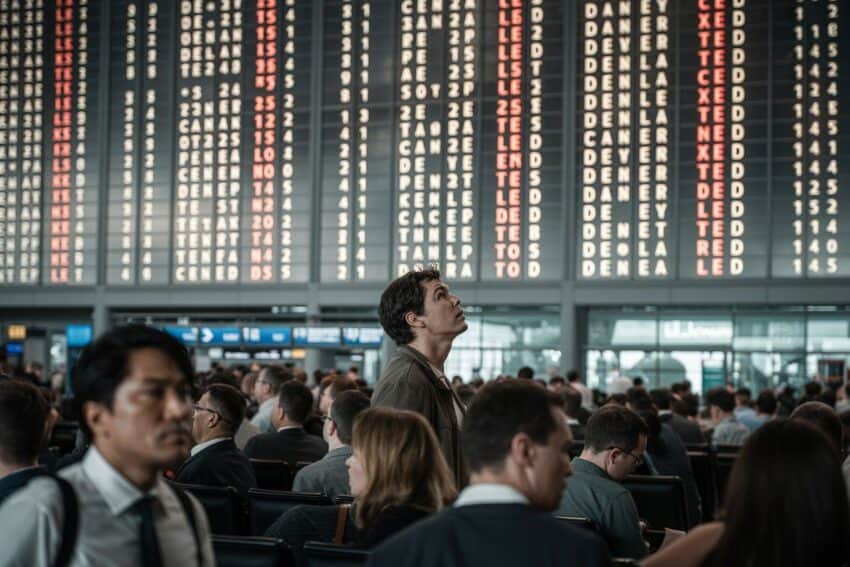
Toronto Pearson International Airport is experiencing a significant wave of operational disruption, with 42 cancellations and 229 delays recorded at the airport itself. The situation reflects a broader network imbalance affecting both inbound and outbound traffic across North America, Europe, the Caribbean and Asia. The disruption is not isolated to a single carrier or region. Instead, it is being driven by a multi-airline and multi-airport cascading effect, where delays at origin airports are directly feeding congestion into Toronto. The result is a high-pressure operational environment affecting passengers travelling through Canada’s busiest aviation hub.
Airline-Level Breakdown of Disruptions Affecting Toronto Operations
Canadian carriers under the highest pressure
The most significant operational strain is concentrated within Canadian airlines operating through Toronto Pearson.
- Jazz (ACA): 16 cancellations, 38 delays
- Air Canada: 10 cancellations, 69 delays
- Air Canada Rouge: 4 cancellations, 14 delays
- WestJet: 12 delays
- Porter Airlines: 16 delays
- Air Transat: 6 delays
- Flair Airlines: 5 delays
Air Canada and its regional partner Jazz represent the largest share of disruptions, indicating network-wide scheduling strain across domestic and international rotations. WestJet and Porter Airlines also show sustained delay pressure, reflecting congestion across Canada’s busiest domestic corridors.
US and regional partners contributing to instability
Several US carriers and regional operators are also contributing to disruption at Toronto Pearson:
Advertisement
Advertisement
- Endeavor Air: 8 cancellations, 5 delays
- American Airlines: 6 delays
- United: 3 delays
- Republic Airways: 2 cancellations, 15 delays
- PSA Airlines: 2 delays
These figures highlight transborder dependency stress, where US regional networks feeding into Toronto are amplifying delay propagation across high-frequency North American routes.
International airlines experiencing isolated but impactful delays
Although smaller in volume, international carriers show operational sensitivity due to long-haul scheduling dependencies:
Advertisement
Advertisement
- Lufthansa: 3 delays
- Turkish Airlines: 2 delays
- British Airways: 1 delay
- Air France: 1 delay
- Iberia: 1 delay
- SAS: 1 delay
- LOT Polish Airlines: 2 delays
- Cathay Pacific: 1 delay
- China Eastern: 1 delay
These disruptions are particularly impactful because even a single delay can affect onward global connections through Europe and Asia.
Airport-Level Analysis: Where the Disruption is Originating
United States network pressure
Major US airports contributing delays include LaGuardia, JFK, Newark, Philadelphia, Boston, Chicago O’Hare, Miami, Dallas–Fort Worth, Houston, Los Angeles, San Francisco, Atlanta, and Washington Dulles. These airports collectively reflect high-density airspace congestion and slot constraints, particularly in the US Northeast corridor.
Canadian domestic system stress
Within Canada, significant disruption is recorded at Montreal, Vancouver, Calgary, Edmonton, Halifax, Ottawa, Winnipeg, Quebec City, Sudbury, Thunder Bay and Timmins. This indicates national aircraft rotation instability affecting multiple provinces simultaneously.
European hub ripple effects
European origin points including London Heathrow, Frankfurt, Munich, Amsterdam, Madrid, Paris Charles de Gaulle, Dublin, Copenhagen, Athens and Istanbul show widespread but lower-volume disruptions. These hubs are critical because they feed long-haul transatlantic connections into Toronto.
Caribbean and leisure markets
Destinations such as Cancun, Punta Cana, Kingston and Guanacaste show isolated disruptions affecting seasonal travel flows into Canada.
Country-Level Impact Overview
The disruption spans multiple regions:
Advertisement
Advertisement
- Canada: Core hub stress across major airports
- United States: High-frequency corridor disruption into Toronto
- Europe: Long-haul hub sensitivity affecting connections
- Caribbean: Seasonal leisure travel instability
- Asia: Isolated but high-impact delays affecting intercontinental links
This confirms that Toronto is operating under a multi-regional aviation ripple effect rather than a single-source disruption.
What Affected Passengers at Toronto Pearson Can Do Now
Travellers impacted by the disruption are advised to take immediate action:
- Monitor airline applications for real-time schedule and gate changes
- Expect extended delays on both domestic and international departures
- Reconfirm onward connections, especially for US and European transfers
- Contact airlines early for rebooking options before queues increase
- Track baggage updates closely due to aircraft swaps and reassignments
- Arrive earlier than usual at the airport to manage reprocessing delays
Passengers connecting through Toronto should be particularly cautious, as missed connections are increasing due to cascading arrival delays.
Final Outlook on Toronto Airport Operations
With 42 cancellations and 229 delays at Toronto Pearson alone, combined with widespread disruption across origin and destination airports, the airport is currently operating under high network pressure conditions.
The situation is being driven by a combination of airline scheduling strain, transborder congestion and international hub delays. Unless upstream conditions stabilise, Toronto is likely to continue experiencing intermittent disruption across both domestic and long-haul networks.
Source: FlightAware and Affected Airports
Advertisement
