
Delta Air Lines plans to retire Boeing 717 aircraft, with over 80 jets expected to exit service as part of fleet renewal by 2030

Published
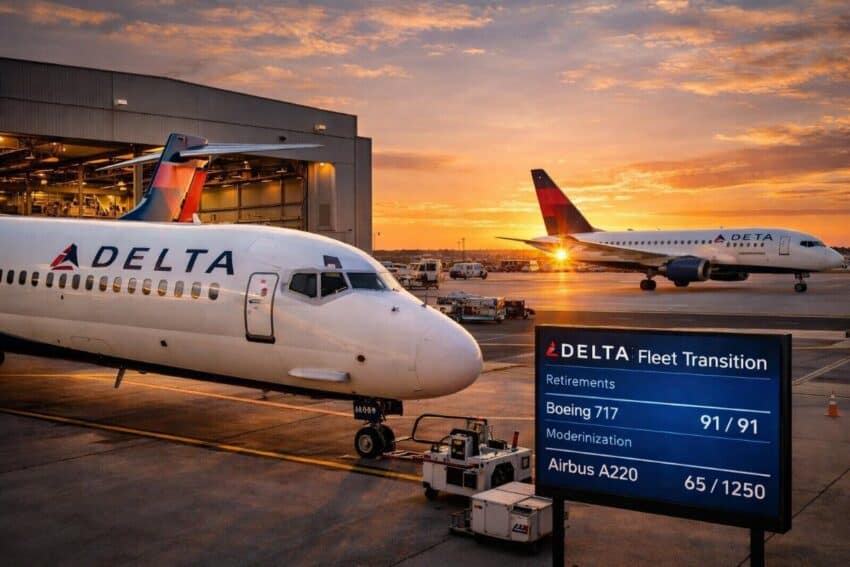
Delta Air Lines has confirmed its long-term plan to gradually retire its Boeing 717 fleet as part of a broader aircraft modernisation programme, with more than 80 aircraft expected to leave service by 2030. The move reflects the airline’s ongoing strategy to simplify its fleet, improve fuel efficiency, and transition toward newer-generation aircraft.
The Delta Air Lines Boeing 717 retirement programme forms a key part of the carrier’s fleet renewal roadmap, which focuses on replacing older narrow-body aircraft with more efficient models such as the Airbus A220. The Boeing 717 currently plays an important role in Delta’s domestic network, particularly on short-haul routes connecting major hubs with mid-sized cities across the United States.
Advertisement
Advertisement
Delta is the world’s largest operator of the Boeing 717, following its acquisition of aircraft originally operated by AirTran Airways. The aircraft type has been a significant part of the airline’s domestic operations for more than a decade.
Boeing 717 Fleet Role in Delta’s Domestic Network
The Boeing 717 is a narrow-body aircraft designed for short to medium-haul flights and is widely used in Delta’s U.S. domestic network. The aircraft typically serves routes between major hubs such as Atlanta, Detroit, and Minneapolis and smaller regional airports that require frequent, lower-capacity services.
Advertisement
Advertisement
According to airline fleet data, Delta currently operates around 80 Boeing 717 aircraft, making it the largest global operator of the type. The aircraft features a single-aisle configuration and is used across Delta First, Delta Comfort, and Delta Main cabins.
Despite its operational efficiency on short routes, the aircraft is gradually being phased out as part of Delta’s fleet standardisation efforts. The airline has been focusing on reducing aircraft variety in order to streamline maintenance, training, and operational costs.
Advertisement
Advertisement
Long-Term Retirement Timeline Extending Toward 2030
Delta initially indicated plans to retire its Boeing 717 fleet earlier, but operational adjustments and fleet demand have extended the timeline. Industry sources and airline disclosures indicate that the retirement process will continue gradually, with full phase-out expected by 2030.
The Delta Air Lines Boeing 717 retirement timeline is not a single event but a phased transition. Aircraft are being removed from service as newer aircraft enter the fleet, ensuring that capacity is maintained across domestic routes.
Advertisement
Advertisement
Delta’s strategy allows flexibility in managing aircraft availability while avoiding service disruptions on key regional routes. This approach also supports continued network coverage across smaller airports that depend on narrow-body aircraft operations.
Replacement Strategy Focused on Airbus A220 Fleet
A central element of Delta’s retirement plan is the replacement of Boeing 717 aircraft with the Airbus A220. The A220 is a next-generation narrow-body aircraft designed for improved fuel efficiency, lower operating costs, and enhanced passenger comfort.
Delta has been steadily integrating the A220 into its fleet over recent years as part of its modernization strategy. The aircraft offers longer range and improved fuel performance compared to older-generation jets like the Boeing 717.
This transition supports Delta’s broader environmental and operational goals, including reduced emissions and improved fleet standardisation. By replacing multiple aging aircraft types with a single modern platform, the airline aims to simplify operations and reduce long-term maintenance complexity.
Advertisement
Advertisement
Fleet Modernisation Across Delta’s Network
The Boeing 717 retirement is part of a wider fleet renewal strategy that includes multiple aircraft types across Delta’s domestic and international operations. The airline has already retired several older aircraft models in recent years, including MD-88, MD-90, and Boeing 737-700 variants.
Delta continues to invest heavily in fleet upgrades, with new aircraft deliveries planned across both narrow-body and wide-body segments. These investments are designed to support rising passenger demand while improving fuel efficiency and reducing operational costs.
According to airline fleet planning disclosures, Delta is focused on building a simplified, more efficient fleet structure over the next decade. This includes increasing reliance on Airbus and Boeing next-generation aircraft.
Operational Impact and Transition Management
The retirement of the Boeing 717 fleet is expected to be carefully managed to ensure minimal disruption to domestic flight schedules. Delta operates thousands of daily flights across the United States, and aircraft transitions are coordinated in phases to maintain service reliability.
As older Boeing 717 aircraft are phased out, replacement aircraft are deployed on overlapping routes to maintain capacity. This ensures continuity for passengers travelling through Delta’s hub-and-spoke network.
Airline operations teams are also adjusting maintenance and training systems to align with the transition toward newer aircraft types. This includes pilot retraining programmes and technical support restructuring.
Advertisement
Advertisement
Industry Context and Aviation Trends
The decision to retire the Boeing 717 reflects a broader trend in the global aviation industry, where airlines are moving toward fleet simplification and fuel-efficient aircraft. Older narrow-body jets are increasingly being replaced by modern aircraft offering lower emissions and improved passenger experience.
Delta’s strategy aligns with similar moves by other major airlines that are retiring legacy aircraft in favour of newer-generation fleets. This shift is driven by rising fuel costs, environmental targets, and long-term operational efficiency goals.
The Boeing 717, originally developed from the McDonnell Douglas MD-95 design, has served multiple airlines over its operational lifespan. However, its gradual phase-out marks the end of an era for one of the last remaining early-generation narrow-body jets in commercial service.
Delta Air Lines’ planned retirement of the Boeing 717 fleet represents a significant step in its long-term modernization strategy. With more than 80 aircraft expected to be phased out by 2030, the airline continues to transition toward a more efficient and simplified fleet structure.
As the Delta Air Lines Boeing 717 retirement programme progresses, the airline will rely increasingly on newer aircraft such as the Airbus A220 to support its domestic network. The shift is expected to improve efficiency, reduce emissions, and enhance operational consistency across Delta’s extensive U.S. route system.
Advertisement
