
Costa Rica’s Playa Dominical Turns Deadly Surf Beach Into Global Lifeguard Safety Success After Years in 2026

Published
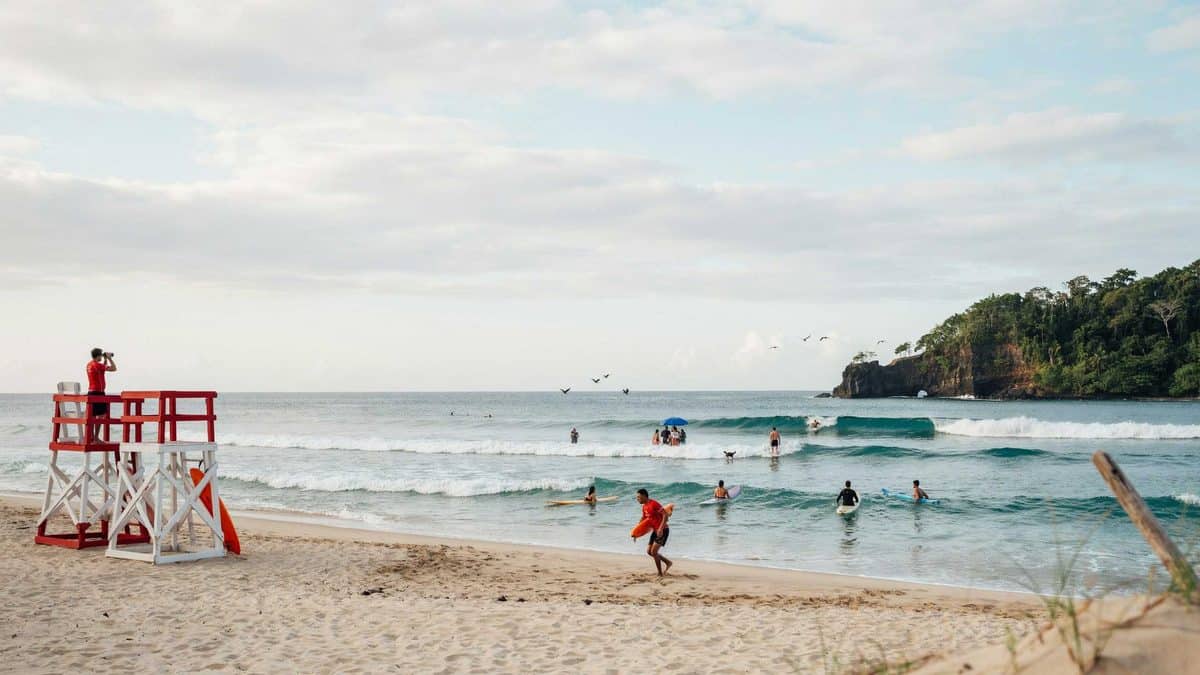
Image generated with Ai
Beach Playa Dominical, considered to be the most dangerous place in the country for surfers, turned out to be an example of a community-based coastal safety system after providing lifeguard services for nearly thirty years. The positive impact on the lives of many tourists and locals began from the year 1996 when the service was introduced since it prevented deaths. In case the growing popularity of Costa Rica’s tourism leads to the growth of the number of tourists visiting dangerous beaches of the Pacific coast, their survival is highly dependent on the safety awareness.
Although Playa Dominical is considered to be an example of the work of lifeguards who save people’s lives, there is another important aspect. People do not realize that the local community developed such a system that cannot be created anywhere else because of the absence of the required resources. There is a constant competition between various destinations on beaches trying to make themselves more attractive for tourists. Dominical demonstrates that it is much easier to attract tourists using a safety system.
Advertisement
Advertisement
The Pacific Coast of Costa Rica is known for its beautiful landscapes and adventurous tourism. Surfing is also quite popular here. However, although the beauty of the region conceals the dangers of strong currents, a drop in the water level and heavy surf dangerous for the swimmers, even those with experience, rip currents and dangerous conditions of the ocean become one of the major issues in the problem of coastal drowning in Costa Rica.
The Beach That Became Famous for Surfing and Feared for Its Ocean Power
Playa Dominical, located in Costa Ballena on Costa Rica’s southern Pacific coast, has long attracted professional surfers, international travellers and adventure seekers. Its consistent waves have helped establish it as one of Central America’s respected surf destinations.
Advertisement
Advertisement
But the same ocean energy that attracts surfers creates serious risks for inexperienced visitors.
Advertisement
Advertisement
The beach break can produce intense waves that quickly overwhelm swimmers. The nearby Río Barú adds another layer of complexity as freshwater flow meets the Pacific Ocean, contributing to unpredictable conditions.
During the early 1990s, Dominical faced a devastating reality. Before organised lifeguard protection existed, drownings were a recurring tragedy. The beach’s reputation attracted visitors, but safety infrastructure did not grow at the same pace as tourism.
The problem was not only the ocean itself. Many rescues were attempted by untrained bystanders who entered dangerous currents without proper equipment or knowledge, sometimes creating additional victims.
This highlighted a major lesson for tourism destinations worldwide: a beautiful beach is not automatically a safe beach.
The 1996 Turning Point That Changed Costa Rica Beach Tourism
The transformation began when a group of surfing-focused residents recognised that Dominical needed a professional rescue system rather than occasional emergency responses.
Advertisement
Advertisement
In December 1996, an experienced beach lifeguard from the United States arrived to help establish Costa Rica’s first professional lifeguard programme. Eight local residents from the Dominical area were trained and began operating from a newly built lifeguard tower.
This was a major shift.
Instead of relying on chance rescues, the community created a permanent prevention system built around:
- Professional ocean rescue training
- Local knowledge of currents and weather conditions
- Daily beach monitoring
- Emergency response preparation
- Public awareness among visitors
The programme represented a new approach to tourism management. It treated safety as part of the visitor experience rather than as an emergency service added afterwards.
The impact became visible over time. The patrolled area recorded zero preventable drownings for decades, demonstrating how trained professionals can dramatically change outcomes at high-risk beaches.
Advertisement
Advertisement
What Others Get Wrong About Beach Tourism Safety
Many tourism destinations focus heavily on attracting visitors through marketing, infrastructure and attractions. However, Dominical’s experience reveals a different reality.
Safety is becoming one of the most important factors influencing modern travel decisions.
Travellers increasingly consider:
- Whether beaches have trained lifeguards
- Whether warning systems are available
- Whether destinations protect families and adventure travellers
- Whether emergency services are reliable
Costa Rica’s coastal safety challenges are not unique. Studies analysing beach drownings in the country found hundreds of coastal deaths over long periods, with foreign visitors representing a significant share of victims. Research has also shown that drowning prevention requires stronger awareness, education and coordinated safety strategies.
For destinations competing in the global tourism market, this creates a new opportunity. A safe destination is not only protecting visitors; it is strengthening its international reputation.
Advertisement
Advertisement
Dominical’s story proves that safety itself can become a tourism asset.
From Volunteer Spirit to Long-Term Tourism Protection
The lifeguard initiative survived for years through community support and private funding. Local fundraising events helped maintain salaries, equipment and operations.
This model showed another important trend in destination management: communities can become powerful tourism stakeholders.
The programme eventually gained limited municipal support between 2017 and 2022, helping cover salaries and social security contributions for two full-time lifeguards. Later, after municipal assistance ended, private backing helped continue operations under the Guardavidas Costa Ballena organisation.
Today, the programme operates with improved facilities, including expanded guard infrastructure and additional monitoring capacity.
Advertisement
Advertisement
The evolution reflects a wider change in tourism thinking. Visitors no longer judge destinations only by scenery. They evaluate the entire experience, including safety, accessibility and trust.
The 29-Year Lesson Costa Rica Can Share With The World
The biggest achievement from Playa Dominical is not simply the number of rescues completed. It is the prevention culture created around the beach.
A successful lifeguard programme does not only respond when someone is already in danger. It prevents risky situations before they happen.
The Dominical model demonstrates several lessons for global coastal destinations:
- Local communities understand their beaches best.
- Professional training saves lives.
- Tourism expansion must include safety planning.
- Private and public partnerships can strengthen visitor protection.
- Lifeguards are an investment in destination reputation.
Costa Rica remains one of the world’s leading nature tourism destinations, attracting visitors for surfing, wildlife, adventure and coastal experiences. Protecting those experiences is becoming increasingly important as international travel continues to grow.
Advertisement
Advertisement
A study of coastal drowning patterns in Costa Rica found that beach safety requires targeted prevention strategies because risks vary between local residents and international visitors.
The Dominical example offers a powerful message: the strongest tourism destinations are not only those that attract people, but those that protect them.
A New Tourism Blueprint Emerges: Why Dominical’s Lifeguard Story Could Influence Beaches Worldwide
The Playa Dominical transformation offers a fresh angle for the global tourism industry. This is not only a story about preventing drownings; it is about how smaller destinations can create powerful visitor confidence through community-driven solutions.
What others are missing is that beach safety is becoming a competitive advantage in international tourism. As travellers increasingly seek adventure experiences, surfing holidays and remote coastal escapes, destinations must prove that they can provide both excitement and protection.
Dominical’s experience creates a new tourism blueprint based on three principles:
Advertisement
Advertisement
- Local expertise must be valued.
- Safety infrastructure must grow alongside visitor numbers.
- Communities must be active partners in tourism development.
For emerging coastal destinations, this approach could become a model for sustainable tourism growth. A destination that protects visitors builds stronger trust, encourages longer stays and improves its reputation among international travellers.
The Numbers Behind Dominical’s Remarkable Transformation
The scale of the achievement becomes clearer when compared with the challenges Costa Rica’s beaches continue to face.
Before professional lifeguard coverage, Dominical experienced repeated drowning incidents every year during the 1990s. After organised patrols began in 1996, the patrolled area recorded no preventable drownings for nearly three decades.
The numbers reveal the importance of trained coastal protection.
| Category | Before Lifeguard Programme | After Lifeguard Programme |
|---|---|---|
| Professional beach monitoring | Not available | Continuous trained lifeguard presence |
| Lifeguard operation | Informal rescues | Organised rescue system |
| Local rescue training | Limited | Dedicated trained team |
| Preventable drownings in patrolled area | Frequent incidents reported during early 1990s | Zero for almost 29 years |
| Community involvement | Limited emergency response | Active tourism safety partnership |
This transformation demonstrates that safety investment can deliver measurable tourism benefits.
Advertisement
Advertisement
Costa Rica’s Wider Beach Safety Challenge
Although Dominical represents a success story, Costa Rica continues to face coastal safety challenges across its extensive Pacific and Caribbean coastlines.
The country receives millions of international visitors every year, many of whom explore beaches, rivers and marine environments. Adventure tourism remains one of Costa Rica’s strongest attractions, but unfamiliar visitors can underestimate natural conditions.
Common risks include:
- Strong rip currents
- Sudden changes in water depth
- Powerful waves
- Lack of swimming ability
- Limited awareness of local ocean conditions
Government agencies and safety organisations have repeatedly encouraged visitors to follow local warnings, avoid swimming alone and respect ocean conditions.
The Dominical experience highlights a broader issue: tourism growth requires safety systems that match visitor demand.
Advertisement
Advertisement
A destination cannot promote coastal adventures without ensuring that travellers understand the environment they are entering.
Why Beach Safety Is Becoming a Global Tourism Priority
The modern traveller is changing.
Visitors are no longer choosing destinations only because of beaches, attractions or scenery. They increasingly consider quality of life, safety standards and responsible tourism practices.
For coastal destinations, lifeguard services are becoming part of the overall tourism product.
A family planning a holiday, a surfer travelling internationally or an adventure traveller exploring remote beaches all value destinations where safety measures are visible.
Advertisement
Advertisement
This creates a new competitive landscape.
Destinations that invest in prevention can gain:
- Stronger visitor confidence
- Better international reputation
- Increased repeat tourism
- Improved community relationships
- More sustainable coastal development
Dominical demonstrates that even a small beach community can create a globally relevant tourism story.
The Community Model: A Lesson Bigger Than the Beach
The success of Guardavidas Costa Ballena is built around cooperation.
The programme did not begin because of a large government investment. It began because residents recognised a problem and created a solution.
Advertisement
Advertisement
That community-first approach offers lessons for other tourism destinations.
Many popular coastal locations around the world face similar challenges. Remote beaches often attract visitors before safety infrastructure is fully developed.
Dominical shows that waiting for external support can cost valuable time.
Instead, destinations can begin with:
- Training local residents
- Building partnerships with tourism businesses
- Creating fundraising networks
- Establishing emergency response systems
- Educating visitors
This model connects directly with the principles of sustainable tourism, where local communities actively shape the future of their destinations.
Advertisement
Advertisement
Dominical Compared With Traditional Beach Safety Approaches
The Dominical approach differs from many conventional tourism safety systems because it developed from local action rather than central planning.
| Feature | Traditional Approach | Dominical Community Model |
|---|---|---|
| Main driver | Government-led systems | Community-led initiative |
| Funding source | Public budgets | Private support and partnerships |
| Local involvement | Often limited | Central role |
| Knowledge base | General safety procedures | Local ocean expertise |
| Tourism impact | Reactive protection | Preventive visitor confidence |
The comparison shows why Dominical has attracted attention beyond Costa Rica.
The programme represents a practical example of how communities can solve tourism challenges through cooperation.
Travel Analytics: Safety Is Becoming A Destination Marketing Tool
From a travel industry perspective, Dominical’s success reflects a wider market movement.
Tourism analytics increasingly show that travellers value destinations offering secure, reliable and well-managed experiences.
Advertisement
Advertisement
Adventure tourism is expanding globally, particularly among visitors seeking surfing, hiking, wildlife encounters and outdoor activities. However, adventure demand also increases responsibility for destinations.
A beach with a strong safety reputation can influence traveller decisions in several ways:
- Families may feel more comfortable visiting.
- Tour operators may include the destination more confidently.
- International media may highlight responsible tourism practices.
- Repeat visitors may increase.
Dominical’s transformation proves that safety is not simply a cost. It is a destination investment.
The Future: Could Costa Rica Export The Dominical Model?
The long-term opportunity is creating similar systems across more beaches.
Costa Rica has hundreds of kilometres of coastline, including internationally recognised surfing destinations and popular tourist areas.
Advertisement
Advertisement
A nationwide network of trained beach lifeguards could strengthen the country’s position as a responsible adventure tourism leader.
The ideal future would involve:
- Professionally trained local lifeguards
- Stable funding structures
- National safety standards
- Visitor education campaigns
- Strong cooperation between communities, businesses and authorities
The Dominical example provides evidence that this approach can work.
The challenge now is expanding the success from one community to more coastal areas.
Editorial Perspective: The Hidden Tourism Lesson From Playa Dominical
Nevertheless, the story is also an example of how the tourism industry views its responsibilities. Traditionally, the destinations were calculated considering various factors such as the number of tourists and income. However, it seems necessary to take into account some other factor – the safety of visitors.
Advertisement
Advertisement
If it is possible to attract millions of people without paying any special attention to the problem of the tourists’ safety, then a destination with the necessary natural features as well as with an effective system of safety can be considered quite reliable.
It should be noted that the tourism specialists should look at the case of Dominical not as the example of destination with good opportunities for surfing, but as the solution of the problems faced by the industry.
The main idea for all destinations in the world is that the destination which attracts tourists without taking into account the problem of their safety is doomed.
Call To Action
With the increasing demand for authentic beach experience on the part of tourists, the beach safety becomes an essential issue of the destination choice process. The case of Playa Dominical shows that a small community can do something great.
Advertisement
Advertisement
Coming to Costa Rican beaches, the tourists should be ready to follow the recommendations, respect peculiarities of the destination and practice responsible tourism.
For tourism professionals, the main idea is clear too. Protection of tourists is an excellent way of destination development.
Advertisement
