

Delaware Beach Migration Accelerates as Sussex County Draws Retirees, Second-Home Buyers and Tourists

Published
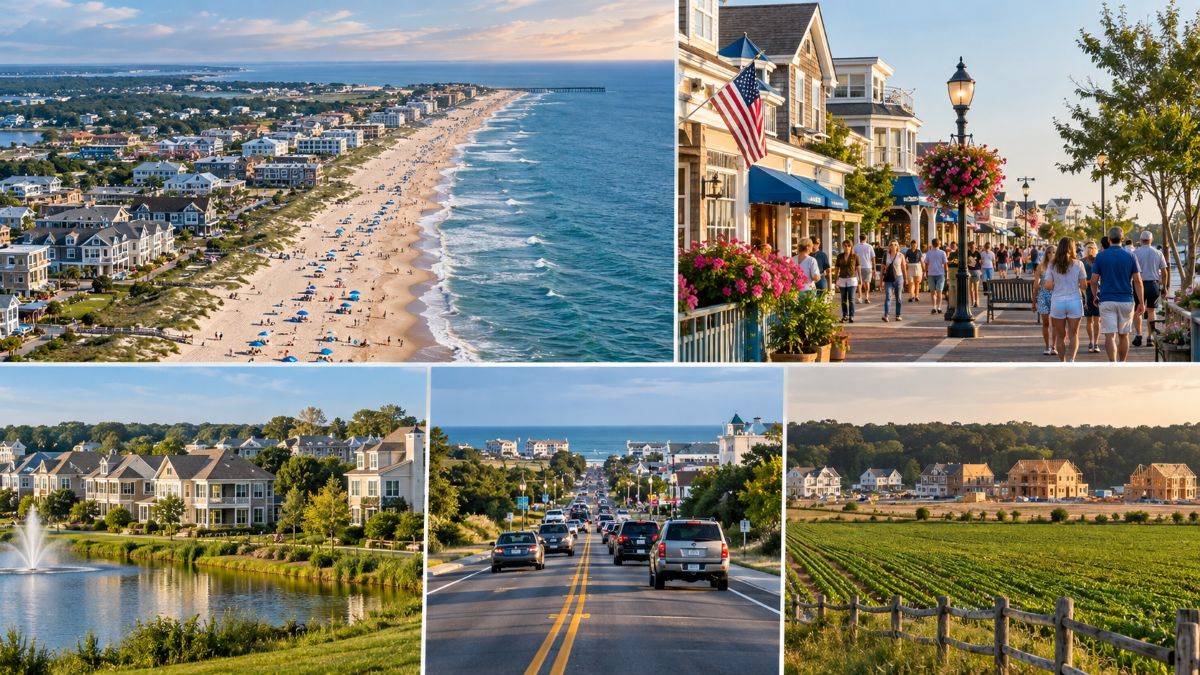
Delaware is emerging as a powerful retirement and second-home magnet along America’s Eastern Seaboard. Sussex County grew 16.8% between 2020 and 2025, reaching 277,140 residents, according to the latest Census estimates. The county also has an unusually high older population, with 32.8% of residents aged 65 or over.
Low property taxes, no state sales tax and Atlantic beaches continue attracting residents from New York, New Jersey and Pennsylvania. Yet this migration now extends beyond retirement, as remote workers, families and second-home buyers enter the market. The resulting growth is changing housing, tourism, traffic and farmland across coastal Delaware.
Advertisement
Advertisement
The scale is significant. Sussex County authorised 3,885 building permits in 2025, while tourism remains a major economic engine for Delaware.
A Coastal County Gains Population
Sussex County has moved well beyond its traditional image as a seasonal beach destination. Its population rose from 237,378 in the 2020 Census to an estimated 277,140 in July 2025. That represents an increase of almost 40,000 residents in five years.
Advertisement
Advertisement
The pace is notable because Delaware itself grew by 7.1% during the same period. Sussex County therefore expanded at more than twice the statewide rate.
The demographic profile is even more revealing. Nearly one-third of Sussex County residents are now at least 65 years old. Delaware statewide records a 22.8% share for the same age group.
Advertisement
Advertisement
The contrast with traditional retirement markets is also striking. Florida’s 65-and-over population represents 22.8% of its total population. North Carolina’s comparable share is 18.9%.
| Location | Population Estimate 2025 | Population Growth Since 2020 | Residents Aged 65+ |
|---|---|---|---|
| Sussex County, Delaware | 277,140 | 16.8% | 32.8% |
| Delaware | 1,059,952 | 7.1% | 22.8% |
| Florida | 23,462,518 | 8.9% | 22.8% |
| North Carolina | 11,197,968 | 7.2% | 18.9% |
| New Jersey | 9,548,215 | 2.8% | 18.5% |
This makes Sussex County an unusual case in American coastal migration. It combines rapid population growth with a sharply older demographic profile.
Advertisement
Advertisement
For travellers, the change matters because a destination increasingly becomes a place to live, not simply somewhere to visit. That creates stronger demand for restaurants, healthcare, retail, recreation and year-round services.
Taxes Help Drive The Migration
Tax considerations remain a major part of the Delaware proposition. Delaware has no state sales tax, while its effective property-tax rate remains comparatively modest. The state also does not impose an estate or inheritance tax.
Retirement income receives additional treatment. Delaware residents aged 60 and above can generally exclude up to $12,500 of pension and eligible retirement income. Social Security and Railroad Retirement benefits are not taxable by Delaware.
These provisions help explain why Delaware attracts buyers from neighbouring high-tax states. The supplied report includes one New York couple who reported an annual Delaware property-tax bill of $1,071. Their former New York property and school taxes approached $17,000 annually.
Advertisement
Advertisement
That individual comparison should not be treated as a universal tax calculation. Property assessments, local charges, income and exemptions vary substantially. However, the broader tax structure remains an important relocation consideration.
| Tax Consideration | Delaware Position | Relevance For Travellers And Retirees |
|---|---|---|
| State sales tax | No state sales tax | Can reduce the tax burden on everyday purchases |
| Individual income tax | Graduated, up to 6.6% | Important for taxable income planning |
| Social Security | Not taxed | Relevant for retirees |
| Retirement income | Exclusion available for eligible residents aged 60+ | Can reduce taxable retirement income |
| Estate tax | None | Relevant to long-term estate planning |
| Inheritance tax | None | Relevant to beneficiaries |
| Property tax | Relatively low effective rate | One factor behind relocation demand |
The official tax position is therefore more nuanced than the simple “low-tax state” label often attached to Delaware. Prospective residents still need to examine local property taxes, insurance, housing costs and income-tax liabilities together.
Housing Demand Is Moving Inland
The coast remains the emotional centre of the migration. Yet prices are pushing many buyers further inland.
The supplied report cites recent median sale prices of approximately $439,000 in Milton, $774,000 in Lewes, $859,000 in Bethany Beach and $909,000 in Rehoboth Beach.
Current market data also show substantial variation across Sussex County. In August 2026, Realtor.com reported a countywide median listing price near $550,000. Rehoboth Beach had a median listing price above $862,000, while Millsboro was below $460,000.
| Community | Recent Market Indicator | Travel And Relocation Character |
|---|---|---|
| Milton | Around $577,000 median listing price in Aug. 2026 | Inland alternative with historic centre and amenities |
| Millsboro | Around $457,000 | Larger inland housing market |
| Lewes | Around $697,000 | Coastal-historic destination |
| Ocean View | Around $522,000 | Residential base near Bethany Beach |
| Bethany Beach area | Premium coastal market | Family-oriented beach destination |
| Rehoboth Beach | Around $862,000 | Established tourism and second-home market |
The price difference creates a clear travel-planning implication. Visitors considering longer stays can often find accommodation and residential options away from the immediate shoreline.
Advertisement
Advertisement
Milton is particularly important in this shift. The supplied report describes the town as an increasingly attractive value market, supported by its historic downtown, cultural facilities and nearby attractions.
Meanwhile, the county’s housing supply is expanding. Census data recorded 3,885 building permits during 2025. That figure demonstrates the scale of construction activity, although permits do not necessarily represent completed homes.
Developers Are Adapting To Retirees
The migration is also changing what developers build.
Coastal Delaware brokers report stronger demand for low-maintenance communities, clubhouses, pools and social amenities. First-floor primary bedrooms have become an important design feature for older buyers.
Even basements have entered the equation. Buyers arriving from the Northeast often expect storage and living configurations familiar from New York, New Jersey and Pennsylvania.
This illustrates how migration can influence tourism infrastructure indirectly. Housing design affects the character of communities, while new residents generate demand for cafés, restaurants, medical services and leisure activities.
Advertisement
Advertisement
The trend also extends beyond retirees. One family described in the supplied report saw a younger generation establish a separate home after working remotely from the family beach property.
That pattern matters for travel media because remote work has blurred the boundary between tourist and resident. A visitor may arrive for a week, return seasonally and eventually purchase a home.
Tourism Already Powers The Coast
The migration is unfolding alongside a substantial tourism economy.
Delaware recorded 29.3 million visitors in 2023, generating more than $7 billion in visitor spending. Tourism contributed $4.7 billion to state GDP and produced $724 million in state and local tax revenue.
The industry supported 55,240 tourism jobs in 2023. Delaware’s tourism sector ranked as the state’s fourth-largest private employer.
| Tourism Indicator | Latest Reported Figure |
|---|---|
| Delaware visitors, 2023 | 29.3 million |
| Visitor spending | More than $7 billion |
| Tourism contribution to GDP | $4.7 billion |
| Tourism share of state GDP | More than 5% |
| State and local tourism tax revenue | $724 million |
| Tourism industry jobs | 55,240 |
| Repeat overnight visitors | 85% |
The concentration of beach tourism makes Sussex County especially important. State coastal research estimates that out-of-town and out-of-state visitors to Delaware’s beaches generate about $1.1 billion in economic activity.
Advertisement
Advertisement
For travellers, that economic dependence also means beach management has become a strategic priority.
Delaware’s coastline requires continual nourishment and monitoring. DNREC says its beach and dune systems protect homes, infrastructure and coastal communities while supporting tourism.
Growth Is Creating Travel Pressures
The same population growth that benefits local businesses can create friction for visitors.
The supplied report describes heavier summer traffic and longer journeys between communities. It also records concerns about access to doctors and dentists as the permanent population expands.
Healthcare capacity is particularly relevant to older travellers and prospective retirees. A destination may offer attractive beaches and tax advantages, yet healthcare access can become a decisive factor in longer-term relocation.
Beach capacity presents another issue. Delaware State Parks reported that its coastal parks closed 94 times during the 2025 summer season after reaching capacity. The wider state park system attracted 7.4 million visitors in 2024.
Advertisement
Advertisement
That pressure is likely to remain seasonal. Summer brings the strongest combination of residents, second-home owners and leisure visitors.
Travellers should therefore consider shoulder seasons when planning coastal trips. Spring and autumn can provide easier access to popular communities, while winter offers a markedly quieter coastal experience.
Farmland Faces A New Development Pressure
Population growth also creates a land-use dilemma.
As housing demand expands, development can move away from the most expensive waterfront communities. Inland farmland then becomes a potential source of new residential land.
The supplied report records concerns from residents about farmland being converted into development. That concern reflects a broader tension between housing demand, agricultural land and the preservation of coastal character.
The issue has consequences for tourism. Visitors increasingly seek historic towns, agricultural landscapes and quieter communities alongside beach experiences.
Advertisement
Advertisement
If development becomes too extensive, destinations risk losing some of the landscape characteristics that attract visitors. Conversely, carefully planned growth can support restaurants, accommodation, attractions and transport infrastructure.
The challenge therefore lies in balancing residential expansion with the identity of coastal Delaware.
What Travellers Should Know Before Visiting
The changing market does not mean visitors should avoid the most popular coastal towns. Instead, it makes trip planning more important.
Travellers staying in Bethany Beach, Rehoboth Beach or Lewes should anticipate higher accommodation demand during peak summer periods. Inland communities can provide alternative bases, particularly for visitors travelling by car.
Public beaches and state parks also require attention during busy periods. Some facilities can reach capacity, while certain recreational activities operate under reservation systems.
Delaware’s official tourism service remains the best starting point for current attraction, seasonal and destination information.
Advertisement
Advertisement
Travellers should also check official state-park information before visiting popular coastal areas. Rules can change between seasons, especially for drive-on beaches and fishing access.
Delaware Now Offers Two Experiences
The transformation of Sussex County is creating two overlapping Delaware experiences.
The first is the familiar holiday destination. It revolves around beaches, boardwalks, restaurants, cycling, fishing and summer accommodation.
The second is a growing residential destination. It offers planned communities, second homes, retirement properties and year-round services.
That overlap explains why the region is attracting such sustained interest. Delaware beach migration is not simply a retirement story. It is also a story about tourism, remote work, housing supply and the changing geography of the American coast.
The state’s tourism economy gives the transformation additional momentum. More residents can support businesses outside the traditional summer season, while more visitors create incentives for investment.
Advertisement
Advertisement
Yet the costs are becoming clearer. Housing has become more expensive, roads face seasonal congestion and development is consuming land that once appeared beyond the growth frontier.
A New Coastal Delaware Takes Shape
Sussex County now sits at an unusual intersection of retirement migration, tourism growth and residential development. Its population has expanded rapidly since 2020, while its older demographic profile distinguishes it from many traditional American growth markets.
For travellers, that transformation means coastal Delaware is becoming more than a summer destination. Bethany Beach, Lewes, Rehoboth Beach and Ocean View increasingly function as both tourism hubs and residential communities.
The opportunity is substantial, but so is the planning challenge. Delaware must accommodate new residents without weakening the beaches, farmland, access and community character that created the demand.
For visitors, the result is a destination in transition. The familiar beach holiday remains intact, but behind the shoreline lies a much larger demographic and economic transformation.
Advertisement
