
Lithuania Hosts HOTREC Vote as European Hospitality Now Seeks to Give Hotels More of a Voice in EU Policy

Published
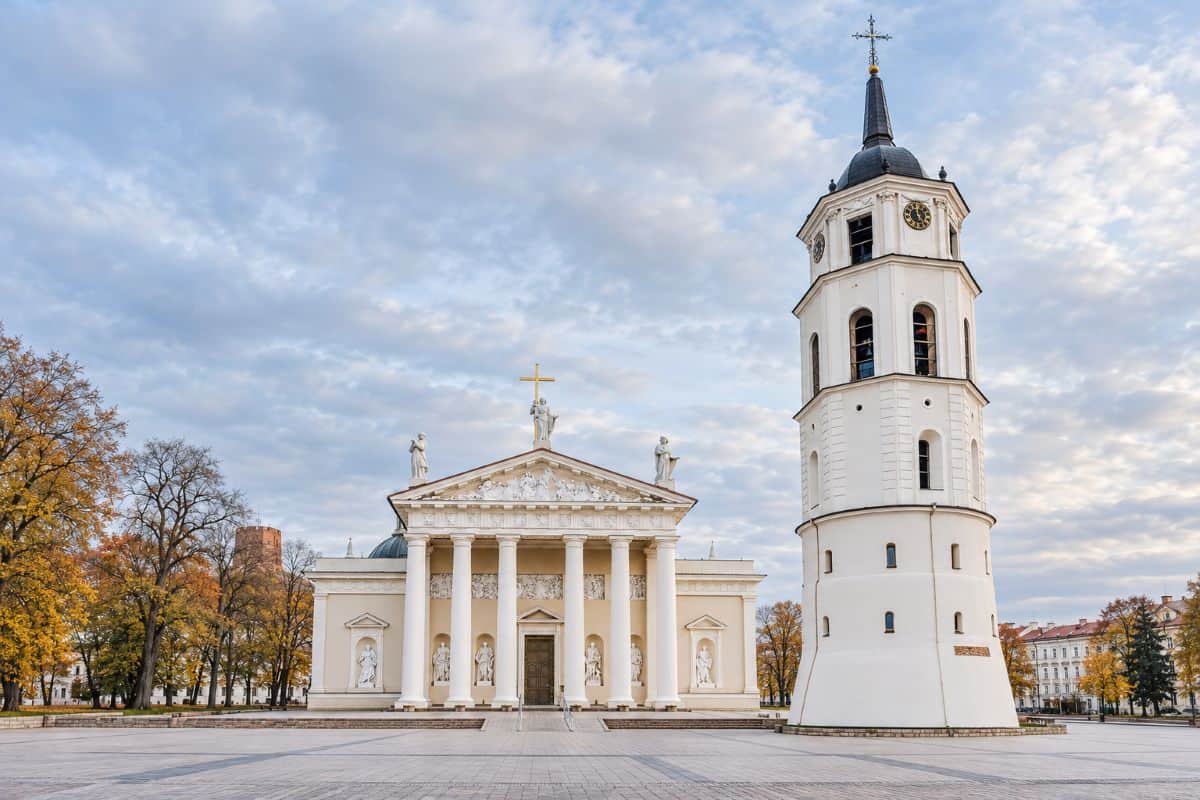
Representatives of European Hospitality elected their leadership for 2027–2028 at the 93rd general assembly in Vilnius, Lithuania, on 13 October 2026. The vote renewed the sector’s representation in discussions affecting hotels, restaurants and cafés across Europe. For accommodation operators and tourism planners, it establishes continuity during debates over skills, digital services and business conditions. For travellers, the immediate position is unchanged: the election introduces no new visa requirement, booking condition or tourist charge.
Leadership Renewal Defines the Verified Story
The central development is an industry election, supported by a published assembly announcement. Separate official statistics and policy documents explain the environment surrounding it. The following percentages describe the editorial importance assigned to each subject in this report. They are an editorial assessment, not official statistics, measured impacts or shares of tourism activity.
| News Component | Share of Story | Officially Verified Finding | Relevance to Travellers | Official Source |
|---|---|---|---|---|
| Industry representation | 45% | Leadership elected for 2027–2028 | No immediate change to trip requirements | Official assembly announcement, 13 October 2026 |
| Accommodation demand | 20% | EU nights rose 1.7% in January–June 2026 | Shows demand, not prices | Eurostat, 1 September 2026 |
| Digital services | 15% | National identity wallets due by end-2026 | Planned identification tools; voluntary use | European Commission, digital identity guidance |
| Workforce | 10% | Employment dialogue addresses skills shortages | Relevant to service delivery | European Commission, hospitality social dialogue |
| Sustainability | 10% | May conclusions support balanced tourism | Includes community and environmental interests | Council of the EU, 28 May 2026 |
| Total | 100% | Editorial assessment |
For European Hospitality, a renewed Voice in EU Policy means representation in discussions where public authorities retain decision-making powers. The evidence establishes elected mandates and existing policy priorities. It does not establish an increase in bookings, lower room rates or a new tourism law. Lithuania hosted the meeting, but its subject was European industry representation rather than a national travel reform. For operators, the immediate institutional result is continuity in the bodies handling representation, employment dialogue and financial oversight. The completed election should therefore be understood as a governance decision, with practical effects still requiring separate evidence.
Existing Rules Provide the Background to the Vote
The relevant chronology begins before the election. Short-term rental transparency rules began applying on 20 May 2026. They establish common data and registration requirements where authorities introduce registration systems or request platform information. On 28 May, European tourism conclusions called for stronger skills, improved cooperation, environmental performance and more balanced destination development. These measures form policy background. Neither announcement establishes that tourism growth or regulation caused the leadership outcome, and neither originated at the Vilnius assembly.
Advertisement
Advertisement
Accommodation statistics followed on 1 September, covering the first half of 2026. Rental-platform figures published on 2 October covered April–June. On 13 October, the assembly elected its leadership: the president secured a third consecutive term, while the vice-president and treasurer continued. An 11-member executive committee and committees covering employment dialogue and finance received mandates for 2027–2028. The announcement also confirmed discussion topics including digital payments, distribution, energy efficiency and gastronomy. It reported no resulting changes to visitor services or travel requirements.
European Hospitality Faces Uneven Growth and Staffing Pressures
EU tourist accommodation recorded 1.321 billion guest nights during January–June 2026, up 1.7% against the same months of 2025. Foreign guests accounted for 48.9%, leaving domestic guests with 51.1%. Foreign guest nights grew 2.5%, compared with 0.9% domestically, approximately 2.8 times as fast using rounded rates. Ireland increased 14.6%, Malta 9.9% and Slovakia 5.9%, while nine countries recorded declines. Cyprus fell 7.7% and Romania 6.7%. These comparable national figures show uneven demand across Europe. Guest nights measure stays, not unique visitors, spending or business profitability. The reporting periods also precede the October vote. Their growth rates cannot measure the effect of leadership decisions made months later.
Advertisement
Advertisement
Business statistics show why a Voice in EU Policy matters beyond accommodation sales. In 2023, EU tourism industries comprised 2.7 million enterprises and employed 13.4 million people. Food and beverage services represented 54% of enterprises and accommodation 15%, together 69%, or roughly seven in ten. These historical figures cover businesses serving residents as well as visitors; they are not 2026 employment totals or exclusively tourist-supported jobs. Official employment dialogue identifies labour shortages, qualifications, training and workplace safety as priorities. Its relevance concerns the people delivering services, although the election itself creates no recruitment scheme or wage agreement.
Digital Tools and Environmental Standards Shape the Agenda
For European Hospitality, digital change involves both booking channels and identification. EU short-term rentals booked through three reporting platforms generated 258.8 million guest nights in April–June 2026, up 5.3% against the same quarter of 2025. This series overlaps with conventional accommodation statistics, so their totals should not be combined. Under the separate rental framework, relevant platforms must display and verify registration numbers. Authorities can request removal of non-compliant listings. These provisions support oversight; they do not prove that an individual booking is cheaper or that a destination has solved housing pressures.
Environmental performance offers another area where European Hospitality can contribute a Voice in EU Policy. July guidance explains that accommodation can qualify for the EU Ecolabel by meeting criteria on energy, water, waste and responsible management. The May tourism conclusions also recognise uneven implementation and pressures in heavily visited destinations. Analytically, these documents point towards practical standards and local delivery as important tests of progress. They do not show that the election has reduced emissions or resource use. Any longer-term benefit will depend on measures that authorities and businesses actually implement. For destinations, the policy challenge is to connect business needs with residents’ interests, workforce conditions and the efficient use of local resources.
What Travellers Should Watch Next
The next confirmed gathering for European Hospitality is scheduled for 21–23 April 2027 in Santorini, Greece. Before then, member states must provide EU Digital Identity Wallets by the end of 2026. Use remains voluntary. Planned functions include identification for hotel reservations and storing boarding passes. These are separate developments, and the timetable does not establish universal acceptance at hotel desks. Travellers considering these tools should check the available national service and the identification methods accepted by their accommodation provider.
The significance of a Voice in EU Policy will become clearer through subsequent proposals, decisions and implementation. The assembly announcement provides no basis for changing existing trips. Monitoring should focus on concrete developments affecting a reservation, document requirement or service, rather than assuming every industry discussion produces an immediate obligation. The following points distinguish useful checks from changes the election does not require.
- Hotel identification: Confirm accepted documents before relying on a digital wallet.
- Entry requirements: Follow the relevant government’s rules for your nationality and itinerary.
- Bookings: Use the terms attached to your reservation; the vote changes none.
- Industry timetable: Treat the April assembly as a scheduled meeting, not a policy deadline.
No immediate itinerary change is required by this election announcement.
Representation Is Renewed; Results Must Follow
The Vilnius election renews European Hospitality representation for 2027–2028 while existing European policies address skills, digital services and environmental performance. Official figures show substantial accommodation demand, uneven national growth and a large tourism business base. Those conditions explain the importance of representation, but they do not prove that the vote will improve prices, employment or service quality. Travellers face no new entry or booking requirements from this announcement. The confirmed next assembly and digital identity timetable provide developments to monitor. Future significance will depend on implemented decisions and demonstrated results. Readers should follow official updates as those separate processes advance.
Advertisement
