
Palau Leads a Bold Pacific Movement as Island Nations Defend Their Future Against Climate Threats and Global Pressure

Published
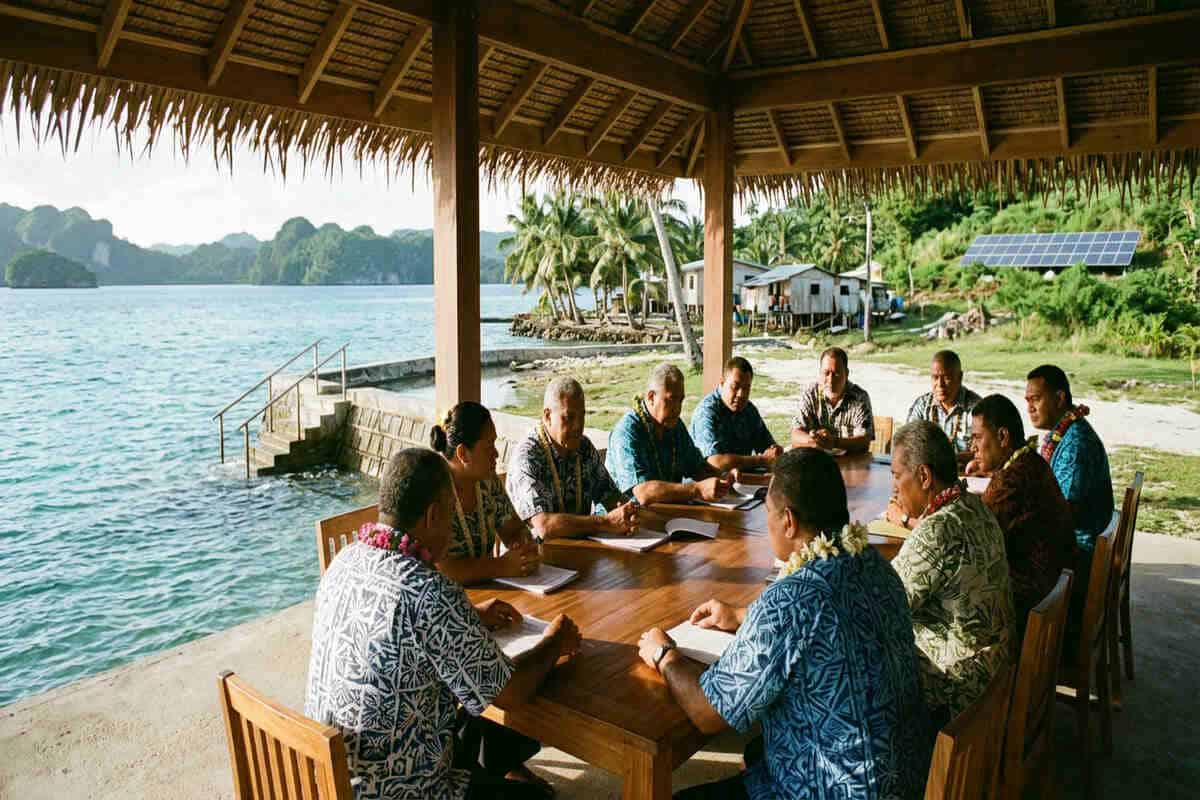
Image generated with Ai
Palau brings island nations together to combat climate change threats and the growing geopolitical competition.All island nations understand the dangers of climate change and global competition from neighboring economic powers, but small island states struggle the most. The Pacific Islands Forum is rapidly becoming the place for small Island States to lobby for protection of their interests in the face of increased involvement from major powers.
The meeting takes place in a setting far removed from the traditional centres of global diplomacy. Palau, a small island nation known for its natural beauty and limited population, has temporarily transformed into an international diplomatic hub as representatives from Pacific countries and partner nations arrive for discussions that could shape the region’s future.
Despite the relaxed atmosphere associated with Pacific gatherings, the summit carries significant strategic importance. Behind the cultural traditions, community participation and island hospitality lies a complex debate about security, partnerships and the growing competition for influence between global powers.
Pacific Islands Struggle to Preserve Unity Amid Rising Global Competition
The Pacific Islands Forum has historically operated on cooperation, consensus and the shared belief that regional challenges require collective solutions. The organisation’s members often describe themselves as one Pacific family, united by common concerns such as rising sea levels, environmental protection and economic development.
Advertisement
Advertisement
However, increasing involvement from powerful external nations has complicated this traditional approach. Over recent years, countries with strategic interests in the Pacific have expanded diplomatic, financial and security engagement with island nations, creating new opportunities but also introducing divisions.
Advertisement
Advertisement
Pacific countries have gained greater international attention because of their strategic locations, vast maritime zones and valuable natural resources. Although many island states have small populations, their exclusive economic zones cover enormous areas of ocean containing important fisheries and potential seabed resources.
This geographical importance has transformed the Pacific into a region of growing strategic competition. Partnerships, infrastructure support, security agreements and development assistance have all become part of a wider contest for regional influence.
The challenge for Pacific leaders is maintaining independence while engaging with multiple partners. Many nations seek economic support and climate assistance from larger countries but also want to avoid becoming caught in wider geopolitical disputes.
Climate Change and Economic Pressures Remain the Pacific’s Most Urgent Challenges
While geopolitical competition dominates international attention, Pacific island nations continue to face immediate challenges that directly affect communities.
Climate change remains the most serious long-term threat for many island countries. Rising sea levels, stronger storms, changing rainfall patterns and coastal erosion are creating growing risks for populations living on low-lying islands.
Advertisement
Advertisement
Extreme weather events have increased pressure on food supplies, freshwater availability and local economies. Many island nations depend heavily on imported goods, making them especially vulnerable to external shocks.
Energy security has also become a major concern. Several Pacific countries rely heavily on imported fuel, leaving them exposed to global price fluctuations and supply disruptions. Rising energy costs can quickly create economic difficulties for communities already facing limited resources.
To address these challenges, Pacific leaders are increasingly focusing on renewable energy expansion. Solar power and other clean energy projects are viewed as potential solutions to reduce dependence on imported fuels while strengthening economic resilience.
The push for climate finance has also remained central to Pacific diplomacy. Island nations have repeatedly called for stronger support from wealthier countries, arguing that those most responsible for historical emissions should provide greater assistance to vulnerable regions.
Strategic Importance of Pacific Nations Draws Attention From Major Powers
The growing global interest in the Pacific reflects the region’s expanding strategic significance. Countries that were once viewed primarily as remote holiday destinations are now recognised as important partners in international security and economic discussions.
Advertisement
Advertisement
The Pacific’s location between major global regions has increased its importance in defence planning, maritime security and trade networks. As competition between major powers intensifies, relationships with Pacific island nations have become increasingly valuable.
Several Pacific countries maintain close relationships with traditional partners, while others have developed stronger ties with emerging powers. These differing diplomatic approaches have created challenges for maintaining a unified regional position.
The Pacific Islands Forum’s consensus-based decision-making model has long been considered a strength because it allows smaller nations to present a collective voice. However, disagreements over international issues have shown the difficulty of reaching common positions when members have different foreign policy priorities.
Recent disputes over regional security concerns have highlighted these challenges. Even when many members share similar views, achieving agreement from every participant can delay collective action.
Diplomatic Tensions Surround Regional Engagement Rules
Another major issue surrounding the summit involves the participation of external partners. The Pacific Islands Forum includes several dialogue partners from outside the region, including major economies that provide development assistance and maintain diplomatic relationships.
Advertisement
Advertisement
However, disagreements have emerged over how these partners should participate in regional meetings. The issue has become particularly sensitive because of competing diplomatic relationships involving Taiwan and China.
Palau maintains diplomatic ties with Taiwan, while China considers Taiwan part of its territory and opposes official recognition of Taiwanese representation internationally. This long-running dispute has created additional pressure around Pacific diplomatic events.
The debate reflects a broader challenge facing island nations. While Pacific countries want international partnerships that support development and security, they also want regional meetings to remain focused on their own priorities rather than becoming platforms for rivalry among larger powers.
Many Pacific leaders have emphasised that the region should not become a stage for competition between outside nations. Instead, they argue that cooperation should focus on issues directly affecting island communities, including climate adaptation, economic stability and sustainable development.
Pacific Leaders Seek A Future Driven by Regional Priorities
The Palau summit represents a critical moment for Pacific diplomacy. Leaders are attempting to balance external partnerships with the need to protect regional independence and unity.
Advertisement
Advertisement
The future of the Pacific will depend on how effectively island nations manage competing interests while maintaining focus on their own development goals. Climate resilience, renewable energy, economic security and sustainable growth remain the priorities that directly influence everyday life across the region.
As global powers continue increasing their engagement, Pacific nations are likely to demand stronger recognition of their role in shaping regional decisions. Their message remains clear: the Pacific is not simply a strategic space for others to compete over, but a region with its own ambitions, challenges and vision for the future.
The summit in Palau demonstrates that even the world’s smallest nations can hold significant influence when they work together. Their ability to maintain unity amid geopolitical pressure will determine how effectively they can protect their interests in an increasingly competitive world.
Advertisement
