
Australia Rail Line Converts to Driverless Metro, as Crucial Trials Complete for Historic Launch in 2026

Published
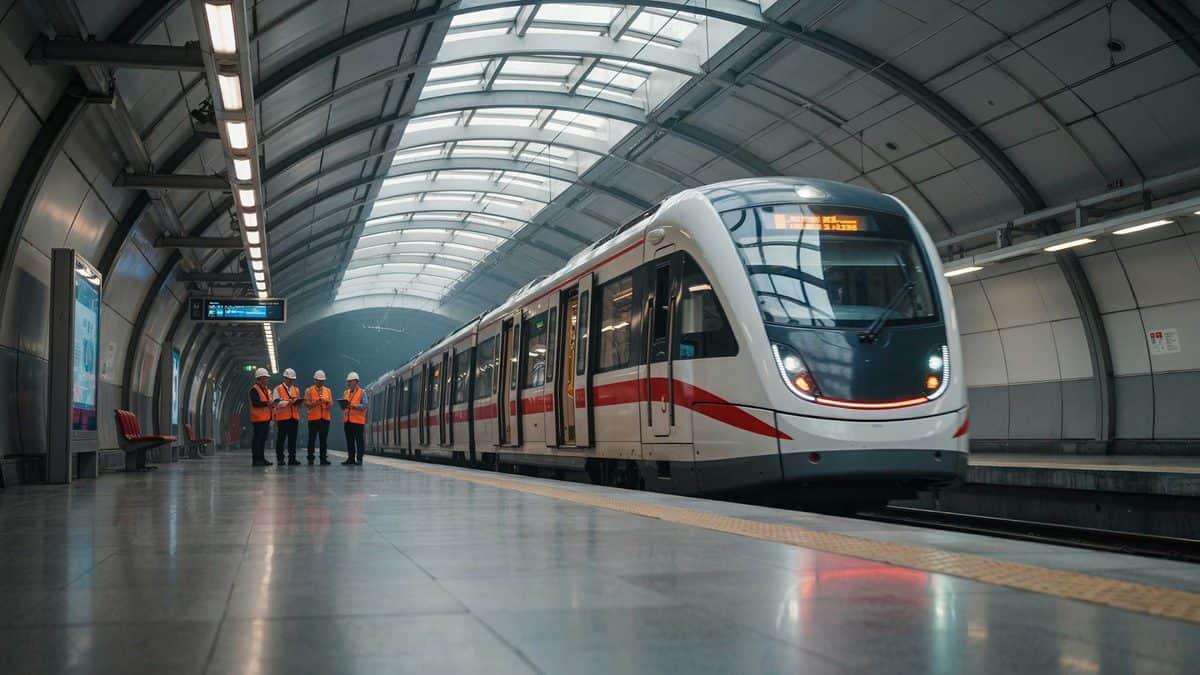
Image generated with Ai
The trial run program for the Southwest Metro of Sydney, Australia, involving more than 130 high-pressure situations in September 2026 has also been successfully executed. And this is the last important step in the process of certification for the operations on the line. It is truly remarkable because it confirms that an old suburb railway line, which has already been in operation for more than 130 years, can be converted into a state-of-the-art driverless metro network. More than 100,000 commuters traveling daily in the southwestern suburbs of Sydney will have a quick ride as well as frequent trains.
The Breakthrough: What Others Are Missing About Sydney’s Railway Metamorphosis
When mainstream news outlets cover major urban rail projects, they typically focus on shiny new station concourses, fresh paint, or minor timetable shifts. But what others are missing is that Sydney Metro and operator Metro Trains Sydney (MTS) have quietly pulled off one of the most complex brownfield railway automation projects in global infrastructure history.
Advertisement
Advertisement
Automating a brand-new, purpose-built underground tunnel is one thing; retrofitting a century-old, open-air heavy rail corridor from Marrickville to Bankstown—complete with heritage curves, legacy level crossings, and aging overhead power lines—into a Grade of Automation 4 (GoA4) driverless network is an engineering feat that transit agencies in London, New York, and Paris have hesitated to attempt.
Sydney hasn’t merely updated a rail line. It has built a scalable global blueprint for how modern megacities can strip away decades of heavy rail inefficiency and replace it with precision-engineered, autonomous rapid transit.
Advertisement
Advertisement
Inside the Crucible: 130 Scenarios and the Bankstown Fire Emergency Exercise
The newly completed Trial Running programme was far more than a routine dress rehearsal. Across five continuous weeks, system engineers and operations teams put the Southwest Metro line through 130 rigorous, high-stress scenarios designed to test every computer algorithm, sensor array, and emergency safety protocol under real-world pressure.
Advertisement
Advertisement
The ultimate test of the trial running period was a massive, multi-agency emergency response simulation that required over 12 months of meticulous joint planning.
The Simulated Bankstown Train Blaze
- The Scenario: A high-speed driverless train carrying passengers suffers a simulated catastrophic on-board fire while approaching Bankstown Station, coming to a controlled emergency stop inside the corridor.
- The Agencies Involved: Fire and Rescue NSW, New South Wales Police Force, Transport for NSW, and Metro Trains Sydney (MTS).
- The Human Element: Approximately 300 civilian volunteers participated, acting as passengers experiencing real-time smoke, evacuation alarms, and emergency directional lighting.
- The Outcome: The autonomous train systems instantly flagged the anomaly, safely guided the vehicle to a controlled halt near Bankstown Station, triggered emergency ventilation, and coordinated with emergency services to execute a full evacuation of all 300 volunteers without a single safety breakdown.
Beyond fire simulations, the 130 scenarios tested power outages, track obstruction detection, sudden weather shifts, network signal drops, and rapid platform surge management. Every test proved that Australia’s first fully automated metro line can handle severe operational disruptions autonomously and safely.
By the Numbers: The Scale of Sydney’s Southwest Testing Milestone
To appreciate the vast engineering effort behind the Southwest Metro line, consider the hard empirical data accumulated since testing and commissioning first launched on the converted corridor in April 2025.
Advertisement
Advertisement
Key Quantitative Benchmarks:
- 5,800+ Hours: The total amount of rigorous testing logged on the Southwest line out of the mandated 9,000 hours required for ultimate regulatory sign-off.
- 24,235 Kilometres: The total distance driven by driverless metro trains back and forth along the Marrickville-to-Bankstown corridor during test phases—equivalent to circling Australia’s coast line more than one and a half times.
- 30,000 Kilometres Goal: The final distance target required to validate long-term mechanical endurance, wheel wear, and automated brake alignment.
- 10 Upgraded Stations: Complete architectural, structural, and technological overhaul across Marrickville, Dulwich Hill, Hurlstone Park, Canterbury, Campsie, Belmore, Lakemba, Wiley Park, Punchbowl, and Bankstown.
- 300 Volunteer Evacuees: The civilian test force utilized during the high-stakes Bankstown emergency exercise.
The Engineering Breakthrough: Bespoke Mechanical Gap Fillers
One of the most complex challenges of converting a 19th-century railway corridor into a 21st-century driverless metro network is platform geometry. Legacy stations along the T3 Bankstown line were constructed with significant platform curves. Standard heavy rail trains used flexible boarding steps, but driverless metro trains require flush, level boarding across every single door to ensure full accessibility and rapid passenger loading.
To solve this, Sydney Metro introduced custom-designed mechanical gap fillers—an advanced engineering solution being fine-tuned following the trial runs.
Advertisement
Advertisement
How Mechanical Gap Fillers Work in Real Time:
- Precision Stopping: The automated driverless train comes to a complete, computerized stop within a millimeter tolerance along the platform.
- Synchronized Extension: Before the train doors open, mechanical gap fillers automatically extend outward from the platform edge to meet the train threshold.
- Zero-Step Boarding: The gap between the platform and the train floor is virtually eliminated, creating a seamless, flat stepping surface for commuters, parents with prams, and wheelchair users.
- Safety Interlocking: Sensors verify that all mechanical gap fillers have fully retracted into the platform structure before the train receives signal clearance to accelerate out of the station.
Alongside gap-filler tuning, operations teams are refining corridor protection management—including anti-intrusion fencing, automated track sensors, and high-definition thermal cameras to prevent trespassers or debris from disrupting autonomous train operations.
Transforming the Commute: Legacy T3 Heavy Rail vs. Southwest Automated Metro
To understand why this project is generating intense interest among global transit planners, it helps to compare the legacy heavy rail system with the newly completed Southwest Metro infrastructure.
| Feature / Metric | Legacy T3 Bankstown Heavy Rail | New Southwest Automated Metro | Commuter Advantage |
| Train Operation | Manual driver operated | Fully Automated (GoA4 Driverless) | Zero human-driver delay; pin-point schedule accuracy |
| Peak Service Frequency | Every 10 to 15 minutes | Every 4 minutes (scalable to every 2 minutes) | Up to 300% increase in train availability |
| Platform-to-Train Step | Variable step up/down; physical gap | Flush level-boarding via Mechanical Gap Fillers | 100% barrier-free accessibility for all commuters |
| Platform Safety | Open platform edges | Full-height glass Platform Screen Doors (PSDs) | Zero risk of track falls or deliberate track trespass |
| Air-Conditioning & Wifi | Mixed aging fleet; variable comfort | Modern single-deck trains with full climate control | Superior passenger comfort and connectivity |
| Turnaround Efficiency | 5–8 minute driver switch at terminus | Instantaneous computerized direction switching | Reduced station dwell times and faster round trips |
| Annual Corridor Capacity | ~12,000 passengers per hour | ~40,000+ passengers per hour | Massive overcrowding relief across Southwest Sydney |
Station Overhauls: From Marrickville to Bankstown
While trial runs were underway on the tracks, intense final completion works were taking place across all ten stations along the 13-kilometre corridor. Converting century-old suburban stations into futuristic transport hubs requires a careful balance between preserving local heritage and integrating cutting-edge technology.
What Commuters Will Experience at the 10 Upgraded Stations:
- Marrickville & Dulwich Hill: Seamless interchanges with the Inner West Light Rail, newly paved platforms, upgraded heritage concourses, and expanded bike parking facilities.
- Hurlstone Park & Canterbury: Re-engineered station approaches, new multi-modal bus interchange zones, and modernized station entries with glass plazas.
- Campsie & Belmore: Dramatically expanded concourse areas designed to handle heavy daily passenger throughput, high-speed ticket gates, and new digital real-time travel displays.
- Lakemba & Wiley Park: Upgraded platform shelters, refreshed landscaping, high-definition security surveillance coverage, and improved street-level active transport paths.
- Punchbowl & Bankstown: Fully revamped urban plazas, high-capacity concourses, and integrated pedestrian thoroughfares connecting the metro stations directly to local retail hubs.
Contractors are currently putting the final touches on these stations, focusing on platform asphalting, boundary fencing remediation, directional signage installation, and precinct landscaping.
Driverless Trains on Set Schedules: The Final Accreditation Push
With the 130 trial scenarios officially checked off, Sydney Metro and operator Metro Trains Sydney (MTS) are entering the final leg of the testing matrix. Over the coming weeks, driverless trains will run on strict, uninterrupted timetable schedules without passengers.
Advertisement
Advertisement
The Objective of Set-Period Timetable Testing:
- Simulating Real Commuter Peak Hours: Running train sets back-to-back at 4-minute intervals during simulated morning and evening rush hours.
- Verifying Dwell Times: Measuring precisely how long train doors stay open at each station under different operating modes.
- Energy Optimisation: Calibrating regenerative braking systems to feed kinetic energy back into the electric grid during rapid decelerations.
- Regulatory Sign-Off: Compiling thousands of pages of operational safety data, software logs, and structural inspection certificates for submission to the National Rail Safety Regulator (ONRSR).
Once the independent regulatory assessment is complete and formal accreditation is granted, the line will officially open its doors to the public.
Travel Analytics & Commuter Economic Impact
From a travel analytics and urban economics perspective, the Southwest Metro isn’t just a train line—it’s an economic multiplier for Sydney’s inner southwest.
Key Commuter Analytics Highlights:
- Time Savings: Commuters traveling from Bankstown to Sydney’s financial district (Martin Place) will see trip times cut to just 28 minutes—saving nearly 30 minutes on a daily round-trip commute.
- Frequency Eliminates Schedules: With trains arriving every 4 minutes during peak periods, commuters no longer need to consult timetables. You simply turn up at the station, step onto the platform, and board within moments.
- Direct City Crossings: Passengers from Southwest Sydney will no longer need to transfer at Central Station to reach the northern employment hubs of Barangaroo, Victoria Cross (North Sydney), or Macquarie Park. The line runs straight through the harbor tunnels.
- Urban Renewal & Housing Density: Transport-oriented development around the 10 upgraded stations is projected to unlock thousands of modern apartments, vibrant dining precincts, and walkable urban spaces over the next decade.
Editorial Perspective
A Modern Model for Sydney’s Transport NetworkFor a long time now, the public transport system in Australia has been regarded as highly reliant on road networks and diesel-electric rail transport networks in the suburb of Australia. But the success that was seen in testing the Southwest Metro line clearly debunks this notion.
There is no denying the progress that has been made by Sydney via its metro system from the Northwest metro to the city part, which moves via Sydney Harbor to the Southwest metro. The choice of using the legacy rail transport network rather than building transit lines on greenfield has provided a model for cities that can build transit networks without altering their urban areas.
The emphasis placed on safety protocols in the Bankstown fire drill and mechanical gap fillers clearly show that Sydney is committed to providing safe and efficient rapid transport service. This is because as Sydney prepares itself for the commencement of passenger operations in the Southwest metro, transit planners and engineers in Europe and North America must take note.
Advertisement
