
Argentina Unites Chile and Various Destinations as Brazil Nears 100 Million Air Travellers in 2026

Published
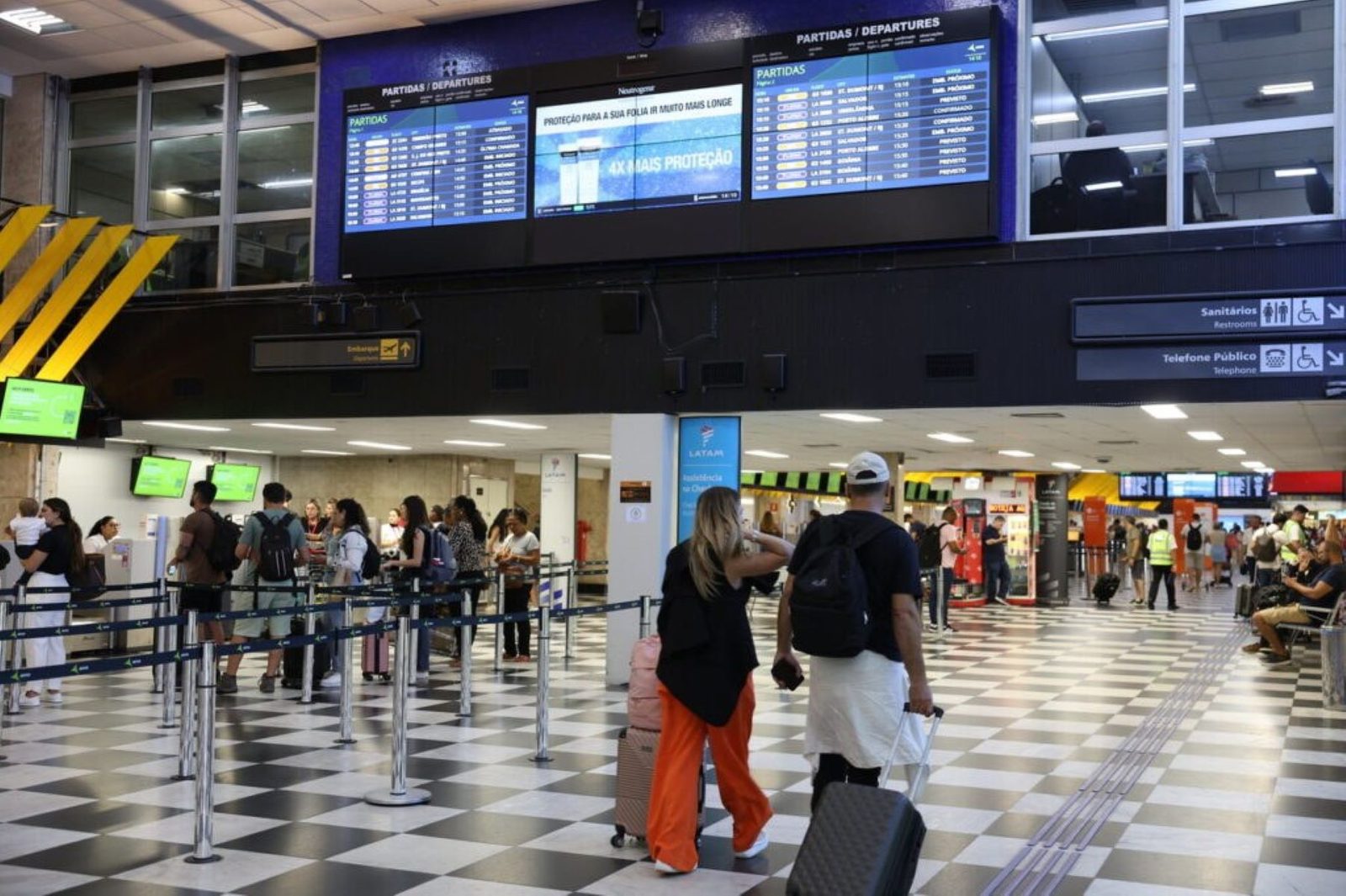
Brazil’s aviation industry is entering an important phase as Argentina unites Chile and various destinations in supporting regional tourism and international travel demand. Brazil airport traffic nears 100 million passengers in 2026, reflecting stronger airline activity across domestic and overseas markets. Argentina remains a leading source of international visitors, while Chile, Paraguay and Uruguay strengthen South America’s tourism connections with Brazil. Expanding passenger movements are placing greater importance on airline connectivity, airport infrastructure and visitor accessibility. The changing travel landscape highlights Brazil’s growing role as a major aviation market, linking regional tourism demand with international travel opportunities.
Brazil Airport Passenger Traffic Approaches Historic Milestone as Domestic and International Flights Expand
Brazil’s aviation sector recorded substantial passenger growth between January and September 2026. According to the Ministry of Ports and Airports, airlines transported 99.6 million passengers on domestic and international services, representing an increase of 4.3% over the corresponding period in 2025. Domestic aviation remained the country’s largest travel segment, accounting for 76.8 million passengers. International flights carried approximately 22.7 million passengers and delivered faster annual growth. The figures demonstrate how Brazil’s air transport network continues to support domestic mobility and cross-border travel. They also provide an important benchmark for airlines, airport operators and tourism businesses assessing market demand.
Advertisement
Advertisement
- Total domestic and international passenger traffic reached 99.6 million during January–September 2026.
- Overall aviation passenger movements increased by 4.3% year on year.
- Domestic flights accounted for 76.8 million passengers, with annual growth of 3.4%.
- International passenger traffic reached 22.7 million, increasing by 7.3%.
- September recorded more than 10.8 million passengers, the strongest September performance in 26 years.
| Aviation indicator | January–September 2026 | Annual change |
|---|---|---|
| Total airline passengers | 99.6 million | +4.3% |
| Domestic passengers | 76.8 million | +3.4% |
| International passengers | 22.7 million | +7.3% |
| September traffic | Over 10.8 million | +0.7% |
| September historical performance | Best in 26 years | Record for the month |
Brazil International Tourism Source Markets Reveal Strong South American Travel Demand
Argentina, Chile, Paraguay and Uruguay form an established group of international tourism source markets for Brazil. The Ministry of Tourism’s 2026 tourism trends publication identifies these countries as consolidated markets, reflecting their longstanding importance to Brazilian inbound tourism. Using GlobalData forecasts, the publication projects approximately 5.58 million combined arrivals from these four countries during 2026. The projected growth rate is 6.5%. These estimates include inbound tourism across applicable transport modes and are separate from Brazil’s recorded aviation passenger statistics. The figures highlight South America’s importance for regional tourism planning, international connectivity and visitor-market development throughout the year.
- Argentina is forecast to contribute the largest number of visitors among the four established markets.
- Chile is projected to remain the second-largest market within this group.
- Paraguay and Uruguay represent important neighbouring visitor markets.
- All four countries have positive projected arrival growth for 2026.
- Their combined forecast indicates opportunities for regional tourism and air transport connectivity.
| Tourism source market | Projected 2026 arrivals | Forecast annual growth |
|---|---|---|
| Argentina | 3,634,060 | +7.3% |
| Chile | 842,020 | +5.0% |
| Paraguay | 555,510 | +5.1% |
| Uruguay | 549,390 | +4.7% |
| Total | 5,580,980 | +6.5% |
Argentina Leads Brazil Tourism Source Markets as Regional Travel Demand Strengthens
Argentina occupies a central position in Brazil’s inbound tourism market. Official tourism planning material forecasts approximately 3.63 million Argentine visitor arrivals during 2026, representing growth of 7.3% from the previous year. This makes Argentina the largest projected contributor among Brazil’s four consolidated South American markets. Argentina also leads the international air-arrival source markets identified in Brazil’s January–August 2026 aviation-linked tourism data, with approximately 1.19 million arrivals by air. The combination of regional proximity, established travel relationships and available transport connections helps explain the importance of Argentine travellers to Brazil’s tourism economy and airline market.
Advertisement
Advertisement
- Argentina is Brazil’s largest projected consolidated South American tourism source market.
- Its full-year 2026 visitor forecast reaches 3,634,060 arrivals.
- Annual tourism arrival growth is projected at 7.3%.
- Argentina generated approximately 1.19 million inbound air arrivals between January and August.
- Argentine travellers support demand across Brazil’s tourism destinations, although national data do not establish which destinations account for every arrival.
| Argentina–Brazil tourism indicator | 2026 figure |
|---|---|
| Projected total visitor arrivals | 3,634,060 |
| Forecast arrival growth | +7.3% |
| Share of four-market forecast | Approximately 65.1% |
| January–August arrivals by air | Approximately 1.19 million |
| Market classification | Consolidated tourism source market |
Chile Strengthens Brazil’s International Air Travel Market Through Growing Visitor Arrivals
Chile remains another significant contributor to Brazil’s South American tourism demand. The country’s projected visitor arrivals are expected to reach 842,020 during 2026, indicating annual growth of 5%. Chile also recorded approximately 537,200 inbound air arrivals to Brazil between January and August, making it the second-largest international air-arrival source market in the official list for that period. This distinction gives Chile particular importance in aviation-led tourism analysis. Strong air-arrival volumes can support the commercial relevance of regional connections, while growing visitor demand can benefit tourism distribution, accommodation services and local transport. Confirmed airline capacity changes require separate operational evidence.
- Chile is projected to generate more than 842,000 visitor arrivals during 2026.
- Expected annual tourism arrival growth stands at 5%.
- Chile recorded approximately 537,200 inbound air arrivals during January–August.
- It ranked second among Brazil’s international air-arrival source markets in that reporting period.
- Chile’s tourism importance extends to regional airline connectivity and destination accessibility.
| Chile–Brazil tourism indicator | 2026 figure |
|---|---|
| Projected total visitor arrivals | 842,020 |
| Forecast arrival growth | +5.0% |
| Share of four-market forecast | Approximately 15.1% |
| January–August arrivals by air | Approximately 537,200 |
| Air-arrival source-market position | Second |
Paraguay Contributes to Brazil’s Tourism Growth Through Cross-Border Travel and Regional Connectivity
Paraguay contributes an important share of Brazil’s international visitor market, particularly through established cross-border travel connections. The official tourism forecast estimates 555,510 Paraguayan visitor arrivals in 2026, representing annual growth of 5.1%. Although Paraguay’s projected market size is smaller than Argentina’s and Chile’s, its proximity to Brazil supports travel across adjoining regions. Paraná is especially relevant because of the established visitor movements involving Paraguay and Argentina. Regional travel can support attractions, accommodation businesses, retail activity and local transport. For airlines, the figures establish broader tourism demand but cannot independently identify the number of Paraguay-origin passengers using Brazilian domestic or international flights.
Advertisement
Advertisement
- Paraguay is projected to generate 555,510 international visitor arrivals to Brazil in 2026.
- The forecast indicates 5.1% growth over 2025.
- Paraguay represents approximately one-tenth of the four consolidated markets’ projected arrivals.
- Its geographical position makes cross-border tourism particularly relevant.
- Tourism demand includes multiple transport modes, making direct comparisons with airline passenger totals inappropriate.
| Paraguay–Brazil tourism indicator | 2026 figure |
|---|---|
| Projected total visitor arrivals | 555,510 |
| Forecast annual growth | +5.1% |
| Share of four-market forecast | Approximately 10.0% |
| Primary regional connection | South American cross-border tourism |
| Forecast classification | All-mode international arrivals |
Uruguay Reinforces Brazil’s Southern Tourism Economy Through Established Visitor Connections
Uruguay continues to feature prominently in Brazil’s regional tourism outlook. Official projections indicate that approximately 549,390 Uruguayan visitors could arrive in Brazil during 2026, representing growth of 4.7%. The market accounts for nearly one-tenth of anticipated arrivals from the four consolidated South American countries. Uruguay’s geographical relationship with southern Brazil creates opportunities for cross-border travel, while regional air connections provide an additional way to reach destinations beyond immediate border areas. The projected increase contributes to a broader pattern of expanding South American tourism demand. However, the forecast does not establish confirmed airline route additions, passenger spending or final visitor volumes for 2026.
- Uruguay’s projected visitor arrivals total 549,390.
- Annual arrival growth is forecast at 4.7%.
- Uruguay represents approximately 9.8% of the four-market projected total.
- Southern Brazil remains geographically important for Uruguay-linked travel.
- Actual full-year performance will require confirmed arrivals data after the reporting period closes.
| Uruguay–Brazil tourism indicator | 2026 figure |
|---|---|
| Projected visitor arrivals | 549,390 |
| Forecast annual growth | +4.7% |
| Share of four-market forecast | Approximately 9.8% |
| Regional tourism relationship | Southern Brazil |
| Data status | Full-year projection |
Brazil’s International Airline Growth Connects South America with the United States and Europe
Brazil’s international aviation growth extends beyond its neighbouring countries. Official January–August 2026 inbound air-arrival data identify the United States, Portugal and France alongside Argentina and Chile as leading source markets. Brazil recorded 4,477,469 international visitor arrivals by air during that period, representing approximately 70% of inbound foreign visitor arrivals across all transport modes. The United States contributed around 486,200 air arrivals, followed by Portugal with 199,700 and France with 162,700. This geographical diversity illustrates Brazil’s position within regional and long-haul tourism networks. It also shows why airport capacity, international accessibility and efficient onward domestic travel remain important considerations for tourism development.
- Brazil recorded 4,477,469 inbound international visitor arrivals by air during January–August 2026.
- Argentina and Chile led the source-market list for air arrivals.
- The United States ranked third among the five reported markets.
- Portugal and France represented major European source markets.
- Approximately 70% of the country’s foreign visitor arrivals during the period entered by air.
| Country | Inbound air arrivals, Jan–Aug 2026 |
|---|---|
| Argentina | Approximately 1,190,000 |
| Chile | Approximately 537,200 |
| United States | Approximately 486,200 |
| Portugal | Approximately 199,700 |
| France | Approximately 162,700 |
| Brazil total, all international source markets | 4,477,469 |
Brazil Airport Infrastructure Development Supports Aviation Safety and Regional Tourism Access
Brazil’s airport development programme provides another important dimension to its aviation growth. At Jorge Amado Airport in Ilhéus, Bahia, authorities have advanced plans to install an Engineered Materials Arresting System, designed to slow aircraft that overrun the runway. The Bahia government confirmed an investment exceeding R$60 million and a planned increase of 100 metres in the operational runway length, from 1,477 to 1,577 metres. The project represents a safety improvement rather than a confirmed expansion of airline frequencies. For passengers travelling to southern Bahia, infrastructure upgrades could support more resilient airport operations and improve the long-term operating environment for regional aviation.
- Ilhéus Airport is scheduled to receive an emergency aircraft arresting system.
- The project involves investment exceeding R$60 million.
- The installation will be located at runway end 29.
- The planned operational runway length will increase by 100 metres.
- Congonhas Airport in São Paulo has already adopted this type of safety technology.
| Airport development indicator | Confirmed project detail |
|---|---|
| Airport | Jorge Amado Airport, Ilhéus |
| State | Bahia |
| Planned technology | Engineered Materials Arresting System |
| Investment | More than R$60 million |
| Existing operational runway length | 1,477 metres |
| Planned operational runway length | 1,577 metres |
| Project status | Planned installation |
Brazil Tourism and Aviation Expansion Creates Wider Opportunities for Global Travel
Brazil’s rising airport passenger volumes and positive regional tourism forecasts have implications for airlines, hospitality operators and international travel businesses. The country recorded approximately R$38.5 billion in foreign visitor expenditure from January to August 2026, according to the Ministry of Ports and Airports, drawing on Central Bank information. During the same period, business travel generated R$9.75 billion in reported corporate travel revenue, an increase of 8.2%. These indicators suggest economic activity linked to international visitors and corporate mobility. Nevertheless, forecasts for Argentina, Chile, Paraguay and Uruguay should remain separate from confirmed revenue and aviation statistics when assessing tourism performance.
- International visitor expenditure reached approximately R$38.5 billion during January–August.
- Reported corporate travel revenue reached R$9.75 billion over the same period.
- Corporate travel revenue increased by 8.2% year on year.
- Air transport contributes to international tourism and domestic business mobility.
- Growing regional demand may support airport, airline and hospitality planning, without guaranteeing specific economic outcomes.
| Tourism and travel indicator | 2026 verified information |
|---|---|
| Foreign visitor expenditure, Jan–Aug | Approximately R$38.5 billion |
| Corporate travel revenue, Jan–Aug | R$9.75 billion |
| Corporate travel revenue growth | +8.2% |
| International air visitor arrivals, Jan–Aug | 4,477,469 |
| Total aviation passenger traffic, Jan–Sep | 99.6 million |
Conclusion
Argentina unites Chile and various destinations in a broader regional tourism outlook as Brazil airport traffic nears a major passenger milestone in 2026. The country’s expanding aviation market demonstrates the importance of domestic mobility, international air connections and reliable airport infrastructure. Argentina continues to lead established regional source markets, while Chile, Paraguay and Uruguay contribute to cross-border travel demand. Brazil’s relationships with the United States and European markets further strengthen its international reach. Continued airport modernisation and careful airline network planning could support future tourism development, although realised growth will depend on actual visitor demand, connectivity and operating conditions.
Advertisement
