
Germany Issues New Travel Advisory For Canada Amid Explosive British Columbia Wildfires Threatening Tourist Safety

Published
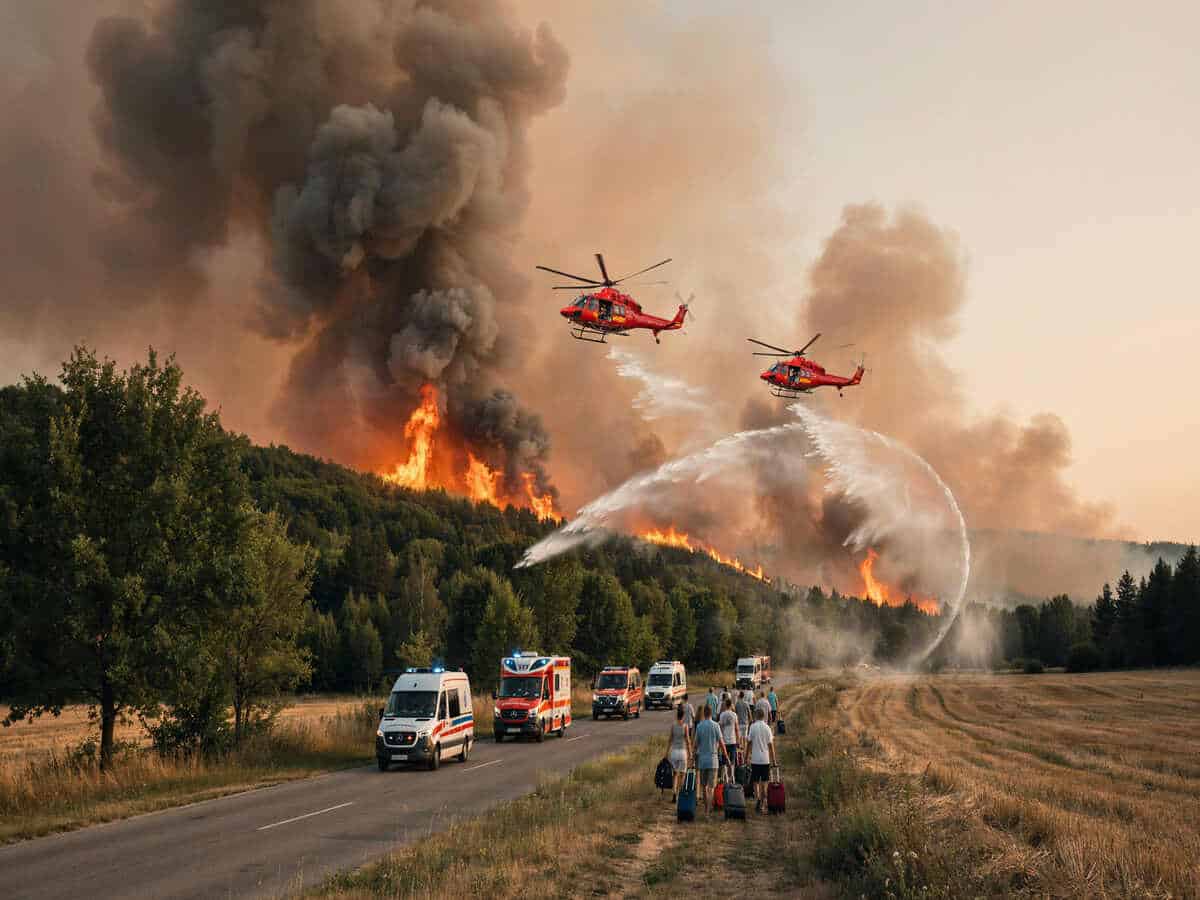
Image generated with Ai
German travel advice on Canadian wildfires with increasing safety worries in British Columbia. Travel advice on Canada has been issued by the German government. The advisory states that travelers from Germany coming to Canada should be extremely cautious as there have been several instances of wildfires that have affected several places including British Columbia and northwestern Ontario. There could be risks associated with the poor air quality and the closure of roads.
Germany’s Federal Foreign Office is not advising against all travel to Canada but is warning travellers that wildfire conditions can change rapidly. German tourists have been encouraged to carefully research current fire situations, monitor local developments and follow instructions issued by Canadian authorities while travelling through affected regions.
Advertisement
Advertisement
The warning comes as wildfire activity remains a major concern across parts of Canada, where changing weather conditions, dry landscapes and extreme temperatures can increase risks for communities and visitors. Despite these temporary environmental challenges, Canada continues to be recognised as one of the world’s safest and most secure countries for travellers, with strong emergency response systems and well-established public safety measures. Canadian authorities continue to provide wildfire information, safety updates and regional alerts to help residents and travellers make informed decisions while visiting affected areas.
British Columbia Wildfire Threat Raises Concerns For International Visitors And Tourism Operations
British Columbia has become a major focus of Germany’s travel warning due to the province’s popularity among international tourists and its exposure to wildfire risks. The region is internationally known for its dramatic mountains, national parks, forests, lakes and outdoor adventure experiences, attracting visitors from around the world.
Advertisement
Advertisement
However, active wildfires are creating challenges for tourism activities in affected areas. German travellers planning holidays in British Columbia have been advised to check whether destinations, roads, hiking trails, parks and accommodation facilities remain accessible before beginning their journeys.
Advertisement
Advertisement
The German Government has highlighted that wildfire conditions can lead to short-term travel restrictions. Authorities may close roads, restrict access to certain locations or issue evacuation orders when fires threaten communities and infrastructure.
For tourists, this means previously planned routes may need to be changed at short notice. Popular road-trip routes, camping areas and outdoor attractions can be affected depending on fire locations, wind direction and emergency measures.
The advisory encourages visitors to remain flexible and avoid entering areas where authorities have issued warnings or restrictions.
German Government Increases Travel Awareness Through Safety Guidance For Canada Visitors
Germany’s Federal Foreign Office is informing travellers that preparation and awareness are essential when visiting wildfire-affected areas of Canada. The government advice focuses on helping German citizens understand potential risks before departure and during their stay.
Travellers have been advised to:
Advertisement
Advertisement
- Check the latest wildfire situation before travelling.
- Monitor weather forecasts and air quality conditions.
- Follow local media reports for security updates.
- Respect evacuation orders, warning signs and restricted areas.
- Follow instructions from Canadian authorities and emergency services.
- Adjust travel plans when conditions become unsafe.
Germany’s approach reflects a wider trend among governments providing destination-specific guidance as climate-related events increasingly influence international travel.
Rather than restricting tourism completely, the advisory aims to ensure travellers make informed decisions and understand that natural disasters can quickly affect transportation, accommodation and sightseeing opportunities.
Wildfire Smoke Creates Air Quality Risks Beyond Direct Fire Zones
One of the main concerns highlighted by Germany is that wildfire impacts are not limited only to locations where flames are burning. Smoke from large wildfires can travel significant distances, reducing air quality in areas far away from active fire zones.
This creates additional challenges for tourists who may not be near evacuation areas but are still exposed to unhealthy air conditions.
Poor air quality can affect outdoor tourism experiences, including hiking, cycling, wildlife tours and sightseeing activities. Visitors with respiratory conditions or sensitivity to smoke may need to take extra precautions and monitor official air quality updates.
Advertisement
Advertisement
The German advisory encourages travellers to consider environmental conditions alongside traditional travel planning factors such as accommodation, transportation and attractions.
For destinations heavily dependent on nature-based tourism, wildfire smoke can create economic impacts by affecting visitor confidence and changing travel behaviour.
Tourists Warned About Possible Road Closures And Emergency Evacuations
Germany has specifically highlighted the possibility of road closures and evacuation measures in wildfire-affected parts of Canada.
For international visitors exploring Canada by car, road access is a critical part of the travel experience. Many tourists visit British Columbia through scenic driving routes connecting national parks, mountain regions and rural communities.
However, wildfire emergencies can quickly change road conditions. Authorities may close highways, restrict access to certain areas or redirect traffic to protect residents and visitors.
Advertisement
Advertisement
Tourists are therefore encouraged to avoid relying only on previously prepared itineraries and instead check updated information throughout their journey.
Emergency evacuation orders may also require visitors to leave affected areas immediately. German authorities have advised travellers to follow official instructions and avoid delaying departures when evacuation measures are announced.
Canada Entry Rules Continue For German Citizens But Travellers Must Follow Requirements
Alongside wildfire information, Germany’s travel guidance also reminds citizens about Canada’s entry requirements.
German nationals can enter Canada without a traditional visa for tourism, business or transit purposes for stays of up to six months. However, travellers arriving by air must obtain an Electronic Travel Authorization (eTA) before departure.
The eTA application must be completed online through the official Canadian government system and requires a fee of CAD 7.
Advertisement
Advertisement
Germany advises travellers to apply early because Canadian authorities may request additional documents or information during the application process.
An approved eTA does not automatically guarantee entry into Canada. Final admission decisions remain with Canadian border officials, who assess each traveller’s eligibility at the border.
Visitors may need to demonstrate that they have sufficient financial resources, are visiting for permitted purposes and intend to leave Canada after their stay.
Security Checks And Crime Awareness Included In Germany’s Canada Guidance
Germany’s advisory also includes general safety information for travellers visiting Canada.
Although Canada remains a generally safe destination, German authorities remind visitors that petty crime can occur in major cities and tourist areas. Pick pocketing and luggage theft are possible, particularly in crowded locations such as airports, railway stations, public transport areas and popular attractions.
Advertisement
Advertisement
German travellers are advised to:
- Keep passports and important documents secure.
- Carry copies of travel documents separately.
- Avoid leaving luggage unattended.
- Protect personal information from suspicious messages or scams.
- Contact Canadian emergency services by calling 911 when necessary.
Travellers are also advised to remain aware of their surroundings during large events and crowded public gatherings.
Temporary Entry Restrictions Linked To Ebola Risks Also Highlighted
Germany’s travel information also includes details about temporary Canadian entry restrictions related to Ebola outbreak risks.
According to the advisory, Canada has suspended entry permits for individuals residing in countries classified as having high or very high Ebola outbreak risks. The restrictions currently apply to travellers connected with the Democratic Republic of Congo, Uganda and South Sudan.
German travellers are encouraged to check updated Canadian entry rules before departure, as health-related requirements and border measures can change.
Advertisement
Advertisement
Those who have recently travelled through affected regions may face additional procedures, including self-isolation requirements after arriving in Canada.
Germany Urges Responsible Travel Planning As Climate Risks Reshape Tourism
Germany’s latest advisory highlights how climate-related emergencies are becoming an increasingly important factor in international tourism planning.
Canada continues to attract millions of visitors with its natural landscapes, cultural attractions and outdoor experiences. However, wildfire events demonstrate the importance of responsible travel preparation, particularly for destinations dependent on forests, national parks and outdoor activities.
The German Government is encouraging travellers to remain informed, monitor official updates and prepare alternative plans when visiting wildfire-prone regions.
For tourists heading to British Columbia and other affected parts of Canada, awareness and flexibility are now essential elements of safe travel.
Advertisement
Advertisement
Germany advises travelers going to Canada about the dangers caused by the wildfires in British Columbia.
The warning becomes a proof for the statement that modern tourism is not just a search for new places but also an insight into the environment which may change the trip quickly. The traveler from Germany will be able to protect himself and continue visiting Canada safely.
Advertisement
