

United Kingdom’s Fife Railway Closures Reshape Edinburgh–Kirkcaldy Holiday Travel as Buses Replace Trains

Published
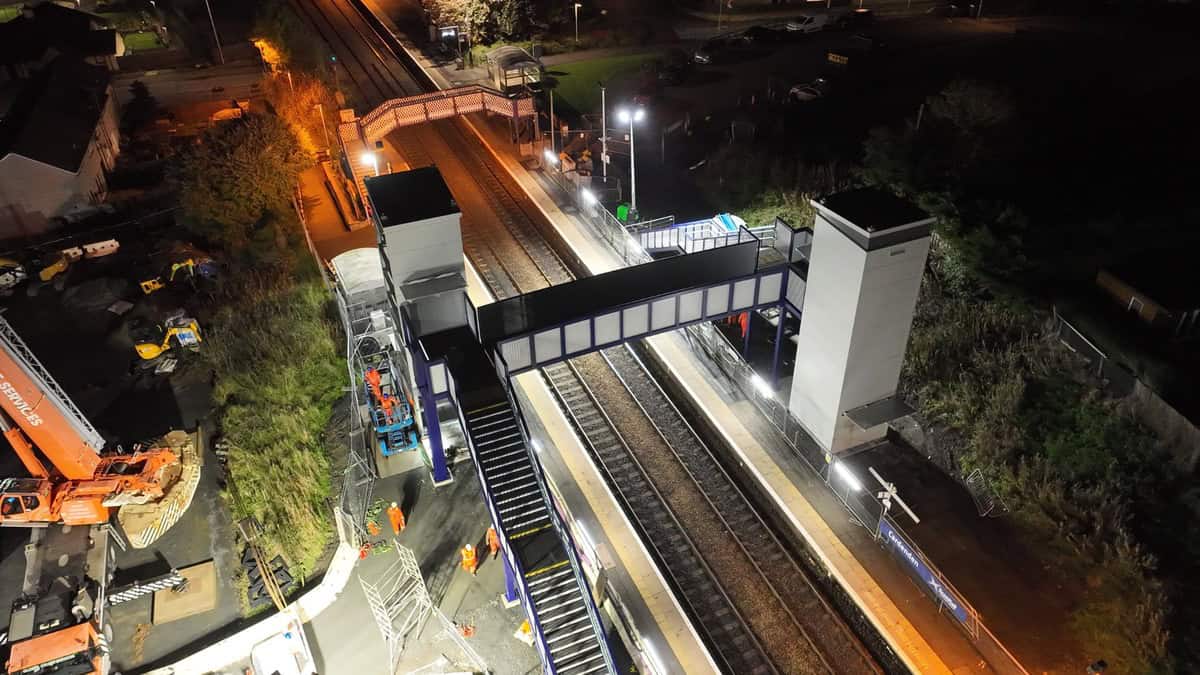
The United Kingdom’s Fife railway electrification programme enters a critical 18-day construction phase on 10 October 2026, coinciding with Scottish school holidays. Rail passengers travelling between Edinburgh, Kirkcaldy and coastal destinations face changing replacement buses, diverted intercity trains and disrupted overnight connections. Importantly, the restrictions change on 20 and 24 October, meaning outward and return journeys may require different arrangements. Official railway notices, local authority holiday calendars and government tourism statistics reveal a wider challenge for holidaymakers, travel agents and tour operators managing autumn coastal itineraries.
Fife Railway Closures Begin as October School Holidays Create a New Travel Planning Challenge
A major programme of railway engineering has begun its scheduled 18-day closure period in Scotland, placing one of the United Kingdom’s established coastal rail corridors under temporary operating restrictions.
Advertisement
Advertisement
According to Network Rail’s official announcement of 8 October 2026, the works form part of the Scottish Government’s £311.5 million investment to electrify 118 kilometres of railway in Fife.
The disruption will extend from Saturday 10 October to Tuesday 27 October. However, the restrictions will not remain identical throughout the construction period.
Advertisement
Advertisement
The most significant new travel angle emerges when official railway schedules are compared with school holiday calendars.
According to Fife Council’s official academic calendar, the autumn school holiday runs from 12 to 23 October 2026.
Advertisement
Advertisement
Meanwhile, the City of Edinburgh Council’s school term dates confirm that local schools observe their October mid-term break from 12 to 19 October.
Consequently, the principal rail restrictions coincide with both school holiday periods. This creates a particular itinerary-planning challenge for families travelling between Edinburgh and the Fife coast, especially those arranging multi-destination excursions, short breaks or visits involving multiple transport operators.
The coincidence does not establish that passenger demand has increased. Nevertheless, it makes the timing of the works especially relevant to tourism businesses serving the October holiday market.
United Kingdom Railway Travel Changes Four Times Before 28 October
The most important operational finding is that the 18-day disruption involves several distinct service patterns rather than one uninterrupted closure arrangement.
According to ScotRail’s first two closure-phase notices and its subsequent 24–27 October service advisory, the route restrictions will change during the holiday period and again over the final weekend.
Verified October 2026 Rail Closure and Replacement Transport Calendar
| Dates | Railway restrictions | Replacement arrangements | Implications for visitors |
|---|---|---|---|
| 10–19 October | No trains between Inverkeithing and Markinch via Kirkcaldy | Hourly replacement buses through affected coastal stations, with additional departures during busier periods | Coastal excursions require revised connections and longer journey allowances |
| 20–23 October | No trains between Markinch and Perth or Dundee | Buses between Kirkcaldy and Perth or Dundee; Edinburgh–Kirkcaldy and Edinburgh–Leven trains operate | Some direct coastal rail access returns, but onward connections north remain restricted |
| 24–25 October | Closure between Lochgelly and Glenrothes with Thornton, with additional restrictions towards Leven | Buses between Cowdenbeath and Leven, plus Kirkcaldy and Leven | Weekend visitors must distinguish between available coastal trains and replacement buses |
| 26–27 October | Inland restrictions between Lochgelly and Glenrothes with Thornton continue | Cowdenbeath–Leven replacement buses remain; Edinburgh–Leven trains via Kirkcaldy operate normally | Some coastal services return while inland connections remain disrupted |
The distinction between the first and second phases is particularly important. Although the overall notice states that through trains via Kirkcaldy are affected until 23 October, ScotRail specifically confirms that trains between Edinburgh and Kirkcaldy will operate from 20 October.
Advertisement
Advertisement
For travel intermediaries, this means an itinerary booked for 18 October cannot automatically be reused on 21 October, even when the same origin and destination are involved.
Similarly, passengers departing for Leven on Saturday 24 October will encounter different arrangements from those travelling on Monday 26 October.
The practical priority is therefore to validate every journey against its actual travel date rather than relying on a general disruption notice covering the entire period.
Coastal Railway Replacement Buses Bring New Constraints for Holidaymakers
Between 10 and 19 October, the greatest immediate changes concern communities and visitor attractions normally connected by the coastal railway.
ScotRail replacement buses operate between Inverkeithing and Markinch, serving Dalgety Bay, Aberdour, Burntisland, Kinghorn, Kirkcaldy and Glenrothes with Thornton.
According to ScotRail’s official JourneyCheck service information, the replacement timetable provides an hourly service throughout the day, with additional capacity scheduled for certain periods.
Advertisement
Advertisement
Verified Replacement Bus Frequencies: 10–19 October
| Operating period | Published frequency | Important limitation |
|---|---|---|
| Monday–Friday | Hourly throughout the day | Approximately half-hourly during 06:30–09:30 and 15:30–18:30 |
| Saturday | Hourly throughout the day | Approximately half-hourly between 10:00 and 18:00 |
| Sunday | Hourly | Certain buses terminate earlier because onward train connections are unavailable |
These are published service patterns rather than guarantees of individual departures. Travellers should consult the journey planner for their specific date and boarding point.
This creates particular considerations for coastal walking holidays and independently organised sightseeing.
The Fife Coastal Path passes through several communities served by the affected railway, including Burntisland and Kinghorn.
Visitors often design walking itineraries around arriving at one station and departing from another. During the closure, those plans require renewed attention to bus stopping points and onward connections.
For travellers continuing towards Leven during the first phase, ScotRail identifies Glenrothes with Thornton as a connection between replacement buses and onward trains.
Intercity Railway Diversions Extend the Impact Beyond Local Tourism
The restrictions also affect long-distance rail passengers using services operated by London North Eastern Railway, CrossCountry and ScotRail.
Advertisement
Advertisement
These changes matter for international visitors who arrive in the United Kingdom through major transport gateways before continuing to Scottish destinations.
According to the National Rail engineering advisory, intercity operators have published different diversion and replacement arrangements.
How Major Train Operators Are Affected
| Operator | Dates | Confirmed changes | Travel planning implications |
|---|---|---|---|
| ScotRail | 10–19 October | Services diverted via Dunfermline where possible; coastal buses operate | Travellers must distinguish through trains from buses serving coastal stations |
| LNER | 10–19 October | Trains diverted via Dunfermline City without calling at intermediate coastal stations; Inverkeithing–Kirkcaldy buses provided | Passengers with coastal destinations need separate connections |
| LNER | 20–23 October | Diverted trains omit Inverkeithing, Kirkcaldy and Leuchars; replacement buses operate between Edinburgh and Leuchars | Inverkeithing and Kirkcaldy passengers can use ScotRail replacement buses without additional ticket charges |
| CrossCountry | 10–23 October | Several long-distance services start or terminate at Edinburgh instead of their usual northern points | Through journeys may require alternative trains or buses |
| ScotRail | 20–23 October | Edinburgh–Kirkcaldy trains operate, while services towards Perth and Dundee require replacement arrangements | Bookings need revised interchange points and revised journey durations |
CrossCountry Timetable Changes Require Particular Attention
On Saturdays and Mondays to Fridays, the 08:20 Aberdeen–Plymouth service starts from Edinburgh, while the 09:27 Plymouth–Aberdeen service terminates there.
The 21:35 Aberdeen–Edinburgh service is cancelled under the published arrangements.
On Sundays, the 12:22 Dundee–Plymouth service starts from Edinburgh, while the 21:20 Aberdeen–Edinburgh service does not operate. CrossCountry also provides evening replacement buses between Dundee and Edinburgh.
Passengers may use their tickets on specified alternative train and replacement bus services without additional charges.
Advertisement
Advertisement
A further late-evening consideration appears in ScotRail’s operational information for 20–23 October.
The published plan identifies the 22:04 Edinburgh departure as the last through train to Leven, while the 23:03 departure terminates at Kirkcaldy.
This distinction is important for passengers arriving late after connecting journeys, evening events or accommodation transfers.
Caledonian Sleeper Restrictions Introduce a Separate Overnight Travel Risk
Another significant aspect concerns overnight rail passengers.
According to Caledonian Sleeper’s official engineering notices, services between London Euston and Aberdeen will not call at Kirkcaldy between 11 and 23 October.
Affected trains are diverted via Dunfermline City without making a passenger stop there.
Advertisement
Advertisement
Travellers who would otherwise board or leave the sleeper at Kirkcaldy therefore need alternative stations and connecting transport.
This is especially relevant to visitors who combine overnight rail travel with a Scottish coastal holiday.
Accommodation providers and rail-inclusive tour operators should verify the arrival station and onward journey separately. A reservation for an overnight train does not, by itself, establish that the originally planned coastal station remains accessible.
The Overlooked Holiday Travel Risk: Return Journeys May Operate Differently
The most significant trade implication emerges from examining the calendar as an interconnected journey rather than a series of individual closures.
A family departing Edinburgh for a coastal holiday on 17 October will encounter the first operating phase, when buses replace trains through Kirkcaldy. If the same family returns on 21 October, Edinburgh–Kirkcaldy trains are scheduled to operate again, although restrictions remain farther north.
A second group travelling over 24–25 October may encounter replacement buses towards Leven. Passengers making that journey on 26 October will find a different coastal operating arrangement.
Advertisement
Advertisement
These examples expose a practical weakness in treating a return rail booking as a symmetrical journey.
Travel agents must establish whether each individual travel leg remains valid, whether the passenger needs a different interchange and whether the revised arrival time still supports the booked accommodation or activity.
The implications extend beyond ticketing. Independent coastal walking itineraries rely on predictable access between starting points and finishing points. Late-arriving international visitors may require additional ground transport after their long-distance connection.
For tour operators, the appropriate response is to assess each itinerary against the precise closure phase, rather than applying one general contingency plan.
The official notices establish the timetable changes. They do not establish how many tourists will be affected, how many bookings will change or whether tourism businesses will experience a measurable reduction in revenue.
Fife Tourism Economy Makes Railway Reliability a Significant Industry Issue
The railway changes affect a destination with an established domestic and international visitor economy.
Advertisement
Advertisement
According to VisitScotland’s official Fife tourism research, Fife received an annual average of approximately 620,000 overnight tourism visits between 2022 and 2024.
These visits generated an estimated £254 million in annual overnight visitor spending.
Official Tourism and Railway Market Indicators
| Economic indicator | Verified figure | Reporting period |
|---|---|---|
| Total overnight visits to Fife | 620,000 annually | 2022–2024 average |
| Overnight visitor nights | 2.44 million annually | 2022–2024 average |
| Overnight visitor expenditure | £254 million annually | 2022–2024 average |
| International overnight visits | 145,000 annually | 2022–2024 average |
| International visitor expenditure | £161 million annually | 2022–2024 average |
| Tourism employment | 12,000 jobs | 2024 |
| Tourism businesses | 875 | 2025 |
| Levenmouth railway passenger journeys | Approximately 300,000 during its first year | First year following 2024 reopening |
Sources: VisitScotland regional tourism statistics and Transport Scotland’s National Transport Strategy fifth delivery plan. Figures relate to different reporting periods and do not measure the economic impact of the October 2026 closures.
The statistics demonstrate why dependable transport access matters to regional tourism.
However, they cannot be used to calculate losses from the current engineering works. Neither the regional expenditure estimates nor the first-year Levenmouth passenger total identifies how many journeys would have taken place during this particular October closure.
The Levenmouth railway provides a useful longer-term perspective.
Advertisement
Advertisement
According to Transport Scotland’s March 2026 delivery-plan update, the reopened railway recorded around 300,000 passenger journeys during its first year, with increased services and additional carriages subsequently introduced.
The route had reopened in June 2024 following more than five decades without regular passenger services.
Its inclusion in the current engineering arrangements shows that recently restored railway connections can still require significant temporary adjustments as the wider network undergoes modernisation.
The £311.5 Million Electrification Programme Is a Long-Term Investment, Not an Immediate Service Expansion
The closure forms part of a much larger railway modernisation strategy.
According to the Scottish Government’s official capital-project investment update, the full business case for Fife decarbonisation was approved in June 2025.
The approved investment of £311.5 million is intended to deliver electrification infrastructure supporting the replacement of existing diesel rolling stock with battery-electric trains.
Advertisement
Advertisement
The published business case identifies an electrification programme extending to 2029, with its delivery schedule aligned to rolling-stock procurement.
The estimate excludes the separately accounted £29.4 million Thornton power feeder station.
Infrastructure Scheduled for the October Construction Period
Network Rail identifies several substantial engineering activities:
- Rebuilding three railway bridges to provide clearance for overhead electrical equipment.
- Upgrading another bridge at Cardenden Road.
- Installing foundations for overhead line masts.
- Altering track infrastructure.
- Upgrading signalling equipment to support future railway operations.
The infrastructure programme should eventually support a less diesel-dependent rail network. However, the present construction phase does not constitute the introduction of new electric train services.
According to Transport Scotland’s railway fleet transition strategy, battery-electric rolling stock will allow services to operate using a combination of electrified infrastructure and onboard battery power.
The wider £342 million investment announcement covers Fife, Borders and suburban railway fleet improvements. It should not be confused with the separate £311.5 million Fife infrastructure budget.
Advertisement
Advertisement
A related £5 million project is also providing a new station footbridge at Cardenden, including two lifts. Network Rail’s 5 October update identifies spring 2027 as the anticipated opening period. That is a future accessibility improvement rather than a facility already available during the October closure.
Replacement Bus Accessibility, Bicycles and Passenger Rights Need Separate Checks
Temporary road transport creates constraints that do not arise in the same way on normal rail services.
According to National Rail’s official replacement transport guidance, non-folding bicycles cannot be carried on replacement buses or coaches.
Folding bicycles may be accepted where space permits, at the driver’s discretion.
This distinction is particularly relevant for cycling holidays and itineraries that combine railway access with coastal routes.
Passengers requiring assistance may be offered suitable alternative transport, including accessible buses, minibuses or taxis, depending on their needs and available vehicles.
Advertisement
Advertisement
Replacement bus stops may also be situated away from station entrances.
National Rail advises checking station-specific pick-up information before travelling. Its guidance further explains that compensation may be available when replacement transport is significantly delayed against the amended timetable, rather than simply because a planned journey takes longer.
Essential Operational Actions for Travel Agents and Tour Operators
Tourism businesses managing itineraries between 10 and 27 October should prioritise the following risk-management measures:
- Revalidate every travel leg: Check outward and return journeys separately because the closure patterns change on 20 and 24 October.
- Confirm replacement bus boarding points: Use the operator’s station information rather than assuming buses depart directly outside the station entrance.
- Protect connection times: Allow additional time between trains, replacement buses, accommodation arrivals and scheduled activities.
- Check intercity tickets: Confirm the specified alternative services and ticket acceptance arrangements with the relevant operator.
- Review overnight rail arrangements: Recheck Caledonian Sleeper departure and arrival stations for travel between 11 and 23 October.
- Assess accessibility and luggage requirements: Confirm suitable transport before finalising itineraries involving passengers with mobility requirements, bicycles or substantial luggage.
- Monitor the final weekend separately: The 24–25 October arrangements towards Leven differ from those scheduled for 26–27 October.
- Keep passengers informed: Provide dated journey instructions and ensure clients know where to obtain live service updates.
United Kingdom Railway Modernisation Could Strengthen Future Sustainable Tourism Connections
The October 2026 Fife electrification works illustrate the relationship between railway investment and destination accessibility.
In the immediate term, visitors face temporary restrictions, changing route options and additional planning requirements during the school holiday period.
Over the longer term, the investment supports Scotland’s transition towards battery-electric railway services and modernised infrastructure.
Advertisement
Advertisement
For international tourism, the principal opportunity lies in creating reliable, accessible and lower-emission connections between major transport gateways and smaller regional destinations.
That potential remains conditional on successful infrastructure delivery, fleet introduction and dependable future timetables. The available government evidence does not establish a quantified tourism growth forecast attributable to this project.
The immediate message for the travel industry is more practical: the Fife railway changes beginning on 10 October should be managed as several distinct operating periods, not a single uniform closure.
Operators that communicate those differences clearly will be better placed to protect visitor journeys, maintain itinerary reliability and support coastal tourism throughout the construction programme.
Advertisement
