
Spain and More Transform Tourism Strategy as Energy Pressures, Debt and AI Reshape the Mediterranean Travel Market

Published
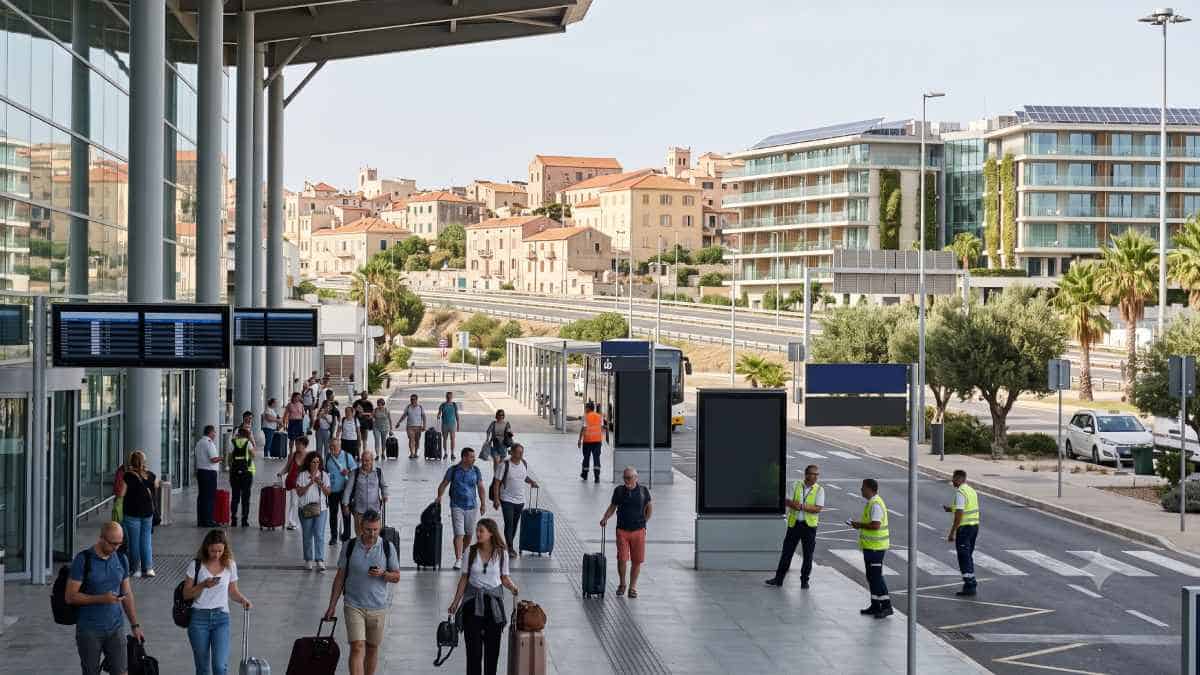
An enormous macroeconomic shift is being felt in the Mediterranean with regards to energy shocks, increased interest rates, and technological innovations that are occurring. At a speech made to delegates ahead of the Annual Meetings, the International Monetary Fund has warned that the global economy is being thrown off balance by crude benchmarks of one hundred dollars per barrel in combination with aggressive artificial intelligence funding. The result of this is margin challenges being faced by destinations and hospitality providers in Spain, Italy, Greece, Portugal, and Croatia. To protect stability in the region, volume growth in Southern Europe tourism is being forgone, and there is a pivot strategy towards high-end tourists, energy efficiencies, and automation.
The Dual Macroeconomic Shock: Energy Disruption and Technological Concentration
The contemporary operating environment across Mediterranean tourism economies is defined by two divergent macroeconomic pressures whereby central bank monetary transmission and destination management strategies are complicated. In a curtain-raiser address previewing the Annual Meetings, it was observed by International Monetary Fund Managing Director Kristalina Georgieva that the international economy is contending with a negative energy supply disruption alongside a positive demand shock driven by artificial intelligence. Rather than being balanced against one another, underlying inflationary pressures are compounded by these structural dynamics, compelling restrictive policy rates to be maintained by advanced-economy monetary authorities while sovereign bond yields are held near multi-year highs. For tourist-dependent regions across Southern Europe, historical volume-led operating models are challenged by this environment, aviation operational costs are directly inflated, the cost of debt for commercial real estate developments is elevated, and rapid technological adaptation is required so that operational margins may be preserved.
Middle Eastern Geopolitical Chokepoints and the Persian Gulf Energy Deficit
The foundational catalyst of the global energy supply disruption is originated from prolonged conflict in the Middle East, through which maritime commercial transit via the Strait of Hormuz has been disrupted. Transit volumes through this narrow strategic corridor have been reduced to approximately one-tenth of their historical pre-war capacity, whereby global hydrocarbon supply chains are constrained. Although outright fuel deficits have been prevented by emergency strategic petroleum reserve releases and logistical adjustments, an elevated price floor has been established by physical bottlenecks, with crude oil benchmarks being maintained near one hundred dollars per barrel. It is indicated by forward contracts for Brent crude that elevated prices will be extended well into the late 2020s, eliminating projections of immediate energy cost moderation.
This baseline crude price is compounded by global downstream refining capacity shortfalls by which refining margins have been widened, creating an unprecedented secondary cost layer. An expansion to approximately one hundred dollars per barrel between raw crude inputs and refined distillates has been registered in the refining margin—commonly referred to in global energy markets as the crack spread. Retail prices for diesel and aviation kerosene have been driven to historic highs by this deficit, whereby freight, utility, and transit overheads are amplified across the European continent. Because heavy reliance is placed on energy imports by Southern European nations to support domestic transport networks and seasonal utility loads, cost-push inflation is exerted by these elevated refining spreads across the broader leisure and hospitality supply chains.
Advertisement
Advertisement
The Artificial Intelligence Demand Shock and Capital Market Concentration
In contrast to the contractionary nature of the energy disruption, a massive, positive demand shock is represented by aggressive private capital deployment into artificial intelligence infrastructure. According to assessments by the IMF, capital deployments observed during the development of continental railway systems, electrical distribution grids, and telecommunication backbones are being matched or surpassed by global investment-to-GDP ratios directed toward artificial intelligence computing capacity, specialised data facilities, and semiconductor supply chains. More than one-tenth of global goods trade is now represented by hardware components and technological products tied to machine learning architecture, reflecting a significant concentration of international capital flows.
While it is suggested by macroeconomic modeling that an incremental half percentage point of annual global GDP expansion could be yielded by artificial intelligence deployment if managed alongside regulatory guardrails, acute capital market friction is created by its rapid scaling. Massive tranches of long-term corporate debt are being issued by technology hyperscalers and institutional investors to finance computing architecture, competing directly for private savings and institutional capital. Upward pressure is exerted by this capital competition on long-term fixed-income yields, absorbing institutional liquidity that might otherwise be utilized for commercial real estate and leisure infrastructure. Simultaneously, renewed demands are placed on regional European electrical grids by the significant electricity requirements of artificial intelligence computing clusters, intersecting with baseline utility inflation driven by global gas constraints.
Advertisement
Advertisement
Commercial Aviation Economics: Refining Crack Spreads and Mediterranean Accessibility
The primary gateway for international visitors entering the Mediterranean basin is served by commercial aviation. Operations have been fundamentally disrupted by the compounding effects of hundred-dollar crude oil and elevated refining margins, requiring fleet allocations, route networks, and dynamic ticketing structures to be re-evaluated by airlines connecting Europe with long-haul markets.
Refining Margin Dynamics and Escalating Jet-A Surcharges
The single largest variable cost on an airline operating statement is represented by aviation turbine kerosene (Jet-A and Jet A-1), traditionally accounting for between twenty-five and thirty-five percent of total airline operating expenditures. As refining margins were widened, jet fuel valuations at European airport hydrants were elevated into historic territories between one hundred eighty and one hundred ninety-five dollars per barrel. Sustained expansion is tracked by the International Air Transport Association Jet Fuel Price Monitor, with observations being made that the underlying commodity price shock has been multiplied by the refining crack spread.
Advertisement
Advertisement
Long-haul flight operations inbound to Southern Europe from key feeder markets across North America, the Asia-Pacific region, and the Gulf Cooperation Council economies have been heavily impacted by this structural cost surge. Significant fuel burn per sector is required by the operation of intercontinental widebody flights across distances exceeding four thousand nautical miles. As a direct operational consequence, substantial fuel surcharges and baseline fare increases ranging from eighteen to twenty-five percent have had to be implemented on intercontinental routes into Madrid, Rome, Milan, and Athens. Budget long-haul passenger flows have been priced out by these fare increases, inbound visitor demographics have been altered, and destinations are being incentivised to cater to higher-yielding traveller segments.
Network Realignment Across Iberian, Italian, and Aegean Gateways
Confronted with high unit costs and geopolitical airspace closures, scheduled operations are being restructured by major commercial transit gateways across Southern Europe so that route profitability may be sustained:
An operational shift has been observed by Spanish aviation authorities and hub operators at Adolfo Suárez Madrid-Barajas and Josep Tarradellas Barcelona-El Prat. As primary gateways connecting Europe with South America and North America, a response has been mounted by Spanish hubs through the dampening of secondary long-haul routes while flight frequencies are increased on primary, high-density intercontinental corridors. Cabin designs are being reconfigured by airlines operating out of Madrid to increase premium economy and business class seating, reallocating seat capacity toward higher-spending visitor segments capable of absorbing elevated fuel surcharges.
Additional operational headwinds are faced by Italian hubs, including Rome Fiumicino and Milan Malpensa, stemming from route diversions. International carriers serving Italian gateways have been forced by escalating security restrictions across the Eastern Mediterranean and the Persian Gulf to adjust flight paths away from regional conflict zones. Between forty-five and ninety minutes of flight time are added by these diversions to intercontinental routes connecting Italy with Asian commercial hubs, creating secondary expenses through extended crew flight duty hours, maintenance cycles, and increased fuel burn. To counter these pressures, codeshare frameworks have been streamlined and focus has been placed on hub-and-spoke feed efficiency by Italian hub operators to maintain passenger load factors.
Advertisement
Advertisement
At Athens International Airport Eleftherios Venizelos, a dual challenge involving long-haul arrivals and high-frequency insular feeder routes is managed by civil aviation authorities. Island air routes connecting Athens with destinations like Rhodes, Corfu, and Heraklion are operated with smaller regional jets and turboprops, which feature higher unit fuel burn per passenger-kilometre than trunk routes. These costs have been mitigated by Greek regional operators through the consolidation of flight frequencies, the alignment of regional departures with intercontinental arrival banks, and the deployment of dynamic seat inventory allocation to safeguard load factors during shoulder seasons.
Machine Learning Deployment and Algorithmic Yield Management
So that load factors may be insulated from consumer demand drops caused by rising ticket prices, the deployment of predictive dynamic pricing models has been accelerated by commercial airlines servicing Southern European corridors. Through the use of machine learning architectures, high-frequency variables are processed by these revenue management systems, including consumer digital search patterns, regional seat inventories, currency shifts, and local competitor rail schedules.
Rather than flat fuel surcharges being implemented that might suppress aggregate booking volumes, real-time price elasticities across individual departure dates and passenger segments are calculated by algorithmic revenue management engines. Corporate travellers and premium leisure visitors are presented with dynamic pricing based on historical willingness-to-pay thresholds, allowing elevated jet fuel input costs to be recovered while baseline occupancies in discount fare classes are preserved. Passenger load factors above eighty percent are enabled to be sustained by major carriers operating across Spain, Italy, and Greece through this yield optimisation despite significant baseline airfare inflation.
Monetary Policy and Real Estate Financing: Restructuring Hotel Capital Expenditure
A hawkish monetary stance across the Eurosystem has been solidified by structural inflationary pressures generated by the global energy complex, fundamentally restructuring the capital landscape for commercial real estate and hospitality investment across the Mediterranean basin.
Sovereign Bond Yields and Commercial Real Estate Borrowing Costs
In the ongoing effort to ensure that headline inflation is returned sustainably to its medium-term target, restrictive monetary policy settings have been maintained by the European Central Bank Governing Council, with the deposit facility rate positioned at two and a quarter percent and the main refinancing rate at two and four-tenths percent. Simultaneously, the quantitative run-off of multi-trillion-euro bond holdings is continued by the Eurosystem, allowing securities purchased under the Asset Purchase Programme and the Pandemic Emergency Purchase Programme to mature without reinvestment.
In the absence of active central bank interventions, benchmark ten-year sovereign debt yields across Southern European governments have been settled at multi-year highs. Because private credit is priced against sovereign risk benchmarks by commercial debt markets, corporate borrowing costs have been cascaded into by the yield environment. Private commercial real estate lending rates for Mediterranean hospitality acquisitions and hotel developments have been climbed into corridors between six and a half and seven and eight-tenths percent. A sharp departure from the low-cost financing environment that characterized the previous decade is represented by this, introducing higher interest burdens for debt-heavy leisure operators.
Advertisement
Advertisement
The Institutional Pivot Toward Asset-Light and Refinancing Structures
Faced with steep financing costs and cautious credit evaluations from commercial lenders, debt-financed new property construction has been scaled back by institutional investors, hotel Real Estate Investment Trusts, and family-owned hospitality groups. The economic viability of acquiring land and developing luxury resorts through variable-rate syndicated loans has been eroded, driving a sectoral transition toward asset-light operational models and corporate balance-sheet deleveraging.
Physical real estate ownership is increasingly being separated from operational hospitality management by institutional hospitality groups. Under sale-and-leaseback arrangements, real estate holdings are sold by hotel operators to institutional real estate funds, life insurance groups, or sovereign wealth entities, with the physical properties being leased back under long-term operational leases. Capital is provided by this strategy to retire high-cost corporate debt while the direct burden of property-level capital expenditure is transferred.
Simultaneously, a regional presence across Lisbon, Madrid, Milan, and Athens is being expanded by international hospitality brands through franchise agreements and hotel management contracts, with balance-sheet debt being avoided entirely. Existing debt liabilities have been addressed by operators through refinancing activities, credit maturities being extended past 2030, and mezzanine debt or preferred equity being incorporated so that refinancing at peak interest rates may be avoided.
Targeted Municipal Interventions and Public Efficiency Financing
Because speculative expansions are limited by high interest rates, hotel capital expenditure across Southern Europe is being shifted toward green retrofits. Faced with volatile utility bills, it is recognized by hospitality operators that an effective financial buffer is provided by lowering consumption per room. Heavy reliance is placed on public grants and non-repayable regional funding mechanisms to finance these retrofits, their balance sheets being insulated from private credit rates:
In Portugal, tighter private lending standards from commercial banking institutions are faced by urban hotel properties in Lisbon and Porto. Consequently, public efficiency funding through the Plano de Promoção da Eficiência no Consumo de Energia, administered under the guidance of the Entidade Reguladora dos Serviços Energéticos and Turismo de Portugal, is utilized by boutique operators. Building envelope upgrades, heat-pump hot water systems, and smart energy monitoring platforms are funded by these capital allocations, allowing utility operating expenses to be cut by historic boutique hotels without commercial debt being incurred.
In Spain, capital budgets have been redirected from physical room additions into microgrid installations by coastal hotel clusters across Palma de Mallorca and heritage destinations in Seville. Working within the Planes de Sostenibilidad Turística en Destino managed by the State Secretariat for Tourism and SEGITTUR, rooftop photovoltaic panels, local battery storage units, and automated Building Energy Management Systems are being integrated by hospitality properties. Significant portions of daytime electrical demand are permitted to be generated on-site by resort operators through these installations, wholesale electricity price spikes driven by global natural gas markets being mitigated.
Advertisement
Advertisement
Along the Croatian Adriatic coastline, operational challenges from cruise ship emissions and electrical grid demands have been faced by the municipal ports of Dubrovnik and Split. Rather than expensive municipal bonds or commercial debt being issued, targeted European Union Recovery and Resilience Facility capital has been deployed by the Croatian Ministry of Tourism and Sports alongside port authorities to install On-Shore Power Supply systems. Auxiliary diesel generators are permitted to be turned off by docked cruise vessels and plugged directly into the local power grid through these berth electrification investments, port-area emissions being lowered while urban infrastructure is modernised without sovereign debt expansion.
Smart Destination Operations and Algorithmic Productivity
As utility costs and interest rates remain high, artificial intelligence and sensor technology are being turned to by destination management organisations and front-line hospitality operators so that operating margins may be protected. Chronic seasonal labour shortages are offset, urban crowding is managed, and supply chain expenditures are stabilised by these digital tools.
Sensor Arrays and Dynamic Access Pricing in Italian Urban Destinations
Structural challenges associated with day-trippers whose presence strains urban infrastructure without generating proportionate overnight lodging revenue have historically been faced by Italian art cities. In response, predictive analytics and sensor networks have been deployed by municipal authorities to manage visitor density:
In Venice, the capabilities of the Smart Control Room located at Tronchetto have been expanded by municipal authorities. Live optical sensors, anonymous telecommunications cell-tower data, public transport ticketing streams, and CCTV feeds are integrated by the facility to monitor foot traffic density across key pedestrian corridors. The municipal Contributo di Accesso is supported by this system, charging day-trippers an entry fee of five to ten euros on designated high-volume dates between April and July. Crowding conditions are forecast days in advance by municipal administrators using predictive pedestrian modeling, visitors being encouraged to shift travel dates and pedestrian traffic being steered toward less crowded neighbourhoods. Overnight hotel guests remain exempt from this fee, preserving the competitiveness of local accommodation providers.
In Naples, Internet of Things pedestrian monitoring arrays across the historic city centre and the maritime corridors serving the Molo Beverello port have been integrated by municipal officials. Traffic signal timings are adjusted, municipal cleaning services are deployed, and public safety teams are managed by urban operations centres leveraging predictive analytics based on scheduled cruise ship arrivals and high-speed rail passenger volumes, helping alleviate urban friction during peak travel periods.
Supply Chain Algorithmic Integration and Conversational AI Concierges in Greece
In Greece, logistical complexities are created by the geographical spread of destination islands, leaving regional hospitality vulnerable to food supply volatility and distribution costs. In response, digital inventory management platforms are being adopted by regional hospitality hubs in Thessaloniki and Heraklion on the island of Crete. Booking patterns and dining histories are analyzed by integrated Enterprise Resource Planning engines applying machine learning algorithms, hotel demand being matched with local agricultural supply networks. By direct links being established with agricultural producers, food delivery routes are streamlined, transit fuel costs are lowered, and resort buffet food waste is reduced by over thirty percent.
Advertisement
Advertisement
At the national level, the rebuilt digital platform VisitGreece.gr, funded through the EU Recovery and Resilience Facility, was launched by the Greek National Tourism Organisation, supported by the Ministry of Tourism. In partnership with ElevenLabs, conversational, multilingual artificial intelligence voice technologies are featured on the national travel portal. The role of a digital travel concierge is fulfilled by the platform, international visitors being engaged in multiple languages to provide personalised itineraries focused on alternative cultural attractions, agritourism estates, and secondary destinations. Tourist expenditures are distributed more evenly across regional economies by routing foot traffic away from congested centers such as Santorini toward emerging destinations in Thessaly, Epirus, and the Peloponnese.
Operational Automation Hedging Against Structural Hospitality Labour Shortages
Throughout the Southern Europe tourism sector, persistent labour shortages across core hospitality functions have been created by demographic shifts and seasonal housing expenses. For operational continuity to be maintained without payroll overheads being driven up, practical automation tools are being deployed by hotel brands:
Mobile self-check-in platforms, digital room keys, and automated identity verification systems are being adopted by front-office operations across Spanish and Portuguese hotels. Front-desk administrative queues are reduced by these platforms while properties are allowed to operate with leaner reception teams. In back-of-house operations, historical foot traffic, flight schedules, and weather patterns are reviewed by machine learning platforms to generate predictive staffing rosters, costly overstaffing during slower periods being avoided while full operational coverage during peak demand is ensured. Additionally, smart thermostats and IoT environmental controls are connected directly to central property management platforms, room temperatures being adjusted automatically when guests check out so that empty rooms are prevented from driving up cooling costs during Mediterranean summer heatwaves.
The Strategic Pivot to High-Yield Tourism: Structural Revenue Outperformance
Faced with physical infrastructure boundaries, climate pressures, and operational cost increases, policies focused purely on maximizing visitor volumes have been formally abandoned by tourism authorities across Southern Europe. Marketing resources and regulatory frameworks are being directed by national tourism bodies and municipal governments toward higher-spending visitor segments that deliver greater economic impact per stay.
Official Expenditure Trajectories in Spain, Greece, and Italy
That visitor expenditure is growing faster than raw arrival volumes is confirmed by official statistical datasets compiled across Southern European national reporting bodies:
| Destination Economy | Baseline Inbound Receipts | Inbound Receipts Evolution | Headline Arrival Dynamics | Key Spending Metrics |
|---|---|---|---|---|
| Spain | €126.1 billion (2024 full year) | €134.7 billion (2025, +6.8% YoY); €15.41 billion (Jan–Feb 2026, +6.9% YoY) | Inbound arrivals grew by 2.0% in early 2026 | Average spending per tourist rose to €1,366; daily spending reached €190 (+3.4% YoY) |
| Greece | €20.66 billion (2024 full year) | €22.61 billion (2025, +9.4% YoY); €8.80 billion (H1 2026, +14.8% YoY) | July 2026 arrivals dipped by 3.1% YoY | Average spend per trip climbed 10.0%, offsetting lower volume; July receipts reached €4.72B |
| Italy | Established post-pandemic recovery baseline | Q4 2025 total overnights rose 2.9% YoY; Q1 2026 total overnights expanded 7.5% YoY | Italian domestic arrivals softened (-3.5% in late 2025) | Non-resident length of stay held steady at 3.53 nights; non-hotel stays surged 14.7% |
This structural transition is highlighted in Spain by data released by the Instituto Nacional de Estadística and the Ministry of Industry and Tourism. International visitor spending reached one hundred thirty-four and seven-tenths billion euros in 2025, reflecting a six and eight-tenths percent increase compared to 2024. This financial performance was carried forward into early 2026, inbound tourism spending during the first two months expanding by six and nine-tenths percent year-on-year to fifteen and forty-one hundredths billion euros. Over this same period, international arrivals grew by two percent, confirming that visitor arrivals were outpaced by overall spending growth by more than three to one. Average visitor spending rose to one thousand three hundred sixty-six euros, while daily spending reached one hundred ninety euros. Fourteen and six-tenths percent and eleven and two-tenths percent of total tourist expenditure were accounted for by the United Kingdom and Germany respectively, while the largest regional shares of revenue were captured by the Canary Islands, Madrid, and Catalonia.
Advertisement
Advertisement
In Greece, a similar spending pattern is revealed by balance of payments data released by the Bank of Greece. Following a strong 2025 in which international travel receipts were expanded by nine and four-tenths percent to reach twenty-two and sixty-one hundredths billion euros, Greek tourism receipts were increased by fourteen and eight-tenths percent during the first half of 2026, totaling eight and eight-tenths billion euros. Total seven-month revenues reached thirteen and fifty-two hundredths billion euros, with four and seventy-two hundredths billion euros in net travel receipts being generated in July. While international arrivals in July were softened by three and one-tenth percent, lower visitor volumes were offset by an average ten percent increase in expenditure per trip, balance of payments revenues being safeguarded. Strong gains were recorded by the Attica region, travel receipts being up one hundred twenty-five and three-tenths percent compared to pre-2020 levels as Athens continues to be established as a year-round cultural city-break destination.
In Italy, consistent revenue performance supported by international visitors is indicated by quarterly statistical monitoring from the Istituto Nazionale di Statistica. Tourist overnight stays were increased by two and nine-tenths percent in the final quarter of 2025, driven by a five and one-tenth percent increase in non-resident stays. Growth was accelerated into early 2026, first-quarter overnight stays rising seven and a half percent year-on-year. Average duration of stay was maintained resiliently at three and fifty-three hundredths nights for international guests, while a fourteen and seven-tenths percent increase in overnight bookings was posted by alternative lodging models, including agritourism and boutique apartments. Traditional coastal areas were outperformed by secondary cultural destinations in Emilia-Romagna and inland artistic hubs, reflecting a healthier spatial distribution of tourism revenues.
Statutory Carrying Capacities and Legislative Reforms in the Adriatic
The transition from volume-driven tourism to carrying-capacity management is clearly demonstrated along the eastern Adriatic coast. In Croatia, the landmark Tourism Act (Zakon o turizmu) was enacted by the national parliament, establishing an overarching legal framework for sustainable destination management. Local municipal councils across key coastal centers, including Dubrovnik, Split, and Rovinj, are required by the legislation to formally calculate and establish local carrying capacities (prihvatni kapacitet).
Whether urban water systems, electrical grids, municipal waste services, and historical city centres can support peak visitor influxes without local quality of life being degraded is analyzed by these evaluations. When municipal carrying capacities are reached, legal authority is held by local governments to cap registrations for new private vacation rentals, limit commercial tour-bus permits, and implement dynamic visitor charges. Supported by the Croatian National Tourist Board, emphasis has been shifted by promotional campaigns toward shoulder-season travel in spring and autumn, as well as continental routes through central Croatia and Slavonia. The historical character of Adriatic coastal assets is protected by this approach while year-round economic activity is fostered.
Policy Implications, Fiscal Space, and Long-Term Mediterranean Resilience
Coordinated governance across Southern Europe is required for navigating this complex macroeconomic environment, immediate cost pressures being balanced against long-term investments in sustainability and digitalization.
Fiscal Consolidation Mandates and European Grant Mechanisms
As was highlighted by IMF Managing Director Kristalina Georgieva, global public debt is on track to surpass one hundred percent of global GDP, matching post-World War II records. In the euro area, the differential between borrowing rates and economic growth has been worsened by the interaction of large public debt loads and elevated sovereign bond yields, eliminating the fiscal buffer through which debt was previously absorbed by governments without structural reforms.
Advertisement
Advertisement
Consequently, persistent calls are faced by Southern European finance ministries to maintain fiscal consolidation, structural deficits being cut to protect credit ratings and keep sovereign spreads relative to German bunds contained. National governments are restricted by this fiscal backdrop from deploying open-ended subsidies to shield hospitality operators from rising energy bills or lower aviation fuel surcharges.
In this environment, crucial funding mechanisms are served by European Union grant frameworks, including the NextGenerationEU initiative and national Recovery and Resilience Facilities. These EU allocations are being directed by member states into green infrastructure and digital transformation projects. In Greece, nineteen local Destination Management Organisations are supported by RRF funding, and the modernization of the national digital tourism portal is underpinned. In Spain, smart mobility corridors and municipal microgrids are financed by national resilience funding. In Croatia, the capital required for shore-power electrification in Dalmatian ports is provided by European grants. By reliance being placed on European grant funds, leisure infrastructure is being modernised by Southern European economies without national sovereign debt burdens being enlarged.
Climate Adaptation, Seasonal Smoothing, and Long-Term Outlook
Beyond near-term financial and energy headwinds, long-term climate vulnerabilities must be navigated by the Mediterranean tourism industry. Higher summer temperatures, extended marine heatwaves, and seasonal water scarcity are being experienced by Mediterranean destinations, challenging traditional peak-summer beach tourism models. Concurrently, the financial burden of high-carbon transit options is increased by elevated fuel costs.
Adaptive strategies are being adopted by Southern European tourism destinations to build long-term economic resilience:
Spring, autumn, and winter travel are being actively promoted by destination authorities in Spain, Italy, and Greece. Peak summer electrical grid strain is reduced by spreading visitor arrivals across a twelve-month calendar, municipal utility loads are smoothed out, and year-round employment is established in the hospitality industry. In parallel, visits to secondary inland destinations, cooler mountainous areas, and regional culinary centers are being encouraged by tourism ministries. The burden on coastal municipal systems is reduced while economic activity in rural communities is supported by foot traffic being diverted away from vulnerable coastal strips. Furthermore, under national Integrated Energy and Climate Plans, local renewable generation and battery storage are being integrated by coastal ports and hotel corridors, hospitality infrastructure being protected from broader energy market shocks.
By software automation, energy-efficiency retrofits, and high-yield visitor strategies being combined, tourism models are being adapted by Mediterranean destinations to changing macroeconomic and environmental conditions. Volume-based growth models are being departed from by the Southern European tourism sector, demonstration being made that international standing can be protected through financial discipline, operational agility, and environmental planning despite global economic volatility.
Advertisement
Advertisement
A permanent structural shift across the Mediterranean is defined by the confluence of hundred-dollar crude, restrictive borrowing yields, and rapid artificial intelligence concentration. Operational discipline, green infrastructure retrofits, and algorithmic revenue management are required to be adopted in favour of indiscriminate volume growth so that these concurrent headwinds may be navigated. As a pivot is made by Spain, Italy, Greece, Portugal, and Croatia away from debt-financed developments toward high-value stays and municipal modernisations, pragmatic resilience is reflected by their strategies. By automated productivity gains being balanced with targeted public capital allocations, a durable, climate-conscious operating model engineered to weather lingering geopolitical volatility and extended financial tightening is established by the Southern Europe tourism sector.
Conclusion
The Southern European tourism industry is in for an era of resilience, driven by changing dynamics in energy, economics, technology investments, and environmental considerations. The countries that make up the region, including Spain, Italy, Greece, Portugal, and Croatia, are moving toward efficiency, high-end tourists, digital tourism management, and climate change adaptation.
Advertisement
