
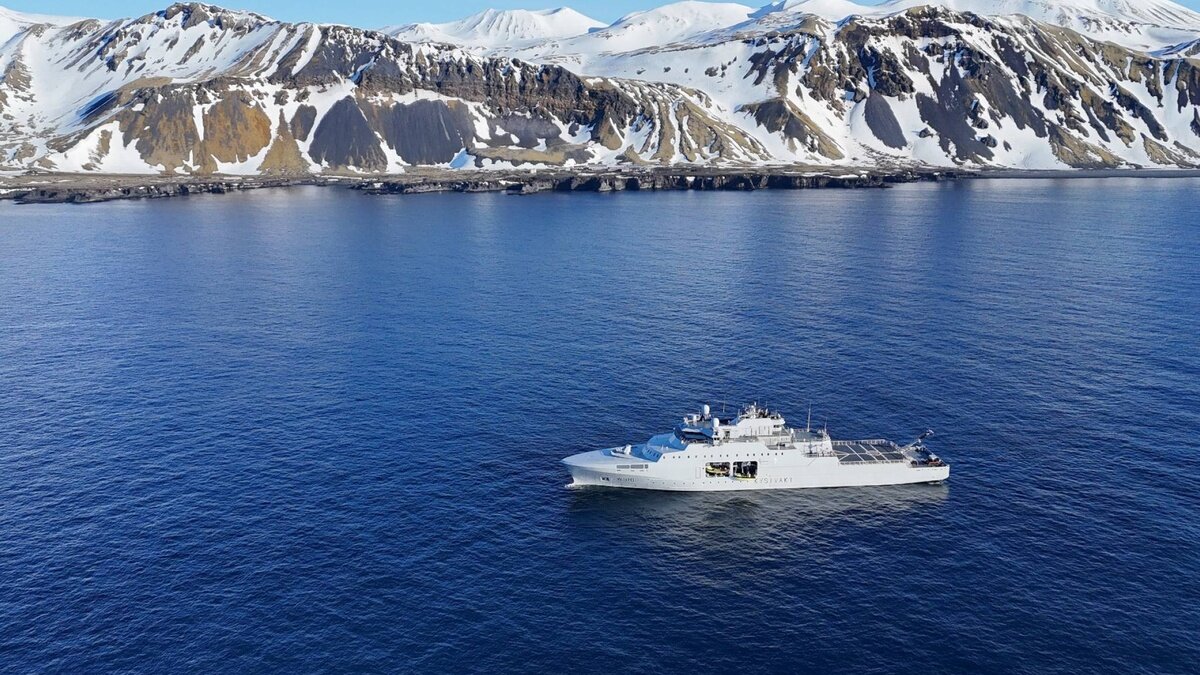
Norway has not opened Jan Mayen to unrestricted expedition tourism after 31 August 2026. Only a seasonal wildlife-disturbance restriction covering certain aircraft movements and noise ends with August. Permanent conservation rules remain, foreign expedition vessels entering Norwegian internal waters require written authorisation at least seven days in advance, and the latest official visitor framework still limits foreign stays. At the same time, government documents show that Oslo has been developing a replacement travel-and-safety regulation intended to cover all Jan Mayen visitors, while Bodø retains direct policing and emergency-response links to the isolated Arctic island.
For travel planners, the most important distinction is between a seasonal environmental restriction ending and an island opening to visitors.
According to Norway’s regulation for the Jan Mayen Nature Reserve, the special seasonal controls from 1 April through 31 August prohibit aircraft, except where necessary for access to operational areas, from flying within one nautical mile of concentrations of birds and mammals. The same period also restricts ships’ whistles, gunfire and comparable loud disturbance around bird cliffs. Those particular seasonal provisions therefore cease to apply after 31 August.
That change does not remove the reserve’s permanent access provisions. Disembarkation and going ashore inside the nature reserve remain prohibited, although the station commander can authorise disembarkation in special cases. Aircraft landings inside the reserve also remain prohibited.
Advertisement
Advertisement
This makes the phrase post-1 September expedition window potentially misleading for travellers. September may remove one wildlife-related seasonal layer, but it does not create a Norwegian government-designated tourism season or establish an automatic right to land.
| Access issue | Position as of 6 September 2026 | Practical travel consequence |
|---|---|---|
| Wildlife flight and noise controls | Seasonal provisions run from 1 April through 31 August | One environmental restriction has ended for 2026, but general access rules remain |
| Disembarkation inside nature reserve | Generally prohibited; special cases may be authorised by station commander | Expedition passengers cannot assume shore access throughout the protected island |
| Aircraft landing inside reserve | Prohibited | End of August does not create new aviation access |
| Foreign expedition vessel entry | Special written authorisation required, with application normally due seven days beforehand | Operators need regulatory planning well before arrival |
| General covered foreign-vessel notification | Normally at least 24 hours before crossing into internal waters | Last-minute itinerary changes can have regulatory consequences |
| Foreign-national stay | Police may permit up to one week if departure is possible; longer stays require prior Justice Ministry permission | Jan Mayen does not operate like an unrestricted Norwegian tourist destination |
| Scheduled passenger aviation | No ordinary passenger flights | Air access cannot be planned like Svalbard, Iceland or mainland Norway |
| Harbour infrastructure | No harbour | Ship-to-shore operations remain highly weather dependent |
The most significant under-reported travel development lies deeper in Norway’s own administrative documents.
According to the 2025 allocation letter for Samfunnet Jan Mayen, the Ministry of Justice and Public Security considered the longstanding regulation governing foreign nationals’ access to Jan Mayen outdated and indicated that it would be proposed for repeal. The ministry was working on replacement provisions concerning tourism, movement and safety that were intended to apply to everyone visiting the island, rather than only foreign nationals.
The same document linked that work directly to difficult operating conditions and insufficient rescue resources. Samfunnet Jan Mayen was instructed to contribute to development of the draft travel-and-safety regulation.
The 2025 annual report, completed in February 2026, subsequently confirmed that Cyber Defence personnel had provided input through meetings and written submissions concerning that draft regulation.
However, as of 6 September 2026, the existing 1962 foreign-access regulation remains published by Lovdata with its current provisions. Under Section 8, police can permit a foreign national to stay for up to one week, provided departure by ship or aircraft is possible when that period ends. A stay beyond one week requires advance permission from the Ministry of Justice and Public Security.
The significance for the travel trade is therefore not that a new system has already taken effect. It is that Jan Mayen sits in a regulatory transition period: Norway has formally identified its old visitor framework as outdated and has worked on a broader replacement, while operators must continue complying with the legislation and controls presently in force until any new regulation is formally adopted.
The inclusion of Oslo and Bodø is not geographical padding. Both cities have direct official links to Jan Mayen’s administration and visitor-risk framework.
Oslo is central because the Ministry of Justice and Public Security’s Polar Affairs Department coordinates central-government matters involving Jan Mayen. Its official address is in Oslo. The ministry also holds key administrative responsibilities for Jan Mayen, including state land, buildings, budgets and agreements with external users.
Bodø has a different but equally practical connection. Jan Mayen’s station commander represents the Chief of Police in Nordland for specified responsibilities, including controls relating to visiting vessels. The Nordland Police District has its headquarters in Bodø.
The latest annual report also states that the emergency medical communications centre AMK Bodø and Norway’s rescue system have roles connected with evacuation and medical transport from Jan Mayen. A SAR Queen rescue helicopter flew from Bodø to Jan Mayen for the first time during 2025 as part of developing emergency capability.
For travel businesses, Oslo therefore represents the national policy and administrative axis, while Bodø has a direct policing and emergency-response connection.
A second major piece of the current travel-access picture took effect on 1 January 2025.
Norway’s revised regulations governing foreign vessels explicitly apply in Norwegian territorial waters including Jan Mayen. In general, they cover foreign vessels measuring at least 15 metres overall or reaching at least 50 gross tonnage. Certain categories, including expedition vessels, are covered irrespective of size.
For ordinary vessels covered by the rules, notification is normally required at least 24 hours before entry into Norwegian internal waters.
The treatment of expedition vessels is stricter. The regulation specifically places expedition vessels among categories requiring written authorisation, with applications normally reaching the Norwegian Joint Headquarters at least seven days before intended entry.
The notification framework requires operational details including vessel identification, flag state, contact information, vessel characteristics, passengers and crew, purpose of entry, planned coordinates and timing, intended calls and a Norwegian point of contact. SafeSeaNet Norway is the principal reporting channel, with an alternative route through the Norwegian Joint Headquarters where SafeSeaNet is unavailable.
The regulation also extends to equipment belonging to covered vessels, including landing craft and rigid inflatable boats. That is particularly relevant to polar expedition operations because ship-to-shore movements commonly depend on such craft rather than conventional harbour infrastructure.
Norwegian authorities may also impose conditions, reject entry notifications, or subsequently alter or withdraw a granted clearance.
This system is no longer theoretical at Jan Mayen. The island’s 2025 annual report records the first vessel inspection carried out there under the regulation after it took effect, conducted on 2 July 2025.
The latest consolidated public visitor statistics published by Samfunnet Jan Mayen show why conventional tourism terminology can distort the island’s actual travel market.Official Jan Mayen indicator 2022 2023 2024 2025 Large tourist vessels with landings 20 46 14 22 Large tourist vessels without landings Not reported Not reported 10 4 Small tourist vessels and private expeditions 12 4 5 2 Organised tourism visitors landing 2,214 3,743 2,908 2,491 Organised tourism visitors without landing Not reported Not reported 2,854 168 Private tour or expedition visitors 24 26 39 9
According to Samfunnet Jan Mayen’s 2025 annual report, 22 large tourist vessels with landings were recorded during the year, alongside four large tourist vessels without landings and two smaller tourism or private expedition boats. It recorded 2,491 organised tourism visitors who came ashore, 168 organised tourists without a landing and only nine visitors associated with private tours or expeditions.
The report says overall tourist numbers in 2025 were below those recorded in 2023 and 2024 despite a modest rise in calls by larger cruise vessels compared with 2024.
That distinction is important. More ships do not necessarily mean unrestricted destination growth. Jan Mayen’s tourism model is governed by controlled vessel calls, weather-dependent landing opportunities and narrow shore access, rather than by conventional destination capacity.
The government’s 2026 reporting calendar also matters when judging how current these figures are. The second-tertial 2026 report is scheduled for submission on 25 September 2026, while the full 2026 annual report is due by 27 February 2027. Consequently, the 2025 annual figures remain the latest consolidated public full-year dataset available for this analysis on 6 September.
The latest official annual reporting gives unusually precise detail about what a successful cruise call actually means.
For 2025, visitors coming ashore were permitted to remain on the beach at Kvalrossbukta, or alternatively at Båtvika, and to use the road. The report states that visitors were not permitted to move through the island’s open terrain or enter the station area.
That makes Jan Mayen fundamentally different from an expedition destination where a ship arrival automatically opens access to hiking routes or independent shore exploration.
A successful call can therefore contain several separate stages: maritime authorisation, favourable sea conditions, an acceptable landing location, station coordination and compliance with nature-reserve and local movement controls.
Norway’s Armed Forces confirmed in March 2026 that ordinary passenger flights do not operate to Jan Mayen. The island’s runway is gravel, while the control tower is staffed for flight activity when weather conditions permit operations.
Sea access is scarcely more conventional. The Armed Forces state that Jan Mayen has no harbour. Cargo operations in Båtvika have required transfer by smaller craft and shore teams, demonstrating the same basic exposure to sea state that expedition vessels must manage.
The 2025 annual report adds another factor that should feature prominently in operator risk assessments: Jan Mayen’s permanent crew has no formal rescue mission or capability for protecting people outside its own personnel.
The island’s isolation is not theoretical. Norwegian Armed Forces material published for the recent Operation Atlantic City, conducted from 26 August to 4 September 2026 with British and US forces, places Jan Mayen roughly 1,000 kilometres from the Norwegian mainland and emphasises its demanding Arctic operating environment. The military activity does not itself change civilian tourism rules, but it reinforces Jan Mayen’s function as an active strategic and operational outpost rather than a conventional leisure destination.
Norway is investing heavily in Jan Mayen, but the purpose of that expenditure must not be confused with tourism expansion.
Government documents for 2026 provide NOK 64.559 million for Samfunnet Jan Mayen’s operating expenditure and identify two major ongoing priorities: construction of the replacement station infrastructure and development of a new fibre connection to the island.
The broader main-building project runs through the 2024–2028 period. Government budget material describes the underlying project at NOK 1.641 billion in 2024-price terms, while the 2026 Defence budget carries a higher price-adjusted cost framework. The investment is designed to sustain Norwegian presence, infrastructure and operations, not to create a public airport, cruise terminal or tourist accommodation base.
The 2025 annual report recorded the new main building under roof and anticipated movement into new buildings from the beginning of 2027, even while the wider project continues towards 2028.
Jan Mayen exposes an increasingly important distinction within polar tourism: physical accessibility is not the same as regulatory accessibility.
A vessel may be capable of reaching the island in September. Wildlife-related seasonal controls may have eased. Sea conditions may even permit small-craft operations. None of those factors independently establishes a right to enter Norwegian internal waters, land passengers, move through protected terrain or depend on island infrastructure during an emergency.
The emerging Norwegian regulatory model is especially significant because it combines environmental protection, immigration-style visitor control, maritime-security clearance, local policing and expedition risk management. Those layers operate independently. A compliant ship therefore needs more than a favourable weather window.
The planned replacement of the old foreign-national framework is also strategically important. If Norway ultimately moves from nationality-based visitor provisions towards a travel-and-safety regulation applying to everyone visiting Jan Mayen, operators may need to adjust procedures even for traveller groups that historically approached access primarily through vessel or nationality rules. The final obligations cannot be predicted until Norway publishes and adopts the replacement regulation.
That is why the strongest September 2026 story is not that Jan Mayen has opened. It is that the island remains one of Europe’s most procedurally complex expedition calls while Norway is simultaneously modernising the legal architecture surrounding future visits.
Jan Mayen is unlikely to develop along the same tourism trajectory as better-connected Arctic destinations. Norway’s current spending is strengthening sovereign presence, communications, station infrastructure and operational resilience rather than creating conventional visitor capacity.
The larger change to watch is regulatory. Oslo has already documented its intention to modernise a visitor system rooted in a 1962 regulation, while the 2025 maritime rules have introduced clearer advance controls for foreign expedition vessels. Bodø’s police and emergency links further demonstrate how mainland institutions remain fundamental to managing activity on an island without a normal civilian transport ecosystem.
For expedition travel businesses, September therefore represents a planning opportunity rather than an open season. Jan Mayen can remain an extraordinary Arctic call, but its commercial viability depends on advance authorisation, weather flexibility, stringent risk management and careful interpretation of Norwegian law. Until Norway formally adopts any replacement visitor regulation, the safest industry position is clear: the end of August changes one environmental calendar restriction, not the island’s fundamental status as a tightly controlled destination.
Advertisement
Advertisement
Advertisement












Sunday, September 6, 2026
Sunday, September 6, 2026

Sunday, September 6, 2026

Sunday, September 6, 2026

Saturday, September 5, 2026
Saturday, September 5, 2026

Sunday, September 6, 2026

Sunday, September 6, 2026



