
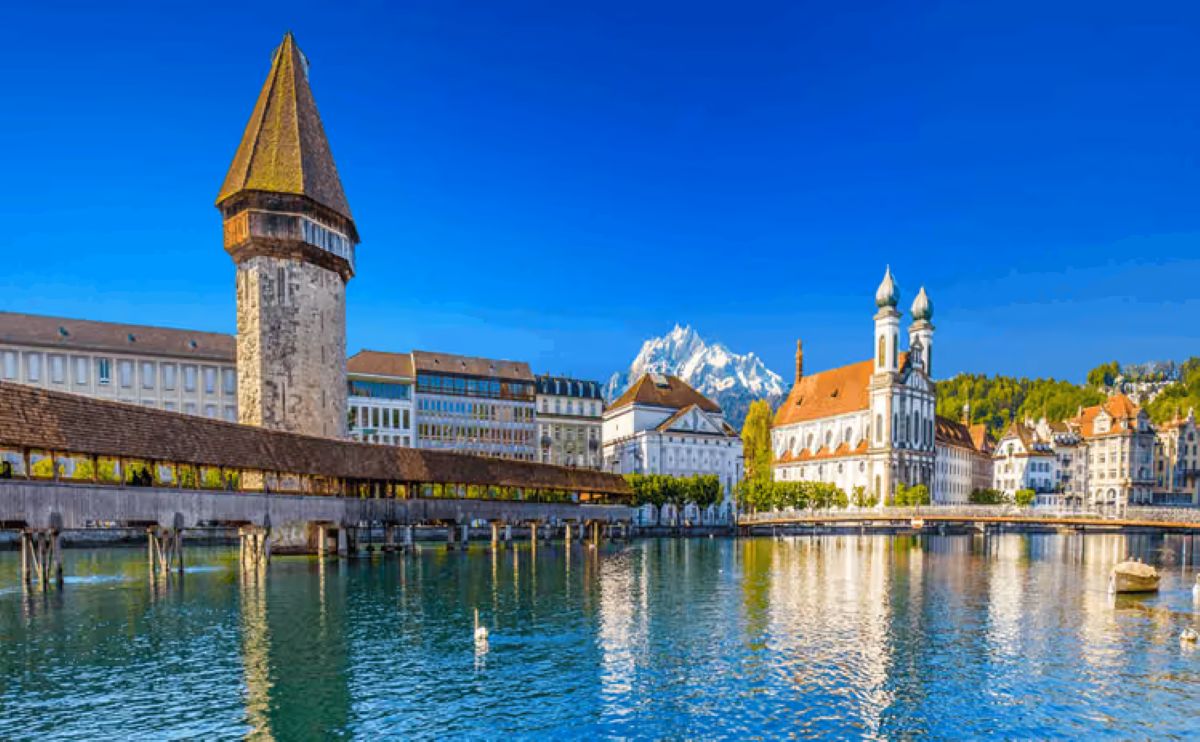
The next phase of city-break travel is likely to include more of Europe’s smaller capitals, as travellers begin to seek out alternatives beyond the busiest gateways. European tourism has reached record levels and, according to the EU, accommodation within the EU is expected to record 3 billion nights in 2024. However, the largest capitals still receive the bulk of the tourism, which has negatively impacted the availability and/or quality of housing, public space and historic center(s). For 2024, Eurostat reported that there were 74 million accommodation nights in Paris, compared to much fewer nights of accommodation in most of the secondary capitals. This presents an opportunity for other cities to attract visitors for more than a couple nights. This is perfect for the small but trendy cities of Ljubljana, Vilnius, Tallinn, Bratislava, Valletta and Zagreb which have a fast, packable culture with big, unique personalities.
Europe’s tourism machine has entered a new scale. EU accommodation establishments recorded more than 3 billion overnight stays in 2024, representing another record for the bloc. International visitors supplied much of that growth, with international nights rising by 4.9%, while domestic nights edged down by 0.1%. The result is a travel market that remains exceptionally strong, but increasingly uneven in how visitors distribute themselves.
The concentration becomes clearer at city level. Paris led the EU in 2024 with around 74 million accommodation nights, followed by Rome at 42 million and Berlin at 30 million. In several countries, capitals account for a substantial proportion of national tourism demand. Estonia’s capital represented 49.8% of national accommodation nights, while Latvia’s capital accounted for more than half.
That concentration creates the opening for smaller capitals. The proposition is not that travellers will abandon Paris, Rome or Amsterdam. Instead, a parallel city-break market can develop around places that deliver high cultural density without metropolitan scale.
Advertisement
Advertisement
For a traveller taking only 48 or 72 hours, city size becomes a practical consideration. A destination can have hundreds of attractions, yet still frustrate visitors if journeys between them consume valuable time. Smaller capitals can reverse that equation by concentrating museums, historic quarters, restaurants and public spaces within manageable distances.
Ljubljana illustrates the model particularly well. The Slovenian capital recorded 1.276 million tourist arrivals and 2.591 million overnight stays in 2024. Foreign visitors generated 2.48 million of those nights, accounting for the overwhelming majority of demand. Arrivals increased 14.6% year on year, while overnight stays rose 12.7%.
The significance lies beyond the growth percentage. Ljubljana can combine an urban itinerary with Slovenia’s mountains, lakes and outdoor attractions. Travellers therefore gain two experiences from one base, reducing the need for complex internal transfers.City Distinctive city-break proposition Strongest strategic advantage Ljubljana Culture, gastronomy and nearby nature City-plus-outdoors itinerary Vilnius Heritage, contemporary culture and neighbourhoods Compact cultural discovery Tallinn Medieval heritage and digital modernity Strong identity contrast Bratislava Central European history and riverfront setting Easy multi-city positioning Valletta Dense heritage and Mediterranean character Extremely concentrated sightseeing Zagreb Cafés, food, museums and urban culture Alternative to Croatia’s coastal circuit
Ljubljana’s recent numbers suggest that smaller capitals do not need enormous visitor volumes to achieve meaningful tourism growth. Its 2024 foreign arrivals reached 1.21 million, while foreign overnight stays exceeded 2.48 million. The United States generated 185,408 nights, Germany 243,835 and Italy 250,322, showing a geographically diverse international market.
Advertisement
Advertisement
The city also demonstrates why the next city-break competition may centre on itinerary efficiency. A visitor can explore the historic centre, riverfront, food scene and cultural institutions before adding a wider Slovenian experience. That creates a compelling proposition for travellers who increasingly value depth within a short stay, rather than simply collecting famous landmarks.
For travel businesses, this matters because the value of a destination does not depend solely on visitor volume. A compact capital can encourage higher participation across restaurants, museums, tours, cultural venues and day trips. It can also spread visitor spending beyond a single landmark district.
Tallinn presents another version of the smaller-capital proposition. Its appeal comes from the unusual juxtaposition between a remarkably preserved medieval centre and a modern, digitally oriented national identity.
The city’s tourism recovery also provides useful evidence. Foreign overnight stays reached 2.54 million in 2024, around 90% of the 2019 level. Tallinn recorded 5.77 foreign visitor nights per resident, according to its tourism impact analysis. That remained higher than Vilnius at 2.77 and Helsinki at 1.64.
This matters because “small” does not automatically mean low-demand. Tallinn shows that a compact capital can attract substantial international interest while still offering the navigational advantages associated with a smaller urban environment.
Its tourism infrastructure also gives travellers several entry points. Tallinn’s official tourism data combines accommodation statistics with airport and port passenger information, allowing the destination to monitor both overnight visitors and wider visitor flows.
Vilnius demonstrates another important evolution. Its appeal increasingly extends beyond the conventional medieval-capital formula. The city combines historic architecture with contemporary cultural spaces, creative districts, gastronomy and unusual adaptive-reuse attractions.
The city also offers a useful example of how municipal tourism policy can shape the visitor economy. Vilnius introduced a €2 per-person, per-night city tax from January 2024, replacing the previous €1 rate. The municipality states that the levy supports tourism marketing and public tourism and recreation infrastructure.
That policy matters to travellers because the headline accommodation price does not always represent the complete cost of a short break. Visitors should check local taxes before booking, particularly when comparing several European capitals.
Vilnius also demonstrates how smaller capitals can create distinctive cultural narratives. Its former Lukiškės Prison has become a cultural and events venue rather than remaining an inaccessible institutional site. Such transformations give visitors experiences that cannot easily be replicated by conventional sightseeing circuits.
Bratislava occupies a particularly interesting position because its strongest advantage may not be isolation. It sits within the Central European travel network and can complement better-known destinations rather than compete directly with them.
That creates a dual-destination opportunity. A traveller can build a longer itinerary around Vienna, Bratislava and Budapest, while a short-break visitor can choose Bratislava alone for a more compact experience.
The destination’s official tourism organisation maintains annual visitor statistics, including 2024 and 2025 datasets. That continuing data collection is important because secondary capitals increasingly need detailed visitor intelligence as their international profile grows.
For travellers, the lesson is straightforward. A smaller capital does not necessarily need to replace a famous neighbour. It can become the lower-friction component of a wider regional journey.
Valletta may be the clearest reminder that smaller does not mean undiscovered. Malta recorded 3.56 million inbound tourists in 2024, while total nights exceeded 22.9 million. Tourist expenditure reached an estimated €3.3 billion, with expenditure per capita at €924.
The capital’s tourism intensity also demonstrates the limits of the alternative-city narrative. Valletta recorded 69.4 tourists for every 100 residents in 2024, up sharply from 53.5 the previous year. That makes it one of the strongest examples of why smaller capitals can experience pressure quickly once demand accelerates.
For travellers, this produces a valuable contradiction. Valletta offers precisely the concentrated experience that makes small capitals attractive, but that concentration can also amplify crowding.
Therefore, the most useful strategy is not simply choosing a smaller city. Travellers should also consider timing, neighbourhood distribution and seasonality.
Zagreb offers perhaps the clearest example of a capital strengthening within a major tourism country. Croatia recorded 20.25 million tourist arrivals and 93.68 million accommodation nights in 2024. Zagreb itself registered 1.42 million arrivals and 2.65 million nights, with foreign visitors generating 2.14 million nights.
Zagreb’s role is particularly interesting because Croatia’s tourism identity remains strongly associated with the Adriatic coast. Yet the capital offers a different product, built around cafés, museums, food, architecture, parks and year-round urban life.
That makes it a potential shoulder-season counterweight to coastal tourism. Instead of competing with Dubrovnik or Split on beaches and summer demand, Zagreb can attract visitors when the country’s coastal tourism cycle is less dominant.
Accommodation supply is another reason the smaller-capital story deserves attention. Across the EU, guests spent 854.1 million nights in short-term rental accommodation booked through major online platforms in 2024. That represented an 18.8% increase from 2023.
The growth has consequences for destination management. More flexible accommodation can help smaller capitals absorb demand, but it can also introduce pressure into residential neighbourhoods.
The trend also changes the economics of city breaks. Travellers can increasingly choose apartments, aparthotels and smaller accommodation formats rather than relying exclusively on traditional hotels.
For destinations, however, rapid accommodation growth must remain balanced against residents’ needs. A city cannot become a successful alternative destination if its success undermines the urban life visitors came to experience.
The practical advantage of these capitals is best understood through the structure of a short trip.Traveller Priority Larger Famous Capital Smaller Capital Opportunity 48-hour itinerary More attractions but greater distance Higher concentration Historic sightseeing Major landmarks, often crowded Dense heritage districts Food exploration Huge choice, highly competitive Stronger local-scale discovery Nature access Often requires longer travel Frequently closer to city Multi-city trip Major international gateway Regional combination potential Slow travel Can require careful neighbourhood planning Easier to navigate Seasonal travel Strong demand year-round Greater scope for shoulder-season exploration
The result is not automatically lower spending. Instead, travellers may achieve better experiential efficiency. They can spend more of a weekend exploring and less time commuting between attractions.
It would be misleading to describe every smaller capital as inexpensive. Hotel rates fluctuate, city taxes vary and popular dates can push prices sharply upwards.
The more useful concept is value density. That means how much culture, food, scenery and local experience a traveller can access within a limited amount of time and money.
The EU’s tourism figures support the broader demand environment. International travel is expanding, while platform accommodation is growing rapidly. This gives secondary capitals a sizeable opportunity to capture travellers searching for alternatives without abandoning Europe’s wider tourism ecosystem.
There is one major caveat to the entire thesis. Promoting smaller capitals as alternatives can eventually reproduce the pressure associated with larger destinations.
Valletta’s tourism-intensity figures show how quickly this can happen. Tallinn’s foreign overnight stays per resident also demonstrate that a relatively small city can carry substantial visitor demand.
The next stage of European tourism may therefore require distribution rather than simple expansion. Destination managers need visitors to spend time across neighbourhoods, seasons and nearby regions.
That approach benefits travellers too. Visiting outside peak periods can mean more accessible attractions, a calmer public realm and greater interaction with local businesses.
A useful way to assess any emerging capital is to ask whether it passes a simple 48-hour test.
Can travellers reach the main cultural district efficiently? Can they experience the destination’s signature food and neighbourhoods? Can they add one distinctive activity without spending half a day travelling? Can the city offer something beyond its postcard attraction?
The strongest smaller capitals pass those tests because their scale becomes part of the product.Capital 48-Hour Strength Best Travel Fit Ljubljana City plus accessible nature Couples and active travellers Tallinn Heritage plus modern culture Culture-led breaks Vilnius History plus creative districts Independent explorers Bratislava Compact Central Europe Regional multi-city trips Valletta Dense heritage and Mediterranean setting Short cultural escapes Zagreb Urban life and food culture Slow city breaks
The rise of smaller capitals should not be mistaken for the decline of Europe’s established giants. Paris, Rome, London and Amsterdam retain enormous cultural and commercial power, and their scale remains part of their attraction.
Yet the economics and psychology of short-haul travel are changing. Travellers increasingly have reasons to value concentration, authenticity, flexibility and lower logistical friction. The EU’s record tourism volumes make that search for alternatives more relevant, not less.
The likely winner will not be the city that calls itself “undiscovered”. It will be the capital that makes a short visit feel unusually complete. Ljubljana, Tallinn, Vilnius, Bratislava, Valletta and Zagreb each offer different versions of that proposition.
The bigger opportunity lies in discovering whether Europe’s next tourism boom can become more distributed, more sustainable and more rewarding. For travellers, that could mean the best city break is no longer the biggest city on the map.
| Destination | Latest Relevant Indicator | What It Tells Travellers |
|---|---|---|
| Ljubljana | 1.28m arrivals in 2024 | Rapid international growth |
| Ljubljana | 2.59m overnight stays | Strong short-break demand |
| Tallinn | 2.54m foreign overnight stays | High visitor intensity |
| Zagreb | 1.42m arrivals in 2024 | Established urban demand |
| Zagreb | 2.65m overnight stays | Strong international component |
| Valletta | 69.4 tourists per 100 residents | High tourism pressure |
| EU | 3bn+ accommodation nights | Record travel demand |
| EU platforms | 854.1m short-term rental nights | Rapid alternative accommodation growth |
The figures show why smaller capitals deserve closer attention, but they also reveal an important warning. Success must not turn compact capitals into miniature versions of the destinations travellers sought to avoid.
For authoritative planning information, travellers should consult the European Commission’s Eurostat tourism statistics, national statistical offices and official destination organisations before booking. City taxes, transport arrangements, accommodation rules and seasonal conditions can change.
Two particularly useful official resources are Eurostat tourism data and the destination-level statistics published by Ljubljana Tourism, Visit Tallinn, Go Vilnius and other official tourism authorities.
Advertisement
Advertisement
Advertisement












Sunday, September 6, 2026
Sunday, September 6, 2026

Sunday, September 6, 2026

Sunday, September 6, 2026
Saturday, September 5, 2026
Saturday, September 5, 2026

Sunday, September 6, 2026

Sunday, September 6, 2026



