

Image generated with Ai
South Korea overtakes the United States, Mexico, Colombia, Hungary, Czech Republic and Tunisia as heritage travel surges worldwide. Gen Z and Baby Boomers are now redefining cultural journeys through ancient civilizations, royal palaces, lost cities, mystery and timeless wonders.
South Korea overtakes the United States, Mexico, Colombia, Hungary, Czech Republic and Tunisia as one of the world’s most powerful heritage travel destinations. Consequently, Gen Z and Baby Boomers are redefining unforgettable cultural journeys through ancient civilizations, royal palaces and lost cities. Travellers are actively seeking history, mystery and timeless wonders instead of ordinary holidays. Moreover, South Korea combines technology with centuries-old traditions, creating an experience that appeals to every generation. From preserved kingdoms to vibrant cultural districts, visitors are discovering authentic stories. Therefore, heritage tourism is becoming one of the fastest-growing global travel movements.
As South Korea overtakes the United States, Mexico, Colombia, Hungary, Czech Republic, and Tunisia in this compelling heritage travel spotlight, a new cultural journey begins to capture the attention of both Gen Z explorers and Baby Boomer travelers. From ancient civilizations and royal palaces to mysterious lost cities and timeless wonders, South Korea emerges as a powerful destination where history and modern culture meet. Meanwhile, the United States, Mexico, Colombia, Hungary, the Czech Republic, and Tunisia continue to offer remarkable heritage experiences across continents. Travel And Tour World invites readers to discover this full insider guide and explore the history, mystery, and cultural treasures shaping global heritage travel in 2026.
South Korea may appear lower on the list at rank #43 in the TTW Picks Best 50 Heritage Travel Destinations in the World for 2026, but this ranking does not reflect a lack of heritage value. Instead, it highlights how global competition in heritage tourism has intensified, especially with Europe, the Middle East, and South America dominating traditional heritage travel circuits.
Advertisement
Advertisement
According to TTW’s 2026 global ranking framework, heritage destinations were evaluated based on historical depth, global tourism pull, preservation impact, accessibility, and international visibility. South Korea’s position reflects a very specific pattern: it is a highly developed cultural tourism destination, but still in a phase of expanding global heritage positioning compared to long-established mega heritage countries.
Heritage travel is one of the most meaningful ways to understand how civilizations evolved across continents. It connects visitors with ancient architecture, sacred traditions, royal histories, colonial influences, and indigenous cultures that continue to shape modern identity. Across South Korea, the Czech Republic, Mexico, Colombia, the United States, Hungary, and Tunisia, heritage destinations reflect thousands of years of human development, preserved in cities, ruins, villages, and cultural landscapes.
Below is a detailed exploration of the top 10 heritage destinations in each country, highlighting the most historically and culturally significant places.Country Top Heritage Destination Second Destination Third Destination Fourth Destination Fifth Destination Sixth Destination Seventh Destination Eighth Destination Ninth Destination Tenth Destination South Korea Gyeongbokgung Palace, Seoul Changdeokgung Palace, Seoul Bukchon Hanok Village, Seoul Jongmyo Shrine, Seoul Hahoe Folk Village, Andong Hwaseong Fortress, Suwon Bulguksa Temple, Gyeongju Seokguram Grotto, Gyeongju Gyeongju Historic Areas Jeonju Hanok Village Czech Republic Prague Old Town Charles Bridge, Prague Prague Castle St. Vitus Cathedral Český Krumlov Old Town Český Krumlov Castle Kutná Hora Sedlec Ossuary Karlštejn Castle Telč Historic Centre Mexico Chichén Itzá Teotihuacán Palenque Monte Albán Oaxaca Historic Centre Tulum Ruins Uxmal Mexico City Historic Centre Guanajuato Historic Town San Miguel de Allende Colombia Cartagena Old Town San Agustín Archaeological Park Villa de Leyva Tierradentro Archaeological Park Santa Cruz de Mompox La Candelaria, Bogotá Popayán Historic Centre Tayrona National Park Ciudad Perdida (Lost City) Barichara United States Independence Hall, Philadelphia Statue of Liberty, New York Mesa Verde National Park Colonial Williamsburg Gettysburg National Military Park Alcatraz Island Grand Canyon National Park Chaco Culture National Historical Park Boston Freedom Trail Monticello, Virginia Hungary Buda Castle District, Budapest Hungarian Parliament Building Fisherman’s Bastion Matthias Church Pannonhalma Archabbey Hollókő Village Eger Castle Hortobágy National Park Lake Balaton Heritage Towns Pécs Early Christian Necropolis Tunisia Carthage Archaeological Site El Jem Amphitheatre Medina of Tunis Dougga Kairouan Sousse Medina Bardo Museum Sbeitla Roman Ruins Kerkuane Punic Site Matmata Cave Dwellings
South Korea offers one of Asia’s most fascinating heritage landscapes, where ancient royal traditions coexist with modern urban life. The country’s cultural identity has been shaped by the Joseon Dynasty, Buddhism, Confucian philosophy, and centuries of artistic and architectural development. The heritage destinations listed in the table represent various periods of Korean history and demonstrate how the nation has successfully preserved its cultural legacy.
Gyeongbokgung Palace stands as the most important royal palace in the country and serves as a symbol of the Joseon Dynasty. Its grand halls, ceremonial gates, and traditional architecture attract visitors interested in Korea’s royal history. Changdeokgung Palace complements this experience with its famous Secret Garden, which reflects the Korean philosophy of harmony between nature and architecture.
Bukchon Hanok Village offers insight into traditional residential life. The narrow streets lined with wooden houses preserve the atmosphere of old Seoul and allow visitors to experience traditional Korean living. Jongmyo Shrine remains one of the most important Confucian sites in East Asia and continues to host ancestral rituals that have been practiced for centuries.
Outside the capital, Hahoe Folk Village preserves the social and cultural traditions of the Joseon period. Hwaseong Fortress demonstrates advanced military engineering and urban planning from the eighteenth century. The city of Gyeongju, often called the “museum without walls,” contains Bulguksa Temple, Seokguram Grotto, and the Gyeongju Historic Areas, all of which reflect the achievements of the ancient Silla Kingdom.
Jeonju Hanok Village completes the list by offering visitors traditional cuisine, architecture, and cultural performances. Together, these destinations highlight South Korea’s ability to preserve its historical identity while embracing modern development.
The Czech Republic is one of Europe’s finest heritage destinations because of its exceptional preservation of medieval and Renaissance architecture. The country’s historic towns, castles, churches, and cultural landmarks reveal centuries of political, artistic, and religious development.
Prague is the centerpiece of Czech heritage. The Old Town features Gothic buildings, historical squares, and the famous astronomical clock. Charles Bridge connects the city’s historic districts and remains one of Europe’s most iconic landmarks. Prague Castle, overlooking the city, is one of the largest castle complexes in the world and has served as a center of political and royal authority for centuries.
St. Vitus Cathedral represents Gothic architecture at its finest, with intricate stained glass windows and impressive towers. Beyond Prague, Český Krumlov offers one of the best-preserved medieval towns in Europe. The castle and surrounding historic center create a fairytale atmosphere that attracts travelers from around the world.
Kutná Hora demonstrates the economic importance of silver mining during the Middle Ages. The town’s churches and historical buildings reveal the wealth generated during that period. Sedlec Ossuary, known as the Bone Church, provides a unique example of medieval religious art and symbolism.
Karlštejn Castle was constructed to protect royal treasures and remains one of the country’s most impressive fortifications. Telč Historic Centre, with its colorful Renaissance buildings, showcases another chapter of Czech architectural heritage.
Collectively, these sites demonstrate the country’s remarkable ability to preserve centuries of European history, making the Czech Republic a leading destination for cultural tourism.
Mexico possesses one of the richest cultural histories in the world. The country combines the achievements of ancient civilizations with centuries of colonial influence, creating a unique heritage landscape.
Chichén Itzá represents the brilliance of the Maya civilization. The Temple of Kukulcán reflects advanced knowledge of astronomy, mathematics, and architecture. Teotihuacán, another major archaeological site, was once one of the largest cities in the ancient world and remains a symbol of pre-Columbian civilization.
Palenque, surrounded by tropical forests, showcases the artistic and intellectual achievements of the Maya people. Monte Albán, built by the Zapotec civilization, demonstrates sophisticated urban planning and religious traditions.
Oaxaca’s historic center reflects the blending of indigenous and colonial influences. Traditional markets, churches, and cultural festivals contribute to the city’s vibrant identity. Tulum provides a unique combination of archaeological significance and coastal scenery, as its ruins overlook the Caribbean Sea.
Uxmal is renowned for its detailed stone carvings and distinctive Puuc architectural style. Mexico City’s historic center contains colonial buildings, cathedrals, and public squares that reflect Spanish influence after the conquest.
Guanajuato and San Miguel de Allende preserve colonial architecture, narrow streets, and artistic traditions. Their colorful buildings and cultural festivals attract visitors throughout the year.
These heritage destinations collectively demonstrate Mexico’s diverse cultural history, spanning thousands of years. Ancient civilizations, indigenous traditions, and colonial influences combine to create one of the world’s most significant cultural landscapes.

Image generated with Ai
Colombia’s heritage reflects the interaction between indigenous civilizations and Spanish colonial influence. The country’s historical sites reveal both ancient traditions and colonial development.
Cartagena is Colombia’s most famous heritage destination. Its walls, forts, and colonial buildings were constructed to defend the city from pirates and foreign attacks. Today, the colorful streets and preserved architecture make it one of Latin America’s most beautiful historic cities.
San Agustín Archaeological Park contains mysterious stone statues and ceremonial monuments created by ancient civilizations. The exact meaning of many sculptures remains unknown, adding to the site’s fascination. Tierradentro Archaeological Park features underground tombs decorated with colorful designs that provide insight into ancient burial practices.
Villa de Leyva remains one of the best-preserved colonial towns in Colombia. Its large central plaza and whitewashed buildings create an atmosphere that has changed little over centuries. Santa Cruz de Mompox also preserves colonial architecture and historical traditions along the Magdalena River.
Bogotá’s La Candelaria district contains museums, churches, and colonial buildings that tell the story of the nation’s political and cultural development. Popayán, known as the White City, preserves elegant architecture and important religious traditions.
Tayrona National Park connects natural beauty with indigenous cultural heritage. Ciudad Perdida, or the Lost City, predates Machu Picchu and offers insight into the advanced civilization of the Tayrona people. Barichara preserves traditional architecture and rural heritage.
Together, these destinations reveal Colombia’s rich historical diversity and demonstrate the country’s growing importance as a cultural tourism destination.
The United States possesses a wide range of heritage destinations that reflect Indigenous cultures, colonial history, immigration, and national development. The country’s heritage sites tell stories of democracy, conflict, settlement, and cultural diversity.
Independence Hall in Philadelphia is one of the nation’s most important historic buildings because it played a central role in the creation of the United States. The Statue of Liberty symbolizes freedom and immigration, representing hope for millions of newcomers.
Mesa Verde National Park preserves the cliff dwellings of the Ancestral Pueblo people. These remarkable structures demonstrate the ingenuity of Indigenous communities who adapted to difficult environments. Chaco Culture National Historical Park provides additional insight into ancient Native American civilizations.
Colonial Williamsburg recreates life during the eighteenth century and allows visitors to experience early American society. The Boston Freedom Trail connects important sites related to the American Revolution.
Gettysburg National Military Park commemorates one of the most significant battles of the Civil War and serves as an important educational site. Alcatraz Island reflects another chapter of American history through its famous prison.
The Grand Canyon is both a natural and cultural landmark, holding spiritual significance for Indigenous communities. Monticello, the home of Thomas Jefferson, reflects the political and intellectual history of the early republic.
These destinations illustrate the diversity of American heritage and demonstrate how different cultures and historical events have shaped the nation.
Hungary’s heritage reflects influences from Roman civilization, medieval kingdoms, Ottoman occupation, and the Austro-Hungarian Empire. Its monuments and historic towns showcase centuries of cultural development.
Buda Castle District dominates Budapest and has served as a royal residence for centuries. The area contains museums, churches, and historic streets overlooking the Danube River. The Hungarian Parliament Building represents the country’s political identity and is one of Europe’s most impressive government buildings.
Fisherman’s Bastion and Matthias Church contribute to Budapest’s architectural beauty. Their towers and decorative details represent both religious and national history.
Pannonhalma Archabbey has functioned as a religious and educational center for over a thousand years. Hollókő Village preserves traditional rural life and demonstrates how local customs and architecture have survived modernization.
Eger Castle is associated with Hungary’s resistance against Ottoman invasions and remains a symbol of national pride. Hortobágy National Park preserves the traditional culture of the Hungarian plains, including pastoral practices and local customs.
The heritage towns around Lake Balaton combine historical architecture with cultural traditions. The Early Christian Necropolis of Pécs reflects Roman influence and early Christianity in the region.
Hungary’s heritage destinations provide a comprehensive view of Central European history and demonstrate the country’s cultural resilience.
Tunisia possesses one of North Africa’s richest cultural landscapes, shaped by Phoenician, Roman, Arab, and Berber civilizations. Its heritage sites reveal thousands of years of Mediterranean history.
Carthage was once one of the most powerful cities of the ancient world and rivaled Rome for control of the Mediterranean. Today, its ruins offer insight into Phoenician civilization and ancient trade networks.
El Jem Amphitheatre stands among the best-preserved Roman monuments outside Italy. Its enormous structure demonstrates the importance of Roman influence in North Africa. Dougga provides one of the most complete examples of a Roman city, with temples, theaters, and public buildings.
The Medina of Tunis preserves Islamic architecture, traditional markets, and historic neighborhoods. Kairouan holds religious significance as one of Islam’s important holy cities and is known for its Great Mosque.
Sousse Medina combines defensive walls with Islamic urban planning. The Bardo Museum contains one of the world’s finest collections of Roman mosaics and archaeological treasures.
Sbeitla preserves Roman temples and public spaces that illustrate ancient urban life. Kerkuane is particularly important because it remains one of the few Punic cities that survived without Roman reconstruction.
Matmata’s cave dwellings represent Berber traditions and demonstrate how communities adapted to harsh environmental conditions.
These destinations establish Tunisia as a major heritage destination where multiple civilizations have left lasting cultural and architectural legacies.

Image generated with Ai
Planning a heritage vacation involves more than selecting historical attractions. Accommodation choices, transportation options, and travel logistics play an important role in creating a comfortable and enriching experience. For travelers from the United States, the heritage destinations of South Korea, the Czech Republic, Mexico, Colombia, the United States, Hungary, and Tunisia offer diverse travel experiences ranging from high-speed rail networks and efficient public transportation to guided tours and scenic road trips.
The following table provides a practical overview of the best places to stay, recommended hotel districts, transportation methods, and ideal trip durations for American visitors. Whether travelers prefer luxury hotels in historic city centers, boutique properties in medieval towns, or traditional accommodations near cultural landmarks, these recommendations help simplify travel planning while ensuring easy access to each country’s most important heritage attractions.Country Recommended Stay Locations Best Areas/Hotels to Stay How to Visit the Heritage Sites Suggested Duration for U.S. Travelers South Korea Seoul, Gyeongju, Andong Myeongdong, Insadong, Jongno (Seoul); Hanok guesthouses in Gyeongju and Andong Arrive via Incheon International Airport. Use Seoul Metro for palaces and villages. Take KTX high-speed trains to Gyeongju and local buses or taxis to heritage sites. 7–8 days Czech Republic Prague, Český Krumlov, Kutná Hora Old Town, Malá Strana, Castle District in Prague; boutique hotels in Český Krumlov Fly into Prague. Most Prague attractions are walkable or accessible by tram and metro. Use trains or buses for Český Krumlov and Kutná Hora. 6–7 days Mexico Mexico City, Oaxaca, Mérida, Valladolid Centro Histórico, Polanco, Condesa, Oaxaca Historic Center Direct flights from many U.S. cities. Domestic flights, buses, and private tours connect archaeological sites and colonial towns. 7–9 days Colombia Bogotá, Cartagena, Villa de Leyva La Candelaria, Zona G, Cartagena Walled City, Getsemaní Fly directly to Bogotá or Cartagena. Domestic flights and organized tours are recommended for archaeological and colonial destinations. 7–8 days United States Philadelphia, New York, Williamsburg, Colorado Center City Philadelphia, Lower Manhattan, Colonial Williamsburg, Mesa Verde lodges Domestic flights, Amtrak, rental cars, and road trips provide access to major heritage sites. 7–10 days Hungary Budapest, Eger, Pécs Castle District, District V, Jewish Quarter in Budapest Fly into Budapest through European connections. Trains and buses connect major historical towns and heritage attractions. 5–7 days Tunisia Tunis, Sousse, Kairouan Medina district, Lake Tunis area, seaside hotels in Sousse Connect through major European hubs. Private drivers, guided tours, and regional trains are the best options for visiting heritage sites. 6–8 days
| Country | Main International Gateway for U.S. Travelers | Typical Flight Duration from U.S. |
|---|---|---|
| South Korea | Seoul Incheon International Airport | 13–16 hours |
| Czech Republic | Prague Václav Havel Airport | 9–13 hours (with connections) |
| Mexico | Mexico City, Cancún | 2–5 hours |
| Colombia | Bogotá, Cartagena | 4–7 hours |
| United States | Major domestic airports | 1–6 hours domestically |
| Hungary | Budapest Airport | 10–14 hours (with connections) |
| Tunisia | Tunis-Carthage Airport | 12–16 hours (with connections) |
| Traveler Type | Best Accommodation Choice |
|---|---|
| Budget Travelers | Hostels, guesthouses, local inns |
| Mid-Range Travelers | Boutique hotels, 3–4 star hotels |
| Luxury Travelers | Five-star hotels, luxury resorts |
| Cultural Travelers | Heritage hotels, traditional houses, historic inns |
| Family Travelers | Serviced apartments and family hotels |
| Senior Travelers | Central hotels near major attractions |
| Country | Best Travel Season |
|---|---|
| South Korea | April–May and September–October |
| Czech Republic | May–June and September |
| Mexico | November–April |
| Colombia | December–March |
| United States | Spring and Fall |
| Hungary | April–June and September |
| Tunisia | March–May and September–November |
Travel and Tour World (TTW) has released its latest research report titled “50 Heritage Sites in the World for 2026,” showcasing destinations that are actively shaping the future of global heritage tourism. The list is developed through detailed editorial research, historical evaluation, and insights drawn from the preferences of over 23 million readers, reflecting a strong global shift toward immersive and experience-driven travel. According to the report, heritage tourism is expanding rapidly with a 6.4% year-on-year growth rate, fueled by increasing interest in cultural discovery, historical exploration, and rising influence from digital and social media platforms. Iconic destinations such as Egypt’s Pyramids, Peru’s Machu Picchu, India’s Ram Setu, and Italy’s Colosseum continue to lead global attention, driving greater investment in conservation efforts, responsible tourism practices, and long-term cultural preservation initiatives.
“The growth in heritage tourism is undeniable, as travelers increasingly opt for destinations that offer unique cultural experiences and a chance to connect with history. These landmarks not only attract millions of visitors annually but also serve as key drivers of local economic development. From ancient temples to breathtaking natural landscapes, heritage sites are integral to the preservation of our global legacy,” said Anup Kumar Keshan, Founder and Editor-in-Chief of TTW.
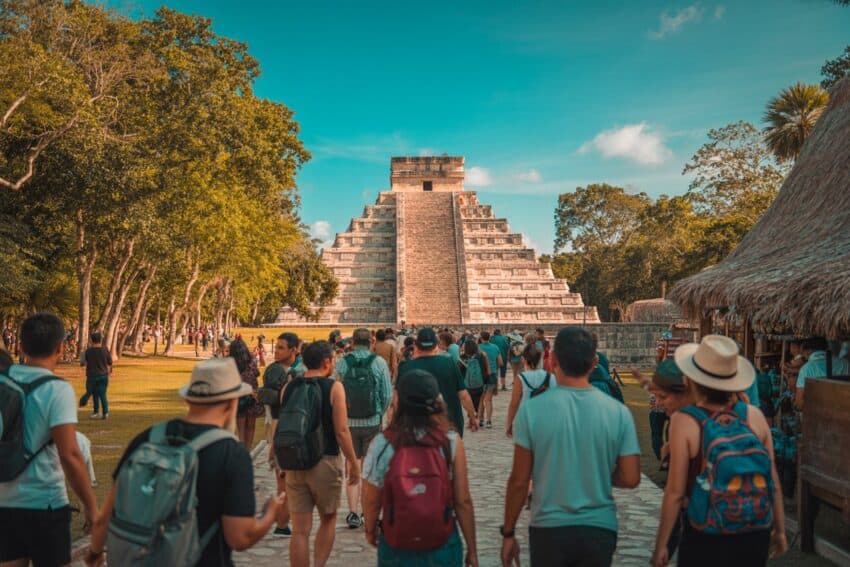
Image generated with Ai
Heritage travel across South Korea, the Czech Republic, Mexico, Colombia, the United States, Hungary, and Tunisia offers an extraordinary journey through some of the world’s most remarkable civilizations. From ancient temples and royal palaces to medieval towns, colonial cities, archaeological sites, and sacred cultural landscapes, these destinations preserve the stories that have shaped nations and societies over thousands of years.
Each country presents a distinct historical identity. South Korea showcases royal dynasties and Confucian traditions, while the Czech Republic preserves Europe’s medieval heritage. Mexico and Colombia reveal the legacy of ancient civilizations and colonial influences, whereas the United States highlights indigenous history alongside the foundations of a modern nation. Hungary reflects centuries of imperial and religious heritage, and Tunisia stands as a crossroads of Phoenician, Roman, and Islamic civilizations.
Together, these seventy heritage destinations demonstrate that travel is more than visiting famous landmarks. It is an opportunity to understand cultures, appreciate historical achievements, and experience traditions that continue to influence contemporary life. Whether exploring ancient ruins, walking through centuries-old streets, or discovering living cultural traditions, heritage tourism creates meaningful connections between the past and the present.
As global travelers increasingly seek authentic experiences, these destinations remain among the finest places in the world to discover humanity’s shared cultural legacy and preserve the stories that continue to define our collective history.
South Korea is transforming global heritage tourism and overtaking traditional cultural powerhouses such as the United States, Mexico, Colombia, Hungary, Czech Republic and Tunisia by creating an unforgettable journey through history, mystery and timeless wonders. Instead of relying solely on historical monuments, the country is building immersive experiences that resonate strongly with both Gen Z and Baby Boomers.
Travellers are no longer interested in passive observation. Instead, they want to participate in ancient traditions, understand royal dynasties and explore stories hidden inside centuries-old architecture. South Korea delivers this experience through a seamless combination of preserved heritage and modern convenience. Consequently, visitors can move effortlessly between futuristic cities and historic landscapes.
Furthermore, the rise of cultural tourism reflects a larger global behavioural shift. Travellers now value authenticity, education and emotional enrichment over superficial attractions. This demand is pushing destinations worldwide to reinvent their tourism strategies. However, South Korea is accelerating faster by investing heavily in heritage preservation, cultural storytelling and experiential tourism.
Gen Z travellers are embracing interactive historical experiences that are social-media friendly yet educational. Simultaneously, Baby Boomers are appreciating slower, meaningful journeys that reconnect them with world history. Therefore, South Korea is successfully bridging generations through a single tourism model.
Ultimately, this transformation is redefining what a cultural holiday means in 2026 and beyond. South Korea is not merely preserving its past; it is strategically turning ancient civilizations, royal palaces and lost cities into globally desirable experiences. As a result, heritage tourism is entering a new era where timeless wonders become the centrepiece of international travel.
Advertisement
Tags: Ancient Civilizations, Colombia heritage, cultural tourism, Czech Republic Travel, global tourism
Advertisement
Advertisement













Friday, September 4, 2026

Thursday, September 3, 2026

Friday, September 4, 2026

Friday, September 4, 2026

Thursday, September 3, 2026

Wednesday, September 2, 2026

Friday, September 4, 2026

Friday, September 4, 2026


