 Prasan Das
Prasan Das
Prasan Das
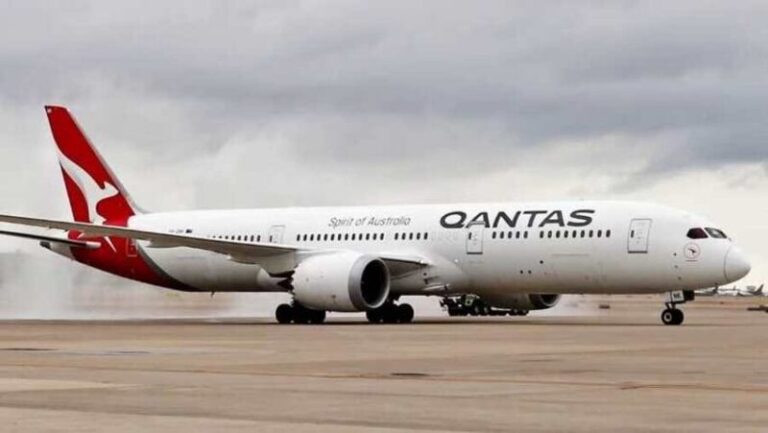
Image generated with Ai
On December 30, 2025, a medical emergency on board forced Qantas to divert its Auckland to Perth service to Sydney. The flight was quickly redirected after a passenger had a serious health crisis that required immediate attention. The airline quickly coordinated with emergency services to ensure the passenger received care upon landing in Sydney. This article details every detail of the incident, including the flight crew’s quick response, the diversion procedure, and the efforts made to manage the situation while minimizing disruptions for other passengers.
On December 30, 2025, a Qantas flight en route from Auckland Airport to Perth Airport was forced to divert to Sydney Airport following a medical emergency onboard. The passenger, a woman in her 60s, could not be revived despite immediate assistance. The tragic incident underscores the importance of airline procedures for handling in-flight medical emergencies, as well as the rapid response of emergency services on the ground.
Advertisement
Flight QF112, operating the scheduled Auckland to Perth route, encountered a serious medical issue mid-flight. The crew swiftly alerted emergency services, and upon arrival at Sydney Airport, medical teams were ready to board the aircraft immediately. Tragically, the passenger, who had been receiving treatment during the flight, was pronounced deceased after efforts to save her were unsuccessful.
The Qantas flight crew, as well as onboard medical support, ensured that the passenger was given the best possible care during the diversion. The aircraft landed in Sydney around noon local time, where paramedics quickly boarded the plane. Despite their best efforts, the passenger was confirmed dead after being attended to. New South Wales Police handled the formal procedures before the aircraft was cleared to continue its journey.
Advertisement
Following the necessary checks, the flight resumed its course later that day. While the tragic event affected the onboard passengers, their onward travel plans were not significantly disrupted. Passengers were informed of the situation, and the flight continued on its way to Perth.
This incident was not an isolated one. On December 26, 2025, a Lufthansa flight traveling from Munich to Beijing also had to divert due to a passenger’s medical emergency. Flight LH722, which was on its way to Beijing, was diverted to Almaty International Airport in Kazakhstan after a passenger lost consciousness during the flight. Emergency medical teams were on hand when the aircraft landed, but, unfortunately, the passenger was confirmed deceased despite immediate care.
The decision to divert the Lufthansa flight was made in the interest of providing the passenger with immediate medical attention. Once the aircraft landed, it was met by local medical personnel and ambulance teams. However, despite their best efforts, the passenger’s life could not be saved. Lufthansa later confirmed the death, and the aircraft continued its journey to Beijing, arriving over two hours later than scheduled.
These incidents highlight the critical role of airline crew members in managing in-flight medical emergencies. Flight crews are rigorously trained to respond quickly and effectively to medical situations. This includes the use of onboard medical kits, coordinating with emergency services, and knowing when to make the difficult decision to divert to the nearest airport for specialized care.
Airlines work closely with medical professionals to ensure that their crew members are equipped with the knowledge and resources necessary to respond to emergencies. In both the Qantas and Lufthansa cases, the crew acted swiftly to manage the situation, ensuring that the passenger received the best possible care before being handed over to medical personnel on the ground.
When a medical emergency leads to an in-flight diversion, the role of the airport becomes equally important. Airports need to have well-coordinated emergency response teams on standby to handle such situations. This includes having medical facilities and personnel readily available to board the aircraft as soon as it arrives.
In the case of the Qantas flight, emergency services were positioned at Sydney Airport ahead of the aircraft’s arrival. Paramedics were prepared to assist immediately upon landing, ensuring that the passenger received prompt care. Similarly, Almaty International Airport responded quickly when Lufthansa’s flight diverted there, ensuring that the passenger received attention as soon as the plane landed.
The presence of such services at airports is critical in minimizing delays and ensuring that the flight can resume as soon as possible. While these diversions may cause delays to the overall travel schedule, the priority is always the health and safety of the passenger in need.
For the passengers onboard these diverted flights, the impact of medical emergencies can be unsettling. While airlines make every effort to manage the situation with minimal disruption, delays and changes in travel plans are often inevitable. Passengers on both the Qantas and Lufthansa flights were informed of the emergencies and were reassured that their onward travel would continue as planned.
In both cases, the diversions allowed the flights to resume their journeys relatively quickly after necessary checks and clearances were completed. While delays were experienced, they were relatively short, and passengers were able to continue their travels with minimal additional inconvenience.
Airlines are required to equip their aircraft with medical kits that can handle a wide range of medical emergencies. These kits contain essential items such as defibrillators, oxygen masks, and medications that can help stabilize a passenger until emergency services can take over. In both of the cases mentioned above, the airline crew was able to provide immediate assistance using these onboard medical resources.
Medical kits are just one component of the broader training that flight attendants and crew members undergo. In addition to knowing how to use medical equipment, flight crews are trained in first aid, CPR, and emergency response procedures. This training ensures that they are able to respond effectively to a variety of medical emergencies, from heart attacks to strokes and other life-threatening conditions.
While the diversion of flights due to medical emergencies is a rare and unfortunate event, it serves as a reminder of the importance of safety protocols and rapid response systems in the aviation industry. Airlines like Qantas and Lufthansa, along with the emergency services at major airports, play a crucial role in ensuring that passengers receive the care they need in times of crisis.
The well-being of passengers remains a top priority for airlines, and the swift actions taken during these emergencies are a testament to the effectiveness of the training and resources in place. While the tragic outcomes of these incidents cannot be avoided, the response to the emergencies and the continuation of travel highlights the professionalism of the airline staff and emergency responders who are prepared to handle such situations with care and efficiency.
Qantas diverted its Auckland to Perth flight to Sydney on December 30, 2025, following a medical emergency onboard, ensuring swift coordination with emergency services for immediate care. This article provides all the facts surrounding the incident.
For passengers traveling on long-haul flights, knowing that airlines are well-prepared for such incidents provides reassurance that their safety is being taken seriously at every step of their journey.
Advertisement
Advertisement
Advertisement













Saturday, September 5, 2026

Saturday, September 5, 2026
Saturday, September 5, 2026
Saturday, September 5, 2026

Saturday, September 5, 2026

Saturday, September 5, 2026

Saturday, September 5, 2026

Saturday, September 5, 2026



