

United States Keeps Pace With Japan, UK and Others as Destination Marathons Unlock Millions in Tourism Value

Published
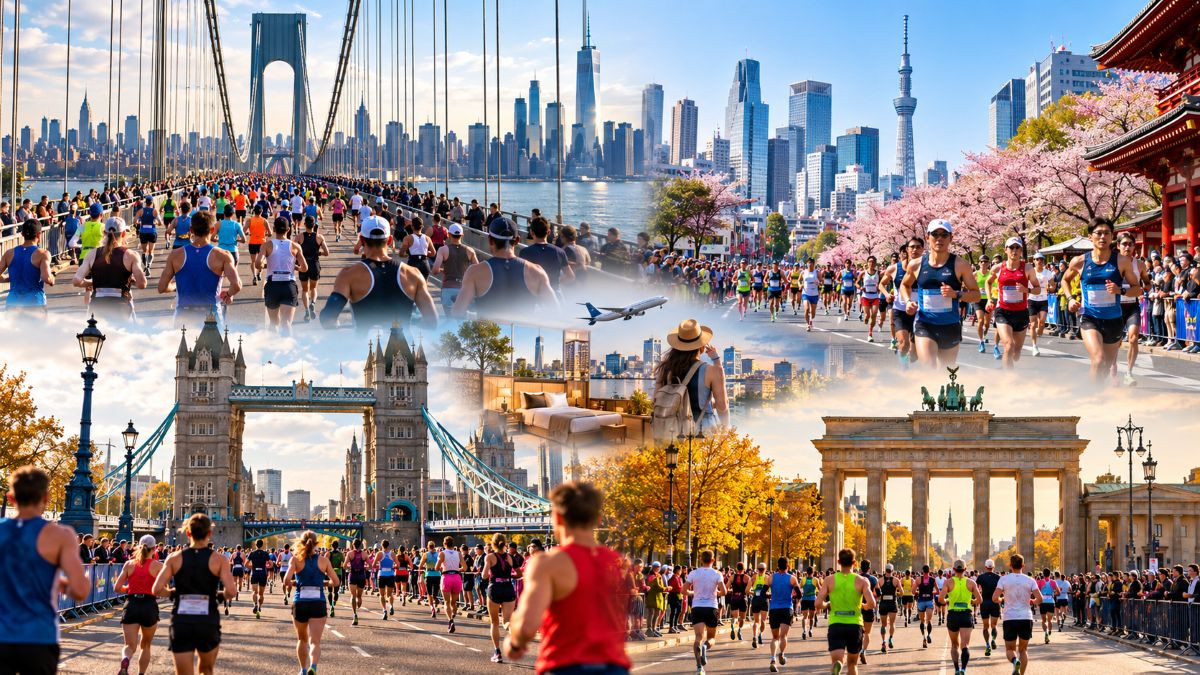
International marathon tourism is generating substantial economic activity across the United States, Japan, the United Kingdom and Germany, with New York, Tokyo, London and Berlin offering four distinct destination-running models. The 2024 New York City Marathon generated $692 million in incremental economic impact, while Tokyo Marathon 2025 produced an estimated ¥78.7 billion in national economic ripple effects. London’s 2025 race generated £226 million in UK economic activity, and Berlin’s 2024 marathon produced €469.4 million in total economic output. However, these headline figures measure different things. International participation, companion travel, hotel nights and genuinely additional visitor spending offer a more meaningful test of which destination benefits most.
Four Major Races Reveal Different Tourism Economies
Destination marathons have evolved beyond sporting competitions into travel experiences that connect accommodation providers, restaurants, cultural attractions and transport operators. For international runners, the race may determine when and where a holiday happens, while companions can generate additional spending without participating in the event.
Advertisement
Advertisement
The commercial opportunity is substantial, but the four destinations cannot be ranked fairly by headline economic impact alone. New York reports incremental economic impact, Tokyo measures economic ripple effects, London publishes national economic activity, and Berlin distinguishes direct and indirect economic output.
These measures are not interchangeable. A credible comparison must consider the overseas share of each field, additional accommodation nights, companion spending and whether participants would have visited anyway.
Advertisement
Advertisement
| Destination | Event and reference year | Published economic measure |
|---|---|---|
| New York, United States | 2024 TCS New York City Marathon | $692 million incremental economic impact |
| Tokyo, Japan | 2025 Tokyo Marathon | ¥78.7 billion national economic ripple effects |
| London, United Kingdom | 2025 TCS London Marathon | £226 million UK economic activity |
| Berlin, Germany | 2024 BMW Berlin Marathon | €469.4 million total economic output |
The figures establish the scale of these events, not a definitive tourism ranking. Their underlying methodologies, geographical coverage and treatment of indirect spending differ. Nevertheless, each reveals how a major race can create commercial opportunities far beyond the registration desk.
New York Turns Overseas Runners Into Citywide Spending
The TCS New York City Marathon offers particularly useful evidence because its organisers have published a detailed breakdown of incremental economic impact. The 3 November 2024 event recorded 55,646 finishers, including 17,859 international finishers from 137 countries and territories. International runners represented approximately 32.1% of the finishing field, demonstrating the race’s considerable global reach.
Advertisement
Advertisement
New York Road Runners’ economic-impact study estimated that the 2024 marathon generated $692 million in incremental economic impact for New York City. Spending by out-of-town runners, spectators and guests included $178 million on accommodation, $109 million on food and drinks, $51 million on shopping, $29 million on museums and attractions, and $19 million on local transport.
Accommodation and dining together accounted for $287 million, illustrating why destination races matter to the wider hospitality sector. The study also estimated that the marathon’s economic impact had increased by 139% compared with the 2019 edition. However, this comparison reflects changes in the event and its economic footprint, rather than a direct measure of growth in international visitor numbers.
New York’s advantage lies in its extensive sightseeing offer. Runners can combine race preparations with Central Park, Broadway, museums, neighbourhood restaurants and waterfront attractions. Companions can explore independently while participants attend race-related activities or recover after finishing.
For travellers, this creates an opportunity to turn a sporting commitment into a longer holiday. For hotels and destination marketers, the commercial question is whether these visitors create additional demand during a traditionally busy period or replace other guests who would have booked anyway.
Tokyo Combines International Running With Cultural Exploration
Tokyo Marathon offers a different proposition, linking a globally recognised race with Japan’s extensive cultural and culinary attractions. The 2025 event took place on 2 March, a period when international runners could incorporate Tokyo sightseeing into an early-spring itinerary.
Organisers set a maximum capacity of 38,000 across the marathon and 10.7-kilometre race. Approximately 18,000 participants from around 130 countries and regions were expected, representing roughly 47% of the announced capacity. This was a projected figure, not a verified count of international marathon finishers.
Advertisement
Advertisement
The final results recorded 37,791 participants across both distances, including 37,480 marathon participants. The distinction matters because the overseas projection and final marathon results do not measure precisely the same population.
The Tokyo Marathon Foundation estimated that the 2025 race generated ¥78.7 billion in economic ripple effects across Japan, including ¥56.2 billion in Tokyo. The estimate was calculated by Mitsumasa Etoh, a visiting researcher at RIKEN and part-time lecturer at Tokyo City University.
These figures demonstrate the event’s wider economic reach, but they do not represent international runner spending alone. Economic ripple effects can include subsequent business activity, so the national estimate cannot be compared directly with New York’s incremental citywide spending.
Tokyo’s strongest tourism proposition is the breadth of experiences available around race day. Visitors can explore Asakusa, historic temples, contemporary architecture, shopping districts and Japanese cuisine. Those extending their holidays can also use Tokyo as a gateway to other destinations across Japan.
The missing measure is the number of overseas runners who add nights specifically because of the marathon. Linking registration-origin data with accommodation records and visitor surveys would help reveal whether Tokyo’s high expected international participation translates into greater spending per runner.
London Benefits From Companions and Spectator Travel
The TCS London Marathon demonstrates why a race’s tourism footprint extends well beyond its participants. Family members, friends, charity supporters and spectators can all generate accommodation, dining and leisure spending, even when they never enter the course.
Advertisement
Advertisement
A Sheffield Hallam University study commissioned by London Marathon Events estimated that the 2025 event generated £226 million in economic activity across the UK, including £68 million in direct economic impact on London. The study also identified a £20 million net export effect, providing a useful indicator of the event’s contribution through spending originating outside the UK.
Researchers surveyed 10,700 people connected with the event, including participants, spectators, staff, volunteers and local businesses. The findings reported an average of 4.33 supporters per participant, equivalent to approximately 250,000 supporters. In addition, 82% of spectators from outside London said they expected to return to the capital within a year.
The supporter figure highlights the potential multiplier effect of companion travel. However, it does not establish that every supporter stayed overnight or travelled internationally. Similarly, an intention to revisit is not evidence that a subsequent trip actually occurred.
London’s established tourism infrastructure gives runners numerous ways to extend their stays. Westminster, the British Museum, the South Bank, West End theatres and historic neighbourhoods can turn race weekend into a wider cultural holiday. International visitors may also combine London with other British destinations.
The reported net export effect is relevant because it captures an economic dimension associated with spending from outside the UK. Nevertheless, it should not be interpreted as a direct measure of overseas marathon runners’ expenditure or treated as equivalent to total visitor spending.
Berlin Demonstrates the Value of Companion Nights
The BMW Berlin Marathon combines an internationally recognised course with a city-break destination known for its historical landmarks, museums, contemporary culture and nightlife. Its economic-impact research also provides unusually useful detail about the accommodation contribution made by accompanying visitors.
Advertisement
Advertisement
A Nielsen Sports study commissioned by SCC EVENTS estimated that the 2024 race generated €469.4 million in total economic output. This comprised €142.7 million in direct economic output and €326.7 million in indirect economic output. Participants, accompanying persons and the organiser contributed to the direct impact, while subsequent economic activity accounted for the indirect component.
The study estimated that 200,021 people accompanied participants, with 71% travelling from outside Berlin. Among those visitors, 94% said the marathon was the main reason for their visit. The findings provide unusually strong evidence that the event motivated travel, although travelling from outside Berlin does not automatically mean travelling internationally.
The accommodation figures are equally revealing. The study attributed €80.86 million in added value to the hotel industry, with accompanying persons contributing €53.6 million. It estimated an average stay of almost three nights at approximately €200 per night.
These figures suggest that companions represent a substantial part of the marathon’s accommodation economy. However, the report’s headline total includes indirect economic activity, so it should not be treated as a measure of direct hotel revenue.
Berlin also has a substantial existing visitor economy. The city recorded 30.6 million overnight stays in 2024, including 12.8 million international overnight stays. International visitors accounted for approximately 42% of the city’s guests, providing a useful baseline against which future race-week accommodation data could be assessed.
Runners can extend their visits through the Brandenburg Gate, the Reichstag, Museum Island and Berlin’s food and cultural districts. The crucial remaining question is how many international hotel nights the marathon creates beyond the city’s normal tourism demand.
Advertisement
Advertisement
Hotel Nights Reveal the Strongest Tourism Opportunity
Accommodation data provide a more tangible way to compare destination marathons than headline economic totals alone. A runner who stays for three nights and brings two companions may generate a different tourism contribution from someone who arrives on race morning and leaves immediately afterwards.
Berlin’s published estimate of almost three nights per accompanying visitor offers a useful benchmark. Yet comparable average-stay figures are not available across all four destinations in the same format, preventing a reliable ranking by nights per international runner.
| Tourism indicator | Why it matters | Evidence available |
|---|---|---|
| International runner share | Measures overseas participation | New York: approximately 32.1%; Tokyo: approximately 47% expected across race distances |
| Companion travel | Captures spending beyond participants | London: approximately 250,000 supporters; Berlin: 200,021 accompanying persons |
| Accommodation value | Identifies hotel-sector benefits | New York: $178 million in accommodation spending; Berlin: €80.86 million in hotel-industry added value |
| Additional travel | Tests whether the race created a trip | Berlin: 94% of surveyed accompanying persons travelling from outside Berlin said the event was their main reason for visiting |
| Post-race sightseeing | Reveals opportunities for longer stays | Attraction spending is reported for New York; comparable cross-city extension data remain limited |
The categories must be interpreted carefully. New York’s accommodation figure represents spending, while Berlin’s figure measures added value to the hotel industry. They are not directly comparable measures of revenue.
For destination marketers, the next step is to collect consistent data on international arrivals, average stay length and additional nights attributable to race participation. That would show whether a city benefits primarily through large visitor volumes or through longer, higher-value stays.
Entry Fees and Travel Costs Shape Runner Choices
The headline registration fee rarely represents the full cost of a destination marathon. International runners must also budget for flights, accommodation, local transport, meals, race preparation and sightseeing. Prices can rise sharply around major sporting weekends, particularly when hotel rooms are limited.
Entry routes also differ between events. Lottery places, qualifying standards, charity entries and official international tour packages may carry different conditions and costs. Consequently, runners should compare the total trip budget rather than selecting a race solely by its advertised entry price.
Advertisement
Advertisement
| Planning factor | What international runners should check |
|---|---|
| Registration | Official entry fee, eligibility, lottery rules and deadlines |
| Flights | Arrival times, baggage allowances and flexibility |
| Hotels | Minimum stays, cancellation terms and race-week price changes |
| Companions | Independent sightseeing options and family accommodation |
| Recovery | Additional nights after the marathon and transport arrangements |
| Extended holidays | Rail connections, regional attractions and onward travel costs |
An extra night may make a trip more expensive, but it can also create a less rushed experience. Runners should allow sufficient time for registration and preparation before the event, then consider recovery needs before planning demanding sightseeing.
Companions should assess the destination independently of the course. A city offering museums, restaurants, performances and day trips can deliver a more rewarding holiday for non-runners. Meanwhile, early hotel reservations and flexible cancellation policies can help travellers manage price volatility.
Better Research Could Identify the True Winners
The four races demonstrate why sports tourism needs more consistent measurement. Organisers publish valuable participation figures and economic-impact studies, but overseas runner counts, companion nights and counterfactual travel behaviour remain unevenly documented.
A stronger methodology would connect anonymised registration data with hotel occupancy, visitor surveys and post-event spending. Researchers should separate international participants from domestic runners, identify companion numbers and measure nights before and after race day. They should also ask whether visitors would have travelled to the destination without the marathon.
Displacement deserves attention as well. An event may increase demand for hotels and restaurants, but it can also raise prices or redirect visitors who would otherwise have travelled at another time. A comprehensive assessment should distinguish genuinely new spending from activity shifted elsewhere.
For tourism boards, these findings could guide investment in international recruitment, companion packages, extended-stay itineraries and partnerships with regional attractions. For hospitality businesses, they could improve forecasting and staffing around major events. For travellers, they could identify destinations that offer the strongest combination of race experience and holiday value.
Advertisement
Advertisement
Marathon Tourism Needs a Fairer Global Scorecard
The United States, Japan, the United Kingdom and Germany all demonstrate the commercial potential of destination marathons, but the available figures do not establish a definitive winner for incremental international tourism. New York offers especially detailed evidence of incremental spending, Tokyo reports substantial national economic ripple effects, London highlights the contribution of supporter travel, and Berlin provides a detailed breakdown of companion-related accommodation value.
The next stage is a standardised comparison measuring overseas participation, additional hotel nights and spending that would not otherwise have occurred. Until then, headline economic totals should be treated as evidence of scale rather than proof of superior tourism performance. For travellers, the most useful destination is the one that combines a suitable race with manageable costs, compelling sightseeing and enough time to enjoy the wider holiday.
Advertisement
