
California Sea Turtle Eggs Relocated to Protect Historic Nests From Hurricane Polo

Published
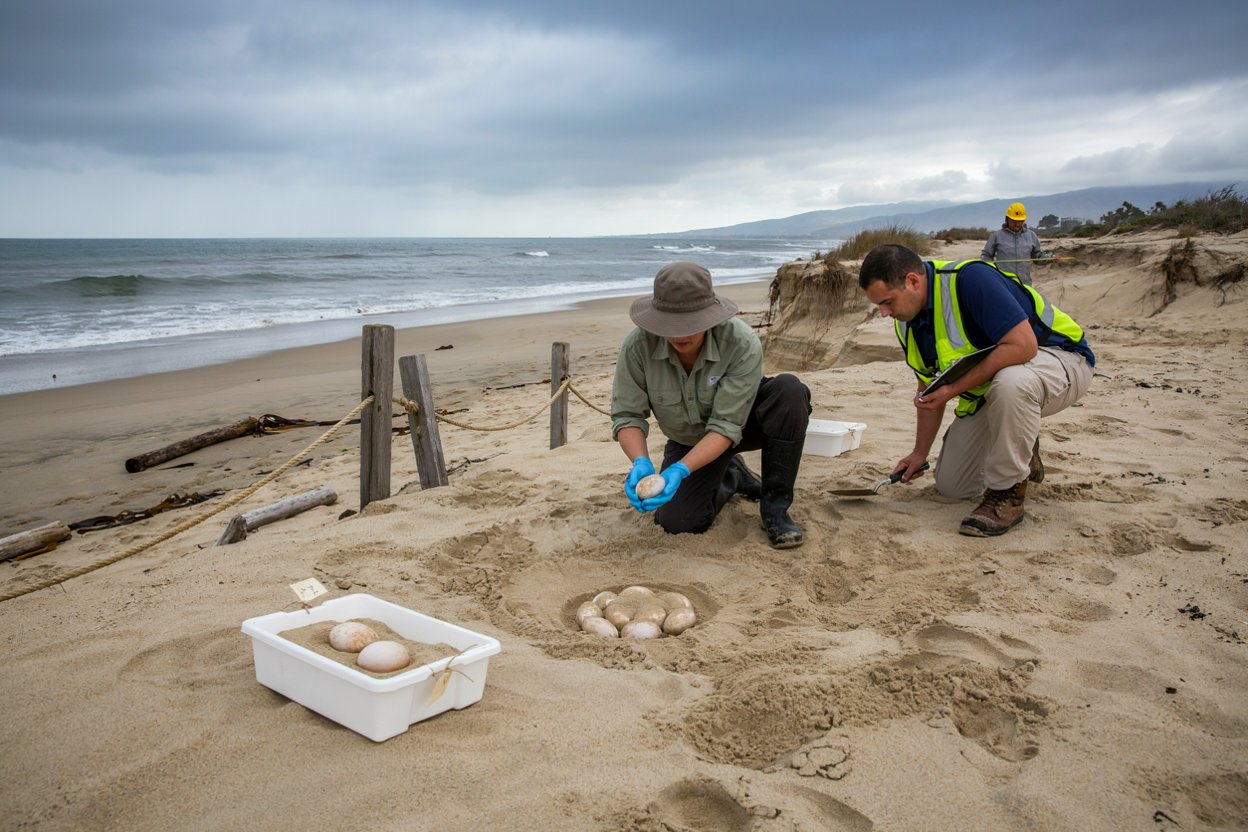
Image generated with Ai
About 200 sea turtle eggs were moved in California ahead of Hurricane Polo. Biologists relocated olive ridley eggs from historic nests after dangerous surf, erosion and flooding threatened them. The eggs are now being monitored at the Aquarium of the Pacific, while officials prepare for possible hatching and release.
About 200 olive ridley sea turtle eggs have been carefully relocated from two Southern California beaches after scientists identified a serious risk from hazardous surf, coastal erosion and flooding associated with Hurricane Polo.
Advertisement
Advertisement
The unusual rescue involves nests discovered in September at Seal Beach and Huntington Beach in Orange County. Their discovery was historically significant because they represented the first recorded sea turtle nesting on the US West Coast, according to the US Fish and Wildlife Service.
Rather than leave the vulnerable nests exposed to potentially destructive coastal conditions, biologists transferred the eggs to the Aquarium of the Pacific in Long Beach. The move is intended to protect the eggs while preserving the possibility of returning the hatchlings to the same beaches where their journey began.
Advertisement
Advertisement
Why were the California sea turtle eggs relocated?
The relocation was driven by immediate environmental risks rather than a permanent change in the turtles’ habitat.
According to information provided by the Aquarium of the Pacific, beach erosion, powerful surf and flooding could have washed away or damaged the nests as Hurricane Polo approached. These conditions can rapidly alter a sandy beach, potentially exposing eggs to seawater, physical disturbance or changes in temperature and moisture.
Advertisement
Advertisement
Biologists therefore collected approximately 200 eggs from the two nests on September 25. Aquarium animal-care specialists and NOAA Southwest Fisheries Service biologists worked together during the recovery operation.
The intervention was also conducted under established wildlife protection authority. The Aquarium said it is authorised by the US Fish and Wildlife Service to rescue sea turtle nests when they face threats.
Advertisement
Advertisement
How are the olive ridley eggs being protected?
The eggs are being maintained in carefully controlled conditions designed to replicate the essential elements of their natural incubation environment.
The Aquarium of the Pacific said the eggs are being kept in containers filled with sand. Staff are monitoring temperature and humidity throughout the remaining incubation period, which is expected to last approximately 45 to 60 days.
This controlled environment is particularly important because sea turtle development is highly sensitive to conditions within the nest. Temperature and moisture can influence incubation and hatchling development, making consistent monitoring essential.
The conservation team will continue observing the eggs throughout the incubation period. If the eggs hatch successfully, the young turtles are expected to be returned to the beaches where they were originally laid.
Advertisement
Advertisement
The planned release would allow the hatchlings to cross the sand and enter the ocean from the same coastal environment in which their mothers nested.
Why is the nesting discovery historically important?
The discovery has attracted scientific attention because olive ridley turtles had not previously been documented nesting on the US West Coast.
The two turtles laid eggs on Seal Beach and Huntington Beach in mid-September. Their appearance in Southern California has therefore created an important new observation for researchers studying sea turtle distribution and nesting behaviour.
Olive ridleys are among the world’s smaller sea turtle species and typically inhabit warm tropical and subtropical waters across the Pacific, Indian and Atlantic oceans.
Researchers have not established precisely why the turtles selected Southern California beaches for nesting. However, scientists have suggested that changing oceanographic and climatic conditions, including the influence of El Niño, could have contributed to the unusual behaviour.
The discovery does not, by itself, establish that Southern California has become a new established breeding area. However, it provides researchers with a significant observation that could inform future monitoring and conservation work.
Advertisement
Advertisement
What could the discovery mean for California tourism?
The arrival of nesting sea turtles adds another dimension to Southern California’s coastal tourism landscape, particularly for destinations such as Seal Beach and Huntington Beach.
These communities are already recognised for beaches, waterfront recreation and coastal experiences. A rare wildlife event can increase public interest, but it also creates a responsibility to protect sensitive habitats from excessive disturbance.
For the travel industry, wildlife encounters increasingly require careful management. Visitors who want to see nesting turtles should prioritise responsible observation and follow instructions issued by wildlife officials rather than approaching animals or disturbing nesting areas.
The conservation response also demonstrates how coastal tourism destinations can balance public interest with wildlife protection. In this case, the eggs are being protected away from the immediate coastal threat, while the intended outcome remains a return to the wild.
Could more sea turtles nest on Southern California beaches?
Officials believe additional nesting may occur, either during the current period or in future years.
The possibility means that residents, visitors and tourism businesses along Southern California’s coastline could play a role in identifying future nesting activity. The Aquarium of the Pacific has encouraged people to watch for sea turtle tracks in the sand.
Advertisement
Advertisement
However, spotting evidence of nesting does not mean the animal should be approached. Members of the public who encounter a nesting turtle or a turtle in distress are advised to contact the 24/7 West Coast Sea Turtle Stranding Hotline.
This approach allows trained personnel to assess the situation while reducing unnecessary human interference.
“The protection of these historic sea turtle nests demonstrates the importance of responsible coastal conservation and scientific collaboration. California’s extraordinary nesting discovery can strengthen wildlife awareness while encouraging tourism stakeholders and visitors to respect fragile marine habitats and support conservation initiatives that protect biodiversity for future generations.”, says Anup Kumar Keshan, Editor-in-Chief, TTW
What happens if the eggs hatch successfully?
The immediate conservation objective is straightforward: maintain the eggs safely through incubation and give the hatchlings an opportunity to return to the ocean.
The Aquarium’s animal-care team will continue monitoring the nests until the eggs hatch or the incubation period concludes. If successful, the young olive ridleys will be transported back to the beaches where they were laid.
They will then be released so they can make the natural journey across the sand towards the Pacific.
Advertisement
Advertisement
The operation therefore represents more than a short-term response to Hurricane Polo. It also creates an opportunity for scientists and conservationists to observe an extraordinary nesting event and gather information that could help shape future sea turtle protection efforts along the California coast.
A significant moment for coastal conservation
The relocation of roughly 200 eggs highlights the vulnerability of wildlife nesting sites to extreme coastal conditions. It also demonstrates how rapid collaboration between biologists, government agencies and aquariums can provide a conservation response when natural habitats become temporarily unsafe.
For Southern California, the nesting discovery has opened a new chapter in sea turtle monitoring. Whether the event becomes an isolated occurrence or signals further nesting activity remains uncertain.
For now, the focus is on protecting the eggs, monitoring their development and, if they hatch, returning the young turtles safely to the wild.
California’s historic olive ridley nesting event has entered a new conservation phase as about 200 eggs remain under controlled care. Hurricane Polo created risks from surf, erosion and flooding, prompting their relocation. Scientists will monitor incubation before potentially returning hatchlings to their original beaches, supporting future coastal wildlife protection.
Advertisement
