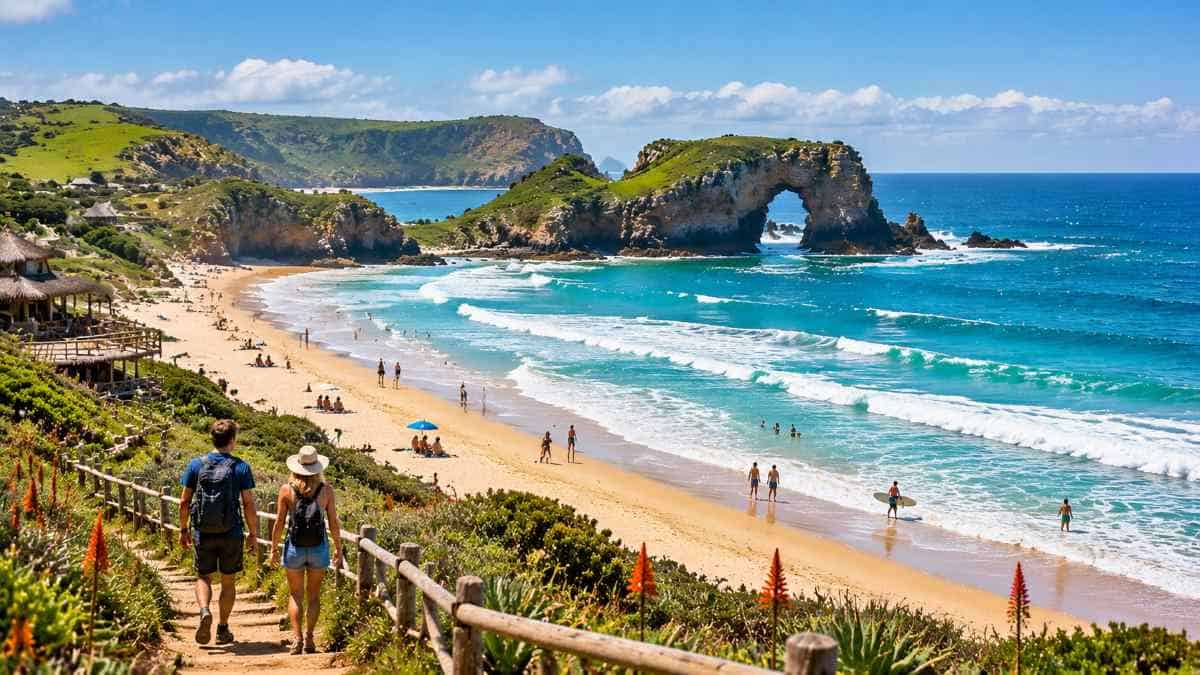
Image generated with Ai
The Eastern Cape region of South Africa is poised to become one of the country’s best summer holiday destinations. The Cape region is now attracting more visitors than ever before, leading to more crowding and increased costs, so travelers are looking for other places to visit and forget the Cape’s South African beaches. The Eastern Cape presents travelers with a chance to go on a malaria free-safari, explore the historic heritage route, sightsee some amazing mountain scenery, and also relax on untamed beaches. The Eastern Cape has developed as an alternative travel destination for those travelers searching for a slower, more authentic, and more nature centered tour destination that combines adventure, conservation, local engagement, and authentic travel all in one.
The Eastern Cape has been emerging as an alternative summer destination to Cape Town, the Winelands, and Durban, but has been slow to attract travelers. Now that visits to Cape Town and its surrounding areas are becoming overcrowded, costing travelers more, travelers are seeking alternatives. The Eastern Cape has unique offerings that combine a variety of diverse experiences that are unmatched in other locations. Travelers can go on a beach vacation in the morning, go on safari to see the Big 7 in the afternoon, and spend the day exploring mountain villages in the Karoo. The Eastern Cape is now one of the providers for the best tourism alternatives that South Africa has to offer.
Advertisement
The biggest difference between the Eastern Cape and traditional summer destinations is the character of its coastline. While many popular beach destinations focus on urban entertainment, luxury developments and busy promenades, the Eastern Cape offers a coastline shaped by nature rather than large-scale tourism.
The Wild Coast, covering much of the former Transkei region, remains the province’s most iconic coastal attraction. The area is recognised for dramatic cliffs, rolling green hills, hidden beaches, remote estuaries and traditional Xhosa villages. Unlike heavily developed beach destinations, the Wild Coast provides a slower travel experience where visitors can explore landscapes that remain closely connected with local communities and natural environments.
Advertisement
Key destinations include:Destination Main Travel Appeal Coffee Bay Wild beaches, hiking routes and access to Hole in the Wall Hole in the Wall Famous sea arch, coastal scenery and cultural significance Port St Johns River valleys, beaches and adventure activities Mdumbi Backpacker tourism, surfing and community-based stays
Hole in the Wall remains one of the Eastern Cape’s most recognisable natural landmarks. The enormous rock formation, created through thousands of years of coastal erosion, has become a symbol of the Wild Coast’s rugged beauty. The region has also become increasingly associated with sustainable tourism. Small-scale accommodation, guided hiking experiences, community stays and nature-based activities allow visitors to experience the coastline while supporting local economies.
Infrastructure improvements, including major transport developments along the N2 Wild Coast route, are expected to improve accessibility to remote coastal communities while maintaining the area’s natural character.
One of the Eastern Cape’s strongest tourism advantages is its malaria-free safari environment. For international visitors, families and first-time safari travellers, the ability to experience African wildlife without malaria concerns provides a major advantage. The province has developed a reputation as one of South Africa’s leading malaria-free safari regions, combining accessibility with exceptional wildlife experiences.
Advertisement
Advertisement
At the centre of this offering is Addo Elephant National Park, South Africa’s third-largest national park and one of the country’s most successful conservation destinations. The park is located near Gqeberha and provides visitors with opportunities for self-drive safaris, guided game drives, hiking and wildlife viewing. Addo is internationally recognised for its large elephant population and diverse ecosystems. The park is home to traditional Big Five species, including elephants, lions, leopards, rhinos and buffalo. Its marine conservation areas in Algoa Bay also contribute to the unique Big Seven experience by including southern right whales and great white sharks.
| Wildlife Experience | Location | Key Feature |
|---|---|---|
| Addo Elephant National Park | Near Gqeberha | Big Seven wildlife experience and elephant conservation |
| Shamwari Private Game Reserve | Eastern Cape | Luxury conservation safari |
| Kariega Game Reserve | Eastern Cape | Family-friendly wildlife experiences |
| Amakhala Private Game Reserve | Eastern Cape | Big Five safari experiences |
| Kwandwe Private Game Reserve | Eastern Cape | Conservation-focused luxury tourism |
Private reserves across the province have expanded beyond traditional game viewing. Many now include conservation activities, habitat restoration projects and educational wildlife experiences. This has strengthened the Eastern Cape’s position as a destination where luxury tourism and environmental protection work together.
The Eastern Cape’s coastal appeal extends beyond remote beaches. The Sunshine Coast offers a different style of holiday built around surfing, outdoor adventure and relaxed seaside living. Jeffreys Bay, internationally known as J-Bay, remains one of the world’s most famous surfing destinations. The town’s Supertubes wave attracts professional surfers and visitors from across the globe.
However, the destination’s appeal extends beyond surfing. Jeffreys Bay offers a laid-back coastal lifestyle focused on beaches, local cafés, outdoor activities and water sports rather than high-energy nightlife. Nearby St Francis Bay provides another distinctive coastal experience. Known for canals, beaches and boating activities, the town attracts travellers seeking peaceful seaside escapes.
Other Sunshine Coast destinations include:
These destinations demonstrate the Eastern Cape’s ability to offer diverse coastal experiences, from adventure-focused surfing holidays to quiet family retreats.
The Eastern Cape is not only a destination for beaches and wildlife. It is also one of South Africa’s most important cultural and historical regions. The province is widely recognised as the heartland of amaXhosa heritage and contains numerous sites connected with the country’s political, cultural and social history.
Cultural tourism has become an important part of the Eastern Cape experience, allowing visitors to explore traditional communities, historic landscapes and heritage attractions. The province is also home to landscapes that reflect centuries of human connection with the environment.
Important heritage destinations include:
Located in the Karoo interior, Graaff-Reinet offers historic architecture, wide-open landscapes and access to Camdeboo National Park. The Valley of Desolation remains one of the region’s most dramatic attractions. The geological formation features towering dolerite columns rising above the Karoo plains, creating spectacular viewpoints for photography and sunset experiences.
Nieu-Bethesda provides a quieter rural tourism experience with historic buildings, artistic traditions and open landscapes. The town represents the slower rhythm of Karoo travel, where visitors can experience heritage, local culture and clear night skies ideal for stargazing.
While many travellers associate South Africa’s summer holidays with beaches, the Eastern Cape also provides mountain escapes. Hogsback, located in the Amathole Mountains, offers a completely different environment with indigenous forests, waterfalls, hiking trails and mist-covered landscapes. The destination has become popular among travellers seeking cooler temperatures, outdoor adventures and peaceful retreats.
The Amathole Mountains provide opportunities for:
The region’s natural beauty has also contributed to its reputation as a destination for creative retreats and slow tourism. For travellers looking to escape summer heat, Hogsback provides a refreshing alternative to traditional coastal holidays.
The Eastern Cape is accessible through two major airports:Airport Location Best Access For Chief Dawid Stuurman International Airport Gqeberha Addo Elephant National Park, Sunshine Coast, western Eastern Cape King Phalo Airport East London Amathole Mountains, central regions and Wild Coast access
Road travel remains one of the best ways to explore the province. Major routes connect coastal cities, wildlife areas and inland attractions. However, travellers exploring remote Wild Coast areas, rural villages or Karoo routes should consider vehicles with higher ground clearance due to gravel roads and uneven surfaces.
| Travel Interest | Best Months | Reason |
|---|---|---|
| Safari and wildlife | May to September | Cooler weather and better wildlife visibility |
| Beaches and surfing | November to April | Warm ocean temperatures and summer conditions |
| Hiking and sightseeing | April-May and September-October | Comfortable temperatures and fewer crowds |
Summer remains the most popular period for coastal holidays, but late January through March often provides a better balance between warm weather and reduced peak-season pressure.
The Eastern Cape is an example of how other countries are developing with tourist travel in mind. Instead of taking trips to sightsee, travelers are taking trips to escape and experience a new culture with authenticity. The Eastern Cape has amazing coastal views and heritage with wildlife.
From the Wild Coast to Jeffreys Bay, to Addo and Hogsback, the Eastern Cape pretty much has everything one could want when looking for a complete travel experience. Most South African travelers looking for a break from the summer and the crowds will find the kind of vacation they are looking for in the Eastern Cape; open spaces, activities that will create memories of a lifetime, cultural experience that will touch your soul, and up close experiences with wildlife.
Advertisement
Tags: Addo Elephant National Park, Eastern Cape summer holiday, Jeffreys Bay tourism, malaria-free safari South Africa, South Africa Eastern Cape travel
Advertisement
Advertisement













Friday, September 4, 2026

Friday, September 4, 2026
Friday, September 4, 2026

Thursday, September 3, 2026

Wednesday, September 2, 2026

Friday, September 4, 2026

Friday, September 4, 2026