
Canada Joins Argentina, Colombia, Mexico, Peru, Chile, Brazil, and More American Countries in Organizing an Internationally Acclaimed Marathon to Heighten the Fever of Sports Tourism: Have a Dive In!

Published
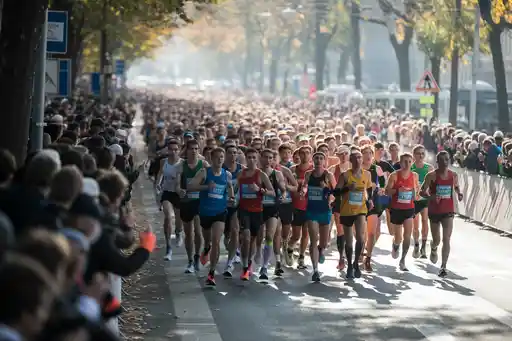
Canada leads a powerful new shift in global endurance sports as it joins Argentina, Colombia, Mexico, Peru, Chile, Brazil, and other American nations in expanding internationally acclaimed marathon events across the region. This growing movement is transforming the Americas into one of the most dynamic hubs of sports tourism worldwide.
Across major cities, marathon races are no longer viewed as simple athletic competitions. Instead, they have evolved into large-scale international festivals that attract elite runners, amateur participants, and global spectators. As Canada strengthens its position alongside Argentina, Colombia, Mexico, Peru, Chile, Brazil, and more American countries, the region is witnessing a surge in cross-border participation and tourism-driven sporting activity.
Advertisement
Advertisement
The expansion is being powered by rising demand for experiential travel, where visitors combine sport, culture, and destination exploration. Governments and city authorities are actively investing in marathon infrastructure to boost international visibility and economic inflows. Hotels, airlines, and local businesses are directly benefiting from the increasing number of visiting runners and supporters.
This coordinated growth across Canada, Argentina, Colombia, Mexico, Peru, Chile, Brazil, and other American countries signals a broader transformation. The Americas are rapidly positioning themselves as a global marathon destination network, where sports tourism acts as a major engine for economic and cultural exchange, reshaping how international running events are organized and experienced.
Advertisement
Advertisement
In addition, marathon culture is no longer limited to elite athletes. Amateur runners now dominate participation. This inclusivity is reshaping sports identity across continents. Therefore, it shows how endurance running is becoming a global tourism engine.
Around 120+ countries worldwide currently host at least one internationally recognized marathon, based on official datasets from governing bodies such as the World Athletics Label Road Races program and the AIMS Association of International Marathons and Distance Races directory. This figure is not fixed, as new races are certified each year, but it represents the most reliable global estimate of countries actively organizing international-level marathon events.
Advertisement
Advertisement
How Many Countries Organize International-Level Marathons Across the World?
An international-level marathon country is not simply a nation that hosts a running event. It must host at least one race recognized under global certification systems. The most authoritative frameworks are the World Athletics Label Road Races program and the AIMS global marathon network. These systems evaluate events based on athlete participation quality, course measurement accuracy, anti-doping compliance, and international broadcast standards.
Countries included in this category host marathons that attract elite athletes from multiple continents. These races are often part of global calendars and tourism circuits. Cities such as London, Tokyo, Boston, Berlin, and New York are prime examples, but the system now extends far beyond traditional marathon hubs. Even emerging destinations in Africa, Asia, and South America are now part of this global certification ecosystem.
Advertisement
Advertisement
How many countries globally host certified international marathons?
The most reliable research indicates that around 120+ countries currently host at least one internationally recognized marathon event. This figure is derived from cross-referencing World Athletics Label events and the AIMS marathon directory.
The number fluctuates annually as races are upgraded, downgraded, or newly introduced. However, the baseline remains stable above 120 countries, confirming that marathon sport has become one of the most globally distributed athletic disciplines.
These countries span every inhabited continent. Europe leads in density, while Asia shows the fastest expansion. Africa continues to grow in elite long-distance participation, while the Americas maintain strong legacy events. Oceania contributes fewer countries but maintains high-profile international races. This global spread reflects both sporting development and tourism-driven demand.

How do the Americas contribute to international marathon hosting?
The Americas maintain a strong but more concentrated marathon network compared to Europe and Asia. The United States dominates with the Boston, New York, Chicago, and Los Angeles marathons. Canada and Mexico complete the core North American marathon landscape.
Advertisement
Advertisement
In South America, Brazil, Argentina, Chile, Colombia, and Peru host internationally recognized events. São Paulo and Buenos Aires are key marathon cities attracting thousands of international participants annually.
The certification system confirms that the Americas collectively contribute around 10–15 countries to the global marathon ecosystem. While fewer in number, these races are often large-scale events with significant commercial sponsorship and media coverage.
The Americas also play a major role in marathon innovation, including mass participation models and urban route design, influencing global race organization standards.
DISTRIBUTION OF COUNTRIES
North America
| Country | Notable Marathons |
|---|---|
| USA | Boston, NYC, Chicago |
| Canada | Toronto Waterfront Marathon |
| Mexico | Mexico City Marathon |
South America
| Country | Notable Marathons |
|---|---|
| Brazil | São Paulo Marathon |
| Argentina | Buenos Aires Marathon |
| Chile | Santiago Marathon |
| Colombia | Bogotá Marathon |
| Peru | Lima Marathon |

Why does Europe dominate international marathon hosting?
Europe is the most concentrated region for international marathons, hosting events in over 30 countries. Cities such as London, Berlin, Paris, Amsterdam, and Rome are long-established marathon capitals. The region benefits from strong infrastructure, cross-border tourism connectivity, and historical investment in athletics.
European marathons are frequently featured in the World Marathon Majors ecosystem, which includes globally recognized races like the London Marathon. According to World Athletics data, Europe consistently holds the highest number of Label-certified events each season.
Another reason for dominance is accessibility. Runners from Africa, Asia, and the Americas often travel to Europe due to visa networks and proximity between countries. This creates a dense calendar of competitive races throughout the year. The combination of heritage, logistics, and tourism makes Europe the global center of marathon activity.
Advertisement
Advertisement
Europe (Highest density of international marathons)
| Country | Notable Marathons |
|---|---|
| United Kingdom | London Marathon |
| Germany | Berlin Marathon |
| France | Paris Marathon |
| Italy | Rome Marathon |
| Spain | Madrid, Seville Marathons |
| Netherlands | Amsterdam Marathon |
| Sweden | Stockholm Marathon |
| Denmark | Copenhagen Marathon |
| Finland | Helsinki Marathon |
| Poland | Warsaw Marathon |
| Greece | Athens Marathon |

How is Asia becoming the fastest-growing marathon region?
Asia is now the fastest-expanding marathon continent, with more than 25 countries hosting internationally certified events. Japan leads the region with the Tokyo Marathon, one of the most prestigious races in the world. China has rapidly expanded its marathon network with events in Beijing, Shanghai, and Guangzhou.
India, Thailand, Singapore, Vietnam, and Indonesia are also strengthening their marathon ecosystems. According to , Asia has seen consistent annual growth in certified race entries over the last decade.
This growth is driven by urban fitness movements, government-backed sports tourism strategies, and rising participation from amateur runners. Major cities are increasingly using marathons as branding tools to attract global visitors. As a result, Asia is expected to narrow the gap with Europe in terms of international marathon density within the next decade.
Asia (Fastest-growing marathon hub)
| Country | Notable Marathons |
|---|---|
| Japan | Tokyo Marathon |
| China | Beijing, Shanghai Marathons |
| India | Mumbai, Bengaluru Marathons |
| Thailand | Bangkok Marathon |
| UAE | Dubai Marathon |
| Singapore | Singapore Marathon |
| South Korea | Seoul Marathon |
| Indonesia | Bali Marathon |
| Vietnam | Hanoi Marathon |
| Malaysia | Kuala Lumpur Marathon |

What role does Africa play in global marathon expansion?
Africa plays a critical role in international marathon sports, particularly in elite performance. While fewer countries host events compared to Europe or Asia, the continent produces some of the world’s fastest marathon runners. Kenya and Ethiopia remain global powerhouses.
Countries such as South Africa, Morocco, Egypt, Tanzania, and Namibia host internationally certified marathons. The Cape Town Marathon and Marrakech Marathon are key examples of Africa’s rising global profile.
According to data, African marathons are increasingly achieving label status due to improved organization standards and international participation. The continent now represents around 15+ countries in the global marathon ecosystem.
Advertisement
Advertisement
Africa’s growth is also tied to sports tourism. International runners often travel to the continent for unique climate conditions and high-altitude training environments. This combination strengthens Africa’s position in global marathon development.
Africa (Rapid expansion region)
| Country | Notable Marathons |
|---|---|
| Kenya | Nairobi Marathon |
| South Africa | Cape Town Marathon |
| Morocco | Marrakech Marathon |
| Egypt | Cairo Marathon |
| Ethiopia | Addis Ababa events |
| Tanzania | Kilimanjaro Marathon |
| Namibia | Windhoek Marathon |
What do official governing bodies say about global marathon distribution?
Two key organizations define international marathon legitimacy: World Athletics and AIMS. The system categorizes races into Gold, Platinum, and Label events based on elite standards, broadcast quality, and athlete participation rules.
Meanwhile, AIMS provides the world’s largest directory of certified marathon events, covering over 120 countries. This dual system ensures consistency in race measurement and global comparability.
These organizations confirm that marathon running is no longer regionally concentrated. Instead, it has become a globally regulated sport with shared technical standards. The certification process ensures fairness, athlete safety, and competitive integrity across continents.
Without these frameworks, it would be impossible to maintain a reliable global count of marathon-hosting countries.

How does marathon certification work across countries?
Marathon certification depends on strict technical criteria. Courses must be precisely measured using calibrated methods, usually the Jones Counter system. Events must also comply with international anti-doping regulations and elite athlete participation requirements.
Advertisement
Advertisement
World Athletics assigns labels based on performance quality and organizational standards. Higher-tier labels require television broadcast coverage, international elite fields, and certified timing systems.
Countries hosting these events must work with national athletics federations to maintain compliance. This ensures consistency whether a marathon takes place in London, Tokyo, Nairobi, or São Paulo.
As a result, the term “international-level marathon country” is not symbolic but structurally defined through measurable global standards.
Why is the number of marathon countries increasing every year?
The number of countries hosting international marathons continues to rise due to sports tourism, urban branding, and health awareness. Cities increasingly view marathons as global marketing tools.
Emerging economies are investing in sports infrastructure to attract international runners. This includes Southeast Asia, parts of Africa, and Eastern Europe. Digital fitness culture has also expanded amateur participation worldwide.
According to trends, new races are regularly added to global calendars, increasing geographic diversity. The accessibility of marathon running compared to other elite sports also supports its expansion.
Advertisement
Advertisement
This trend suggests that the current estimate of 120+ countries may increase steadily in the coming years, potentially reaching 130–140 countries as new events gain certification.
| Category | Official Source | Countries Covered | Notes |
|---|---|---|---|
| World Athletics Label marathons | World Athletics | ~90–110 countries | Elite + Gold + Platinum label races |
| AIMS member marathons | AIMS Official Directory | 120+ countries | Broadest verified marathon network |
| World Marathon Majors ecosystem | WMM | 8 host countries (core) | Tokyo, USA, UK, Germany, etc. |
Mr. Anup Kumar Keshan, Founder and Editor-in-Chief, Travel And Tour World, notes, “This development reflects a clear and growing transformation in how countries across the Americas are using sport as a strategic driver of tourism and economic visibility. The inclusion of Canada alongside Argentina, Colombia, Mexico, Peru, Chile, Brazil, and other American nations highlights a coordinated regional push towards positioning marathon events as global tourism assets rather than isolated sporting competitions.
What stands out most is the shift in purpose. Marathons are no longer just endurance races for elite athletes. They have become large-scale international events that attract amateur runners, global spectators, media attention, and high-spending tourists. This change is directly influencing hotel occupancy rates, airline traffic, urban branding strategies, and even infrastructure investment in host cities.
Canada’s expanding participation adds further credibility to the region’s marathon ecosystem, especially given its established sporting infrastructure and global connectivity. Meanwhile, South American nations such as Brazil and Colombia continue to leverage marathons as tools for international recognition and destination marketing.
The underlying reason behind this collective movement is economic diversification. Governments are increasingly recognising that sports tourism generates consistent, repeatable, and scalable revenue streams. Unlike seasonal tourism, marathon events bring predictable annual influxes of visitors.
Overall, this trend signals a long-term repositioning of the Americas as a dominant global hub for endurance sports tourism. It is not a short-term marketing push but a structural shift in how cities and countries design their international engagement strategies through sport.”
Advertisement
Advertisement
What is the future outlook for global marathon distribution?
Canada joins Argentina, Colombia, Mexico, Peru, Chile, Brazil, and more American countries in organizing an internationally acclaimed marathon because of the rising global demand for endurance events. The cause is clear. Governments and cities want stronger tourism inflows. The reason is economic growth and global visibility. As a result, it again reflects a powerful regional transformation. Ultimately, sport and tourism are now deeply connected, shaping a new international travel economy.
The future of international marathon sports is expected to become even more geographically balanced. Asia and Africa are projected to grow fastest, while Europe will maintain leadership in elite race density.
Technological improvements in race timing, athlete tracking, and broadcasting will make certification easier for emerging countries. This will likely expand participation further.
Global organizations like World Athletics and AIMS are actively supporting this expansion by standardizing race requirements and encouraging inclusivity in event hosting.
The long-term outlook suggests that marathon running will become one of the most universally distributed sports on the planet, with nearly every country capable of hosting internationally certified events.
Advertisement
