
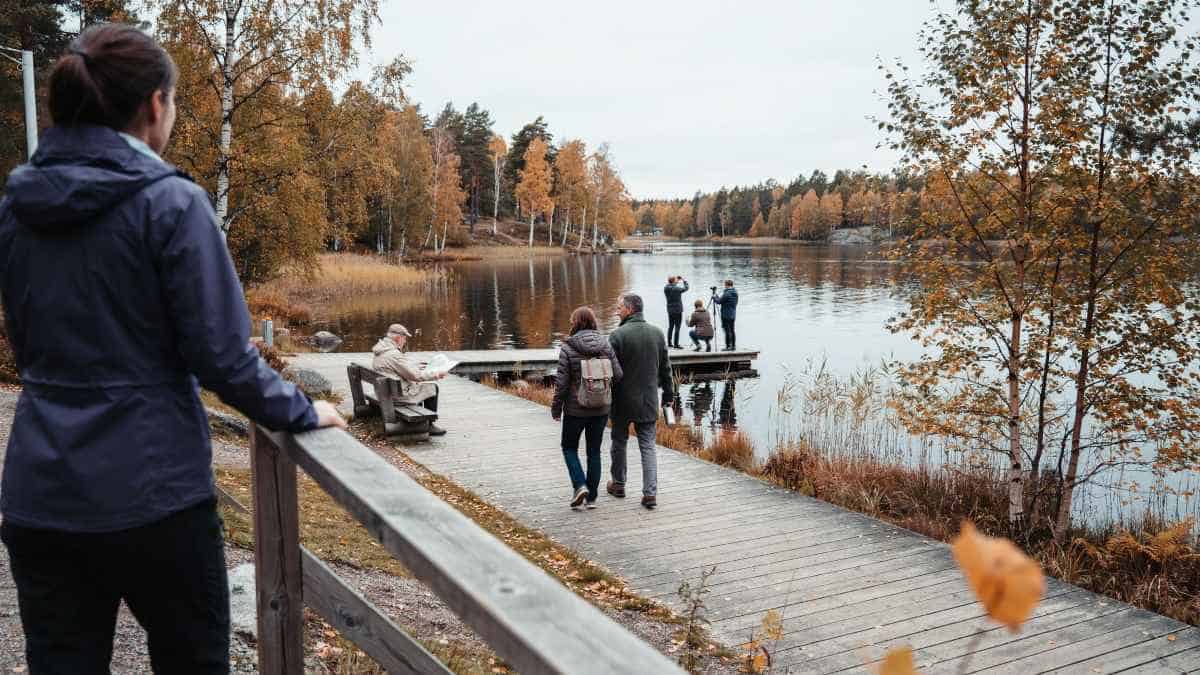
Image generated with Ai
The tourism economy of Sweden is increasingly moving away from the traditionally dominant summer period as international and domestic tourists tend to take their trips throughout the year. According to statistics from Tillväxtverket and Visit Sweden, the period between September and May has become responsible for 57% of guest nights per year, which indicates a significant development in comparison with the seasonal trend that prevailed until 2019. The development is quite an important thing for hotels and other tourism companies. Now, rather than being confronted with a strong peak in summer and weak demand in other periods, many businesses operate more evenly throughout the year.
The growing share of guest nights outside summer points to a structural change rather than a temporary movement in travel demand. September through May now generates 57% of annual guest nights, meaning the majority of accommodation demand occurs outside the conventional June to August holiday period.
Advertisement
This creates a more balanced operating environment for the tourism industry. Hotels can maintain occupancy for longer periods while restaurants, guides, transport companies and attractions have more opportunities to serve visitors throughout the year.
Reducing dependence on a short summer window can make tourism planning easier. Businesses can spread staffing, investment and promotional activity across a longer operating season instead of concentrating resources around a few months.
Advertisement
Advertisement
Sweden’s autumn and spring landscapes are becoming increasingly valuable tourism assets. Shoulder-season travel can offer cooler temperatures, fewer crowds and opportunities for outdoor experiences that differ from the traditional summer holiday.
Hiking, cycling, wildlife experiences and nature-based excursions can attract visitors during September and the following months. The appeal is strengthened by Sweden’s forests, lakes, coastline and open landscapes.
For international travellers, the shoulder season can provide a more relaxed way to experience Swedish destinations. Visitors can combine outdoor activities with cultural attractions, local food and city breaks without the intensity associated with peak summer.
Autumn culinary experiences are contributing to Sweden’s seasonal diversification. Foraging for mushrooms, berries and other wild ingredients connects visitors with the country’s landscapes while offering a distinctly seasonal reason to travel.
Advertisement
Advertisement
Food-focused tourism can benefit smaller communities because experiences are often linked to local producers, restaurants, guides and accommodation providers. A traveller attracted by an autumn culinary programme may stay for several nights and combine food activities with nature or cultural experiences.
This creates a broader economic impact than a single sightseeing visit and helps destinations develop tourism products for quieter periods.
Winter has also become a major opportunity for Sweden’s northern destinations. Aurora tourism gives international travellers a compelling reason to visit during the darkest months.
Northern Sweden can combine the search for the northern lights with snow-based activities, wilderness experiences and local cultural encounters. This creates a distinctive winter proposition.
Aurora tourism also encourages longer stays because visitors often allow several nights for favourable viewing conditions. Longer accommodation stays can provide valuable revenue for hotels and tourism businesses during a period that historically faced weaker demand.
The shift towards year-round travel can be particularly important for destinations outside Sweden’s largest cities. Rural and northern communities can use nature, food and seasonal experiences to attract visitors when conventional sightseeing demand is lower.
A longer season can support local employment and make tourism businesses more commercially viable. Instead of relying almost entirely on summer revenue, operators can build several products around different seasons.
This can encourage investment in accommodation, activities and visitor infrastructure while reducing the risk associated with extreme dependence on peak-season demand.
Steadier commercial accommodation occupancy can have wider benefits for Sweden’s tourism industry. Businesses with more consistent demand can plan staffing more effectively and maintain services across more months.
It can encourage accommodation providers to develop packages for specific seasonal markets. Autumn nature breaks, culinary weekends and winter northern-lights trips can be marketed to different audiences without relying on a single summer campaign.
The result is a tourism economy that increasingly operates as a year-round business across Sweden rather than a seasonal one.
There are evident signs of levelling out seasonality in Sweden’s tourism market, where September through May now make up 57% of the total number of guest nights per year. This process is being driven by shoulder season outdoor activities, culinary attractions during autumn, and aurora tourism. For tourists, this trend implies that Sweden can become a country offering great attractions at any time of the year. From the point of view of business and local communities, this will create an opportunity to earn money on a steady basis and not be so dependent on the season of summer.
Advertisement
Tags: Arctic tourism Sweden, aurora tourism Sweden, northern sweden, Northern Sweden tourism, off-peak tourism Sweden
Advertisement
Advertisement













Thursday, September 3, 2026
Thursday, September 3, 2026
Thursday, September 3, 2026

Thursday, September 3, 2026

Thursday, September 3, 2026

Wednesday, September 2, 2026

Thursday, September 3, 2026
Thursday, September 3, 2026


