
Brussels Joins Paris, Munich, Amsterdam, Vienna, and Zurich in Warning Indian, American, and UAE Tourists About Lengthy Processing Times and Flight Bottlenecks as Post-Pandemic Aviation Recovery Utterly Outpaces Airport Staffing Efforts

Published
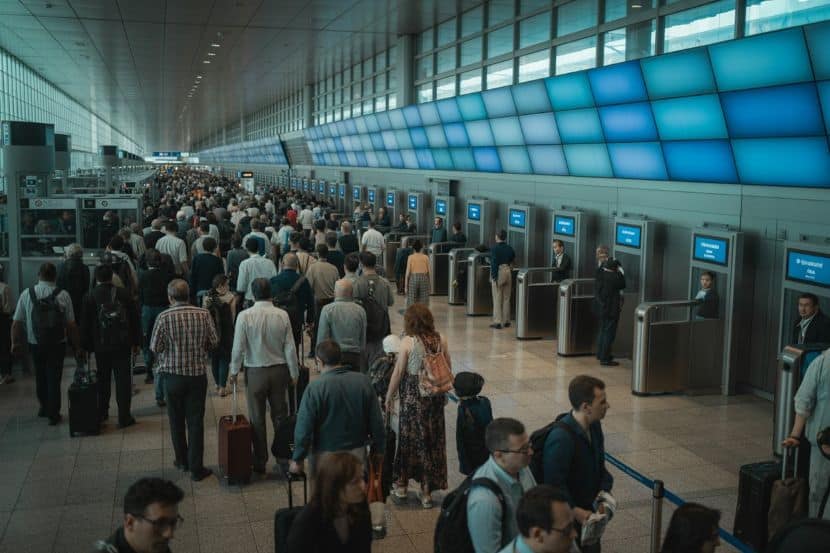
Brussels Joins Paris, Munich, Amsterdam, Vienna and Zurich in EU Airport Chaos Warning as Biometric Border System Triggers Travel Delays for Indian, US and UAE Travellers has now become a defining headline across European aviation. Brussels Joins Paris, Munich, Amsterdam, Vienna and Zurich as airports struggle with rising passenger pressure and strict new border checks. In fact, EU Airport Chaos Warning is spreading quickly as the Biometric Border System Triggers Travel Delays for Indian, US and UAE Travellers at multiple major hubs. Moreover, the situation is intensifying because airports are still recovering from post-pandemic staffing shortages while handling surging global demand. As a result, long queues, missed connections and extended processing times are now common. Therefore, Europe’s busiest gateways are warning passengers to prepare for delays and stricter biometric verification at every stage of their journey.
What Is EES and Why It Is Slowing Down Europe
The Entry/Exit System (EES) is now active across the Schengen Area. It digitally records every entry and exit of non-EU travellers. It stores passport details, fingerprints and facial images. The goal is simple. Strengthen border security. Track overstays. Stop illegal migration. But the process is complex at busy airports.
Instead of a quick passport stamp, travellers must now stop for biometric scanning. This extra step increases processing time at every border counter. During peak hours, queues grow quickly. Airports such as Zurich have already warned passengers that waiting times can increase significantly during busy travel periods. Authorities across Europe confirm that only non-EU travellers are affected. EU citizens continue to move through faster automated lanes.
Brussels Airport Issues a Strong Warning
Brussels Airport has become one of the loudest voices in this crisis. The airport reports that when EES began, waiting times increased sharply.
Advertisement
Advertisement
At departure, passengers sometimes waited up to two hours. At arrival, delays crossed three hours. In some cases, hundreds of travellers missed their flights within just a few days.
Even after partial adjustments, queues have not fully disappeared. Passengers still face long processing times at immigration counters. Non-EU travellers cannot use fast e-gates. They must go through manual biometric registration.
Advertisement
Advertisement
Brussels is now asking authorities to slow down the rollout or improve staffing immediately. Without changes, the airport warns that congestion could worsen during peak summer travel.
Paris and France Face Hidden Congestion Pressure
Paris Charles de Gaulle and Orly airports are also under pressure. Official systems now require biometric registration for non-EU arrivals.
This means fingerprints, facial scans and document verification at every entry point. During busy hours, this creates long queues at border control.
Reports from travellers suggest that delays are becoming unpredictable. Some passengers clear immigration quickly. Others wait for hours during peak flight arrivals.
French authorities confirm that passport stamping is being phased out completely. The new system is permanent. But airports are still adjusting operations, which is creating instability in passenger flow.
Munich Expands Technology but Cannot Escape Delays
Munich Airport is one of the most advanced in Europe. It introduced EES early and installed 119 self-service kiosks to speed up registration. Passengers are encouraged to scan documents, complete biometric registration and follow digital instructions before reaching border officers.
Advertisement
Advertisement
However, even with this technology, delays continue. The system still requires manual verification in many cases. Long-haul passengers, especially non-EU travellers, are spending more time at immigration. Airport authorities admit that processing will take longer than before. They advise passengers to arrive earlier than usual, especially for intercontinental flights.
Vienna Warns of Holiday Travel Pressure
Vienna International Airport is also experiencing increased pressure during peak travel periods. Officials have warned passengers that check-in, baggage drop and border procedures now take longer. The airport has urged travellers to arrive well in advance. The EES system is fully integrated into Vienna’s border operations. It applies only to non-EU travellers, including visa-exempt visitors. Self-service systems are being introduced for faster processing. But even with automation, the airport admits that delays are still possible during busy hours.
Zurich Airport Faces Double Challenge
Zurich Airport in Switzerland is dealing with two problems at once. First, the new EES biometric system is slowing border control for non-EU travellers. Second, the airport is undergoing construction and upgrades.
New scanners and renovated shopping zones are changing passenger routes. This creates temporary bottlenecks inside the terminal. Authorities warn that both factors combined may increase waiting times. Travellers are advised to follow updated signage and arrive earlier than normal.
Amsterdam Goes Fully Digital as Passport Stamps Disappear
Amsterdam Schiphol Airport has now fully switched to the EES system. Passport stamps are no longer used.
Instead, all non-EU travellers are digitally registered. This includes passport scanning, fingerprint capture and facial recognition.
Advertisement
Advertisement
The system is designed to improve security and efficiency. But the transition has created longer processing times at border control.
Dutch authorities say the system will become smoother over time. For now, passengers are advised to remain patient and follow instructions carefully.

Indian, US and UAE Travellers Hit the Hardest
Travellers from India, the United States and the United Arab Emirates are among the most affected.
They fall under the category of non-EU travellers. This means they must go through full biometric registration at every entry point.
They cannot use fast-track EU lanes. They must wait in standard immigration queues.
At airports like Brussels and Zurich, this results in longer waiting times compared to EU citizens. Many travellers report missed connections and tight transfer windows becoming difficult to manage.
Advertisement
Advertisement
Airports across Europe are advising these passengers to arrive earlier and expect longer border processing times.
Air Traffic Growth Meets Staff Shortages
Europe’s airports are struggling to keep up with demand.Passenger traffic has recovered faster than expected after the pandemic. But staffing levels have not recovered at the same speed.
Air traffic controllers, security staff and ground handlers are in short supply. Many workers left the industry during COVID-19 and have not returned.
This creates a major imbalance. More passengers are arriving, but fewer staff are available to process them.
As a result, delays are increasing across the entire aviation network.
Missed Flights and Network Disruptions Spread
When immigration queues become too long, passengers miss their flights. Aircraft cannot wait indefinitely. This creates a ripple effect across airline schedules. One delay in Brussels or Munich can affect flights across multiple countries.
Advertisement
Advertisement
Airlines are forced to rebook passengers, adjust schedules and absorb financial losses. Even small delays at border control can escalate into large network disruptions. The system becomes unstable during peak travel hours.
Technology Is Helping but Not Solving the Problem
Airports are investing heavily in digital systems.Self-service kiosks are being installed. Automated passport control is expanding. New scanners are speeding up security checks.
But technology alone is not enough. Machines still require supervision. Systems sometimes fail. Travellers unfamiliar with kiosks slow down queues instead of speeding them up. Without enough trained staff, technology becomes an added layer rather than a complete solution.
Travel Advice for Passengers Flying to Europe
Airports and governments are giving clear advice to travellers. Arrive early. In many cases, three to four hours before departure is now recommended for long-haul flights. Keep all documents ready. Ensure passports are valid and biometric enabled. Use online check-in wherever possible. Follow airport instructions carefully. Expect delays at immigration, especially during peak travel periods. Travellers are also encouraged to carry essentials like water and snacks due to longer waiting times inside terminals.

Europe Faces a Critical Aviation Test
The situation highlights a deeper challenge for European aviation. On one side, security systems are becoming more advanced. On the other side, passenger demand is growing rapidly. The Entry/Exit System adds a new layer of control but also slows movement. Combined with staffing shortages, this creates pressure across the entire network. Brussels, Paris, Munich, Amsterdam, Vienna and Zurich are all experiencing similar problems. This is no longer a local issue. It is a Europe-wide aviation challenge.
A System Under Pressure and a Summer of Uncertainty
Europe’s airports are entering a difficult phase. The combination of biometric border checks, staff shortages and rising passenger numbers is creating a fragile system. Brussels joining other major airports in issuing warnings shows how widespread the issue has become. Non-EU travellers, especially from India, the US and the UAE, are feeling the impact most strongly. Unless staffing improves and systems are stabilised, delays may continue through the next peak travel seasons. For now, European aviation stands at a critical point where efficiency, security and passenger experience must be urgently balanced.
Advertisement
