Image generated with Ai
The global hospitality industry is undergoing a massive financial paradigm shift. Traditional nightly room rates are no longer enough to sustain profitability against economic volatility and rising operational costs. To adapt, hotels across the world—led by the USA, Thailand, Indonesia, Vietnam, and the UK—are aggressively expanding non-room revenue streams. They are transforming into mixed-use lifestyle hubs by monetizing clinical wellness programs, local co-working memberships, advanced tech upselling, and strategic local partnerships. This evolution secures predictable, recurring income and completely redefines the modern hotel from a simple place to sleep into a lucrative, community-integrated commercial ecosystem.
| Country / Region | Core Non-Room Focus | Key Strategies & Innovations | Financial Impact & Market Data |
| United States | Strategic Partnerships & Tech | Major brands (IHG, Accor, Wyndham) are scaling partnerships in EV charging, sleep technology, and outdoor accommodations. Hotels use AI platforms to aggressively upsell breakfasts, local tours, and room upgrades. | U.S. hotel ancillary revenue hit $18.9 billion in 2022 (a 10.2% CAGR). Non-room revenue now accounts for nearly 33% of total hotel revenue. |
| Thailand | Clinical Wellness & Medical Tourism | Luxury resorts in Phuket and Bangkok are partnering with specialized medical groups to offer hyperbaric oxygen chambers, IV nutrient infusions, and stem-cell therapies directly in luxury villas. | The Thai wellness tourism market generates $14.1 billion annually, achieving an exceptional 36.4% annual growth rate. |
| Indonesia | Extended Retreats & Holistic Health | Centered in Bali, operators target high-net-worth individuals and younger demographics with extended mindfulness, sound healing, and farm-to-table culinary programs. | Holds the largest wellness economy in Southeast Asia at $55.77 billion. Wellness tourism accounts for over 13% of all foreign tourist arrivals. |
| Vietnam | Eco-Luxury & Subscription Models | Developers are building large-scale wellness destinations along coastlines featuring mineral hot springs (onsen) and biophilic architecture. They monetize via subscription-based community memberships. | Identified as Southeast Asia’s fastest-growing institutional investment frontier for master-planned wellness real estate. |
| UK & Europe | Co-working, F&B & Local Events | Lifestyle brands (like Ennismore’s The Hoxton) are turning lobbies into neighborhood hubs. They monetize through heavy local food and beverage (F&B) integration, coworking memberships, and local art residencies. | In successful lifestyle properties, F&B can generate 30% of total revenue, with coworking spaces adding an additional 30%. |
The traditional hospitality playbook is being rewritten in real-time. For decades, the metric of success for any hotel was simple: put heads in beds and keep occupancy high. Today, however, that singular focus is a recipe for financial vulnerability. As the travel landscape shifts and consumer demands evolve, the world’s smartest hoteliers are realizing that the real money isn’t just in the room—it’s in everything else. From hyperbaric chambers in Southeast Asia to bustling co-working lobbies in London, the race to capture non-room ancillary revenue is transforming the very definition of what a hotel can be.
Advertisement
The traditional hotel business model—selling a bed for the night and hoping the guest orders a club sandwich via room service—is fundamentally broken in the modern era. Historically, hotels relied on high occupancy rates to drive profitability, leaving them incredibly vulnerable to macroeconomic shocks, seasonal downturns, and the shifting whims of global travel trends. Today, the landscape is much more hostile to the old ways of doing business. Online travel agencies take massive commissions, slashing direct profit margins, while short-term rental platforms have permanently altered consumer expectations regarding space and amenities. To survive, hospitality brands have realized they must insulate their balance sheets. By shifting focus toward non-room ancillary revenues, properties are transforming into localized lifestyle hubs. This isn’t just about survival; it’s about capturing a larger share of a traveler’s wallet. When a property can reliably make money off a guest’s morning yoga session, afternoon co-working space, and evening local wine tasting, the nightly room rate becomes just one piece of a much larger, more resilient financial puzzle.
In the United States, the race for ancillary revenue is heavily driven by technological integration and strategic brand alliances. Major hospitality conglomerates are realizing that they don’t need to build every experience from scratch; instead, they can partner with established experts. We are seeing an explosion of hotels teaming up with electric vehicle infrastructure providers to turn parking lots into profitable charging hubs. Furthermore, sleep technology is becoming a massive revenue driver. Hotels are partnering with high-end mattress companies and smart-lighting brands to offer premium sleep packages as a lucrative upsell. Beyond physical partnerships, American hotels are leveraging sophisticated artificial intelligence platforms to aggressively and intuitively upsell experiences before the guest even arrives. Automated messaging systems offer customized local tours, priority dining reservations, and late check-out options, dynamically priced based on current demand. By treating the hotel stay like an integrated e-commerce platform, US operators are successfully pushing non-room revenue to nearly a third of their total property income.
Advertisement
While the US focuses heavily on tech and convenience, Thailand has successfully cornered the market on clinical wellness, turning luxury resorts into high-end medical spas. Thailand has long been a global destination for medical tourism, but the lines between a clinical hospital and a high-end luxury resort are completely blurring. Properties in Phuket and Bangkok are moving far beyond standard Swedish massages and mud facials. Instead, they are forging deep, operational partnerships with specialized medical facilities to offer clinical-grade treatments directly within the resort environment. Guests can now easily book packages that include hyperbaric oxygen chambers, preventative genomic testing, and customized IV nutrient infusions administered by registered nurses in their private villas. This strategic pivot attracts a highly lucrative demographic: the health-optimized, wealthy traveler who views vacation as a dedicated time for physiological repair. By integrating these high-margin clinical services, Thai resorts are significantly boosting their average guest spend while securing their position as the fastest-growing wellness economy in the entire world.
Indonesia, particularly the island of Bali, is taking a deeply holistic approach to non-room revenue by capitalizing on the extended-stay retreat model. Rather than treating wellness as an a la carte menu item, Indonesian operators are packaging it into immersive, weeks-long programs that guarantee a captive audience and sustained ancillary spending. These properties are purposefully targeting high-net-worth individuals, burned-out corporate executives, and the ever-growing digital nomad class with comprehensive wellness itineraries. Revenue streams here are incredibly diverse, encompassing daily breathwork seminars, sound healing sessions, personalized Ayurvedic nutrition plans, and farm-to-table culinary masterclasses. Furthermore, Indonesian hotels are aggressively monetizing the community aspect of travel. By hosting paid speaker series and exclusive networking events within their tropical settings, they create a lucrative club-like atmosphere. This strategy not only maximizes the revenue extracted per guest but also drastically increases the average length of stay, providing operators with predictable, long-term cash flow that traditional transient bookings simply cannot offer.
Vietnam is rapidly emerging as the most exciting frontier for master-planned wellness real estate, utilizing eco-luxury to drive unprecedented non-room revenues. Developers are moving away from single-building hotels and instead constructing sprawling, integrated lifestyle destinations along the country’s pristine coastlines. A major driver of this new economic model is the integration of natural resources, most notably the heavy development of Japanese-style mineral hot springs, or onsen, which serve as massive attractions for both domestic and international tourists. What makes Vietnam’s approach particularly unique is the aggressive adoption of subscription-based business models. Instead of relying solely on hotel guests, these eco-resorts sell monthly or annual community memberships to locals and expatriates. These premium memberships grant access to the wellness facilities, co-working spaces, and exclusive dining venues. By combining stunning biophilic architectural design with a steady stream of recurring subscription revenue, Vietnam is proving that luxury hospitality can be both environmentally conscious and financially stabilized against the unpredictable swings of global tourism.
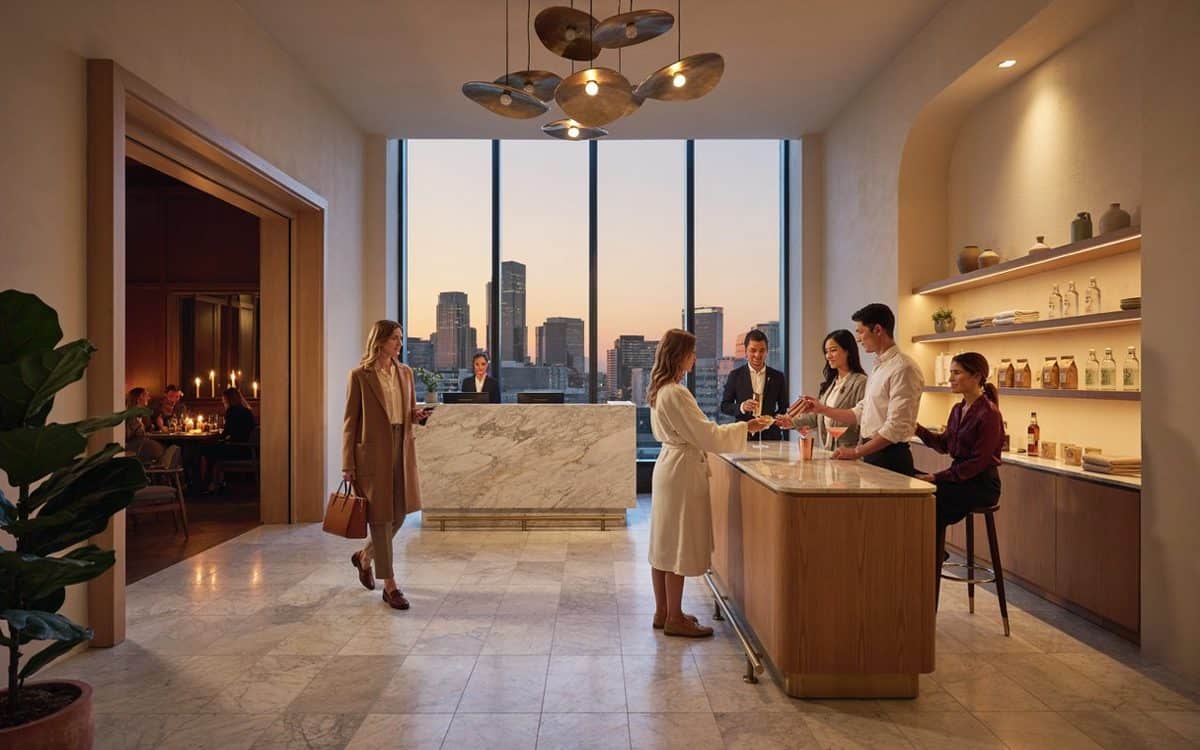
Across the UK and Europe, the traditional, quiet hotel lobby is virtually dead. In its place, innovative lifestyle hospitality brands are pioneering a model that transforms ground-floor spaces into bustling, revenue-generating neighborhood hubs. Brands are actively monetizing their lobbies by seamlessly blending high-energy food and beverage operations with flexible, premium co-working environments. The fundamental strategy is to capture local community spending rather than just relying on overnight transient guests. By offering tiered co-working memberships, these European properties secure guaranteed monthly income regardless of room occupancy. Meanwhile, the localized restaurant outlets—often helmed by popular local chefs rather than generic hotel catering staff—draw in city residents for breakfast meetings, lunch dates, and evening cocktails. This creates a vibrant, authentic atmosphere that ironically makes the hotel much more attractive to actual travelers. In these successful lifestyle properties, it is not uncommon for food and beverage to generate upwards of thirty percent of total revenue, with memberships adding another massive layer of financial insulation.
The mechanics of monetizing strategic partnerships require a delicate balance of brand alignment and clever financial structuring. Hotels rarely take on the heavy operational burden of managing a medical clinic or a complex tech installation themselves. Instead, they operate on lucrative revenue-sharing agreements or strict lease models. For instance, when a luxury hotel partners with a renowned fitness brand for on-site classes, the hotel typically takes a solid percentage of every class booked, while the fitness brand gains direct access to an affluent, captive audience. Additionally, hotels are utilizing sophisticated affiliate marketing models within their digital concierges. If a guest books an off-site helicopter tour or an exclusive restaurant reservation through the hotel’s custom app, the property automatically receives a commission. Some ambitious brands are even white-labeling products—partnering with local artisanal coffee roasters or boutique skincare lines to create exclusive, hotel-branded retail items. This allows the hotel to earn high retail margins without the associated research, development, or manufacturing costs.
Artificial intelligence is the invisible, highly efficient engine driving the modern hotel ancillary revenue machine. The archaic days of a front desk agent awkwardly trying to upsell a suite at check-in are being rapidly replaced by sophisticated algorithms. AI platforms instantly analyze vast amounts of guest data—from past booking habits to demographic information and even social media sentiment—to present highly personalized offers at the exact moment a guest is most likely to buy. This is known in the modern industry as attribute-based selling. Instead of just booking a generic room, guests are prompted to add on specific, monetized attributes: a guaranteed high floor, early check-in, a pre-stocked minibar with their favorite local craft beer, or a deeply discounted spa treatment during notoriously off-peak hours. Furthermore, AI allows for dynamic pricing of these exact ancillaries. The cost of a late check-out might fluctuate in real-time based on the property’s current occupancy and housekeeping schedules, maximizing profit margins on services that essentially cost the hotel nothing to provide.
As properties increasingly transform into bustling co-working spaces, local neighborhood bars, and clinical wellness centers, there is a legitimate, growing risk of alienating the traditional traveler who simply wants a quiet, comfortable place to sleep. The tension between a vibrant, revenue-generating lobby and a restful, private guest experience is a tightrope that operators must walk very carefully. If a tired business traveler cannot get a good night’s rest because the hotel has transformed its rooftop into a highly profitable nightclub for locals, the core product—the guest room—suffers immensely. Smart hoteliers are successfully mitigating this by employing hyper-segmented architectural design. They are creating strict physical and acoustic boundaries between the public, high-energy activation zones and the private guest room corridors. Some luxury brands are taking it a step further by offering specific quiet floors or purely residential wings that are entirely insulated from the lifestyle programming. Balancing the pursuit of localized ancillary revenue with the fundamental promise of traditional hospitality is the greatest design challenge facing the modern industry.
In another independent research, Amadeus-Travel-Dreams-Report-2026 shows that utilizing guest insights to craft personalized experiences that drive new profitability, shifting personalization from a mere hospitality perk to a fundamental revenue strategy.
Transition to Experience Hubs: Hotels are expanding beyond traditional lodging by generating non-room revenue through wellness programs, local events, and strategic partnerships.
Monetization of Guest Preferences: High-demand room attributes and services—such as early check-ins, custom amenities, and local experience kits—are being explicitly targeted as new revenue opportunities.
Investment in Tailored Tech: Properties are actively doubling down on personalization by integrating AI, contactless technology, and custom packages to curate unique local experiences.
Strategic Evolution: Delivering a personalized stay is no longer just a service differentiator used to stand out from competitors; it is now an essential, core revenue-generating strategy for the industry.
By the end of this decade, the traditional hospitality concept of Revenue Per Available Room will likely be entirely replaced by Total Revenue Per Available Guest. The successful hotel of 2030 will function far less like a standard lodging facility and much more like a hyper-curated, mixed-use commercial platform. We will likely see the total erasure of the boundary between hospitality and retail, with every physical item in a guest room—from the modern artwork on the walls to the smart mirror in the bathroom—available for instant purchase and global home delivery via integrated e-commerce systems. Furthermore, major properties will likely become deeply integrated into the local civic infrastructure, perhaps even serving as localized community energy grids or decentralized neighborhood healthcare outposts, heavily subsidized by municipal government partnerships. The most profitable hospitality brands of the future will be those that realize they are no longer just in the business of selling sleep, but in the highly lucrative business of orchestrating comprehensive lifestyles. As long as travelers continue to seek deep connection, hyper-personalized wellness, and absolute convenience, the aggressive evolution of non-room revenue will continue to fundamentally rewrite the economic rules of global tourism.
Why did this massive shift happen? The cause is simple. Relying purely on nightly room rates became far too risky. Economic crashes ruined traditional profits. So, what is the ultimate answer? American hotels transformed into aggressive e-commerce hubs. They monetized absolutely everything. The reason they beat competitors like Thailand is pure technological power. They did not just add spa treatments. They weaponized AI to sell local perks, EV charging, and elite co-working spaces. This bold strategy completely insulated their cash flow. The hotel of the future is finally here. It is no longer a bedroom. It is a relentless retail empire.
Advertisement
Advertisement
Advertisement













Friday, September 4, 2026

Friday, September 4, 2026

Friday, September 4, 2026

Thursday, September 3, 2026

Wednesday, September 2, 2026

Friday, September 4, 2026

Friday, September 4, 2026