
Greece Inspires a Powerful European Monastery Travel Boom Through Sacred Escapes and Slow Tourism

Published
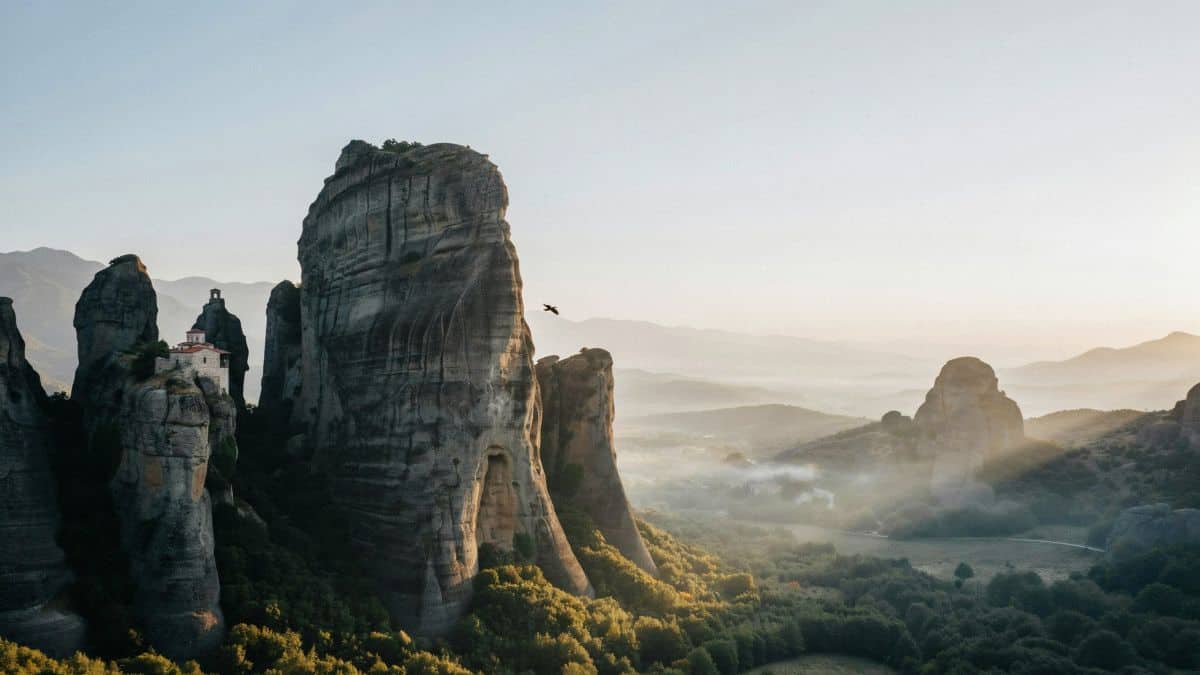
Image generated with Ai
The country of Greece creates a remarkable European monastery travel trend by means of sacred escapades and slow tourism through transforming the old sites of worship into meaningful trips for today’s tourists. Across the country, tourists go beyond popular beaches and city tours. Instead, they visit tranquil monasteries, paths in the mountains, stay in villages and taste local cuisine. The Meteora region is an example of such development, where monks’ rock top monasteries unite religion, art, amazing landscape and trekking in one place. Besides, the interest goes beyond tourism itself, as tourists can hike along historical paths, visit culturally interesting places and stay longer in small communities. It promotes guesthouses, local guides, cafes and producers.
Europe’s Monasteries Are No Longer Just Stops on a Sightseeing List
For many years, a monastery visit meant a quick photograph, a church tour and a bus ride back to the city. That model is changing. In 2026, monasteries are supporting wider travel experiences. Visitors now pair them with hiking, cycling, river cruising, local food, village stays, cultural events and wellness breaks. This shift helps destinations move visitors away from a single crowded landmark and into the surrounding region.
The appeal is easy to understand. Monasteries often stand in striking places. They sit on cliffs, beside rivers, in forests, on islands or above old towns. Their settings offer calm, beauty and history in one place. For travellers dealing with busy work lives and constant screens, such spaces feel different. They promise silence, slower days and a stronger connection with place.
This is especially valuable for rural tourism. A monastery rarely exists alone. It supports cafés, guesthouses, local guides, transport providers, craft makers and small food businesses. When visitors stay overnight rather than return to a major city, more of their money stays in the local area.
Advertisement
Advertisement
Greece Turns Meteora into a Year-Round Spiritual and Outdoor Gateway
Advertisement
Advertisement
Meteora in central Greece is one of the clearest examples of monastery tourism working as a full destination product. Six active monasteries stand on giant rock pillars above the town of Kalambaka. The setting is visually extraordinary, but the visitor appeal goes far beyond photographs. Meteora combines Orthodox heritage, scenery, hiking, climbing, local accommodation and seasonal religious events.
Meteora is Greece’s most important monastic centre after Mount Athos. Monastic life began there in the 11th century, while the monasteries reached their peak in the 13th and 14th centuries. Today, the site remains both a place of worship and a major cultural attraction. Great Meteoron, Varlaam, Roussanou and Agiou Stefanou each offer a different visitor experience through architecture, frescoes, museums, manuscripts and sweeping views.
The major tourism lesson from Meteora is seasonality. The monasteries can be visited throughout the year. Spring and autumn suit hiking, while winter mist creates a different landscape and religious celebrations bring another reason to visit. This helps Kalambaka avoid depending only on the summer rush. It also encourages visitors to stay longer, explore trails and use local businesses.
Advertisement
Advertisement
Meteora proves that sacred heritage can support both international tourism and regional life when visitors are encouraged to explore responsibly beyond a single viewpoint.
France’s Mont-Saint-Michel Shows the Reward and Risk of Global Fame
Advertisement
Advertisement
Mont-Saint-Michel is one of Europe’s greatest monastery-led tourism icons. The abbey rises from a rocky tidal island on the Normandy coast, surrounded by a vast bay and changing sea conditions. It blends Gothic architecture, pilgrimage history, medieval streets and a powerful coastal landscape. The UNESCO-listed site attracts more than three million visitors each year.
That scale creates major economic value. Visitors support accommodation, restaurants, shuttles, guided visits, museums and businesses throughout Normandy. The site also benefits from wider journeys. The Véloscénie cycle route links Paris with Mont-Saint-Michel, allowing the abbey to become the final highlight of a longer low-carbon travel route.
Yet Mont-Saint-Michel also gives Europe an important warning. Fame can create crowding. When narrow lanes, car parks and public spaces become overwhelmed, the heritage experience suffers. The future is not simply about attracting more people. It is about managing arrivals better. Timed visits, public transport, early-morning and evening experiences, guided bay walks and longer regional stays can reduce pressure while spreading economic benefits across the destination.
In 2026, Mont-Saint-Michel remains a tourism magnet. Its bigger value, however, is as a lesson in how to balance visitor demand with conservation and local quality of life.
Austria’s Melk Abbey Links Culture, Danube Cruises and Festivals
Advertisement
Advertisement
Melk Abbey in Austria shows how a monastery can become the centrepiece of a wider cultural landscape. The Benedictine abbey stands high above the Danube in the Wachau Valley. Its Baroque architecture, abbey church, library, Marble Hall and gardens make it one of Austria’s most recognisable heritage experiences.
The active monastery receives more than 500,000 visitors every year. It is not only a museum. It remains home to a Benedictine community, hosts cultural activity and forms part of the Wachau, a celebrated landscape known for vineyards, old towns and Danube views.
This makes Melk a strong example of layered tourism. A visitor may arrive by river cruise, train, bicycle or road. They can then continue to wine villages, walking trails, local restaurants and other heritage sites. This is exactly how a landmark should work. It should encourage travellers to discover more of the region instead of taking only one picture and leaving.
Melk also adds a powerful reason to travel outside the classic summer period. Its annual Baroque Festival gives visitors a reason to book accommodation, dine locally and explore the Wachau at a quieter time of year.
Italy Uses Monasteries to Build Slow Travel Routes Beyond Rome
Advertisement
Advertisement
Italy has some of Europe’s strongest monastery heritage, but its greatest 2026 tourism opportunity lies in using that heritage to pull visitors beyond the country’s busiest cities. The Abbey of Montecassino and the monasteries of Subiaco provide a strong example.
Montecassino, founded by St Benedict in 529, stands on a hill above Lazio. It is one of Italy’s most important places of worship and is widely seen as the cradle of Western monasticism.
The site connects directly to the Way of St Benedict, a 300-kilometre route that links Norcia, Subiaco and Montecassino through Umbria and Lazio. This is not only a pilgrimage path. It is a tourism corridor for walkers, cyclists and culture-led travellers. It takes people through small villages, natural landscapes and food-producing areas that may otherwise receive little international attention.
Subiaco adds another striking experience. The Monastery of San Benedetto is built into the rock face of Monte Taleo and linked with the cave where St Benedict lived as a hermit. Its setting offers a powerful alternative to conventional city sightseeing.
The value of this route is clear. It turns spiritual heritage into a slow-travel product. Visitors travel at a human pace. They sleep in smaller communities. They use local cafés, shops and guides. They learn about history without adding pressure to Rome, Florence or Venice.
Advertisement
Advertisement
Romania’s Painted Monasteries Can Strengthen Rural Heritage Travel
Bucovina in north-eastern Romania has a different kind of monastery appeal. Its painted monasteries and churches are known for vivid exterior frescoes, which make religious art visible before a visitor even crosses the threshold. Bucovina is a destination of painted monasteries, striking landscapes, old traditions and hospitality.
This gives the region a strong tourism advantage. A visitor does not need to choose between culture and countryside. The two experiences work together. Monastery visits can be combined with traditional food, crafts, village accommodation, forest landscapes and local celebrations. The result is a fuller journey and a stronger reason to stay overnight.
Romania’s opportunity is to package these sites as a respectful cultural circuit. Small-group guides, clear heritage interpretation and local producer visits can add income without turning sacred sites into theme parks. The focus should remain on the art, worship, community history and landscape that make Bucovina unique.
Slovenia Offers a New Model: The Monastery as a Place to Stay
Advertisement
Advertisement
Slovenia is taking monastery tourism in a fresh direction. In Kamnik, Mekinje Monastery has introduced an overnight retreat experience in 2026. The site allows visitors to stay within former monastery walls and step away from the noise of everyday life. It combines heritage, simple accommodation, local products, exhibitions and calm.
The experience includes herbal breakfasts made with ingredients from the monastery garden, relaxation workshops, historical exhibitions and local teas and syrups. This is a powerful shift. Instead of treating a monastery only as a place to enter and leave within an hour, the destination lets visitors stay and take part in the rhythm of the place.
This model fits a growing demand for slower and more meaningful travel. It also spreads spending into smaller towns near alpine regions. Kamnik can benefit not only from day visitors but from overnight guests who eat locally, explore the old town and continue into the Kamnik-Savinja Alps.
Europe Must Protect Worship, Heritage and Local Life
Greece is responsible for an intense wave of monastery tours in Europe via spiritual escapes and slow tourism as people look for more meaningful and respectful trips in 2026. Monasteries, which used to be simply a source of good pictures, provide much more to tourists. In addition to that, these religious sites have the potential to boost the local economy because they will employ tour guides, families’ lodging places, cafes and local producers. The Meteora rock monasteries provide a good example of how that can be done. They attract tourists from all around the world but encourage them to hike and visit the area of central Greece.
Advertisement
