

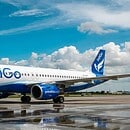
Image generated with Ai
Côte d’Ivoire, Gabon and West Africa could soon witness a significant shift in regional aviation as Fastjet Group, one of Africa’s best-known low-cost airline brands, explores plans to expand beyond its traditional markets in Eastern and Southern Africa. The airline is considering using the existing Air Operator Certificates (AOCs) held by its sister company, Solenta Aviation, in Gabon and Côte d’Ivoire to establish operations in West Africa. While no official launch date or routes have been confirmed, the proposal signals a strategic move that could reshape regional air connectivity and create new travel opportunities across one of Africa’s fastest-growing aviation markets.
Imagine travelling between major business cities and emerging tourism destinations across West Africa with more flight choices and potentially lower fares. That possibility is exactly why the aviation industry is paying close attention. Instead of starting from scratch, Fastjet is exploring a faster, more efficient way to enter a highly competitive market.
Advertisement
Fastjet has built its reputation by providing affordable air travel across parts of Eastern and Southern Africa.
Now, the airline is evaluating opportunities to extend its network westwards by making use of regulatory approvals already held by Solenta Aviation.
Advertisement
Advertisement
According to the group’s Director of Strategy and Development, Julian Edmunds, existing Air Operator Certificates in Gabon and Côte d’Ivoire could provide practical entry points into the region.
Using these certifications could significantly reduce the time, investment and administrative processes normally required to launch an airline in a new market.
Rather than waiting years for new regulatory approvals, the airline could build on an existing operational foundation while responding more quickly to market demand.
Launching an airline is rarely straightforward.
Advertisement
Advertisement
Obtaining an Air Operator Certificate often requires extensive regulatory approvals, operational inspections and financial investment before commercial flights can begin.
Fastjet’s proposed strategy follows a different approach.
By leveraging existing certifications through Solenta Aviation, the airline can potentially reduce operational risks while maintaining greater flexibility.
This franchise-style model has become increasingly attractive for airlines seeking regional expansion without committing to large capital investments.
Across Africa, more carriers are adopting partnership-driven growth strategies that combine shared infrastructure, leased aircraft and collaborative operational frameworks.
West Africa has become one of Africa’s most competitive aviation regions.
Airlines including Air Peace, ASKY Airlines, Air Côte d’Ivoire and Air Sénégal continue expanding their regional networks while increasing connectivity between business centres and tourism destinations.
The competitive landscape is expected to evolve further with planned ECOWAS aviation reforms, scheduled to take effect from January 2026.
The reforms aim to reduce aviation taxes and operational fees, potentially lowering ticket prices while encouraging greater passenger demand throughout the region.
For travellers, increased competition often results in broader route choices and improved accessibility.
The two countries under consideration occupy strategically important positions within Africa’s aviation network.
Abidjan, Côte d’Ivoire’s commercial capital, has developed into one of West Africa’s busiest aviation gateways, supporting international business travel, tourism and regional trade.
Meanwhile, Libreville, Gabon’s capital, serves as an important link between Central Africa and neighbouring markets.
Launching services from either city could allow Fastjet to connect underserved destinations where air services remain limited and ticket prices remain relatively high.
Improved connectivity would also strengthen travel between Francophone and Anglophone African markets, an area long identified as a challenge for regional tourism development.
Reliable regional aviation remains essential for Africa’s tourism growth.
Many travellers currently face indirect routings, limited flight frequencies or expensive fares when travelling between neighbouring countries.
If Fastjet proceeds with its expansion plans, tourism boards, tour operators and business travel providers could benefit from improved regional accessibility.
Additional services may also encourage multi-country holidays, conference travel and regional business investment by making cross-border travel more convenient.
For leisure travellers, lower fares could open opportunities to explore destinations that were previously less accessible because of limited flight availability.
Fastjet’s proposal reflects a broader trend emerging across African aviation.
Rather than establishing entirely new airlines in each country, operators are increasingly relying on franchise agreements, wet leases, strategic partnerships and existing regulatory structures to support expansion.
These flexible business models reduce financial exposure while allowing airlines to respond more quickly to changing passenger demand.
They also help carriers comply with local ownership requirements that apply in several African aviation markets.
As more airlines adopt similar approaches, regional aviation is expected to become increasingly interconnected while encouraging greater competition.
Although Fastjet has not yet confirmed launch dates or specific routes, industry observers will be closely monitoring future developments.
Should the airline move forward, its West African expansion could strengthen its position as one of Africa’s leading low-cost airline brands while increasing connectivity between Central, West, Eastern and Southern Africa.
For travellers, stronger competition often leads to improved service, broader route networks and more affordable travel opportunities.
The airline may use existing Air Operator Certificates held by Solenta Aviation to simplify regulatory approvals and accelerate market entry.
Potential benefits include increased regional connectivity, more flight options and stronger competition that may support more affordable fares.
Growing passenger demand, expanding business travel and upcoming ECOWAS aviation reforms are making the region increasingly attractive for airline investment.
Fastjet’s exploration of West African expansion represents more than a possible network extension—it reflects the changing dynamics of African aviation. By considering a partnership-led approach through existing Air Operator Certificates, the airline is demonstrating how carriers can expand more efficiently while responding to growing regional demand. If these plans move forward, stronger links between Abidjan, Libreville and other West African destinations could improve connectivity, stimulate tourism and create new travel opportunities across one of the continent’s fastest-evolving aviation markets.
Advertisement
Advertisement
Advertisement













Friday, September 4, 2026

Friday, September 4, 2026

Friday, September 4, 2026

Thursday, September 3, 2026

Wednesday, September 2, 2026

Friday, September 4, 2026
Friday, September 4, 2026