
Switzerland Leads Europe’s Luxury Living Landscape as High Costs Reshape the Most Expensive Cities in 2026

Published
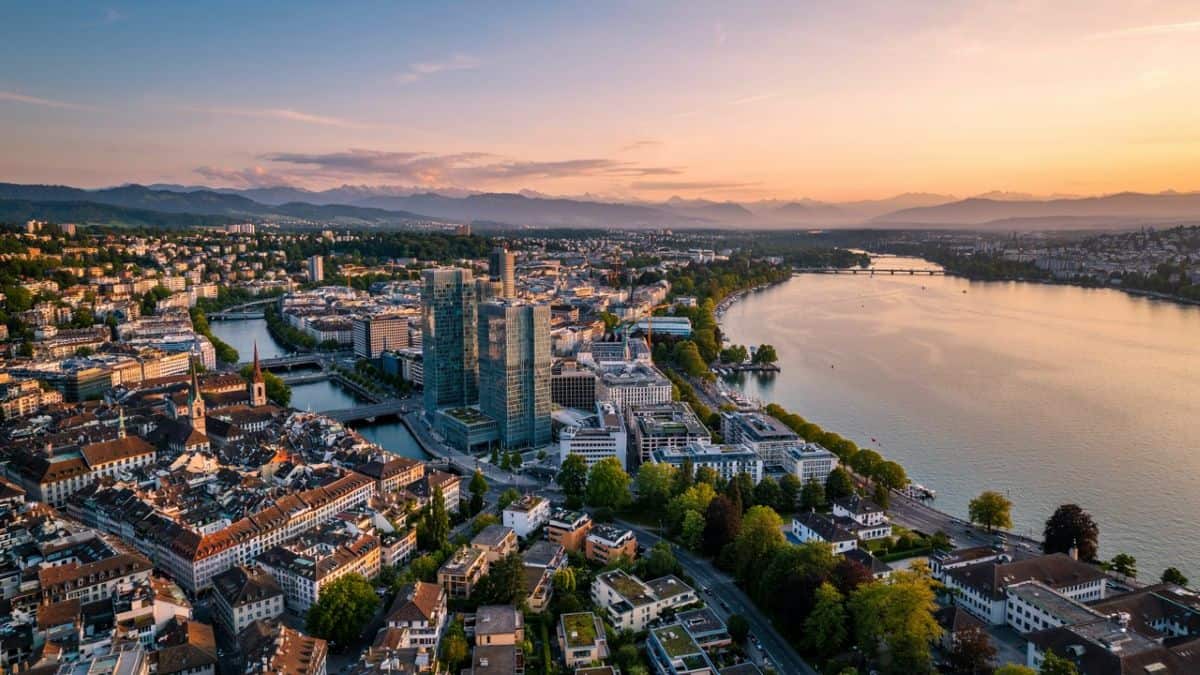
Image generated with Ai
Switzerland Dominates Europe’s Luxury Living Landscape due to High Costs Shaping the Most Expensive Cities in 2026, illustrating the way economies of cities change in the continent. Also, Switzerland remains under the spotlight owing to its premium possibilities, whereas the European cities demonstrate the evolution of lifestyles and rising demand. Innovation, tourism, and international links form the Luxury Living Landscape. Nevertheless, the problem of High Costs makes life difficult for both residents and tourists.
Switzerland Dominates Europe’s Most Expensive City Rankings in 2026
Switzerland remains the centre of Europe’s high-cost living landscape. Two Swiss cities, Zurich and Geneva, occupy the first two positions because of their exceptionally high consumer prices, housing costs, and service expenses.
Advertisement
Advertisement
Zurich leads the ranking with an estimated cost index of 120, making it the most expensive European city in this analysis. The city is one of the world’s most important financial centres. It attracts international companies, skilled professionals, and investors. However, this economic strength contributes to expensive rents, costly restaurants, transport, and daily services.
Geneva follows closely with an index of 118. The city is known as a global hub for diplomacy, finance, and international organisations. Thousands of international employees live and work there, increasing demand for housing and services. As a result, rental prices and everyday expenses remain among the highest in Europe.
Advertisement
Advertisement
Housing plays a major role in Switzerland’s cost structure. Around 20–30% of household spending is connected to housing and utilities. In cities like Zurich and Geneva, high property values and rental demand push living expenses higher than many other European locations.
The high prices do not only affect residents. Visitors also experience higher costs through accommodation, dining, transportation, and entertainment. This makes Swiss cities premium destinations where travellers often need larger budgets.
Advertisement
Advertisement
Nordic Capitals Drive Europe’s Rising Living Costs Through Strong Economies
Northern Europe also dominates the list of expensive cities. Oslo, Copenhagen, Reykjavik, and Stockholm appear among Europe’s highest-cost urban centres because of high wages, strong welfare systems, taxation structures, and expensive services.
Norway’s capital, Oslo, ranks third with a cost index of 110. The city benefits from a strong economy supported by energy, technology, and financial sectors. However, higher wages and operating costs contribute to expensive housing, food, and services.
Advertisement
Advertisement
Copenhagen, Denmark’s capital, follows with an index of 107. Denmark has one of Europe’s highest consumer price levels. According to European price comparisons, Danish consumer prices remain significantly above the European Union average. Services, restaurants, and daily goods contribute strongly to the city’s high living costs.
Reykjavik, Iceland’s capital, ranks sixth with an index of 103. Its remote location creates additional challenges. Many goods must be imported, increasing prices for consumers. Tourism growth has also increased demand for accommodation and services.
Meanwhile, Stockholm, Sweden’s capital, ranks eleventh with an index of 92. Food, transport, and services remain expensive compared with many European cities.
These Nordic destinations demonstrate an important economic pattern. High living standards often come with higher prices. Strong salaries can support residents, but visitors and newcomers frequently experience higher costs.
Advertisement
Advertisement
London Paris and Western Europe’s Major Capitals Remain Highly Expensive
Europe’s most famous capitals continue to appear among the costliest cities. London and Paris remain global centres for business, tourism, culture, and international connections.
London ranks seventh with an index of 101. The United Kingdom’s capital has one of the most expensive housing markets in Europe. Housing represents around 30% of household spending in the analysis, making rent one of the biggest financial pressures for residents.
London’s position as a global financial centre attracts workers from around the world. However, strong demand for accommodation keeps rental prices high. Transport, dining, and entertainment also contribute to the city’s overall expense.
Paris ranks eighth with an index of 100. France’s capital remains one of Europe’s most influential cities for tourism, fashion, business, and culture. Housing costs in the Paris region remain significant, while services and leisure activities add to everyday expenses.
Other Western European cities also appear in the ranking.
Luxembourg City ranks fifth with an index of 105. Despite its small size, Luxembourg has one of Europe’s strongest economies. Its role as a financial centre increases demand for housing and services.
Advertisement
Advertisement
Dublin ranks twelfth with an index of 90. The Irish capital has experienced significant housing pressure due to economic growth, especially from technology companies. Rising rents have become a major factor influencing living costs.
Germany Italy Spain and Belgium Cities Face Growing Urban Expenses
Large European economies also feature strongly in the ranking. Cities such as Munich, Milan, Amsterdam, Madrid, Berlin, Barcelona, and Brussels show how urban popularity can increase costs.
Milan ranks ninth with an index of 95. As Italy’s business and fashion capital, Milan attracts international companies and visitors. Housing and consumer services in northern Italy remain higher than many other parts of the country.
Munich ranks tenth with an index of 93. Germany’s southern economic powerhouse has experienced strong housing demand. The city’s economic success has pushed property and rental prices higher.
Frankfurt ranks fourteenth with an index of 88. Known as Germany’s financial centre, Frankfurt faces higher costs in housing, restaurants, and services.
The Netherlands’ capital, Amsterdam, ranks fifteenth with an index of 87. High housing demand, energy costs, and international popularity contribute to its expensive living environment.
Advertisement
Advertisement
Spain’s major cities also appear on the list. Madrid ranks sixteenth with an index of 85, while Barcelona ranks eighteenth with an index of 82. Tourism, international demand, and rising rental prices influence their positions.
Berlin, once considered one of Europe’s more affordable capitals, now ranks seventeenth with an index of 83. Increasing rents have changed the city’s cost profile.
Belgium’s capital, Brussels, ranks nineteenth with an index of 80. As the centre of European institutions, Brussels attracts international workers and maintains relatively high housing and service costs.
Housing Remains the Biggest Factor Behind Europe’s Expensive Cities
Housing is the most important factor shaping Europe’s cost-of-living landscape. Across many expensive cities, rent, property prices, and utilities represent one of the largest parts of household spending.
The analysis estimates housing shares between 15% and 30% depending on the city. London has one of the highest housing impacts, with around 30% of household costs linked to accommodation.
Zurich, Geneva, Paris, Milan, Dublin, Amsterdam, and other major cities also experience strong housing pressure because of limited supply and high demand.
Advertisement
Advertisement
However, living costs are not only about rent. Other categories also influence affordability.
Food prices remain higher in countries with expensive production systems, high wages, or significant import dependence. Nordic and Swiss cities often experience higher grocery costs.
Transport costs vary between cities. Some expensive cities provide strong public transport networks that help residents reduce car expenses. Others have higher commuting costs due to urban expansion.
Healthcare and education also influence household budgets. European countries have different systems, meaning costs can vary significantly depending on residents’ circumstances.
Entertainment, restaurants, and cultural activities also contribute to city expenses. Global destinations often charge premium prices because they attract international visitors and businesses.
Europe’s Expensive Cities Reflect Economic Strength and Global Attraction
The ranking of Europe’s most expensive cities also shows a connection between economic success and urban costs.
Advertisement
Advertisement
Cities with strong financial sectors, international companies, advanced infrastructure, and global tourism appeal often become more expensive. Zurich, Geneva, London, Paris, Copenhagen, Oslo, and Amsterdam all share these characteristics.
These cities continue attracting people because they offer career opportunities, cultural experiences, education, and high-quality infrastructure. However, the demand that makes them attractive also increases living expenses.
For travellers, these cities remain among Europe’s most rewarding destinations. They offer world-class museums, historic landmarks, luxury shopping, restaurants, and unique cultural experiences. However, visitors need careful planning because accommodation and daily expenses can be significantly higher.
For businesses, expensive cities often represent strong markets with skilled workers and international connections. For residents, they provide opportunities but require careful financial planning.
Methodology Shows Why Europe’s Cost Ranking Should Be Viewed Carefully
This ranking provides an estimated comparison rather than an official European city cost index. No single organisation currently publishes a complete city-by-city European living cost ranking.
The analysis combines multiple sources, including Eurostat purchasing power data, OECD and IMF information, national statistics, and private surveys such as Numbeo and international cost reports.
Advertisement
Advertisement
The cost index uses a common scale where higher numbers represent higher expenses. Zurich is used as an approximate reference point with an index around 120, and other cities are adjusted based on available data.
Some city-level figures rely on national data because detailed urban statistics are not always available. Capital cities and major economic centres often have higher costs than national averages, but exact differences can vary.
Data dates also differ. Some official price comparisons use 2025 information, while private databases provide more recent 2026 estimates.
Therefore, the ranking should be understood as an informed comparison rather than a fixed measurement. Actual living costs depend on lifestyle, housing choices, income levels, and personal spending habits.
Europe’s Most Expensive Cities Continue Shaping the Future of Urban Living
In today’s time, Switzerland unveils the most expensive cities to reside in as Zurich emerges to top the list of 2026 cost explosion in the modern cities. In addition to that, the emerging economy in Europe’s cities brings with it some serious challenges. These most expensive places lure both professionals as well as travelers by virtue of innovation, culture, and connectivity. The increasing cost of accommodation is one thing that keeps Zurich at the top of discussion regarding affordability. Hence, it can be said that Switzerland tells us a more detailed story of how cities have to strike a balance between development and future.
Advertisement
