
Saudi Arabia Joins Israel and More Nations Becoming Target for Houthi Conflict Escalation Resulting New Travel Alert

Updated
Published
Saudi Arabia joins Israel and more nations facing a sharper Houthi conflict escalation, raising fresh concerns over regional security, tourism, aviation, shipping, energy and international travel, creates a new travel alert.Saudi Arabia joins Israel and more nations confronting the widening impact of Houthi conflict escalation across the Middle East and Red Sea.
Meanwhile, fresh missile and drone threats are increasing pressure on regional security, aviation, shipping and tourism. As the conflict expands, Saudi Arabia has become a prominent target of Houthi attacks, while Israel remains part of the group’s wider confrontation. Moreover, threats affecting maritime routes are creating consequences for more nations beyond the immediate battlefield. Therefore, airlines, cruise operators, hotels and travellers are closely watching developments. The escalation could further disrupt connectivity, raise operating costs and reshape travel patterns across the region.
Advertisement
Advertisement
The latest Houthi escalation is extending beyond Yemen’s battlefield, with Saudi Arabia facing missile and drone attacks while commercial shipping faces growing risks across the Red Sea, Bab al-Mandab and Gulf of Aden. The developing security situation has implications for airlines, cruise operators, shipping companies, energy markets and travellers moving through the wider Middle East.
For the travel industry, the distinction between direct attacks and maritime exposure is important. Saudi Arabia and Yemen are experiencing direct military confrontation, while vessels connected with several other countries face elevated risks at sea. The situation is fluid, and individual incidents should therefore be verified against government advisories and maritime-security notices before travel decisions are made.
Advertisement
Advertisement
Saudi Arabia: Riyadh And Energy Infrastructure Face Houthi Attacks
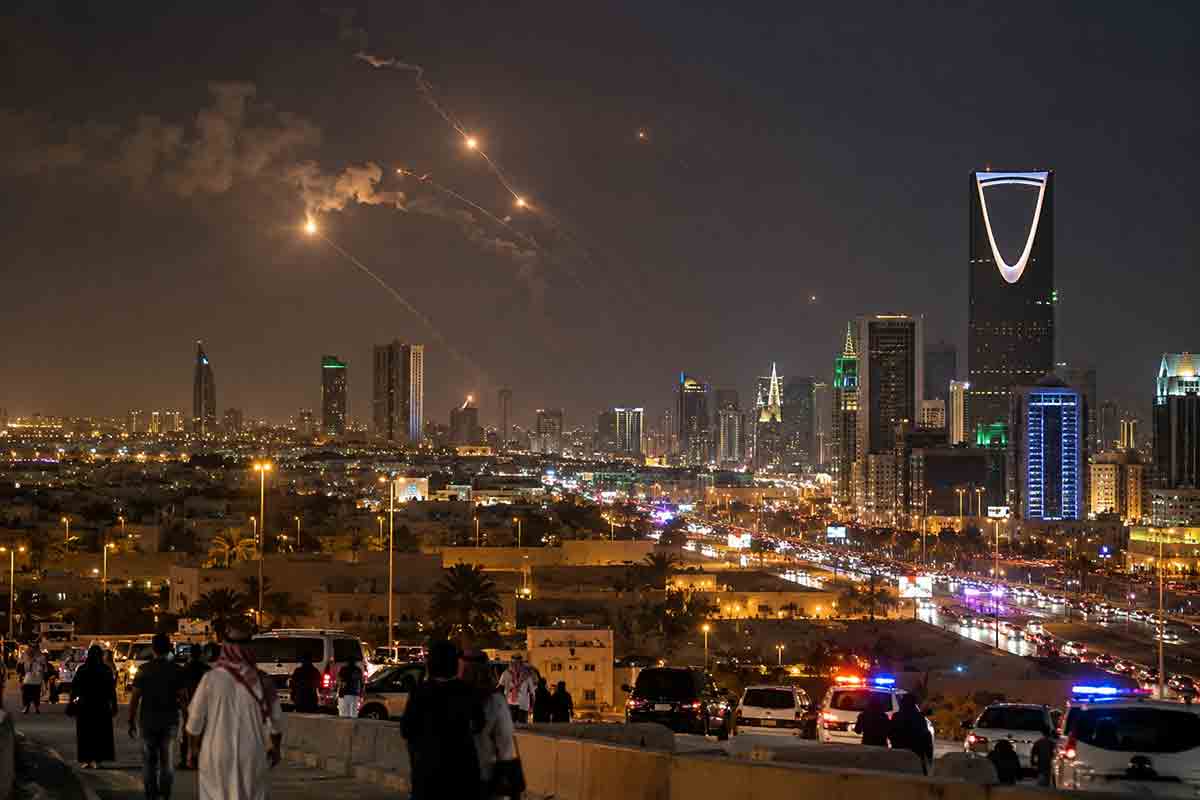
Saudi Arabia is currently the most prominent country outside Yemen affected by the latest Houthi escalation. Air-raid alerts were issued in Riyadh, while explosions were reported in the capital and authorities subsequently declared that the immediate danger had passed.
Houthi forces have also claimed attacks involving missiles and drones against Saudi targets, including energy infrastructure in Yanbu. Other Saudi locations affected by previous attacks include Jeddah, Taif, Abha, Khamis Mushait, Jizan and Najran. The geographical spread matters for tourism because Saudi Arabia is developing Riyadh, Jeddah and other cities as major international business and leisure destinations, while aviation and energy infrastructure remain strategically important.
Advertisement
Advertisement
Residents in Riyadh have been given the all-clear after air raid alerts were issued and explosions were heard across Saudi Arabia’s capital, marking a significant escalation in the widening confrontation between the Kingdom and Yemen’s Iran-backed Houthi movement.
The alerts, issued late on Friday and continuing into Saturday morning local time, triggered heightened security measures in Riyadh and several other Saudi regions. Reuters and AFP journalists reported hearing explosions in the capital before authorities confirmed that the immediate danger had passed.
Advertisement
Advertisement
The latest incident comes as Houthi attacks against Saudi targets intensify, with the group declaring what it describes as a maritime embargo against Saudi Arabia and targeting energy infrastructure with drones and missiles.
Why Were Air Raid Alerts Issued in Riyadh?
Saudi authorities issued air raid warnings after detecting a potential threat involving incoming missiles or drones. The Saudi Civil Defence alerted residents in Riyadh and other areas as the Kingdom faced another wave of attacks linked to the escalating conflict with the Houthis.
Explosions were subsequently reported by international journalists in the capital. Authorities later confirmed that the immediate threat had ended and advised residents to avoid gathering in crowds.
Although Riyadh has extensive experience with missile and drone threats linked to regional conflicts, the latest alerts are particularly significant because they come amid a broader escalation involving Saudi energy infrastructure and maritime routes.
Advertisement
Advertisement
The incident also represents the first reported air raid alerts in Riyadh since the Houthis intensified their campaign and announced their maritime restrictions against Saudi interests in July.
What Is Behind the Houthi Escalation Against Saudi Arabia?
The Houthis have linked their latest attacks to Saudi military operations and restrictions affecting Houthi-controlled areas of Yemen.
Houthi military spokesman Yahya Sarea said earlier this week that the group had launched missiles and drones towards Saudi Arabia in response to more than 450 Saudi air strikes against Houthi-controlled territory during the preceding week.
The group has accused Saudi Arabia of imposing a blockade on ports and airports in areas under Houthi control in north-western Yemen. In response, the Houthis announced their own maritime restrictions targeting Saudi-linked shipping.
The confrontation therefore extends beyond conventional military operations. It increasingly involves ports, shipping routes, oil infrastructure and international trade corridors that connect the Gulf with global markets.
Why Are Mokha and Perim Island Important?
The Houthis have recently seized control of the strategic port city of Mokha and Perim Island, increasing their influence around one of the world’s most sensitive maritime regions.
Advertisement
Advertisement
Perim Island sits near the Bab al-Mandab Strait, a crucial maritime gateway linking the Red Sea with the Gulf of Aden and the wider Indian Ocean.
The waterway is particularly important for international commerce because ships travelling between Europe and Asia can use the Red Sea and Suez Canal route instead of sailing around the southern tip of Africa.
Greater military pressure around the Bab al-Mandab therefore has implications well beyond Yemen and Saudi Arabia.
Any prolonged disruption could affect shipping schedules, insurance costs, vessel routing and energy transportation, particularly at a time when other major maritime routes are already facing instability.
Riyadh Airport Faces Fresh Aviation Disruption
King Khalid International Airport in Riyadh has become a focal point of the latest escalation after air-raid warnings were issued for the Saudi capital. Explosions were reported in Riyadh, while smoke and flames were seen near the airport area. Flight-tracking data indicated significant disruption before operations began returning towards normal.
For airlines, even a temporary security alert can create knock-on effects. Aircraft may be delayed, departures suspended, flights diverted and connecting passengers affected. Because Riyadh is an important Saudi aviation hub, disruption can also spread across domestic and international networks.
Advertisement
Advertisement
Jeddah And Southern Airports Remain Exposed
The aviation impact extends beyond Riyadh. Jeddah, Abha, Jizan and Najran have faced heightened security concerns as Houthi attacks have targeted Saudi territory.
Southern airports are particularly exposed because of their geographical proximity to Yemen. Previous incidents have resulted in temporary airport closures and operational restrictions.
Jeddah presents a separate concern because King Abdulaziz International Airport is one of Saudi Arabia’s most important international gateways and a major entry point for religious travellers. Any prolonged disruption there could affect airlines operating services for Umrah and other international travel.
Airlines Face Rerouting And Higher Costs
Airlines operating in the region must continuously assess airspace restrictions, security warnings and potential missile or drone activity. Even when Saudi airspace remains officially open, carriers can be required to alter routes or maintain contingency plans for sudden diversions.
Longer flight paths can increase fuel consumption, aircraft utilisation and crew costs. Delays can also disrupt aircraft rotations, potentially affecting several services during the same operating day.
These challenges arrive as Middle Eastern carriers are already experiencing significant financial pressure.
Advertisement
Advertisement
Middle East Airlines Already Facing Heavy Losses
The International Air Transport Association has forecast a $4.3 billion net loss for Middle Eastern airlines in 2026, compared with an estimated $7.2 billion profit in 2025.
IATA has attributed the deterioration to the consequences of regional conflict, including cancellations, reduced capacity, higher fuel costs and weaker connecting traffic.
The impact is particularly important for Gulf carriers because their business models rely heavily on international transfer passengers travelling between Europe, Asia, Africa and other markets.
Fuel Prices Add Another Challenge
The Houthi escalation is also affecting energy and shipping markets, creating another potential problem for airlines.
The Red Sea and Bab al-Mandab are critical transportation corridors. Shipping companies avoiding the area can face substantially longer journeys around Africa, increasing fuel and transportation costs.
Higher energy prices can eventually translate into higher airline operating expenses because jet fuel remains one of the industry’s largest costs.
Advertisement
Advertisement
What Does This Mean For Travellers?
Passengers travelling to or through Saudi Arabia should expect airlines to monitor the situation closely and potentially make short-notice changes to schedules or routing.
Government travel advisories are also important because security assessments can change rapidly.
For airlines, the immediate priorities are maintaining safe flight operations, monitoring airspace developments and preparing alternative routes. For travellers, checking the airline’s latest flight status and official government guidance before departure remains essential.
The wider concern is whether the latest Houthi escalation remains concentrated around Saudi Arabia or expands further across the Gulf aviation network. If attacks continue affecting major airports and energy infrastructure, the consequences could extend beyond Saudi Arabia to international airlines, connecting hubs and global aviation costs.
How Are Saudi Oil Exports Being Affected?
Saudi Arabia has increasingly relied on alternative routes for energy exports as the regional security environment has deteriorated.
The conflict around the Strait of Hormuz has added further pressure to Gulf energy markets, while instability in the Red Sea has created another challenge for Saudi Arabia and other regional exporters.
Advertisement
Advertisement
The latest Houthi attacks have directly targeted Saudi oil facilities. According to the information surrounding the attacks, drones and missiles struck several energy sites last week, triggering fires and forcing operations to be temporarily halted.
Saudi Arabia remains one of the world’s most important oil producers, meaning disruption to its energy infrastructure can quickly become a concern for global markets.
Even temporary interruptions can influence traders’ expectations about available supply, transportation risks and future energy prices.
Why Are Global Fuel Markets Watching the Conflict?
The growing confrontation is being closely watched by energy markets because the affected areas include several critical routes for international oil and fuel transportation.
The Strait of Hormuz, the Red Sea and the Bab al-Mandab Strait are strategically important maritime corridors. Disruption in any of these areas can increase voyage times, insurance costs and operational risks for shipping companies.
When vessels avoid threatened waterways, they may have to take substantially longer routes. That can increase fuel consumption, crew costs and delivery times while reducing effective shipping capacity.
Advertisement
Advertisement
The combination of maritime blockades, attacks on oil infrastructure and uncertainty surrounding regional military operations has therefore contributed to concerns about energy security.
Higher crude and refined fuel costs can eventually feed into petrol and diesel prices, although the effect on consumers varies between countries and depends on taxation, refining capacity, currency movements and domestic market conditions.
Has Saudi Arabia Asked the United States for Military Support?
Saudi Crown Prince Mohammed bin Salman has reportedly asked US President Donald Trump to consider military action against the Houthis, according to two sources familiar with the matter cited by CBS News, the BBC’s US media partner.
The United States has so far not directly entered the conflict against the Houthis, according to the reported information.
Instead, Washington has offered intelligence and targeting support while maintaining discussions with Saudi Arabia and Yemen’s internationally recognised government.
A senior Trump administration official told the BBC that the United States remained in continuous dialogue with Saudi Arabia and the Republic of Yemen government regarding regional stability.
Advertisement
Advertisement
The US position could become increasingly significant if attacks on Saudi infrastructure and shipping continue to intensify.
What Did the United Nations Say About the Red Sea?
The United Nations Security Council held an emergency meeting earlier this week following the latest escalation.
During the meeting, representatives of Yemen’s government and Saudi Arabia called for stronger international action against the Houthis. They accused the group of restricting access through the Bab al-Mandab Strait and using maritime pressure as an economic weapon.
Security Council members stressed the importance of maintaining freedom of navigation through the Red Sea.
The issue is significant because the Red Sea is part of a major international shipping corridor connecting Asia, the Middle East and Europe. Any sustained disruption could therefore affect supply chains across multiple regions.
The diplomatic discussions also underline the wider international concern surrounding the conflict and its potential impact on global commerce.
Advertisement
Advertisement
Why Is Saudi Arabia’s Tourism Industry Important?
Tourism has become a central pillar of Saudi Arabia’s economic diversification strategy. According to the OECD, tourism directly contributed SAR 231.5 billion, equivalent to 4.9% of GDP, in 2024, while the sector supported more than one million jobs in 2025.
The Kingdom recorded 29.3 million international arrivals in 2025, generating SAR 176.6 billion in inbound tourism receipts. Domestic tourism remains equally significant, with 93.3 million domestic tourists recorded in 2025.
These figures demonstrate the scale of the industry now exposed to the consequences of regional instability.
Saudi Arabia Travel Advisories Tighten as Houthi Attacks Raise Risks for Tourists
Saudi Arabia’s growing security tensions with the Houthis are prompting governments to update travel advice, with warnings covering missile and drone attacks, regional conflict, terrorism and possible disruption to flights. The advisories do not impose identical restrictions across the Kingdom, but they consistently identify the Yemen border and parts of southwestern Saudi Arabia as higher-risk areas.
For international travellers, the key message is that Saudi Arabia is not subject to a single uniform travel warning. Restrictions vary according to nationality, location and the latest security developments.
| Government | Overall advice for Saudi Arabia | Highest-risk areas / specific restrictions | Main reasons cited | Latest update |
|---|---|---|---|---|
| United Kingdom – FCDO | No blanket do-not-travel warning for all of Saudi Arabia, but regional restrictions apply | Avoid all travel within 10 km of Yemen border; avoid all but essential travel between 10 km and 80 km from border | Houthi missile and drone attacks; risk of escalation; attacks on cities, airports, energy infrastructure and shipping | Current September 2026 guidance |
| United States – State Department | Level 3 – Reconsider Travel | Level 4 – Do Not Travel to Yemen border region; US government employees face additional restrictions in Jizan, Asir, Najran and Qatif | Iranian missile/drone threats, armed conflict, terrorism, exit bans and local laws | 15 September 2026 |
| Canada – Government of Canada | Avoid non-essential travel | Avoid all travel to Asir, Jazan and Najran and within 30 km of Yemen border; exercise extreme caution elsewhere in southwestern Saudi Arabia | Armed strikes, drone attacks, military debris and volatile regional security situation | 17 September 2026 |
| Australia – Smartraveller | Reconsider your need to travel | Do not travel within 30 km of Yemen border; reconsider travel between 30 km and 80 km from border | Houthi missile/drone attacks, military strikes, terrorism and possible airspace closures | Current 17 September 2026; page updated 2 September |
What Is The UK Advising Travellers?
The UK Foreign, Commonwealth & Development Office does not advise against travel to the whole of Saudi Arabia.
Advertisement
Advertisement
However, the FCDO advises against all travel within 10 kilometres of the Saudi-Yemen border and against all but essential travel between 10 and 80 kilometres from the border. It also warns that Houthi missiles and drones have targeted Saudi cities, airports, energy infrastructure and shipping.
The advisory identifies locations including Abha, Jizan, Najran, Taif, Jeddah and Yanbu among areas affected by previous attacks.
What Is The US Travel Advisory?
The US State Department currently places Saudi Arabia at Level 3 – Reconsider Travel.
The US government cites risks linked to missile and drone attacks, armed conflict and terrorism. The Yemen-border area carries a separate Level 4 – Do Not Travel designation.
The US advisory also identifies additional restrictions affecting US government personnel in locations including Jizan, Asir, Najran and Qatif.
For American travellers, the advisory highlights the possibility of significant flight disruption, even when commercial aviation continues operating.
Advertisement
Advertisement
What Does Canada Advise?
Canada takes a more cautious nationwide position through its Saudi Arabia travel advisory, recommending that travellers avoid non-essential travel because of the volatile regional security environment.
Ottawa advises against all travel to Asir, Jazan and Najran, as well as areas within 30 kilometres of the Yemen border.
The Canadian government cites armed strikes, drone attacks and military debris among the risks. It also warns that renewed attacks can result in flight cancellations and other forms of transportation disruption.
What Is Australia’s Position?
Australia’s Smartraveller advisory for Saudi Arabia recommends that travellers reconsider their need to travel to the Kingdom.
The Australian government specifically warns about Houthi missile and drone attacks and identifies risks involving airports, oil infrastructure, shipping and cities including Riyadh and Jeddah.
Travellers are advised not to travel within 30 kilometres of the Yemen border and to reconsider travel between 30 and 80 kilometres from the border.
Advertisement
Advertisement
Smartraveller also warns that security developments can result in airspace closures, flight cancellations, delays and diversions with little or no notice.
Which Parts Of Saudi Arabia Face The Greatest Restrictions?
The advisories broadly agree that the Yemen-border region and southwestern provinces face the highest level of risk.
| Area | Advisory pattern |
|---|---|
| Yemen border | Strongest restrictions across the four governments |
| Jazan | Particularly high concern |
| Najran | Particularly high concern |
| Asir | Particularly high concern |
| Riyadh | Security incidents reported, but not subject to the same blanket border restrictions |
| Jeddah | Security concerns and potential aviation disruption |
| Makkah | Travellers should monitor current official guidance |
| Madinah | No equivalent blanket border restriction |
This geographic distinction is important for travellers because a warning concerning Jazan or the Yemen border should not automatically be interpreted as a prohibition on visiting every Saudi destination.
What Does This Mean For Tourists And Airlines?
The principal risk for international tourism is rapidly changing operating conditions. Even where airports remain open, missile warnings or regional military activity can cause airlines to alter schedules, delay flights or reroute aircraft.
Tourists should therefore check their airline’s latest flight information alongside the travel advisory issued by their own government immediately before travelling.
Saudi Arabia continues to operate major tourism, religious and business destinations, but the latest government warnings demonstrate that security conditions remain fluid.
Advertisement
Advertisement
For the travel industry, the most important distinction is between Saudi Arabia’s higher-risk border areas and the wider Kingdom. Travellers should assess their specific destination rather than relying solely on a country-wide headline, while remaining prepared for sudden changes to flights and transport arrangements.
How Are Houthi Attacks Affecting International Tourism?
International travellers are particularly sensitive to security warnings and transport disruption. The UK Foreign, Commonwealth & Development Office warns that Houthi missiles and drones have targeted Saudi cities, airports, energy infrastructure and shipping, while the US State Department advises travellers to reconsider travel to Saudi Arabia.
Such advisories do not necessarily mean that all Saudi destinations are inaccessible. However, they can influence holiday bookings, business travel, group tours and corporate events, particularly when travellers are uncertain about flight operations or potential changes to itineraries.
Tour operators and travel agencies may also face increased demand for flexible bookings and cancellations.
What Is Happening Around Riyadh And Jeddah?
The latest escalation has increased attention on Riyadh and Jeddah, two of Saudi Arabia’s most important tourism and aviation centres.
Air-raid warnings were recently issued in Riyadh following reported Houthi missile and drone activity. Explosions were heard in the capital, while smoke was reported near the airport area before authorities later declared that the immediate danger had passed.
Advertisement
Advertisement
Jeddah also remains strategically important because King Abdulaziz International Airport serves as a major international gateway and a critical entry point for religious travellers.
Any prolonged airport disruption could therefore affect hotels, airlines, tour operators and ground transportation.
Could Religious Tourism Be Affected?
Religious tourism provides an important layer of resilience for Saudi Arabia. Makkah and Madinah attract millions of visitors, while religious travel represented 48.3% of inbound tourist arrivals in 2025, according to Saudi tourism data.
However, security incidents near the holy cities can generate concern among prospective pilgrims and travel organisers.
A drone was intercepted south of Makkah in September, according to Saudi authorities. Houthi leadership denied targeting the holy city, meaning the incident should be treated carefully when assessing attribution.
For airlines and pilgrimage operators, maintaining predictable access to Makkah and Madinah remains particularly important because religious travel generates substantial demand for flights, hotels, buses and other tourism services.
Advertisement
Advertisement
What Does The Crisis Mean For Saudi Hotels?
Saudi hotels entered the latest security escalation with mixed market conditions.
Recent JLL data showed Riyadh hotel occupancy at 47.6%, while Jeddah recorded 66.4%. Makkah and Madinah performed more strongly, supported by religious travel, with occupancy reaching 68.2% and 75.1% respectively.
This difference highlights the importance of diversified tourism demand.
Business and international leisure hotels in Riyadh could be more exposed to weaker international bookings, while properties serving religious visitors benefit from a more specialised and relatively resilient market.
Why Does The Red Sea Matter To Tourism?
Saudi Arabia is investing heavily in Red Sea tourism, making maritime security increasingly important to its long-term strategy.
The Houthi conflict has disrupted shipping through the Red Sea and Bab al-Mandab Strait, encouraging some vessels to take longer routes around Africa.
Advertisement
Advertisement
For Saudi tourism, this could affect cruise itineraries, marine tourism, logistics and the delivery of supplies to coastal developments.
The impact is indirect but important because Red Sea destinations are being positioned as a major component of the Kingdom’s future international tourism offering.
Can Domestic Tourism Protect The Sector?
Domestic tourism provides an important buffer when international demand becomes uncertain.
Saudi Arabia recorded 93.3 million domestic tourists in 2025, generating SAR 127.1 billion in domestic tourism revenue.
This substantial internal market can continue supporting hotels, attractions, restaurants and domestic transport even if some international travellers postpone trips.
However, domestic demand cannot completely compensate for weaker international arrivals, especially for international airlines, luxury resorts, major events and destination projects designed to attract overseas visitors.
Advertisement
Advertisement
What Happens Next For Saudi Tourism?
Saudi Arabia remains committed to expanding tourism, with the country recording 122.6 million overnight visitors in 2025 and increasing its ambition to reach 150 million tourists by 2030.
The current security crisis creates a new variable for that expansion. The principal risks are prolonged airport disruption, stronger travel advisories, weaker international bookings, higher transport and energy costs and continued instability around the Red Sea.
For the travel industry, the situation is therefore less about an immediate nationwide tourism shutdown and more about rising operational and confidence risks.
If security conditions stabilise, Saudi Arabia’s strong domestic market, religious tourism base and expanding international infrastructure could continue supporting growth. If attacks spread further towards major airports, tourism centres or Red Sea destinations, airlines, hotels, tour operators and international travellers would face a considerably more complicated operating environment.
How Did the Yemen Conflict Begin?
Yemen’s current crisis has its roots in the country’s civil war, which began in 2014 when Houthi forces seized control of Sanaa and displaced the internationally recognised government.
The conflict escalated dramatically in 2015 when a Saudi-led coalition of Arab countries intervened militarily in an effort to restore the government’s authority.
Advertisement
Advertisement
Years of fighting have devastated Yemen, creating a severe humanitarian crisis while leaving the country divided between competing political and military forces.
The Houthis have since developed significant military capabilities, including missiles and drones, enabling them to threaten targets across Yemen’s borders and challenge commercial shipping in nearby waters.
What Happens Next for Riyadh and the Region?
The latest air raid alerts in Riyadh highlight how the conflict is increasingly reaching beyond Yemen’s borders and directly affecting Saudi Arabia’s population, energy infrastructure and maritime interests.
The immediate threat in the Saudi capital has passed, but the broader confrontation remains unresolved.
With the Houthis continuing to threaten Saudi targets, Saudi Arabia conducting military operations in Yemen, and international powers seeking to protect shipping routes, the risk of further escalation remains a central regional concern.
For global travellers, airlines, shipping companies and energy markets, developments around Riyadh, the Red Sea, Bab al-Mandab and the Strait of Hormuz will remain closely watched because any further disruption could have consequences extending far beyond the Middle East.
Advertisement
Advertisement
Yemen: The Main Battlefield Remains Inside The Country
Yemen remains the principal battlefield in the wider conflict. Houthi forces control substantial parts of northern and western Yemen, while forces aligned with the internationally recognised government hold other areas. Fighting has continued around strategically important locations, including parts of the Red Sea coastline and Taiz and Hodeidah. Saudi military operations have also targeted Houthi positions inside Yemen. For international tourism, Yemen remains fundamentally different from the neighbouring Gulf destinations because of its prolonged conflict, fragmented security environment and humanitarian crisis. The continuing hostilities also affect access to ports, airports, roads and maritime corridors, limiting conventional tourism activity across much of the country.
Israel: Maritime And Regional Security Exposure Remains Significant
Israel has historically been a major target of Houthi missile and drone operations, particularly since the conflict involving Israel and Hamas intensified. However, the latest escalation reviewed is more heavily concentrated on Saudi Arabia, Yemen and commercial shipping through the Red Sea region. This distinction is important when describing the current situation. Israel remains part of the broader regional security picture, and vessels associated with Israel can face elevated risks in waters affected by Houthi operations. For travellers, the implications are more closely linked to changing regional airspace, maritime security and potential transport disruption than to a uniform Houthi bombing campaign across the country.
United States: Ships And Regional Assets Face Elevated Risk
The United States is not currently experiencing a comparable Houthi missile campaign against its mainland territory, but US-linked maritime and military interests remain exposed in the region. American vessels, companies and military assets operating around the Red Sea, Bab al-Mandab and Gulf of Aden can face threats involving missiles, drones and other weapons. The United States has previously conducted military operations against Houthi positions and continues to monitor maritime security. For American travellers, the principal concern is therefore regional rather than domestic. Airlines, cruise companies and shipping operators with connections to the area may alter routes when security assessments change.
United Kingdom: Red Sea Shipping Remains A Security Concern
The United Kingdom is similarly not facing a current Houthi bombing campaign on British territory. However, British-linked commercial vessels and maritime interests remain exposed when operating through the southern Red Sea and surrounding waters. The UK has previously participated in military operations designed to protect maritime navigation and respond to Houthi attacks. For British travellers, the consequences can appear indirectly through changes to cruise itineraries, shipping schedules, insurance costs and regional aviation planning. The key issue is the connection between British commercial interests and a maritime corridor that has become considerably more complicated for international shipping since attacks on merchant vessels increased.
Tanzania: Flagged Commercial Vessels Have Faced Attacks
Tanzania has become relevant to the Houthi maritime crisis because vessels flying the Tanzanian flag have been among commercial ships reported as facing Houthi attacks. This does not mean Tanzania itself is being bombed or that the country’s mainland tourism infrastructure is under Houthi attack. Instead, the exposure concerns commercial vessels operating through the Red Sea and Gulf of Aden. The distinction is essential for travel reporting. Tanzania’s major tourism destinations, including Zanzibar and mainland safari regions, are geographically distant from the Houthi battlefield. Nevertheless, international shipping disruptions can indirectly influence freight costs, supply chains and the movement of goods between Europe, Asia, Africa and the Middle East.
Dominica: Maritime Links Create Indirect Exposure
Dominica has also entered the Houthi-related maritime security picture through reports involving a Dominica-flagged commercial vessel. Again, this represents maritime exposure rather than a direct attack on Dominica itself. The Caribbean island is far removed geographically from Yemen and the Red Sea conflict zone, while its tourism economy is primarily based on nature, cruise and leisure travel. The relevance comes from international shipping and vessel registration. A ship’s flag does not necessarily indicate the nationality of its owners, operators or cargo. Consequently, reporting on Houthi attacks should identify the specific vessel, its flag and the circumstances of an incident rather than suggesting that the entire country has become a direct target.
Advertisement
Advertisement
Saudi-Linked Shipping: A Growing Maritime Vulnerability
Saudi Arabia’s exposure extends beyond its territory because Saudi-linked vessels are operating within a maritime environment affected by Houthi threats. Reports of attacks on Saudi-associated ships have added another dimension to the confrontation. The Bab al-Mandab Strait is particularly important because it connects the Red Sea with the Gulf of Aden and provides a maritime gateway between the Mediterranean-linked Suez Canal route and the Indian Ocean. Any prolonged threat can encourage shipping operators to reconsider routing. Longer voyages around the Cape of Good Hope can increase fuel consumption, transit times and operational costs, with potential consequences for international supply chains.
Egypt: Red Sea And Suez Canal Exposure Matters
Egypt is not the principal target of the current Houthi campaign, but the country has a major strategic interest because the Suez Canal forms part of the maritime corridor connected to the Red Sea and Bab al-Mandab. Reduced shipping through the route can affect canal traffic, logistics revenues and the movement of goods between Asia and Europe.
Egypt’s Red Sea resorts are also closely connected to the wider regional tourism network, although the Houthi threat should not automatically be interpreted as a direct attack on Egyptian tourism destinations. The principal concern is disruption to maritime traffic and the wider security environment surrounding one of the world’s most important trade corridors.
Djibouti: Bab al-Mandab Creates Strategic Exposure
Djibouti occupies an exceptionally important geographical position because it sits beside the Bab al-Mandab Strait, opposite Yemen. The country hosts major maritime infrastructure and international military facilities and has long served as a logistical gateway between Africa, the Red Sea and the Indian Ocean.
Djibouti is not currently being described as a principal Houthi bombing target in the latest escalation. However, any deterioration around Bab al-Mandab can directly affect maritime operations, port activity and regional security planning. For the travel sector, the wider concern is the potential effect on shipping and aviation connectivity rather than a generalised threat to tourism throughout Djibouti.
Oman: Neighbouring Geography Makes Regional Monitoring Important
Oman is not currently identified as a principal target of the latest Houthi missile and drone campaign. Its geographical position, however, places it close to the wider Arabian Sea and Gulf of Oman security environment. Oman has also historically played a diplomatic role in Yemen-related negotiations and regional de-escalation efforts. For tourism, Muscat and Oman’s major leisure destinations remain separate from the direct battlefield. Nevertheless, airlines, cruise companies and tour operators monitor developments across the Arabian Peninsula because changes in regional airspace, maritime security or military activity can affect schedules and routing. Oman’s position makes it an important country to watch as the wider crisis develops.
Advertisement
Advertisement
What Does The Houthi Escalation Mean For Travel?
The current crisis demonstrates why country-level travel risk and maritime security risk must be assessed separately. Saudi Arabia and Yemen are directly involved in the military confrontation, while countries such as the United States, United Kingdom, Tanzania and Dominica have become relevant because of their maritime or commercial connections.
For airlines, the principal considerations include airspace restrictions, missile activity and changes to regional flight paths. Cruise operators face separate challenges because Red Sea itineraries can involve the Bab al-Mandab and Gulf of Aden. Shipping companies must consider vessel routing, insurance, crew safety and cargo schedules.
The situation also has consequences for global tourism supply chains. Longer maritime routes can raise transportation costs and delay goods, while energy-market volatility can influence aviation fuel and operating expenses.
“The evolving situation highlights the resilience and adaptability of the global travel industry. Even amid uncertainty, destinations, airlines and tourism stakeholders continue working to maintain connectivity and protect travellers. Saudi Arabia’s growing tourism infrastructure demonstrates the importance of preparedness, communication and coordinated security measures as the region navigates this challenging period. The travel industry has repeatedly shown its ability to respond to changing circumstances while continuing to create opportunities for visitors and businesses. We remain hopeful that dialogue, cooperation and responsible regional engagement will help support stability and allow tourism, aviation and hospitality to continue developing. The future of travel depends on confidence, connectivity, safety and collaboration across borders.”, says Anup Kumar Keshan, Editor-in-Chief, TTW
Why The Red Sea Crisis Matters Beyond The Middle East
The Houthi conflict is no longer simply a Yemen-focused security issue. Its effects are being felt through Saudi energy infrastructure, international shipping, the Bab al-Mandab Strait and the wider Red Sea trade corridor.
The most direct military pressure is currently concentrated on Saudi Arabia and Yemen. Other countries are primarily exposed through shipping, regional military interests or their connection to vessels operating through threatened waters.
Advertisement
Advertisement
For the global travel industry, the key indicators to monitor are new attacks, changes in maritime advisories, airspace restrictions, vessel diversions, airline schedule adjustments and government travel warnings. These developments will determine whether the current security crisis remains geographically contained or produces broader disruption across international travel and tourism networks.
The cause is the intensifying confrontation between the Houthis, Saudi Arabia and other regional actors, alongside the group’s continuing military and maritime operations. The answer lies in understanding that the conflict is no longer confined to Yemen. Saudi Arabia and Israel face different forms of Houthi-related threats, while commercial vessels connected with several nations face risks across important maritime corridors.
The reason this matters to tourism is straightforward: instability can disrupt airports, airspace, shipping routes, energy supplies and traveller confidence. Consequently, airlines may reroute flights, cruise operators may modify itineraries, and international visitors may reconsider journeys as governments update travel advisories.
Saudi Arabia joins Israel and more nations in facing the wider consequences of Houthi conflict escalation, although the nature and intensity of the threats differ between countries. Saudi Arabia has experienced direct missile and drone attacks, while Israel has historically faced Houthi launches and maritime-linked threats. Meanwhile, commercial shipping connected to additional nations remains exposed around the Red Sea and Bab al-Mandab.
As a result, the conflict is becoming increasingly important for the global travel industry. Airlines must monitor airspace and airport security, while cruise companies and shipping operators assess maritime routes. Furthermore, hotels, tourism authorities and destination businesses must prepare for possible changes in international demand. Ultimately, the situation demonstrates how a regional conflict can create wider consequences for aviation, tourism, energy and global connectivity. Continued monitoring of official advisories and transport updates will remain essential as developments unfold.
Advertisement
