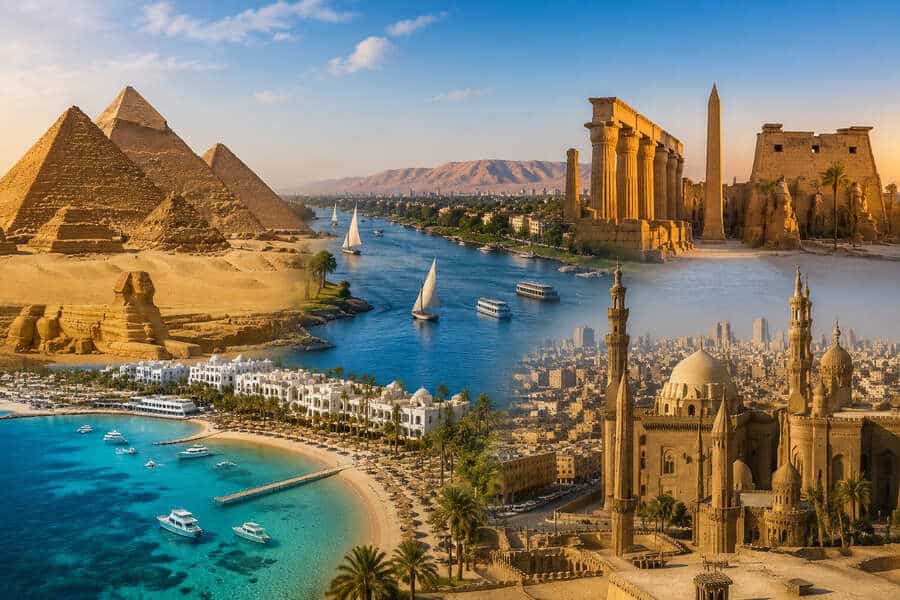
Image generated with Ai
Russia, together with Italy, Poland, the United Kingdom, Germany, France, Spain and other leading source markets, is driving a notable upswing in Egypt’s tourism performance in 2026, strengthening the country’s position as a rapidly expanding destination across the Mediterranean and wider Middle East. This growth is being powered by rising international demand across multiple travel segments, with the Red Sea resorts recording strong momentum in beach and leisure tourism, while Luxor and Aswan continue to attract consistent interest for cultural and heritage experiences.
At the same time, Cairo is gaining further traction as a key city-break and stopover hub, supported by improved air connectivity, expanding flight networks and ongoing tourism infrastructure development. The combined effect of these diversified inbound flows is creating a sustained tourism boom, with increasing visitor arrivals and more balanced growth across Egypt’s major destinations.
Advertisement
Egypt’s tourism sector is also benefiting from a sharp rise in Italian arrivals, which increased by 15% between January and early June 2026 compared to the same period last year, reflecting renewed international confidence in the destination. This broader European demand, led by Italy alongside Germany, the United Kingdom, France and Spain, continues to reinforce Egypt’s appeal, with the Red Sea, Luxor, Aswan, Cairo and Alexandria remaining central to its tourism growth story.
Italy has strengthened its position as one of Egypt’s most influential inbound markets in 2026, recording a 15% increase in arrivals during the first half of the year. This reflects both a recovery in Mediterranean outbound travel and a clear preference among Italian tourists for culturally rich and multi-experience destinations.
Advertisement
Advertisement
Egypt’s tourism framework has increasingly aligned with European outbound travel trends, focusing on stronger partnerships with tour operators, aviation networks, and digital distribution channels. Key European markets, including Italy, Germany, the United Kingdom, France, and select Eastern European countries, remain central to Egypt’s growth strategy.
Several structural factors are driving Italian demand. Improved air connectivity between Italian cities and Egyptian destinations has enhanced accessibility, while charter flight expansion to Red Sea resorts has increased capacity during peak seasons. Additionally, promotional campaigns across European travel trade platforms have strengthened destination visibility.
A growing number of Italian travellers are also shifting toward independent travel models. Instead of single-location holidays, visitors are increasingly opting for flexible itineraries that combine coastal relaxation with cultural exploration. Egypt’s year-round warm climate, relatively short flight durations from Europe, and diverse tourism product mix continue to strengthen its competitive positioning.
The Red Sea region remains the dominant pillar of Egypt’s tourism performance. Destinations such as Hurghada, Sharm El Sheikh, and Marsa Alam continue to attract high volumes of Italian and broader European visitors due to their well-established resort infrastructure, marine biodiversity, and diving tourism offerings.
These coastal destinations are increasingly being marketed as integrated leisure hubs, combining water sports, luxury resorts, and wellness tourism. Their appeal is further strengthened by consistent air connectivity and well-developed hospitality ecosystems catering to both mass tourism and premium segments.
At the same time, Upper Egypt is witnessing a resurgence in cultural tourism demand. Luxor and Aswan are experiencing renewed international interest, driven by Nile cruise experiences and archaeological tourism circuits. These destinations are increasingly integrated into combined travel packages that link Egypt’s coastline with its historical heartland.
An emerging trend is the growing popularity of multi-city itineraries. Travellers are now combining Cairo, Giza, and Alexandria with Red Sea resort stays. This shift is supported by improved domestic aviation links and upgraded transport infrastructure, allowing smoother movement between Egypt’s key tourism zones.
Egypt’s ability to deliver beach, heritage, and urban tourism within a single travel ecosystem is becoming a defining advantage in the Mediterranean region.
Egypt’s tourism growth is being reinforced by significant infrastructure investment across aviation, transport, and cultural sectors. Airport expansion projects, including upgrades at Cairo International Airport and the development of Alamein International Airport, are improving passenger handling capacity and reducing seasonal congestion.
These aviation improvements are designed to enhance Egypt’s ability to manage increasing international arrivals while supporting new route development from European and regional markets. The expansion of airport infrastructure also supports the government’s long-term objective of diversifying entry points for tourists.
Transport connectivity between key tourism regions is also improving. Road network upgrades linking Marsa Alam with Luxor are particularly significant, as they enable seamless travel between coastal resorts and inland heritage destinations. This integration supports the development of structured multi-destination tourism circuits.
In addition, Egypt is investing in cultural infrastructure, including new museum developments and heritage restoration projects. These initiatives aim to expand tourism beyond traditional routes and encourage longer visitor stays. The diversification of tourism assets is expected to increase per-visitor spending and distribute tourist flows more evenly across regions.
Egypt’s inbound tourism recovery is increasingly supported by a broad and diversified range of source markets. Italy remains one of the strongest European contributors, followed closely by Germany and the United Kingdom, which continue to deliver consistent visitor volumes.
France and Spain also maintain stable performance, particularly during peak holiday periods. These Western European markets collectively form the backbone of Egypt’s long-haul tourism inflow from Europe.
Outside Europe, the Middle East remains a critical pillar of Egypt’s tourism economy. Countries from the Gulf Cooperation Council, including Saudi Arabia and the United Arab Emirates, contribute significantly to both leisure tourism and family travel segments.
Eastern European markets, including Russia and Poland, continue to support Egypt’s Red Sea tourism sector, particularly in resort destinations where package tourism remains dominant. This diversified structure reduces reliance on any single market and enhances overall resilience against global travel disruptions.
The combination of European, Middle Eastern, and emerging long-haul markets provides Egypt with a balanced tourism portfolio capable of sustaining growth momentum even during periods of geopolitical or economic uncertainty.
Egypt’s tourism strategy in 2026 is increasingly centered on experience-based travel rather than traditional single-destination tourism. The rising number of Italian visitors reflects this shift, with demand moving toward curated itineraries that combine culture, leisure, and exploration.
Marketing efforts are increasingly focused on integrated tourism promotion, particularly through partnerships with internationaltour operators and airline alliances. These collaborations aim to strengthen Egypt’s visibility in key European markets and improve distribution across global booking platforms.
Digital engagement, influencer-driven campaigns, and familiarisation trips for travel professionals are becoming essential tools in destination marketing. These initiatives help showcase Egypt’s evolving tourism landscape, from ancient heritage sites to modern coastal resorts and urban attractions.
The continued growth in Italian arrivals reflects broader European confidence in Egypt’s tourism infrastructure, product diversification, and accessibility. With sustained investment in airports, transport systems, and cultural assets, Egypt is positioning itself as a multi-dimensional destination offering both historical depth and modern travel convenience.
The 15% increase in Italian tourist arrivals during early 2026 underscores Egypt’s strengthening position within the global tourism market. Supported by diversified source markets, infrastructure expansion, and an evolving multi-destination travel model, Egypt continues to reinforce its standing as one of the Mediterranean’s most resilient and competitive tourism destinations.
Russia, alongside Italy, Poland, the United Kingdom, Germany, France, Spain and other key markets, is powering Egypt’s tourism surge in 2026, driving strong growth across major destinations. The momentum is being led by rising demand for the Red Sea, Luxor and Cairo, supported by improved connectivity, infrastructure upgrades and expanding international travel flows.
Egypt’s tourism sector is sustaining strong momentum into 2026, supported by diversified growth from key European and global source markets and rising demand across its core destinations. With continued improvements in connectivity, infrastructure development and expanding travel offerings, Egypt is reinforcing its position as a leading Mediterranean and Middle Eastern tourism hub, where the Red Sea, Luxor and Cairo remain central to long-term visitor growth.
Advertisement
Tags: Cairo tourism growth, Egypt tourism 2026, Luxor travel demand, Red Sea tourism Egypt, Travel News
Advertisement
Advertisement













Friday, September 4, 2026

Friday, September 4, 2026

Friday, September 4, 2026

Thursday, September 3, 2026

Wednesday, September 2, 2026

Friday, September 4, 2026

Friday, September 4, 2026