
Eiffel Tower, Louvre Museum, Palace of Versailles in France Restrict Entry During Extreme Heat While Italy, Spain, Germany and Switzerland Battle Record Temperatures

Published
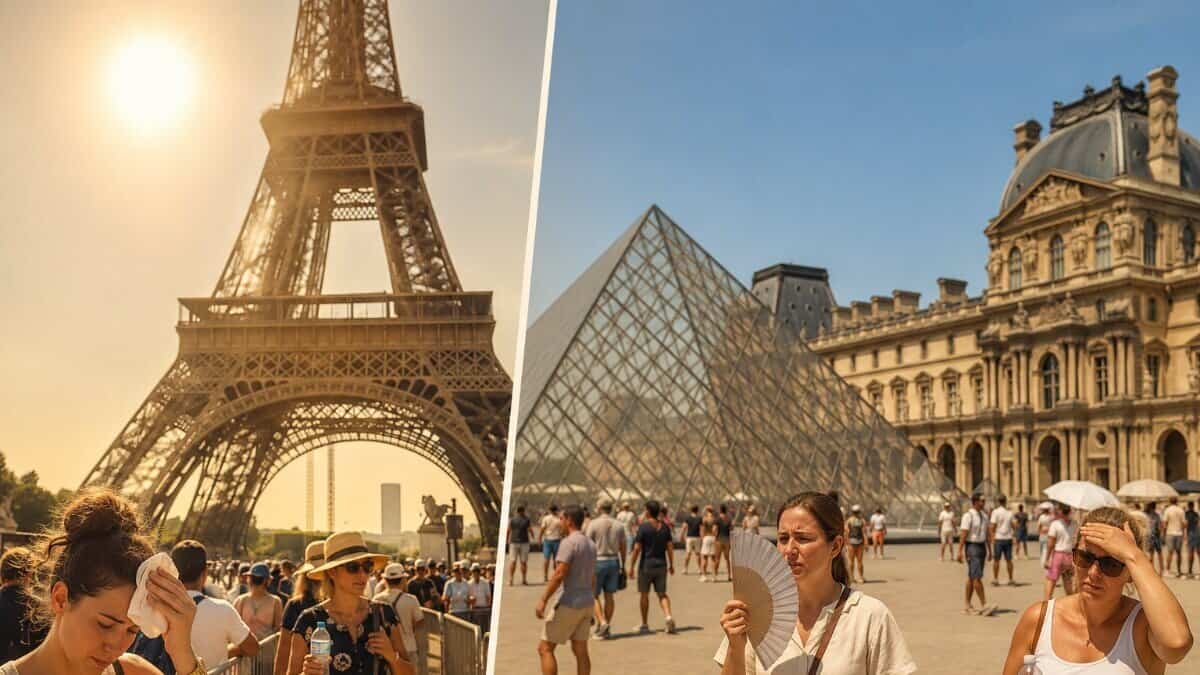
Image generated with Ai
Eiffel Tower, Louvre Museum and Palace of Versailles in France restrict entry during extreme heat as Italy, Spain, Germany and Switzerland battle record temperatures. Europe’s famous landmarks are putting visitor safety first while reshaping summer travel plans.
The Eiffel Tower, Louvre Museum and Palace of Versailles in France are making headlines after they restrict entry during extreme heat, while Italy, Spain, Germany and Switzerland continue to battle record temperatures. Consequently, Europe’s tourism industry is rapidly adapting to protect millions of visitors. Authorities have introduced revised visiting hours, strengthened safety measures and urged travellers to avoid the hottest periods of the day. Moreover, these changes highlight how climate extremes are influencing travel decisions across the continent. Visitors are therefore encouraged to plan ahead, remain hydrated and follow official guidance before exploring Europe’s most famous landmarks.
Advertisement
Advertisement
France is making global headlines after the Eiffel Tower, Louvre Museum and Palace of Versailles reduced visiting hours as Europe’s deadly heatwave intensified. The unprecedented weather has forced tourism authorities to prioritise visitor safety while millions continue travelling across the continent. Meanwhile, Italy, Spain, Germany and Switzerland are also experiencing extreme temperatures, prompting health alerts and changes to outdoor tourism activities. As a result, travellers are being urged to rethink sightseeing schedules, stay hydrated and avoid peak afternoon heat. The latest developments highlight how climate extremes are increasingly influencing tourism across Europe’s most iconic destinations.
| Country | Famous Landmark | City | Heatwave Impact | Normal Visiting Hours | Temporary Changes |
|---|---|---|---|---|---|
| France | Eiffel Tower | Paris | Closed early due to extreme temperatures | Summer: 9:00 am–12:45 am | Closed at 4:00 pm, last entry 12:15 pm |
| France | Louvre Museum | Paris | Reduced operating hours | 9:00 am–6:00 pm (Wed/Fri until 9:00 pm) | Closed at 4:00 pm, last admission 2:00 pm |
| France | Palace of Versailles | Versailles | Shortened opening hours and visitor restrictions | Standard daytime schedule | Reduced hours due to heatwave |
France Shocks Travellers as Famous Landmarks Cut Visiting Hours During Europe’s Extreme Heatwave
Yes. France has temporarily reduced visiting hours at several of its most famous landmarks, including the Eiffel Tower, the Louvre Museum and the Palace of Versailles, as an exceptional European heatwave threatens visitor safety. Other European countries remain open to tourists but have issued significant health warnings due to soaring temperatures.
Advertisement
Advertisement
France’s Heatwave Is Reshaping Summer Tourism
Europe’s latest heatwave has rapidly become one of the biggest challenges facing the tourism industry this summer, with temperatures climbing well above seasonal averages across several countries. Authorities have responded by introducing emergency safety measures that directly affect some of the continent’s busiest tourist attractions while encouraging visitors to adjust their itineraries.
Advertisement
Advertisement
France has emerged at the centre of the disruption because several globally recognised landmarks have officially shortened their operating hours. The unprecedented decisions demonstrate how extreme weather is becoming an operational challenge for tourism authorities responsible for managing millions of annual visitors.
Eiffel Tower Reduces Visitor Access
The Eiffel Tower, one of the world’s most visited monuments, has become one of the most visible symbols of the heatwave’s impact on tourism. Operators decided to close sections of the attraction earlier than usual after temperatures reached dangerous levels across Paris.
Visitors were advised to arrive during the morning instead of the afternoon, when heat intensity becomes significantly higher. Officials also encouraged tourists to carry sufficient drinking water, wear protective clothing and postpone visits if they experience symptoms related to heat exhaustion.
Advertisement
Advertisement
Louvre Museum Shortens Opening Hours
The Louvre Museum also introduced temporary changes to its visitor schedule as Paris experienced exceptionally high temperatures. Museum management reduced public access to protect both visitors and employees from prolonged exposure to extreme heat.
Although indoor galleries remain cooler than outdoor attractions, authorities explained that large visitor volumes combined with record temperatures created operational challenges. Travellers are therefore encouraged to confirm opening times before arrival and book morning admission whenever possible.
Advertisement
Advertisement
Palace of Versailles Introduces Visitor Restrictions
The Palace of Versailles has likewise adjusted visitor operations in response to the exceptional weather conditions affecting northern France. Outdoor gardens, courtyards and walking routes became particularly challenging during the hottest part of the day because visitors remain exposed to direct sunlight for extended periods.
Tourism officials have therefore encouraged guests to explore indoor sections first before considering outdoor areas during cooler morning or evening hours. The changes reflect a broader strategy to reduce heat-related medical incidents while maintaining visitor access wherever safely possible.
| Country | Major Tourist Destinations Affected |
|---|---|
| France | Paris landmarks, museums, monuments, schools and transport disruptions |
| Italy | Rome, Florence, Venice, Milan, Naples under red heat alerts; tourists advised to avoid midday sightseeing. |
| Spain | Madrid, Seville, Barcelona, Andalusia experiencing temperatures above 40°C with health warnings for visitors. |
| United Kingdom | London and southern England experienced record June temperatures, leading to disruption of outdoor ceremonies and tourism activities. |
| Switzerland | Record June temperatures prompted public heat warnings for visitors and residents. |
| Germany | Heat warnings, increased health risks and disruptions to outdoor tourism. |
Italy Faces Extreme Temperatures Across Tourist Cities
Italy has not announced widespread landmark closures, yet authorities across several major cities have issued red heat alerts as temperatures continue rising. Rome, Florence, Venice, Milan and Naples remain open to international visitors, although health officials strongly advise limiting outdoor sightseeing during midday.
Many guided walking tours have also adjusted departure schedules to early morning or evening, allowing tourists to enjoy cultural attractions while avoiding the hottest hours. Hotels and tourism businesses are similarly increasing hydration stations and shaded rest areas to support visitor wellbeing.
Spain Continues Welcoming Visitors with Safety Warnings
Spain’s tourism industry remains fully operational despite widespread heat alerts affecting several popular destinations. Madrid, Seville, Barcelona and much of southern Spain have experienced exceptionally high temperatures that have prompted authorities to issue public health guidance for both residents and visitors.
Advertisement
Advertisement
Tourists are being encouraged to visit famous monuments early in the morning while reserving indoor museums, shopping districts or restaurants for the hottest hours. This flexible approach allows visitors to continue enjoying Spain’s attractions while reducing exposure to dangerous heat.
Germany Responds with Public Health Advisories
Germany has also experienced unusually high temperatures that have resulted in nationwide health advisories. Although famous landmarks remain open, tourism authorities are recommending shorter outdoor visits and increased hydration throughout the day.
Many city tourism offices have expanded public access to drinking water points while encouraging visitors to take frequent breaks indoors. These practical measures are helping destinations continue welcoming tourists without introducing widespread closures.
Switzerland Experiences Record June Temperatures
Switzerland is witnessing one of its warmest starts to summer in recent years as temperatures continue reaching unusually high levels. Mountain regions remain considerably cooler than many urban destinations, making alpine tourism increasingly attractive for visitors seeking relief from the heat.
Tourism providers continue monitoring weather conditions closely while advising travellers to check forecasts before undertaking hiking or sightseeing activities. Safety remains the priority as Europe experiences increasingly frequent extreme weather events.
Advertisement
Advertisement
Climate Change Is Transforming European Tourism
The latest heatwave demonstrates that climate change is increasingly influencing travel planning across Europe’s most popular destinations. Tourism organisations are investing more heavily in visitor safety measures, flexible operating schedules and improved emergency preparedness as prolonged periods of extreme heat become more common.
For international travellers, the evolving situation reinforces the importance of monitoring official tourism updates before visiting major attractions. Morning sightseeing, adequate hydration and flexible itineraries are rapidly becoming essential components of safe and enjoyable European holidays during the peak summer season.
The temporary restrictions introduced at the Eiffel Tower, the Louvre Museum and the Palace of Versailles demonstrate how Europe’s tourism sector is adapting to increasingly severe weather events without bringing travel to a halt. France has chosen to prioritise public safety by reducing visitor access during the hottest parts of the day, while other major tourism destinations, including Italy, Spain, Germany and Switzerland, continue welcoming international visitors under enhanced health advisories and operational adjustments. Rather than discouraging tourism, these measures are designed to ensure travellers can continue enjoying world-famous cultural attractions safely and comfortably.
The ongoing heatwave also reflects a broader transformation in global tourism management. Rising temperatures are encouraging destinations to adopt more flexible operating schedules, expand visitor information services and improve emergency preparedness during peak travel seasons. Travellers who monitor official updates, choose morning or evening sightseeing and remain prepared for extreme weather can still enjoy memorable holidays across Europe. As climate conditions continue to evolve, collaboration between tourism authorities, landmark operators and public health agencies will become increasingly important in preserving visitor experiences while safeguarding public wellbeing. The latest developments reinforce that resilience, adaptation and responsible destination management are now essential components of sustainable tourism across Europe’s most iconic landmarks.
Advertisement
