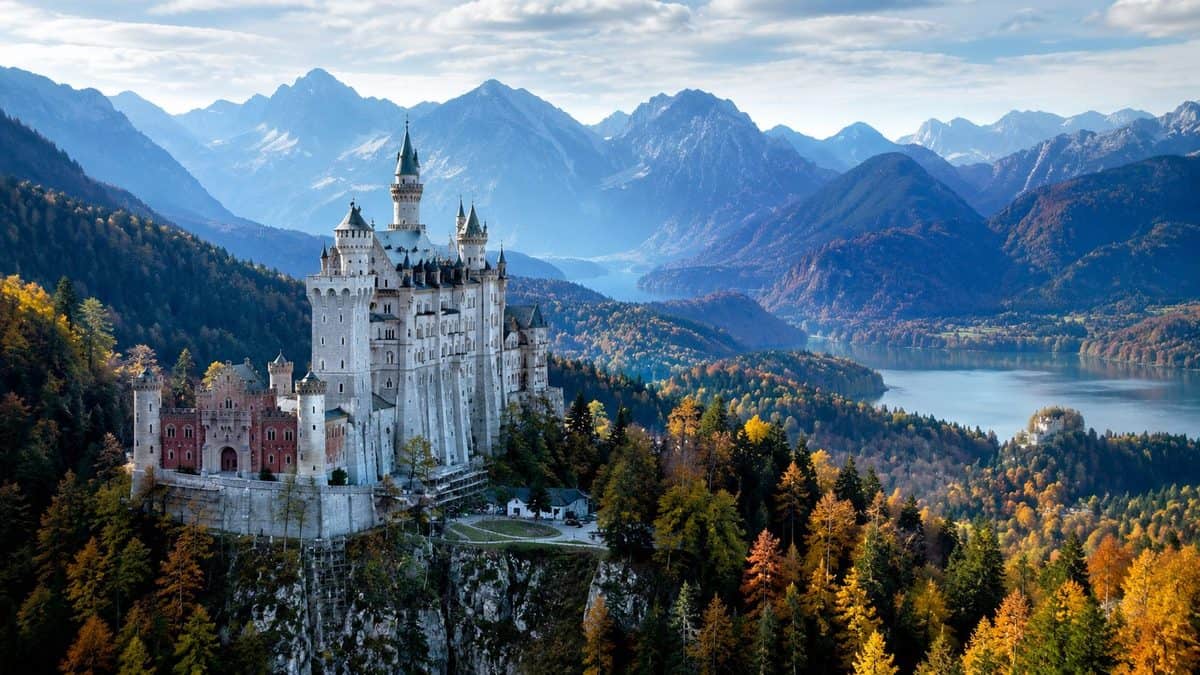
Image generated with Ai
France unites with Italy and three more European nations to cope with a severe digital dilemma as viral travel trends and destinations propel overtourism across Europe, with France, Italy, Spain, Portugal and the Netherlands introducing visitor controls, pricing measures, capacity limits and digital strategies to manage rising crowds created by online travel influence.
France’s digital dilemma is dramatically illustrated by Étretat in Normandy, where spectacular white cliffs and natural arches have become internationally recognisable travel images. The small coastal community, home to only around 1,100 permanent residents, attracts approximately 1.5 million visitors annually, creating enormous pressure on paths, roads, parking facilities, local services and environmentally sensitive cliff areas.
Advertisement
Authorities have increasingly restricted access to dangerous coastal locations as erosion and heavy visitor movement complicate management of the landscape. The problem demonstrates how viral visibility can disproportionately affect small communities: thousands of travellers can arrive seeking essentially the same photograph while the destination’s physical capacity remains unchanged.
How France is coping
Advertisement
Italy represents one of Europe’s most visible overtourism battlegrounds. Venice, Florence, Portofino, the Amalfi Coast and sections of the Dolomites regularly dominate international travel feeds, helping concentrate travellers around recognisable streets, squares, viewpoints and landscapes rather than distributing them evenly across destinations.
Venice expanded its experimental day-visitor access programme across 60 days in 2026, charging eligible visitors €5 with earlier booking and €10 for later booking. Provisional figures showed 679,553 paid vouchers, generating more than €5.2 million. Authorities also reported the average daily number of paid vouchers had fallen 32.3% compared with 2024, suggesting pricing and advance planning may influence visitor behaviour.
How Italy is coping
Spain’s digital tourism dilemma is particularly acute in Barcelona, where around 16 million tourists visited in 2025, generating approximately €10.4 billion in spending. Yet the challenge is not simply the overall number. Visitors are disproportionately concentrated around famous neighbourhoods, monuments, markets, restaurants and streets repeatedly recommended through digital platforms.
Advertisement
Advertisement
A single tapas bar, bakery or neighbourhood attraction can experience sudden international exposure after appearing in viral content. Barcelona is responding by tightening control over tourism accommodation while using visitor taxation to help finance services affected by tourism pressure. The city’s municipal tourism surcharge has reached €4 per person per night, with additional revenue supporting transport, cleaning, security and management of heavily visited areas.
How Spain is coping
Portugal’s response demonstrates what happens when authorities conclude that an attraction simply cannot accommodate unlimited visitor growth. Sintra’s colourful Pena Palace has become one of Portugal’s most photographed landmarks, with social media reinforcing international demand for the same terraces, façades and panoramic viewpoints.
The palace previously accommodated as many as 12,000 visitors in a single day, but management measures reduced maximum daily attendance to fewer than 6,000, effectively cutting the highest potential visitor pressure by more than half. Timed admission now regulates entry to the palace interior, while private vehicle restrictions around Pena encourage greater reliance on public transport and walking.
How Portugal is coping
The Netherlands is taking an unusually sophisticated approach by using digital communication to counter the same online forces that concentrate visitors. Amsterdam recorded approximately 23.7 million tourist overnight stays in 2025, while forecasts indicate the total could reach between 25 million and 29.4 million by 2028.
Rather than simply attracting more visitors, Amsterdam’s strategy increasingly focuses on changing their behaviour. Its Renew Your View approach encourages travellers to explore culture, neighbourhoods and experiences beyond the city’s stereotypical tourism imagery. Authorities are also restricting hotel expansion and reducing tourism activities considered incompatible with long-term residential liveability.
The wider Dutch countryside faces similar pressure, particularly around tulip fields where visitors entering private agricultural land for photographs can damage flowers and bulbs.
How the Netherlands is coping
Europe’s emerging digital dilemma is fundamentally about concentration. Twenty thousand tourists distributed across an entire destination create a different operational challenge from thousands arriving simultaneously at one street, café, beach, palace or viewpoint because an algorithm repeatedly recommended exactly the same location.
Digital travel content removes much of the uncertainty that traditionally accompanied exploration. Travellers can arrive with restaurants bookmarked, photographs planned, viewpoints pinned and itineraries organised around locations they have already watched online.
That efficiency is useful for travellers, but it can also produce a remarkable clustering effect. Previously overlooked destinations can become internationally famous almost overnight while their infrastructure, transport networks, ecosystems and communities remain designed for much smaller numbers.
The cultural consequences extend beyond queues. When large numbers of visitors arrive seeking exactly the same experience, businesses have powerful economic incentives to reproduce whatever performs successfully online.
Restaurants may prioritise photogenic dishes. Shops can shift towards souvenirs. Previously residential streets can accumulate visitor accommodation, while cafés attracting viral attention may become destinations in themselves rather than neighbourhood businesses.
This does not mean digitally influenced tourism is inherently inauthentic. Social media can introduce travellers to independent businesses, overlooked cultural attractions and destinations that previously struggled for international recognition.
The problem begins when discovery turns into extreme concentration and the online representation of a place starts influencing its physical identity.
Blaming social media alone would oversimplify a far more complicated tourism transformation. Venice, Barcelona, Amsterdam, Paris and Florence were global tourism destinations decades before today’s major social platforms existed.
Low-cost aviation, expanding international middle classes, cruise tourism, short-term accommodation, improved rail connectivity and aggressive destination marketing have all contributed to Europe’s enormous visitor economy.
What algorithms have changed is the speed, scale and geographical precision of demand. Traditional destination marketing might persuade travellers to visit Italy. Contemporary viral content can persuade enormous audiences to visit one Italian viewpoint, photograph one particular angle and arrive during the same part of the day.
That distinction is central to understanding the digital dilemma.
France, Italy, Spain, Portugal and the Netherlands reveal a significant change in European tourism policy. For decades, national and local tourism organisations competed for international arrivals, hotel nights and visitor expenditure. Success was frequently measured through continually rising numbers.
The new challenge is considerably more complicated.
Venice is charging some day visitors. Barcelona is tightening accommodation controls. Sintra has reduced capacity at Pena Palace. Amsterdam is restricting hotel growth while digitally promoting alternative experiences. France is protecting vulnerable coastal landscapes from concentrated visitor pressure.
These interventions suggest that European destinations increasingly recognise that record tourism numbers cannot automatically be treated as record tourism success.
The next stage of European tourism will increasingly depend on dispersal. Destinations need visitors to explore beyond the handful of places dominating recommendation algorithms while encouraging travel across different seasons, neighbourhoods and regions.
Technology could become part of the solution. Real-time crowd information can direct visitors towards quieter attractions, reservation systems can spread arrivals throughout the day, digital campaigns can promote alternative destinations and transport information can reduce pressure on congested areas.
The same algorithms capable of sending thousands of travellers towards one location could therefore eventually help distribute them.
For European tourism authorities, that represents an important strategic opportunity: digital influence does not necessarily need to be eliminated; it needs to be redirected.
France, Italy, Spain, Portugal and the Netherlands are confronting different versions of the same problem. Their destinations have become extraordinarily successful at attracting global attention, but digital travel culture can concentrate that attention with a speed and precision traditional tourism infrastructure was never designed to absorb.
Étretat’s roughly 1.5 million annual visitors against around 1,100 residents, Venice’s 679,553 paid access vouchers, Barcelona’s approximately 16 million annual tourists, Pena Palace’s reduction from 12,000 to fewer than 6,000 daily visitors, and Amsterdam’s 23.7 million tourist overnight stays demonstrate the enormous scale of the management challenge.
The emerging response is not to close Europe to tourism. Instead, authorities are experimenting with limits, pricing, reservations, regulation and digital redistribution to protect the places travellers have come to see.
Europe spent decades competing to become more visible to international tourists. Its severe digital dilemma now presents the opposite challenge: how to remain desirable without allowing viral popularity to overwhelm the destinations that made millions of people want to visit in the first place.
France unites with Italy and three more European nations to cope with a severe digital dilemma as viral travel trends and destinations propel overtourism across Europe, forcing France, Italy, Spain, Portugal and the Netherlands to manage overcrowding through new tourism controls and visitor strategies.
In conclusion, France unites with Italy and three more European nations to cope with a severe digital dilemma as viral travel trends and destinations propel overtourism across Europe, forcing popular locations to rethink how tourism growth is managed. France, Italy, Spain, Portugal and the Netherlands are responding with visitor caps, pricing systems, reservations, accommodation controls and digital strategies to protect fragile landmarks, local communities and natural landscapes. The challenge is not stopping tourism but balancing global popularity with sustainability, ensuring that viral travel trends continue to benefit European destinations without overwhelming the very places that attract millions of visitors.
Advertisement
Advertisement
Advertisement











Wednesday, September 2, 2026
Tuesday, September 1, 2026

Wednesday, September 2, 2026

Wednesday, September 2, 2026

Tuesday, September 1, 2026
Tuesday, September 1, 2026

Tuesday, September 1, 2026

Tuesday, September 1, 2026