
Jetstar vs Qantas Domestic Network: Australia’s Fare Battle Exposes a Stark Travel Value Divide

Published
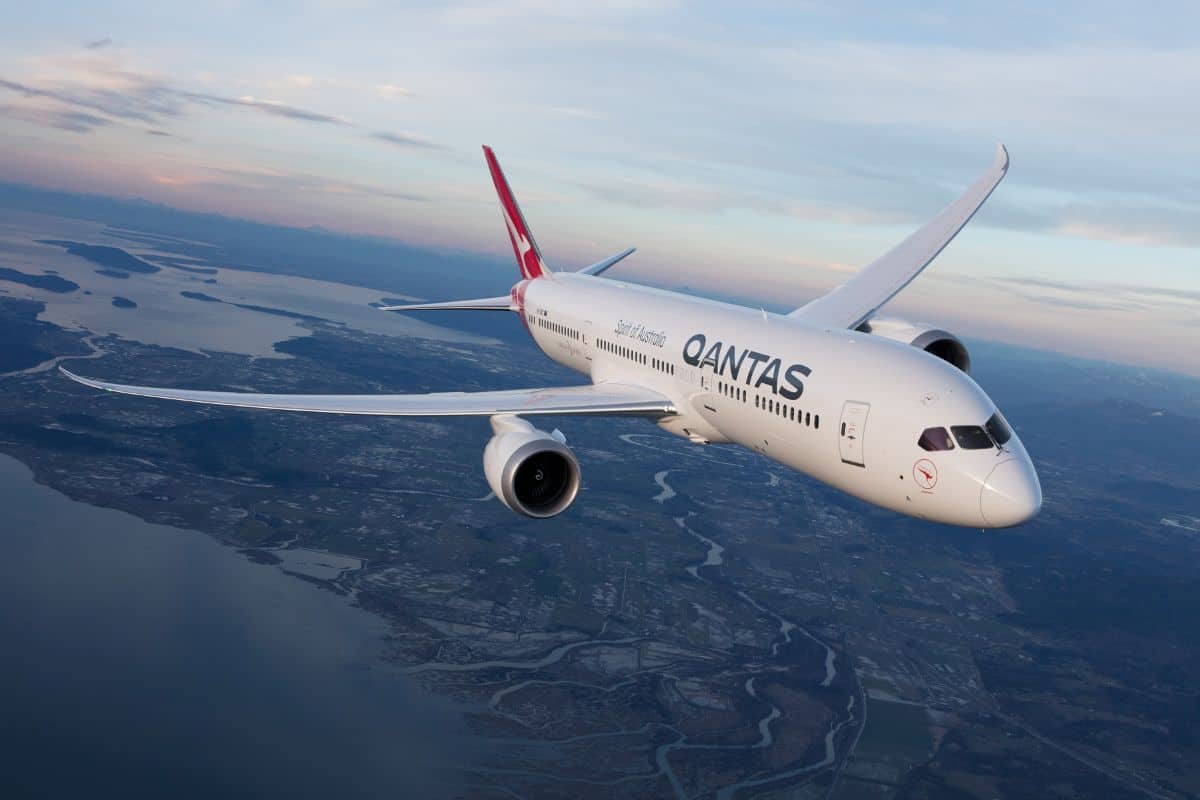
Australia’s domestic aviation market is entering a revealing new phase as Jetstar expands affordable leisure access while Qantas protects its broader network reach. The latest ACCC data shows Qantas held 35.9% of domestic passengers in July 2026, while Jetstar accounted for 29.3%. Qantas also operated 106 domestic routes, compared with 60 for Jetstar. Yet Jetstar carried 14.3% more passengers than its 2019 level, while Qantas remained 3.6% below it. Western Sydney International Airport now adds another strategic dimension, with Jetstar launching first and QantasLink following in 2027. The comparison therefore extends beyond headline fares. It increasingly concerns destination access, flight frequency, baggage costs, flexibility and the practical value of each network.
Two Airlines, Two Different Travel Equations
The most useful way to understand Australia’s two Qantas Group brands is to stop treating them as interchangeable airlines. Jetstar is designed around low entry fares and optional extras, while Qantas operates a broader full-service proposition covering major cities, regional centres and connecting markets.
That distinction is visible in the latest network data. The ACCC counted 106 Qantas routes in July 2026, against 60 for Jetstar, although individual route counts can overlap across airlines. Qantas therefore held the broader individual network, while Jetstar maintained a substantial footprint concentrated around major cities and leisure destinations.
| Measure, July 2026 | Qantas | Jetstar |
|---|---|---|
| Domestic passenger share | 35.9% | 29.3% |
| Domestic routes | 106 | 60 |
| Passenger change from 2019 | -3.6% | +14.3% |
| Capacity change from 2019 | -2.3% | +11.6% |
| July 2026 passenger change year-on-year | -1.5% | +0.8% |
The numbers reveal a significant strategic divergence. Jetstar has recovered and expanded passenger volumes beyond its pre-pandemic level, while Qantas continues to command the larger network and passenger share. That makes the competition less about replacing one airline with another and more about serving different travel missions.
Advertisement
Advertisement
Jetstar’s Leisure Map Is Getting Denser
Jetstar’s Australian network reaches Adelaide, Brisbane, Busselton and Margaret River, Byron Bay, Cairns, Canberra, Darwin, Gold Coast, Hervey Bay, Hobart, Launceston, Mackay, Melbourne, Newcastle, Perth, Sunshine Coast, Sydney, Townsville, Uluru and Whitsunday Coast. This geography gives the airline a pronounced leisure-market identity.
The important point is that destination count alone can mislead travellers. A route operating several times daily offers a very different proposition from a seasonal service with limited departures. Jetstar’s network therefore works particularly well for travellers who can organise holidays around low fares and available schedules.
Advertisement
Advertisement
The airline’s recent expansion also shows how it uses secondary airports and tourism gateways. Melbourne Avalon has become a significant part of that strategy, while new or extended services can create direct links between regional tourism markets that previously required connections or longer surface journeys.
Jetstar also announced that its Cairns–Sunshine Coast service will continue through October 2027. The airline says this remains the only direct air link between those two Queensland destinations, demonstrating how a single low-cost route can have significance beyond the largest metropolitan markets.
Advertisement
Advertisement
Qantas Still Owns The Network Advantage
Qantas’ advantage becomes clearer when the question changes from “Where can I fly cheaply?” to “How easily can I build a complete journey?”
The Qantas domestic map reaches numerous regional centres through QantasLink alongside the main metropolitan network. Its published direct-flight list includes markets such as Albury, Armidale, Ballina Byron, Coffs Harbour, Dubbo, Griffith, Merimbula, Mount Isa, Moranbah, Rockhampton, Toowoomba, Weipa and numerous other regional locations.
That breadth matters to travellers who need schedule resilience. A business passenger may value multiple departure options, while a regional traveller may have no practical alternative if an airline withdraws from a smaller market.
The latest ACCC research reinforces this distinction. Most major-city routes had three airlines operating in July 2026, while most regional and remote routes had only one airline. Network depth therefore becomes a consumer-protection issue as well as a convenience issue.
Advertisement
Advertisement
The Cheapest Ticket Is Not Always Cheapest
Jetstar’s pricing model deliberately separates the base fare from several travel components. Its Starter fare includes a seat and a 7kg carry-on allowance, while checked baggage, seat selection and food can be purchased separately.
That creates an important calculation for travellers. A passenger travelling with only a small cabin bag can exploit the low entry price, while a family with checked luggage and assigned seats may face a narrower price gap after extras.
Jetstar’s current bundle structure partly addresses this issue. Its Starter Plus bundle includes 20kg checked baggage, food and drink and standard seat selection, while Flex and Flex Plus provide additional flexibility.
| Traveller Requirement | Jetstar Starter | Jetstar Bundle | Qantas Economy |
|---|---|---|---|
| Low headline fare | Strong advantage | Moderate advantage | Usually weaker |
| 7kg carry-on | Included | Included | Included under applicable fare rules |
| Checked baggage | Extra | Available in selected bundles | Included under applicable domestic fare rules |
| Seat choice | Extra | Included in selected bundles | Included under applicable fare rules |
| Food | Extra | Included in selected bundles | Full-service proposition |
| Flexibility | Limited | Higher with Flex options | Stronger on flexible fares |
The comparison must therefore use total trip cost rather than advertised fare alone. The ACCC also cautions that its average passenger-revenue measure excludes ancillary revenue such as baggage, seat selection and onboard food, making headline airfare data an incomplete measure of what passengers ultimately spend.
Australia’s Fare Environment Is Tightening
The broader pricing environment makes this distinction even more important. The ACCC reported that real average fare revenue per passenger increased 1.6% year-on-year across the three months to July 2026.
May recorded a 3.5% increase and June a 4.0% increase before July posted a 2.3% decline. BITRE’s real best-discount airfare index was also 6.5% higher on average than a year earlier, while restricted-economy fares were 4.3% higher.
Advertisement
Advertisement
At the same time, Australia’s domestic industry carried more than 5.2 million passengers in July 2026. Airlines flew 6.4 million seats, producing an industry load factor of 81.9%. Capacity was 0.4% lower than a year earlier, while Jetstar actually increased capacity by 1.3%.
This combination creates a powerful market dynamic. Stable demand, tighter capacity and high load factors can reduce the frequency of genuinely cheap seats, particularly on popular leisure routes.
Western Sydney Changes The Equation
Western Sydney International provides the most important new case study in this rivalry. The airport opened for freight in July 2026, with passenger operations scheduled from October.
Jetstar will become the first domestic passenger airline when services begin on 25 October. Its initial schedule provides up to 14 weekly flights to Melbourne, seven to the Gold Coast and three to Brisbane, according to the ACCC’s latest assessment. QantasLink follows on 28 March 2027 with four weekly flights to Brisbane and four to Melbourne.
The launch-fare contrast is striking.
| Western Sydney Route | Jetstar Launch Fare | Qantas Launch Fare | Initial Frequency |
|---|---|---|---|
| WSI–Melbourne | From A$69 | From A$99 | Jetstar up to 14 weekly |
| WSI–Gold Coast | From A$59 | Not announced | Jetstar 7 weekly |
| WSI–Brisbane | From A$75 | From A$99 | Jetstar 3 weekly initially |
Jetstar’s advertised launch fares exclude checked baggage. Qantas’ announced fares include its applicable full-service domestic inclusions, so the A$30–A$40 headline difference should not be treated as a direct like-for-like saving.
Advertisement
Advertisement
The airport itself could eventually become more important than the launch fares. WSI has an initial annual passenger capacity of 10 million, serves a Greater Western Sydney catchment of about 2.8 million people and will operate 24 hours a day.
Its location is approximately 50 kilometres west of Sydney’s CBD. The airport initially relies heavily on road access, while its metro connection is expected to open in 2027.
The Australian Competition and Consumer Commission expects WSI’s additional capacity, 24-hour operations and greater slot access to lower barriers to airline entry over time. That could increase route choice and competitive pressure across Sydney’s aviation market.
Regional Travellers Face A Different Reality
The national picture becomes more complicated outside the capital-city corridors. Australia’s domestic route network contracted to 149 routes in July 2026, ten fewer than a year earlier and far below the 178 routes recorded in March 2024.
The Qantas network remained the largest individual network at 106 routes. Jetstar operated 60, Virgin Australia 57 and Rex 30. These figures overlap because multiple airlines can operate the same route.
For travellers, the contraction matters most where alternatives are scarce. The ACCC found that regional and remote routes generally had fewer airline choices than major-city routes.
Advertisement
Advertisement
Fuel costs add another pressure. The July 2026 real average jet-fuel price reached A$205.25 a barrel, 38.9% above July 2025. Jet fuel typically represents around 25% to 30% of an airline’s cost base, although the share varies by airline and route.
Reliability Adds Another Layer
Price and network breadth do not tell the entire story. Travellers also need to consider operational reliability when choosing between the two brands.
BITRE recorded an overall on-time arrival rate of 78.4% in July 2026. Qantas recorded 81.4%, compared with 72.5% for Jetstar, while the industry cancellation rate remained 1.5%.
That difference does not mean every Qantas flight will outperform every Jetstar service. However, it demonstrates why frequency, punctuality and schedule resilience belong in any serious value comparison.
A cheaper ticket becomes less attractive when a traveller has an important connection, meeting or event at the destination. Conversely, a leisure traveller with flexible plans may reasonably accept fewer inclusions for a substantially lower base fare.
What The Numbers Mean For Travellers
The emerging picture is therefore surprisingly nuanced. Jetstar is strongest when price sensitivity dominates the decision, particularly for travellers carrying little luggage and targeting major leisure destinations.
Advertisement
Advertisement
Qantas becomes more compelling when network breadth, regional connectivity, frequency, flexibility and included services carry greater weight. Its 106-route network demonstrates why the full-service brand remains strategically important despite Jetstar’s rapid passenger growth.
The Qantas Group’s financial results reinforce the separation. In 2025–26, Jetstar Domestic generated A$533 million in underlying EBIT, up 15.4%, while Qantas Domestic generated A$907 million. The ACCC said Jetstar’s result reflected ancillary revenue growth, a more efficient fleet and resilient demand for low-fare leisure travel.
| Priority | Better Starting Point |
|---|---|
| Lowest possible base fare | Jetstar |
| Travelling with minimal luggage | Jetstar |
| Leisure destinations | Jetstar |
| Broad regional connectivity | Qantas |
| Multiple schedule options | Qantas |
| Business travel | Qantas |
| Flexible travel | Qantas or a Jetstar flexibility bundle |
| Secondary-airport access | Route dependent |
| Best value with luggage | Compare total bundled price |
The Traveller’s Best Choice Depends On The Trip
The latest evidence does not produce a universal winner. Instead, it exposes two distinct forms of accessibility within Australia’s aviation market.
Jetstar is expanding access by lowering the entry price and targeting leisure markets, secondary airports and tourism destinations. Qantas offers a different form of access through a substantially wider individual domestic network, stronger regional reach and a fuller-service proposition.
The smartest booking decision therefore begins with the journey rather than the airline. Travellers should compare the final fare after luggage and seat requirements, check departure frequency, examine airport location and consider how costly a schedule disruption would be.
That approach will become increasingly important as Western Sydney International grows. Jetstar’s early presence gives it a powerful opportunity to stimulate new demand, while Qantas’ later arrival brings another layer of connectivity. Together, they could make Sydney’s aviation map more accessible, but the real winner will be the traveller who compares the complete journey rather than the cheapest number on the screen.
Advertisement
