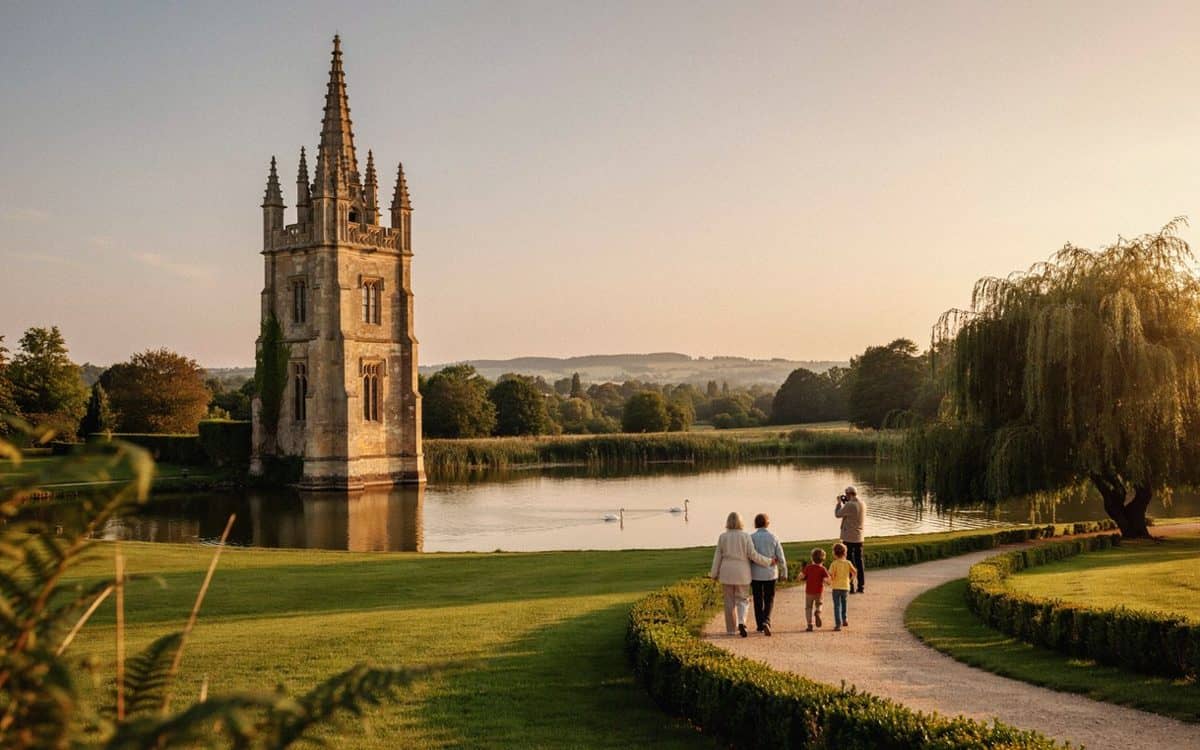
Image generated with Ai
UK overtakes rival European destinations as tourism surges for eccentric folly architecture and historic trails. Overwhelming numbers of visitors flock to historic British estates nowadays. What is the reason millions of people swarm towards bizarre structural edifices? The main point is that curious tourists desperately seek a whimsical kind of architecture instead of the traditional one. As a result, magnificent landscape gardens become incredibly popular all around the country.
Folly architecture and eccentric monument trails offer cultural travellers an intriguing alternative to standard palaces by showcasing extravagant, useless, and whimsical historical structures built purely for decorative effect and architectural vanity. Moving away from the conventional reverence associated with traditional cathedrals and royal residences, this design-focused travel niche maps out historical structural follies that prioritize pure visual drama, philosophical statements, and unbridled imagination over mundane utility. From the rolling aristocratic estates of Georgian England and the grotesque mythological wonderlands of Renaissance Italy to the astronomical marvels of Rajasthan and the single-handed outsider art of rural France, these peculiar anomalies continue to redefine how we experience structural history.
Advertisement
The United Kingdom remains the undisputed spiritual homeland of the landscape folly, where ambitious Georgian aristocrats totally reshaped vast country estates to evoke classical paintings, melancholic ruins, and philosophical wonder. Historic properties like Painshill Park in Surrey and Stourhead in Wiltshire feature extraordinary man-made anomalies designed to trick the eye and spark deep intellectual curiosity among visitors. These historic landscapes purposefully rejected standard agricultural utility in favour of creating living theatrical stages filled with gothic towers, fake abbeys, and crystal-lined underground grottos. Modern cultural tourists flock to these verdant English estates because they offer an immersive step back into an era when landscape design functioned as pure visual poetry and aristocratic self-expression.
Moving away from the manicured lawns of England, Italian folly architecture leans heavily into the dark, surreal, and psychologically destabilizing realms of Renaissance imagination. Commissioned in 1552 by Prince Pier Francesco Orsini, the Sacro Bosco in Bomarzo replaces classical harmony with terrifying mythological beasts, giant stone monsters, and purposefully distorted structural designs. Visitors walking through this wooded Italian labyrinth encounter leaning houses and gaping stone mouths that actively challenge traditional Renaissance perspectives and mathematical balance. This bizarre outdoor gallery continues to fascinate contemporary art lovers because it represents a rare moment when high-art architecture embraced whimsical chaos and psychological surrealism without apology.
Advertisement
Advertisement
For official guidance on protecting and exploring the UK’s heritage assets, consult the official GOV.UK Historic Environment Portal.
Indian eccentric architecture manifests through monumental scale, astronomical curiosity, and whimsical water engineering that completely redefines traditional notions of royal vanity and structural purpose. Whimsical stepwells like Chand Baori plunge dozens of stories into the earth as inverted pyramids, transforming basic water reservoirs into dizzying optical mazes of symmetrical terraced steps. Meanwhile, structures like the Jantar Mantar in Jaipur turn complex astronomical mathematics into colossal abstract stone sculptures that can still track time down to mere seconds. These breathtaking northern structures captivate international tourists because they effortlessly merge hyper-functional engineering with monumental artistic expression on a truly staggering geographic scale.
“The dramatic surge in popularity for eccentric folly architecture reflects a broader cultural shift among modern travellers who increasingly crave authentic, whimsical storytelling over traditional sightseeing. Historic British estates and European heritage sites are no longer just static monuments of the past; they have become vibrant backdrops for creative exploration and digital-age curiosity. By prioritizing bizarre design and artistic escapism, heritage tourism is successfully redefining how contemporary explorers connect with historical spaces, proving that unique structural anomalies will always captivate the global imagination far more than standard palaces ever could.”
— Anup Kumar Keshan, Founder and Editor-in-Chief, Travel And Tour World
France houses perhaps the most literal and awe-inspiring interpretation of single-minded obsession in architectural history through the creation of Le Palais Idéal in the rural town of Hauterives. Built entirely by a modest local postman named Ferdinand Cheval between 1879 and 1912, this surreal palace was constructed single-handedly using unique stones collected in a wheelbarrow during daily mail rounds. This self-taught masterpiece combines stylistic elements from Hindu temples, Egyptian tombs, and medieval castles into a chaotic, poetic celebration of outsider art and unyielding human determination. Travellers continue to make the pilgrimage to this unique French village because it stands as the ultimate proof that pure imagination can triumph over formal architectural training.Country Landmark / Folly Name Core Architectural Feature Purpose UK Painshill Park Crystal grotto & gothic tower Landscape poetry & escape Italy Park of the Monsters Grotesque stone sculptures Mythological surrealism India Chand Baori Inverted stepwell geometry Water storage & optical art France Le Palais Idéal Hand-collected stone palace Outsider art obsession
UK overtakes competing European destinations in terms of tourism due to an increase in visits to bizarrely decorated structures and historic trails. Unusual landscape gardens, arcane towers, and secretive grottos are drawing record crowds of inquisitive tourists. This striking trend reflects a burgeoning interest in a more expressive and fanciful kind of history. Ultimately, these alternative historic trails have made Britain the most popular destination for unconventional architecture in the world.
UK overtakes competing European destinations in terms of tourism due to an increase in visits to bizarrely decorated structures and historic trails because social media is promoting bizarre and unique historic sites. Tourists are looking for unique visual content and are tired of popular places crowded by people. Thus, historic British follies provide a perfect background for modern adventurous travelers.
Advertisement
Advertisement
Advertisement











Wednesday, September 2, 2026

Tuesday, September 1, 2026

Wednesday, September 2, 2026

Wednesday, September 2, 2026
Tuesday, September 1, 2026
Tuesday, September 1, 2026

Tuesday, September 1, 2026

Tuesday, September 1, 2026



