
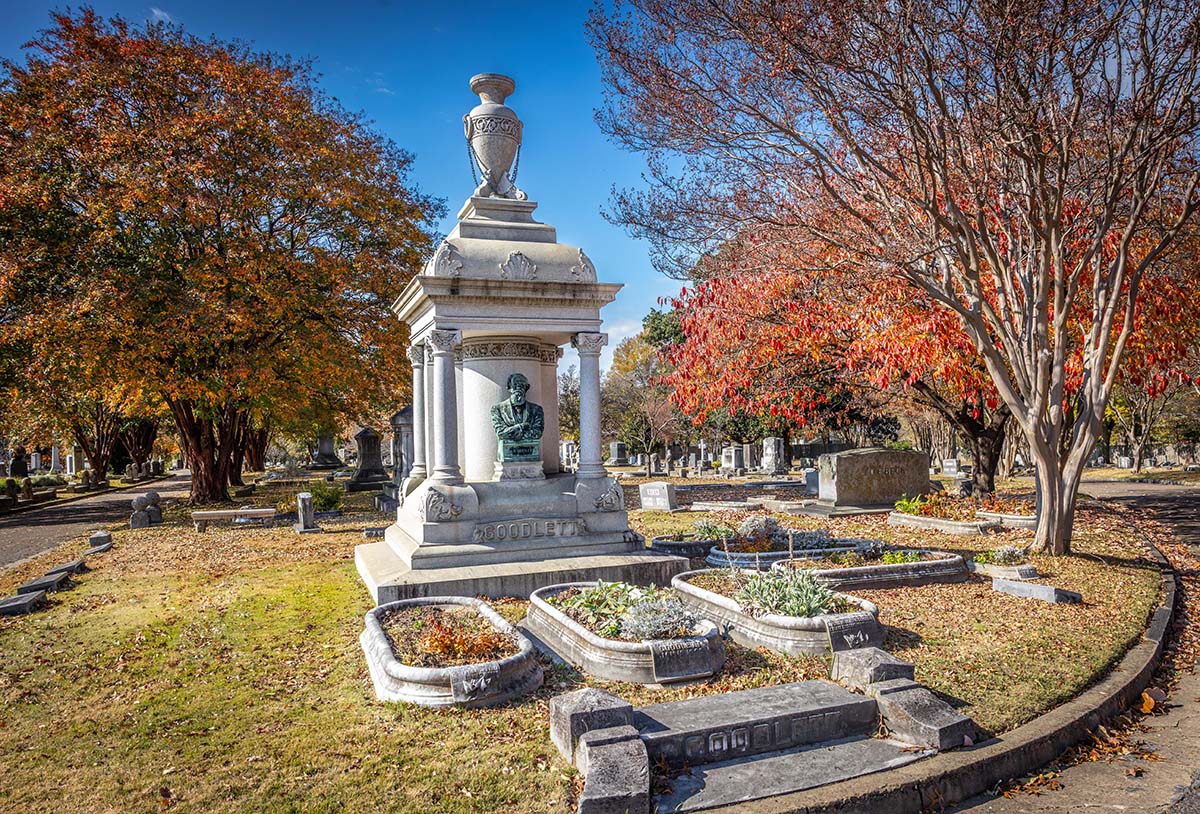
Tennessee joins more US States drawing more travellers with historic ghost stories and dark tourism experiences. From battlefields to haunted theatres, these destinations turn history into unforgettable journeys. US States are turning haunted history into a compelling travel draw, with historic prisons, battlefields, theatres, cemeteries and ghost towns offering visitors unusual ways to explore America’s past.
Tennessee joins more US States as travellers chase historic ghost stories and dark tourism experiences across America. The trend is gaining attention because these destinations offer more than frightening tales. Instead, visitors can explore battlefields, theatres, cemeteries, prisons, mansions, caves and ghost towns while discovering the history behind each location. Tennessee leads with destinations such as Memphis, Shiloh, Franklin, Nashville and Elkmont. Meanwhile, more US States are using local legends to create memorable travel experiences. As a result, historic ghost stories are becoming a powerful tourism tool. They attract curious travellers, extend itineraries and give lesser-known destinations a compelling reason to be explored.
US States are increasingly bringing haunted history into the travel spotlight. Across America, historic buildings, battlefields, cemeteries, prisons, theatres and abandoned communities are becoming part of dark tourism itineraries. The appeal is not simply about ghosts. Instead, these places connect travellers with real events, local legends and stories preserved by communities.
From Tennessee and Pennsylvania to Louisiana, Florida, Maryland and California, visitors can find ghost walks, lantern tours, historic-site visits and paranormal investigations. Meanwhile, tourism organisations are packaging many of these experiences alongside heritage, food, culture and road trips. As a result, haunted destinations are becoming a distinctive part of America’s wider tourism economy.
Advertisement
Haunted tourism is no longer limited to Halloween attractions or specialist paranormal enthusiasts.
Across several US States, historic destinations are using stories of ghosts, unexplained activity and local legends to encourage visitors to look at familiar places differently.
The destinations range from battlefields where thousands of soldiers died to theatres that have entertained audiences for generations. Former prisons, historic homes, cemeteries, railway depots, caves and ghost towns add further variety.
For the travel industry, the attraction is relatively straightforward. A destination with an established historical story can create another visitor experience without changing its underlying heritage.
The result is a form of tourism that combines history, storytelling, culture, architecture and folklore.
Importantly, reported paranormal activity should be presented as folklore or visitor testimony rather than established scientific fact. That distinction gives the subject greater editorial credibility.
Tennessee is offering travellers a different way to experience its history: through places where heritage, folklore and reported paranormal activity overlap.
The state’s haunted attractions stretch well beyond conventional Halloween entertainment. Historic cemeteries, Civil War sites, theatres, former prisons, old homes, railway buildings, caves and abandoned settlements all form part of a broader dark tourism landscape.
The appeal is straightforward. Travellers can visit locations with genuine historical significance while hearing stories that have been passed down through generations. In some places, visitors can simply take a daytime heritage tour. In others, after-dark investigations invite participants to use paranormal equipment and explore buildings when the atmosphere changes completely.
For travellers planning a spooky-season road trip, Tennessee provides an unusually broad choice.
Memphis offers one of the strongest starting points for a haunted Tennessee itinerary.
Elmwood Cemetery, established in 1852, covers 80 acres and is listed on the National Register of Historic Places. Its Victorian-era monuments, ancient trees and graves of prominent figures give visitors a direct connection with the city’s past.
The Orpheum Theatre adds a very different dimension. The historic performance venue is associated with the reported ghost of a 12-year-old girl named Mary, who is said to have been seen by cast members, crew and guests.
Meanwhile, Earnestine and Hazel’s carries its own reputation. The former brothel is reportedly home to spirits and was named the fourth most haunted spot in America by Yelp in 2021.
A Memphis Ghost Tour also provides visitors with a way to combine the stories with the city’s historic South Main Arts District.
At Shiloh National Military Park, history itself creates the backdrop for paranormal folklore.
The site witnessed one of the bloodiest battles of the American Civil War. Legends associated with the battlefield include phantom gunshots, drums, footsteps, voices and apparitions.
Travellers can hike the grounds, visit monuments and follow the self-guided driving tour.
The experience is not simply about ghosts. Shiloh remains an important historical landscape, meaning visitors can approach the destination through military history first and folklore second.
Nearby, Hagy’s Catfish Hotel adds another story to the journey. Local legend tells of Elmo, a 19th-century steamboat crewmember who drowned in the Tennessee River and was recovered near what is now the restaurant’s parking area.
Two Rivers Mansion in Nashville offers travellers a more structured paranormal experience.
Listed on the National Register of Historic Places, the mansion hosts the Whispers from the Past Paranormal Investigation Experience. Participants can enter the property after dark with Southern Innovative Paranormal and explore the mansion and 1802 House.
The format goes beyond a conventional ghost tour. Investigators demonstrate previous research and findings, while visitors can use ghost-hunting equipment during the experience.
For travellers who prefer traditional heritage tourism, the property also hosts guided tours and special events.
Lotz House in Franklin provides another example of how dark tourism can develop around authentic historical sites.
The property stood near the epicentre of the Battle of Franklin and still carries physical reminders of the conflict, including cannonball holes and reported bloodstains.
Stories associated with the house include soldiers appearing in doorways and a woman in period clothing calling for “Ann” from a staircase. Reports also attribute playful activity, including tugging and pulling at trouser legs, to two Lotz family children who died young.
The Tennessee Wraith Chasers investigated the property for Travel Channel’s Haunted Live. Lotz House has also appeared on Travel Channel’s Most Terrifying Places in America list.
Robertson County is home to one of Tennessee’s best-known paranormal legends: the Bell Witch.
The Bell Witch story has become a tourism attraction through events and experiences connected with the Bell family grounds and graves.
The Bell Witch Fall Festival has been running for more than 20 years and brings the legend to life through immersive productions staged close to the historic site.
Bell Witch Cave offers another attraction for visitors interested in the story. During October, the area provides a range of experiences, from daytime hayrides, pumpkin activities, cabin and cave tours to evening haunted hayrides and lantern tours.
More adventurous visitors can also take part in paranormal investigation experiences.
The Comer House in Sumner County has more than two centuries of history and now serves as the home of Sumner County Tourism.
Employees have reported unexplained voices, footsteps, furniture moving, unusual sounds and lights apparently responding to questions. In 2025, the property opened for paranormal investigations involving equipment such as EMF detectors, spirit boxes, bells, responsive lights and dowsing rods.
Sam Davis Home in Smyrna offers another after-dark historical experience. Visitors can walk through dimly lit rooms, hear stories about its tragic past and travel by lantern to the Davis family cemetery.
The Haunted Murfreesboro Tour provides another way to explore Rutherford County’s historic streets and stories.
Company Distilling in Lynchburg adds an unexpected stop to a dark tourism itinerary.
The destination is known for award-winning spirits, cocktails and craft beer, but staff and guests have also reported unexplained incidents.
Accounts include hair being pulled, a glass reportedly moving across a room, locked doors unlocking, disembodied conversations and more recent reports of “mimic” activity involving voices or behaviours associated with employees.
For travellers exploring Tennessee whiskey country, the location demonstrates how paranormal tourism can coexist with established food, drink and heritage experiences.
Etowah has two historic locations associated with unexplained activity.
The Historic Gem Theater has been part of the community for more than a century, hosting films, concerts and performances. Local reports of strange sounds and unexplained happenings have helped create its paranormal reputation. Paranormal investigators, including Haunted Travelers, have investigated the building and reported electronic voice phenomenon.
The Historic L&N Depot, once an important railway transportation hub, is also associated with ghost stories. Visitors have reportedly heard footsteps and detected the smell of cigar smoke or women’s perfume.
Together, the two sites show how local transportation and entertainment history can become part of a destination’s folklore.
Historic Rugby offers something different.
Founded in 1880 by English author Thomas Hughes as a utopian agricultural settlement, the community faced typhoid, land disputes and difficult farming conditions. Although most colonists eventually left, preservation transformed Rugby into a restored Victorian village.
Today, paranormal reports include disembodied voices, equipment apparently responding to questions and reported apparitions. Historic Rugby After Dark allows visitors to experience the village through evening tours and investigations.
Historic Scott County Jail in Huntsville takes the experience in another direction. Built in 1904 from locally quarried sandstone, the former jail operated until 2008 and is now a museum and paranormal-tour site.
Visitors have reported voices, shadow figures, footsteps, whistles and doors opening without explanation. Daytime, after-dark, paranormal and private overnight tours are available.
Knoxville’s Bijou Theatre has a particularly layered past. The building has served as a hotel, brothel and Civil War hospital. A general died there, and reports include footsteps above the stage, clothing being tugged and sightings of soldiers.
Brushy Mountain State Penitentiary in Petros offers another historically intense setting. Once known as the “end of the line”, the prison held some of Tennessee’s most violent inmates, including James Earl Ray.
Today, visitors can take daytime tours led by former guards and inmates, explore independently or participate in overnight paranormal experiences. The site also has a restaurant, distillery and live music venue.
At Blowing Cave Mill in Sevierville, travellers can explore a mill built in 1795. After-dark paranormal investigations allow participants to examine the historic building, experience drafts from the cave entrance and conduct their own research.
Finally, Elkmont in Great Smoky Mountains National Park offers a quieter, atmospheric ending.
First settled in the 1840s, the former logging community eventually became a ghost town, with several cabins and structures remaining. Visitors exploring the area around dusk have reported footsteps, strange noises and the feeling of being watched.
The abandoned setting, particularly around the former Wonderland Hotel site, provides a striking contrast with the area’s natural beauty.
Pennsylvania has another powerful combination: nationally significant history and a deep collection of local ghost stories.
Gettysburg is the obvious anchor.
The battlefield is already a major heritage destination because of its importance during the American Civil War. Stories of unexplained sounds, apparitions and other paranormal experiences provide an additional narrative for visitors.
Philadelphia also offers a different type of dark tourism through Eastern State Penitentiary, where the imposing former prison has become an important historic attraction and a platform for seasonal experiences.
Historic hotels, old towns, battlefields and former prisons allow Pennsylvania to offer several forms of haunted travel rather than relying on one attraction.
For international visitors, this is particularly relevant because the experience can be incorporated into a conventional American history itinerary.
Few American cities have a stronger association with ghosts than New Orleans.
The city’s French Quarter, historic cemeteries, old buildings and centuries of social history have created fertile ground for ghost stories and folklore.
Visitors can take walking tours focused on ghosts and spirits while simultaneously learning about architecture, historical personalities, disasters and the city’s cultural development.
That makes New Orleans an important example of how dark tourism can complement an established city-break market.
A traveller does not need to make the entire trip about paranormal activity. A ghost walk can sit alongside food tourism, music, architecture, cruises and cultural sightseeing.
This is precisely why haunted tourism has commercial value for mature destinations.
Florida’s haunted tourism market has a particularly strong historic centre in St Augustine.
The city has centuries of European and American history, creating a natural setting for ghost tours and after-dark experiences.
Historic buildings, cemeteries and the St Augustine Lighthouse have all contributed to the city’s reputation for paranormal tourism.
Elsewhere, Key West has developed its own famous stories, while Cassadaga adds a spiritual-tourism dimension.
The broader lesson is important for destination marketers. Haunted experiences can be positioned alongside historic sightseeing instead of being marketed exclusively as frightening attractions.
Maryland offers another strong example of the connection between heritage and paranormal tourism.
Historic cities such as Annapolis, Baltimore and Frederick, together with Civil War locations and communities on the Eastern Shore, provide a large geographical base for ghost-related experiences.
The state’s appeal comes from its age and variety. Visitors can move from colonial and maritime history to Civil War stories and historic-town folklore.
Ghost walks also encourage travellers to explore streets and buildings after conventional sightseeing hours.
That creates a useful tourism proposition: an evening activity that extends the visitor’s stay without requiring a completely separate destination.
North Carolina demonstrates how paranormal stories can take travellers beyond the country’s most famous cities.
The state’s tourism promotion has highlighted unusual locations and local legends, including the Devil’s Tramping Ground.
These destinations appeal because they combine mystery with landscape and regional storytelling.
For tourism planners, such attractions can help distribute visitors towards smaller communities that might otherwise receive less attention.
This is one of the strongest arguments for dark tourism. It can turn a local story into a reason for travellers to make a detour.
Missouri brings another powerful category into the market: historic prisons.
The Missouri State Penitentiary in Jefferson City is an important example. The former correctional facility has a long institutional history and now supports historical and paranormal visitor experiences.
Prisons are particularly effective dark tourism destinations because the physical environment itself tells a story.
Cell blocks, corridors and old institutional structures create a sense of place that cannot easily be replicated in a conventional attraction.
For visitors, the paranormal stories become an additional layer over a documented history of incarceration.
California offers a distinctly Western interpretation of haunted tourism.
Instead of concentrating entirely on ghosts inside historic buildings, the state can use ghost towns and abandoned settlements as travel experiences.
Places such as Bodie provide visitors with a window into the state’s mining and frontier past.
This creates an excellent road-trip format.
Travellers can explore remote landscapes, historic structures and abandoned communities while learning about the people and industries that shaped the American West.
California’s scale also makes the concept particularly suitable for multi-stop itineraries.
Oregon and Utah offer similar opportunities through historic locations, ghost towns and regional folklore.
In Oregon, haunted stories can be connected with historic buildings, frontier communities and the state’s distinctive Pacific Northwest landscape.
Utah adds another layer through former mining communities and Old West history.
For travellers, these destinations demonstrate that haunted tourism does not necessarily mean entering a dark building at midnight.
Sometimes the atmosphere comes from an abandoned settlement, an isolated historic site or a landscape where little remains of the community that once occupied it.
Maine provides a particularly strong connection between haunted tourism and seasonal travel.
Historic buildings, old prisons, coastal communities and folklore can be incorporated into autumn itineraries alongside fall foliage.
The state’s tourism proposition also benefits from its association with American horror culture, particularly around Bangor and Stephen King-related locations.
This creates a broader seasonal package: travellers can combine scenic drives, autumn colours, heritage attractions, food and Halloween-related experiences.
That is commercially more powerful than treating haunted tourism as a single-night activity.
The growth of haunted destinations reflects a wider shift in travel behaviour.
Travellers increasingly want experiences rather than simple sightseeing. They want a reason to visit a particular building, neighbourhood, town or region.
Haunted stories provide that reason.
They also work particularly well on social media because historic architecture, atmospheric streets, cemeteries and abandoned buildings naturally produce visually compelling travel content.
For destination organisations, the strategy can also support shoulder-season travel. Autumn and Halloween are obvious periods, but many ghost tours operate outside October.
The Tennessee examples demonstrate the range particularly well, with daytime heritage tours sitting alongside after-dark paranormal investigations. Historic Rugby, Scott County Jail and Brushy Mountain, for example, all allow visitors to experience heritage while engaging with paranormal stories.
There is an important journalistic distinction in covering haunted tourism.
The historical record should be reported as fact where it can be established. Claims about ghosts, apparitions, unexplained voices or paranormal activity should be attributed to local legends, staff accounts, visitors or investigators.
That approach does not weaken the story.
In fact, it makes the story stronger because readers can understand exactly where documented history ends and folklore begins.
The appeal of these destinations ultimately comes from the combination.
A battlefield has historical significance. A theatre has cultural significance. A prison has institutional significance. A cemetery preserves community history.
The ghost story then provides another reason to look closer.
The cause behind the rise of haunted tourism across US States is a growing demand for immersive travel experiences combined with America’s deep historical inventory. The answer is to transform documented heritage sites into richer visitor experiences through ghost walks, storytelling, lantern tours, seasonal events and paranormal investigations. The reason this model works is that the destinations already possess compelling histories, architecture and local narratives. Consequently, tourism organisations can add new experiences without abandoning the core heritage product. From Tennessee battlefields and historic prisons to Louisiana’s old streets and California’s ghost towns, dark tourism gives travellers another reason to explore, stay longer and travel deeper.
Tennessee’s appeal lies in the combination of documented history and reported folklore.
The destinations are not isolated Halloween attractions. Many are historic properties, battlefields, theatres, cemeteries, railway buildings, prisons or communities with stories that predate modern paranormal tourism.
That distinction matters for travellers. A visitor can explore Civil War history at Shiloh or Franklin, architectural heritage at Elmwood and Rugby, performing arts history at the Orpheum and Bijou, or industrial and transportation heritage in Lynchburg and Etowah.
The supernatural stories then provide an additional narrative layer.
Travellers should also distinguish between historical fact and paranormal claims. Reported sightings, voices and unexplained activity are part of local lore and visitor experiences, rather than established scientific evidence of ghosts.
That balance allows Tennessee’s dark tourism offer to remain compelling without separating the stories from the historical places that inspired them.
Haunted tourism is giving US States a distinctive way to package America’s history for modern travellers. Tennessee demonstrates the model particularly clearly, with battlefields, theatres, cemeteries, mansions, prisons, caves and historic communities forming a broad travel circuit. Other states bring different strengths. Louisiana has the historic atmosphere of New Orleans; Pennsylvania connects ghosts with Civil War and national history; Florida combines paranormal stories with St Augustine’s heritage; Maryland uses historic communities for ghost walks; while California and Utah bring abandoned settlements and frontier history into the mix. The commercial opportunity extends beyond Halloween.
Tennessee joins more US States in drawing travellers through historic ghost stories and dark tourism experiences, creating a travel trend that blends history, folklore and exploration. Tennessee’s destinations demonstrate how effectively this approach can work. Memphis offers historic cemeteries and theatres; Shiloh connects battlefield history with reported paranormal stories; Franklin adds Civil War heritage; while Nashville, Robertson County, Rugby, Huntsville and the Great Smoky Mountains provide further experiences. More US States are developing similar attractions, from historic prisons and battlefields to ghost towns and old neighbourhoods. Importantly, the strongest travel stories distinguish documented history from reported supernatural experiences and local folklore. That distinction builds trust while preserving the mystery that attracts visitors. Ultimately, dark tourism gives travellers another way to understand America’s past. It also creates new reasons to visit historic communities, discover lesser-known attractions and experience destinations beyond traditional sightseeing.
Ghost tours can fill evening itineraries, historic properties can host specialised experiences and smaller communities can turn local legends into reasons for travellers to visit. For the US travel industry, the strongest proposition is therefore not simply fear. It is storytelling. By combining documented history with clearly identified folklore, destinations can create memorable experiences while preserving the credibility that modern travellers increasingly expect.
Advertisement
Advertisement
Advertisement













Friday, September 4, 2026

Thursday, September 3, 2026

Friday, September 4, 2026

Friday, September 4, 2026

Thursday, September 3, 2026

Wednesday, September 2, 2026

Friday, September 4, 2026

Friday, September 4, 2026


