
Flights Cancelled over Gulf Airports Including Kuwait, Medina and More with 1,585 Delays and 40 Cancellations

Published
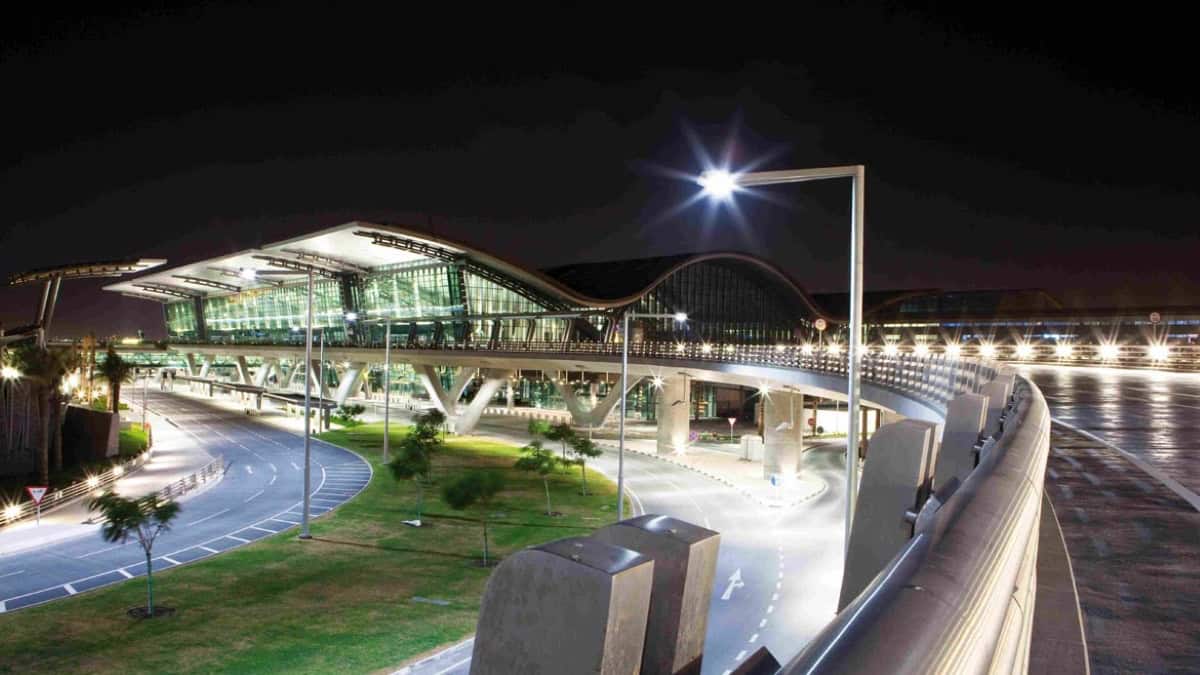
Airlines reported 1,585 delays and 40 cancellations, causing extensive disruption to flights at Gulf airports, including key hubs like Kuwait, Medina, and more. The interruption resulted from operating pressure on regional aviation networks brought on by security issues, changes to airspace, and difficulties with aircraft rotation. Additionally, as airlines dealt with delayed arrivals and departures, busy hubs throughout the Gulf saw schedule adjustments. Passengers using important Middle East connections had difficulties as the impact spread to multiple airports. Travelers were encouraged to verify updated flight information before arriving at airports, but airlines continued to modify operations to restore timetables.
Which Gulf airports recorded the highest flight disruptions?
The largest impact was recorded at Saudi Arabian airports, where multiple major hubs experienced significant delays and cancellations.
Advertisement
Advertisement
King Khalid International Airport in Riyadh recorded the highest number of delays among the listed airports, with 357 delays and 8 cancellations. As Saudi Arabia’s capital city airport, Riyadh handles a large volume of domestic and international traffic, making operational disruptions highly visible for connecting passengers.
King Abdulaziz International Airport in Jeddah followed with 272 delays and 4 cancellations. The airport serves as one of Saudi Arabia’s most important international gateways and supports a large number of regional connections.
Advertisement
Advertisement
Other Saudi airports also faced disruptions. King Fahd International Airport recorded 88 delays and 1 cancellation, while Prince Mohammad Bin Abdulaziz International Airport in Medina reported 51 delays and 2 cancellations. Abha Regional Airport registered 43 delays and 3 cancellations, adding further pressure to domestic and regional travel networks.
Outside Saudi Arabia, Dubai International Airport recorded 186 delays and 9 cancellations, making it one of the most affected Gulf aviation hubs. Dubai’s position as a major international transit centre means delays can affect passengers connecting between Asia, Europe, Africa and the Middle East.
Advertisement
Advertisement
Abu Dhabi International Airport reported 119 delays and 2 cancellations, while Sharjah International Airport recorded 68 delays and 3 cancellations. Together, UAE airports experienced notable disruption across multiple carriers and routes.
How were Gulf airlines affected by delays and cancellations?
Several airlines operating across the Gulf region experienced significant schedule disruptions.
Advertisement
Advertisement
| Airline | Country/Region | Cancelled Flights | Cancellation Rate | Delayed Flights | Delay Rate |
|---|---|---|---|---|---|
| Saudia | Saudi Arabia | 8 | 1% | 232 | 42% |
| FlyDubai | UAE | 4 | 1% | 51 | 16% |
| Air Arabia | UAE | 3 | 1% | 58 | 24% |
| Turkish Airlines | Türkiye | 2 | 0% | 168 | 10% |
| Flynas | Saudi Arabia | 2 | 0% | 137 | 43% |
| Oman Air | Oman | 2 | 1% | 21 | 20% |
| Qatar Airways | Qatar | 1 | 0% | 81 | 12% |
Saudi Arabia’s flag carrier Saudia recorded 232 delayed flights, representing a 42% delay rate, along with 8 cancellations at a 1% cancellation rate. The figures made Saudia one of the most affected airlines in the region.
Saudi low-cost carrier Flynas reported 137 delays, with a 43% delay rate, and 2 cancellations. The high delay percentage indicates significant schedule pressure across its operations.
In the UAE, FlyDubai recorded 51 delays with a 16% delay rate and 4 cancellations at 1%, while Air Arabia experienced 58 delays at a 24% delay rate and 3 cancellations at 1%.
International carriers were also affected. Turkish Airlines reported 168 delays with a 10% delay rate and 2 cancellations, while Qatar Airways recorded 81 delays at 12% and 1 cancellation. Oman Air reported 21 delays at 20% and 2 cancellations.
Advertisement
Advertisement
What cities and countries were impacted by the Gulf disruption?
The disruption affected major aviation markets across the Middle East. Saudi Arabia recorded the strongest impact, with airports in Riyadh, Jeddah, Medina, Dammam and Abha experiencing delays and cancellations.
The UAE also faced significant pressure, particularly in Dubai, Abu Dhabi and Sharjah. These airports play a crucial role in international connecting traffic, meaning delays can affect passengers beyond the Gulf region.
Qatar, Oman, Bahrain and Kuwait also experienced operational challenges. Hamad International Airport in Doha recorded 95 delays and 1 cancellation, while Seeb International Airport in Oman reported 46 delays and 2 cancellations. Bahrain International Airport registered 19 delays and 2 cancellations, and Kuwait International Airport recorded 44 delays and 1 cancellation.
Türkiye’s Istanbul Airport also saw disruption, with 197 delays and 2 cancellations, highlighting the wider impact on regional aviation connections.
| Airport | Origin cancelled % | Destination cancelled % |
|---|---|---|
| Dubai Int’l (DXB) | 0% | 0% |
| King Khalid Int’l (RUH) | 0% | 0% |
| Yanbu Domestic (YNB) | 80% | 80% |
| Abha Regional (AHB) | 4% | — |
| Prince Mohammad Bin Abdulaziz (MED) | 2% | — |
| King Abdulaziz Int’l (JED) | — | 0% |
| Sharjah Int’l (SHJ) | — | 1% |
What can affected passengers do now?
Passengers travelling through affected Gulf airports should check their flight status directly with airlines before travelling to the airport. With delays affecting multiple carriers, updated departure times may change throughout the day.
Travellers with connecting flights should allow additional time between flights, especially when travelling through major hubs such as Riyadh, Jeddah, Dubai, Abu Dhabi and Istanbul.
Advertisement
Advertisement
Passengers affected by cancellations should contact their airline for information about rebooking options, alternative flights or available assistance. Keeping digital copies of booking details and monitoring airline notifications can help travellers respond quickly to schedule changes.
As Gulf airports continue managing disrupted operations, passengers are advised to remain updated and plan additional time for airport procedures until schedules return to normal.
Data Verification Notice
The data has been extensively curated by our editorial team using real-time aviation figures recorded on 19 September 2026 at 5:55 pm ET USA (20 September 2026, 1:56 am GST).
Primary Source: FlightAware.
Verification Protocol: All statistics have been independently reviewed and cross-checked by our human editorial desk. Timestamped records, data logs and feed snapshots are securely archived internally to support historical accuracy and editorial transparency.
Note: Real-time flight-tracking figures reflect active airspace and operational data. Minor variations may occur when compared with information displayed at individual airport terminals or airline departure gates.
Yesterday, Gulf Airports faced more than 60 cancellations and 1,130 delays. Click here to see the complete news.
Advertisement
Verified by Somudranil Sarkar
