
Belgium Matches Netherlands and Others as Schengen Travel Rules Tighten for Non-Biometric Russian Passports

Updated
Published
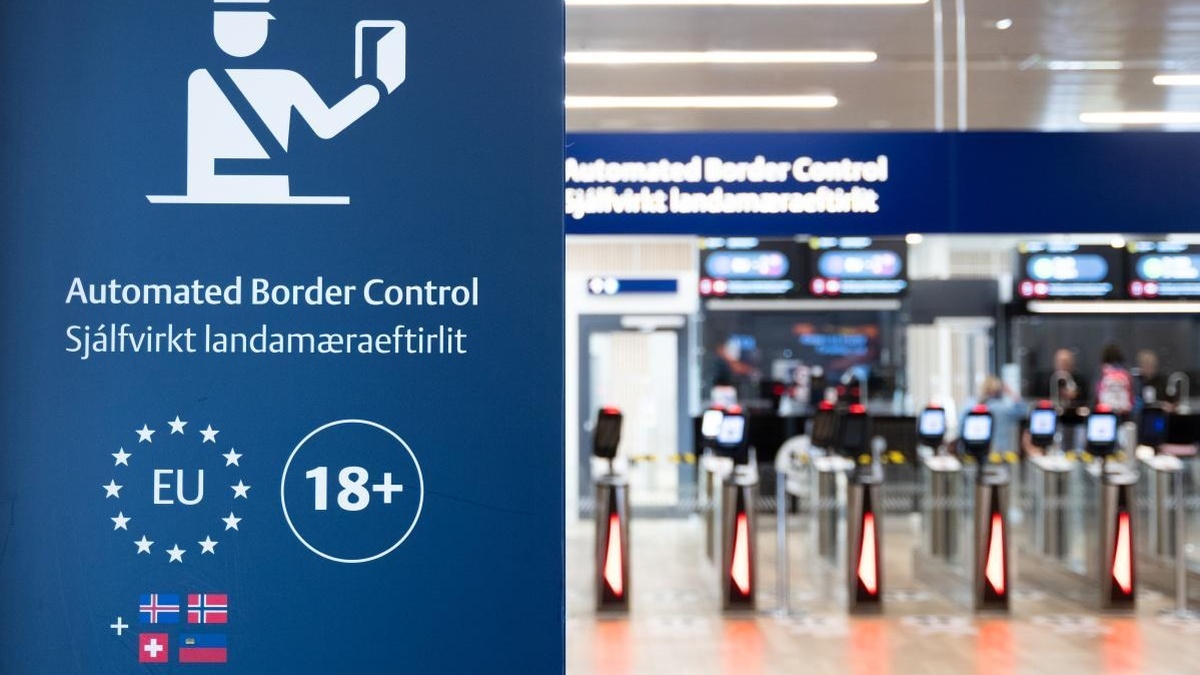
Russian travellers using non-biometric passports enter a more complicated Schengen environment today. Belgium, Luxembourg and the Netherlands stop recognising Russian non-biometric ordinary, diplomatic and service passports, while Sweden changes recognition of ordinary passports but keeps a defined transition for qualifying pre-existing visas and residence permits. The crucial traveller issue is deeper than a passport ban: a Schengen visa can remain administratively valid while the passport carrying it may not be recognised in every country on an itinerary. That distinction now makes country-by-country document checking essential.
Russia Travellers Now Face Two Separate Schengen Document Tests
The most important development from 1 October is not simply that four Schengen countries have changed their policy towards Russian non-biometric passports. It is that passport recognition and visa validity are separate legal questions.
Advertisement
Advertisement
According to the European Commission’s official list of recognised travel documents, the Benelux countries introduce a common recognition position from 1 October covering Russian non-biometric ordinary, diplomatic and service passports. The Commission records the Benelux provision under its recognition table and states that visas issued in affected non-biometric passports cease to be valid by 31 December 2026 at the latest.
Sweden follows a materially different transition structure. According to Sweden’s official foreign-service guidance, it stops recognising Russian non-biometric ordinary passports from 1 October. However, through 31 December 2026, Sweden accepts such ordinary passports where they contain a qualifying visa issued before 1 October by Sweden, another EU member state or another Schengen country, or where the holder has a qualifying residence permit issued before that date. Sweden’s non-recognition of Russian non-biometric diplomatic and service passports begins only on 1 January 2027.
Advertisement
Advertisement
That difference is the core information travellers, tour operators, corporate travel managers and visa specialists need to understand.
Belgium, Luxembourg and the Netherlands Share One Core Benelux Passport Rule
According to the Embassy of Luxembourg in Moscow, from 1 October 2026 Russian non-biometric ordinary, diplomatic and service passports are not recognised for travel and visa processing across Belgium, Luxembourg and the Netherlands. The same official guidance places a final 31 December 2026 deadline on Schengen visas already issued in those passports.
Advertisement
Advertisement
This creates an important operational distinction. The passport itself and the visa attached to it cannot automatically be treated as a single permission.
| Country | Rule effective 1 October 2026 | Russian passport categories affected | Existing-document position |
|---|---|---|---|
| Belgium | Benelux no longer recognises affected non-biometric passports for travel and visa processing | Ordinary, diplomatic, service | Existing Schengen visas in affected passports cease to be valid by 31 December 2026 at the latest |
| Luxembourg | Same Benelux recognition change | Ordinary, diplomatic, service | Official Luxembourg guidance sets 31 December as the final validity point for previously issued Schengen visas |
| Netherlands | Same Benelux recognition change | Ordinary, diplomatic, service | Dutch government explicitly permits certain holders of an existing valid Schengen visa to visit until 31 December 2026 |
| Sweden | Non-biometric ordinary passports no longer generally recognised | Ordinary from 1 October; diplomatic and service from 1 January 2027 | Transition through 31 December for qualifying pre-1 October visas or residence permits |
The commonality is therefore clear: all four states are tightening acceptance of Russian non-biometric travel documents from the same date, but they are not implementing identical transitional treatment.
Netherlands Creates an Explicit Existing-Visa Travel Window
The Netherlands provides one of the clearest traveller-facing explanations.
According to NetherlandsWorldwide, the Dutch government’s international consular portal, a Russian non-biometric passport can no longer support a new Dutch Schengen visa application for travel beginning from 1 October. However, a traveller who already holds a valid Schengen visa in such a passport may visit the Netherlands until 31 December 2026 at the latest.
The same Dutch guidance contains another highly important instruction for multi-country travellers: anyone planning to continue into another Schengen state must separately establish whether that destination requires a Russian biometric passport.
That sentence effectively identifies the hidden risk in multi-stop European journeys.
Advertisement
Advertisement
A traveller heading to Amsterdam, followed by Brussels, Luxembourg City or another Schengen destination, cannot safely treat Dutch acceptance as automatic recognition by every subsequent country. National recognition rules still matter.
Sweden’s Transition Is Broader but Has a Firm Cut-Off
Sweden’s system is different.
The Swedish authorities allow the transitional use of a Russian non-biometric ordinary passport through 31 December 2026 where one of two conditions is satisfied.
The passport may contain a valid visa issued before 1 October by Sweden, another EU member state or a Schengen country. Alternatively, the holder may possess a valid qualifying residence permit issued before 1 October by Sweden, another EU state or another Schengen country.
That can matter for travellers reaching Stockholm after entering Europe elsewhere.
It also means Sweden’s transition should not be reduced to a simple Swedish-visa exemption. Its published rule can encompass certain visas and residence permits issued elsewhere in the EU or Schengen framework, provided the timing and validity conditions are satisfied.
Advertisement
Advertisement
From 1 January 2027, Sweden will also stop recognising Russian non-biometric diplomatic and service passports.
Why a Valid Schengen Visa Is Not Automatically Enough
This is the legal point that makes the 1 October development particularly important.
Under Article 6 of the Schengen Borders Code, a third-country national seeking a short stay must possess a valid travel document entitling its holder to cross the border and, where required, a valid visa. These are separate entry conditions.
In practical terms, possessing an unexpired visa does not eliminate the requirement to hold an acceptable travel document.
The EU Visa Code reinforces the importance of national document recognition. Article 25 provides for situations where a travel document is recognised by some member states but not others. In such cases, territorial validity can depend on which states recognise the underlying document.
This legal architecture explains why Russian travellers should no longer read only the expiry date printed on their visa.
Advertisement
Advertisement
They need to establish three separate facts:
- whether their Russian passport is biometric or non-biometric;
- whether the destination recognises that particular passport on the travel date;
- whether an existing visa or residence permit falls within a national transitional exception.
For the travel trade, this converts what once looked like a straightforward visa check into a document-recognition matrix.
Schengen Itineraries Can Now Produce Different Results From the Same Passport
The information-gain issue is particularly visible in multi-country itineraries.
Consider a Russian traveller holding a non-biometric ordinary passport containing a Schengen visa issued before 1 October. The Netherlands publishes an explicit travel window for qualifying existing visa holders through 31 December. Sweden also publishes a transition for qualifying pre-1 October visas and residence permits.
Belgium and Luxembourg sit within the common Benelux recognition change, but their public rule must not be simplified into an assumption that every remaining visa automatically restores recognition of the passport used to carry it.
For travel professionals, that means an itinerary involving Amsterdam, Brussels, Luxembourg and Stockholm should be validated country by country rather than treated as one homogeneous Schengen journey.
Advertisement
Advertisement
This is especially important for corporate and MICE travel. A delegate may have a valid conference registration, confirmed accommodation and an apparently valid Schengen visa, yet still require a biometric passport depending on the national recognition regime governing the intended journey.
Temporary Internal Border Checks Make the Difference More Than Theoretical
Schengen normally removes systematic controls at internal borders, but travellers should not assume that documents will never be inspected once they have entered the area.
The European Commission’s current register shows that Sweden has temporary controls covering all internal land, air and sea borders until 11 November 2026. Germany also maintains controls at land borders including those with Belgium, Luxembourg and the Netherlands, while France has controls affecting its borders with Belgium and Luxembourg through 31 October.
This makes correct document recognition operationally significant beyond the first external-border entry point.
A traveller may therefore encounter document verification during a broader European journey even where the itinerary mainly moves between Schengen countries.
The issue for agents is not to predict whether a particular traveller will be checked. It is to ensure that the traveller remains document-compliant wherever a lawful check occurs.
Advertisement
Advertisement
EES Biometrics Do Not Replace Passport Recognition
Europe’s new digital border infrastructure does not remove this obligation.
The European Commission confirms that the Entry/Exit System has been fully operational since 10 April 2026 at Schengen external borders. By 6 August, it had recorded more than 150 million entries and exits. The system records travel-document information, fingerprints, facial images and entry-exit data for covered non-EU short-stay travellers.
However, EES registration is not a substitute for holding a document accepted for border crossing.
The Schengen Borders Code continues to require the underlying valid travel document and, where applicable, the necessary visa.
The practical lesson is significant: biometric border processing and biometric passport recognition are related security concepts, but they are not interchangeable permissions.
Why This Matters for Airlines, Agencies, Tour Operators and MICE Planners
The change increases pre-departure compliance work across the distribution chain.
Advertisement
Advertisement
Air and sea carriers operating to Schengen external borders already have responsibilities concerning required travel documents. EU rules provide for carrier obligations where third-country nationals arrive without documents necessary for entry, creating a strong operational reason for document validation before carriage.
Travel agents should therefore avoid confirming eligibility solely because a customer possesses an unexpired Schengen visa.
Tour operators selling Belgium, Luxembourg, Netherlands and Sweden combinations should add a passport-type check before final ticketing.
Corporate travel departments should audit travellers individually rather than assuming that colleagues holding the same visa class will face identical requirements.
MICE organisers receiving Russian delegates should communicate the distinction between event eligibility and immigration-document eligibility well before departure.
Critical Operational Takeaways for Travel Sellers
- Check passport technology first. Establish whether the Russian travel document is biometric or non-biometric before assessing the visa.
- Do not rely solely on visa expiry dates. Passport recognition is a separate Schengen entry requirement.
- Validate every destination. Dutch acceptance during the transition should not automatically be projected onto Belgium, Luxembourg, Sweden or another Schengen state.
- Record the visa issue date. Sweden’s transitional provision specifically depends on qualifying documents issued before 1 October 2026.
- Check residence permits separately. Sweden expressly includes qualifying pre-existing EU and Schengen residence permits within its transition.
- Revalidate multi-country itineraries. Internal border controls remain possible and are currently active in Sweden and several neighbouring Schengen states.
- Recommend biometric-document renewal early. For travellers planning trips beyond the transitional period, reliance on a non-biometric Russian passport carries growing operational risk.
- Recheck rules immediately before departure. Official recognition tables and national consular instructions can be updated.
What Comes Next for Russian Travel Into Schengen
The 1 October change signals a broader shift away from assuming that one valid visa creates uniform practical mobility across every Schengen itinerary.
Advertisement
Advertisement
For Russia’s non-biometric passport holders, the remaining months of 2026 form a transition period in which visa validity, passport recognition, residence status, issue dates and destination-country rules must all be read together.
By 2027, the direction becomes clearer. Sweden’s remaining recognition for Russian non-biometric diplomatic and service passports ends on 1 January, while the Benelux transition for visas embedded in affected documents reaches its final 31 December 2026 cut-off.
For travel businesses, the strategic lesson extends beyond Russia. As Europe strengthens biometric border management and member states maintain document-recognition powers, itinerary design increasingly requires document-level compliance rather than visa-level checking alone.
Frequently Asked Questions
1. Which countries change Russian passport rules on 1 October 2026?
Belgium, Luxembourg, the Netherlands and Sweden introduce relevant changes. Belgium, Luxembourg and the Netherlands apply the Benelux rule to Russian non-biometric ordinary, diplomatic and service passports. Sweden’s 1 October change initially concerns ordinary non-biometric passports.
2. Can a Russian traveller use an existing Schengen visa in the Netherlands?
The Dutch government states that qualifying holders of a valid Schengen visa already placed in a Russian non-biometric passport may visit the Netherlands until 31 December 2026 at the latest.
3. Does Sweden accept an old Russian non-biometric passport during the transition?
Yes, in specified circumstances. Through 31 December 2026, Sweden accepts qualifying non-biometric ordinary passports connected to certain visas or residence permits issued before 1 October.
Advertisement
Advertisement
4. Does having a valid Schengen visa guarantee admission to every Schengen country?
No. Schengen law treats possession of an acceptable travel document and possession of the required visa as separate conditions, while travel-document recognition can differ between states.
5. What should Russian travellers planning several Schengen countries do now?
They should verify the passport-recognition and transition rules of every country on their itinerary, not only the country that issued their visa or their first point of entry.
Advertisement
