
Samarkand, Uzbekistan Hits 11.7 Million Tourist Trips: What Others Are Missing in Silk Road Nation’s Long-Stay Tourism Shift

Published
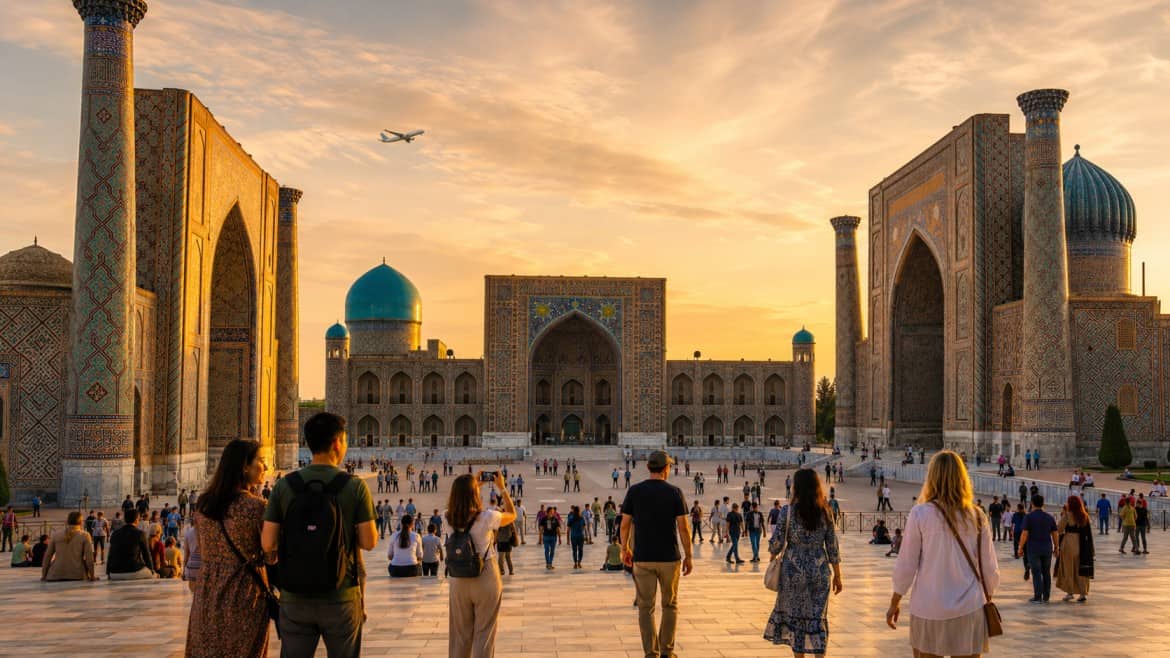
Image generated with Ai
Tourism in Uzbekistan is accelerating at a pace that is reshaping Central Asia’s travel map in 2025–2026. The country recorded 11.7 million tourist trips in 2025, a sharp jump that has triggered a strategic shift toward longer visitor stays and higher spending. This transformation is unfolding right now, as authorities respond to rising demand, expanded air connectivity, and stronger tourism revenues.
The change matters immediately because it affects how travellers plan Silk Road journeys, how airlines build routes, and how regional economies compete for international visitors. The focus is no longer just arrivals, but how long tourists stay and how much they spend. This shift is directly impacting visitors from Europe, Asia, and the Americas, as well as tour operators designing multi-country Silk Road itineraries across Central Asia.
Uzbekistan’s Tourism Surge Redefines the Silk Road Economy
Tourism in Uzbekistan has entered a structural growth phase. Official figures show inbound trips rising from 6.63 million in 2023 to 11.7 million in 2025, marking one of the fastest tourism expansions in Central Asia.
This surge is not accidental. It is driven by coordinated national strategies linking aviation, heritage tourism, and regional cooperation. Key Silk Road destinations such as Samarkand, Bukhara, and Khiva continue to anchor visitor flows, but authorities are now pushing travellers beyond traditional routes.
Advertisement
Advertisement
A critical shift is underway:
- From short cultural visits
- To extended, multi-region travel circuits
- To higher-value spending behaviour
This marks a departure from volume-based tourism toward value-based tourism, where each visitor contributes more economically per trip.
Advertisement
Advertisement
From Arrival Numbers to High-Value Tourism Strategy
Uzbekistan’s tourism model is evolving from expansion to monetisation. Tourism service exports increased significantly, rising from $2.14 billion in 2023 to $4.8 billion in 2025, reflecting stronger spending per traveller.
Officials are now prioritising:
Advertisement
Advertisement
- Long-haul tourists from Europe, Asia, and the Americas
- Higher-spending travellers rather than mass arrivals
- Extended stays through regional tourism packages
The strategic reasoning is clear. Short visits generate limited economic impact, while longer stays increase hotel occupancy, domestic transport usage, and cultural tourism spending.
Government-backed incentives are reinforcing this shift. Subsidies for airlines and tour operators, along with VAT-related refunds for tourism businesses during peak seasons, are designed to stimulate longer itineraries and repeat visitation.
This marks a deeper repositioning of Uzbekistan as a premium Silk Road destination rather than a transit stop.
Aviation Expansion Reshapes Accessibility and Global Reach
Air connectivity is becoming the backbone of Uzbekistan’s tourism transformation. The national carrier has expanded its fleet significantly over the past five years, growing from 26 aircraft to 45 aircraft, strengthening both regional and international routes.
Advertisement
Advertisement
This expansion supports the country’s ambition to attract long-haul markets, particularly from Europe and North America. Uzbekistan Airways has also confirmed a long-term fleet strategy involving Boeing 787-9 Dreamliners, which will enhance long-distance capacity from the next decade.
The aviation strategy is closely tied to the transformation of Tashkent into a regional aviation hub. The goal is to position the city as a transit gateway between Europe and Asia, linking multiple continents through Central Asia.
Key aviation priorities include:
- Expanding direct international routes
- Increasing transit passenger flows
- Strengthening intercontinental connectivity
This aviation push is central to making Uzbekistan more accessible for long-haul travellers who previously bypassed the region due to limited flight options.
Regional Silk Road Circuits: The New Travel Logic
One of the most significant but under-reported shifts is Uzbekistan’s push to integrate itself into wider Central Asian travel circuits. Instead of positioning itself as a standalone destination, the country is building multi-country itineraries across the Silk Road region.
These regional packages are designed to connect:
Advertisement
Advertisement
- Historic Silk Road cities
- Mountain landscapes and desert routes
- Cross-border cultural heritage zones
This strategy increases average tourist stay duration and encourages repeat visits. Travellers arriving from Europe or Asia are being encouraged to extend their journeys across neighbouring destinations, transforming Uzbekistan into a regional hub rather than a final stop.
This is the “what others are missing” factor. While many destinations focus on attracting arrivals, Uzbekistan is building an ecosystem that maximises movement across borders, effectively turning geography into a shared tourism product.
Infrastructure Pressure and Domestic Connectivity Challenge
Rapid tourism growth is also exposing internal infrastructure challenges. Domestic travel distances remain significant, particularly between major hubs like Tashkent and remote regions such as Karakalpakstan.
Authorities are responding with:
- High-speed rail expansion projects
- New airport developments across regions
- Improved domestic transport corridors
These upgrades are essential to ensure tourists can move efficiently beyond core destinations. Without internal connectivity, the long-stay strategy risks being concentrated only in a few cities.
Transport reform is therefore becoming as important as aviation expansion. The goal is to ensure that increased arrivals translate into geographically distributed tourism revenue across the country.
Advertisement
Advertisement
What Others Are Missing in the Uzbekistan Tourism Model
Most global tourism markets still prioritise arrival numbers. Uzbekistan is taking a different approach by prioritising economic yield per visitor.
The key divergence is:
- Others chase volume
- Uzbekistan is chasing value and duration
This shift is supported by integrated policy tools, including aviation expansion, subsidies, regional tourism packaging, and infrastructure development. The result is a coordinated ecosystem rather than isolated tourism growth.
The broader implication is significant. Central Asia is emerging as a competitive tourism corridor, and Uzbekistan is positioning itself as its central connector.
If successful, this model could redefine Silk Road tourism for the next decade.
Uzbekistan’s tourism transformation is no longer about growth alone. It is about control over visitor behaviour, spending patterns, and travel duration. With 11.7 million tourist trips, rising tourism revenues, and a long-term aviation strategy centred on Tashkent, the country is reshaping its global travel identity.
Advertisement
Advertisement
For travellers, tour operators, and airlines, the message is clear: Uzbekistan is no longer just a stop on the Silk Road. It is becoming the hub that connects it.
Advertisement
