
Spain Joins Greece, Italy, Netherlands, UK, Japan, Thailand and Other Major Destinations in 2026 Overtourism Emergency with Skyrocketing Cruise and Visitor Taxes, Strict Daily Caps, and Radical Travel Rules That Will Change Global Travel Forever

Published
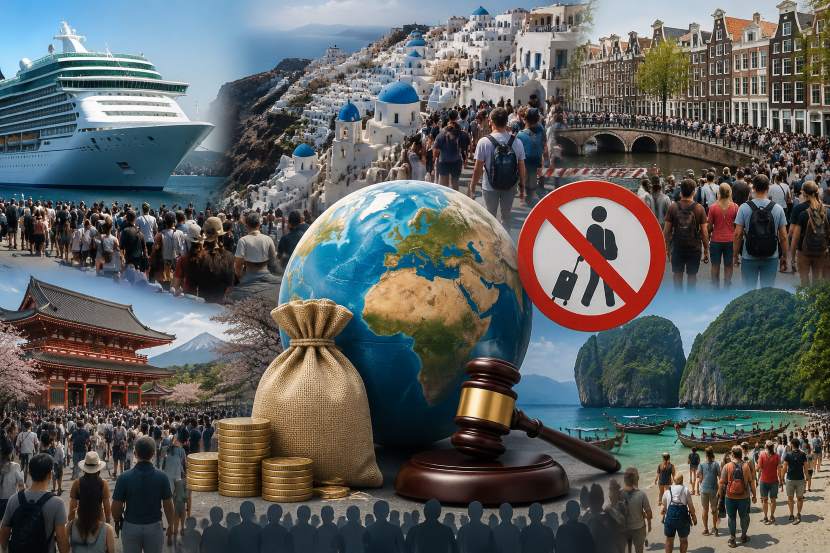 Image generated with Ai
In 2026, Spain joins Greece, Italy, Netherlands, UK, Japan, Thailand and other major destinations in an overtourism emergency, as authorities implement skyrocketing cruise and visitor taxes, strict daily caps, and radical travel rules to manage overcrowding, protect residents, and preserve cultural and natural heritage. The surge of cruise passengers and short-term tourists has overwhelmed infrastructure, congested historic streets, and placed extraordinary pressure on public services, prompting governments to act decisively.
Key measures vary across destinations. In Greece, tiered cruise levies on Santorini and Mykonos reach €20 per passenger during peak season, while Venice enforces a pre-booked Access Fee of €5–€10 coupled with QR code verification. Amsterdam has reduced cruise moorings by 50% and introduced a €15 per day passenger tax, and Barcelona charges €11 for short-stay cruise visitors with plans for increases in 2027. Japan has implemented conservation and hotel taxes at iconic sites like Mount Fuji and Kyoto, while Thailand now applies a 300-baht entry fee for all arrivals. Edinburgh has introduced a 5% visitor levy on overnight stays, potentially extending to cruise passengers in the near future.
Advertisement
Advertisement
Alongside financial measures, daily visitor caps and structural regulations ensure crowd control, while radical travel rules such as terminal relocations, pre-booked entry, and environmental compliance transform the way tourists experience destinations. Together, these policies aim to redirect visitor flows, incentivize longer stays, and align tourism with sustainability, marking a decisive shift in global travel management and redefining responsible tourism for 2026 and beyond.
Spain: Barcelona’s Bold Pivot from Cruise Chaos to Quality Tourism
Spain’s Barcelona, one of Europe’s most visited cities, has moved beyond debate and enacted some of the most aggressive tourism policies on the continent. After years of mounting resident protests, infrastructure strain and traffic overload from short‑stay visitors — especially cruise tourists — the city’s government framed 2026 as a year of transformation.
Advertisement
Advertisement
Cruise Passenger Taxes on the Rise
Barcelona has significantly increased the per‑visitor surcharge for cruise passengers, particularly those who spend only a few hours in the city. As of April 1, 2026, cruise visitors staying less than 12 hours are charged roughly €11, a figure that includes both municipal and regional tourism levies. City planners have indicated a further planned increase to €14 in 2027, part of a phased plan to make quick cruise calls financially less attractive compared with longer stays.
Terminal Relocation Strategy
Alongside tax increases, Barcelona is strategically moving cruise terminals out of the historic city center. The goal is to reduce easy access for day‑trippers, pushing arrivals to docking points further from central attractions and public transit hubs. This shift fundamentally changes the nature of cruise excursions — transforming them from convenient pit‑stops into longer, planned visits that deliver more sustained economic contribution to the local economy.
Advertisement
Advertisement
Long‑Term Tourist Model Shift
Barcelona’s broader tourism strategy now favors overnight visitors, particularly hotel guests who spend money on accommodation, dining, cultural sites, and local businesses. Policies targeting short‑term vacation rentals are part of this shift, with plans to phase down Airbnb‑style units in central neighborhoods by 2028. Together, these measures are designed not just to reduce crowding but to cultivate a more sustainable tourism economy that benefits both visitors and residents alike.
Travel Impact: Passengers planning quick Barcelona port visits should prepare for higher taxes, longer transit times from non‑central terminals, and incentives to arrange overnight stays.
Advertisement
Advertisement
Greece: Seasonal Levies and Visitor Caps to Protect Island Life
In 2026, Greece’s tourism authorities fully rolled out a tiered cruise passenger levy across major island destinations — most notably Santorini and Mykonos — and applied it at scale across other ports as well. The aim is clear: manage peak‑season pressure without halting tourism entirely.
Tiered Cruise Fees by Season
Greece’s fee structure is designed around demand and seasonality:
- Peak Season (June–September): €20 (~$23) per passenger
- Shoulder Season (April–May and October): €12 (~$13)
- Off‑Season (November–March): €4 (~$4.50)
Unlike one‑size‑fits‑all taxes, these tiers reflect the heavy seasonal swings in island tourism. During peak months, ports in Santorini and Mykonos often face gridlocked pedestrian traffic and overwhelmed transit systems; levying a higher fee serves both to regulate demand and provide revenue for infrastructure support.
Daily Visitor Caps in High‑Demand Islands
Beyond taxes, island authorities — particularly in Santorini — have instituted daily cruise visitor caps. For the 2026 season, Santorini will host no more than 8,000 cruise passengers per day, calculated using ship capacity figures rather than actual onboard counts to ensure compliance. This mechanism helps prevent the extreme crowds that once funneled thousands of visitors into narrow town streets at once.
Advertisement
Advertisement
How the Fees Are Collected
Cruise lines like MSC and Royal Caribbean now automatically add the relevant seasonal fee to passengers’ onboard accounts. Cruise operators remit these charges directly to Greek authorities, simplifying compliance but incorporating the cost into any cruise‑goer’s overall travel budget.
Travel Impact: Travelers planning Greek island excursions should factor seasonal levies into their cruise budgets. Peak summer visits will carry the highest fees, while off‑season travel offers a softer cost profile and fewer crowds.
Italy: Venice’s Tightened Access Controls and Advanced Visitor System
Few destinations have wrestled with overtourism as visibly as Venice. The historic lagoon city has long been a symbol of tourism’s double‑edged sword, attracting millions of visitors yearly while struggling with crowds, environmental stress, and fragile heritage infrastructure. In 2026, Venice escalated its management strategy from pilot trials to full‑scale, enforced access regulation.
Expanded Access Fee for Visitors
Venice’s signature “Access Fee” — part of the broader Venice Discovery Pass — has become both permanent and more sophisticated in 2026. The system applies to day visitors on specified high‑traffic dates, particularly during spring and summer weekends when crowds once peaked without any controls.
- Pre‑booked visitors (registered four days or more before arrival): €5
- Last‑minute visitors (registered within four days): €10
Unlike in prior years where enforcement was patchy, Venice has deployed stewards at key points such as Santa Lucia train station and the main cruise terminal to scan QR codes linked to pre‑registered visits, ensuring that entry fees are paid and validated before visitors disperse into the city.
Revenue for Infrastructure and Crowd Management
The Access Fee revenues are directed toward city services — including sanitation, public transport, heritage conservation, and crowd management systems — providing an essential funding stream linked directly to visitor usage. This model represents a pivot from relying solely on accommodation taxes to capturing contribution from transit visitors who historically consumed infrastructure without staying overnight or contributing to local lodging revenue.
Advertisement
Advertisement
Cruise Traffic and Lagoon Protection
Venice’s Access Fee functions alongside existing restrictions on large cruise ships entering the historic waterways, a measure that has become emblematic of the city’s efforts to protect its lagoon environment and fragile urban fabric. By combining fee‑based access with strict environmental criteria, the city is transitioning toward a tourism ecosystem that limits harmful crowding while still welcoming legitimate cultural engagement.
Travel Impact: Visitors to Venice in 2026 must pre‑register in advance when possible to secure the lower access fee. Last‑minute arrival will cost more and may encounter enforcement delays at key checkpoints. Cruise passengers spending only a few hours in the city now face structured entry costs and verification procedures.
Netherlands: Amsterdam’s Cruise Reductions and Urban Tourism Reset
In response to overtourism pressures and environmental commitments, Amsterdam has adopted a multi‑pronged strategy that reshapes cruise visitation and urban tourism patterns. The city’s approach blends cruise limits, day‑visitor taxes, and long‑term planning aimed at both resident quality of life and climate goals.
Cutting Cruise Moorings by Half
For the 2026 cruise season, Amsterdam’s authorities moved to reduce the number of allowed cruise ship moorings from 190 to a maximum of 100. This 50% reduction is one of the most significant nationwide cruise caps in Western Europe and signals a deliberate scaling back of high‑volume day‑trip tourism into the Dutch capital.
Day Visitor Tax Built Into Port Fees
Amsterdam now imposes a €15 per day cruise passenger tax, collected via port fees and passed on by the cruise lines. This levy is intended to reflect the real cost of daily urban visits — from public transit usage to waste management — that day–trip cruise passengers once consumed without corresponding overnight spend.
Future Terminal Relocation Plans
Looking beyond 2026, the city council has confirmed plans to relocate the main Passenger Terminal Amsterdam (PTA) out of the city center entirely by 2035. Moving cruise docking further from central neighborhoods is part of a broader effort to reduce pollution, noise, and crowds, pushing daily tourist movement into places better equipped to handle high throughput without impacting residents.
Advertisement
Advertisement
Aligning Tourism with Sustainability Goals
Amsterdam’s cruise and tourism strategy fits within wider sustainability ambitions, including zero‑emission zones, shore power infrastructure for docked vessels, and stricter environmental compliance. These initiatives aim to reduce air and water pollution linked to cruise tourism while repositioning Amsterdam as a balanced, future‑focused travel destination.
Travel Impact: Fewer cruise calls and added daily taxes mean travelers may find Amsterdam itineraries leaner and more deliberately planned. Cruise visitors should prepare for additional costs and shorter stays in central city areas as docking points shift outward.
United Kingdom: Edinburgh Launches the UK’s First Visitor Levy
The United Kingdom entered the overtourism policy arena more visibly in 2026 with Scotland’s introduction of a city‑wide visitor levy, positioning Edinburgh as the first UK city to enact such a system. While aimed primarily at accommodation stays, the levy sets a precedent that could expand to other visitor types, including cruise passengers, in the near future.
The Edinburgh Visitor Levy Explained
Effective July 24, 2026, the Edinburgh Visitor Levy applies to paid overnight stays in the city:
- Rate: 5% of room rate per night
- Capped: Typically limited to seven nights per visitor booking
Though this charge is currently geared toward hotel and lodging stays, city planners and tourism officials are already debating extensions to day‑visitor and cruise‑related surcharges as overtourism pressures mount — particularly in the summer months when crowds overwhelm historic zones like the Royal Mile, Old Town, and civic parks.
Reinvesting in Local Infrastructure
Revenue from the levy will be reinvested in tourism support services, cultural site maintenance, public spaces, and infrastructure improvements. The levy’s explicit purpose is not to deter visitors but to ensure that tourism economy benefits are shared with the communities and systems that support them.
Advertisement
Advertisement
Cruise Ports and Visitor Flows
While Edinburgh’s physical cruise port at Leith is not yet subject to a dedicated day‑visitor tax, local authorities have publicly acknowledged that cruise passenger impact is part of the broader visitor strain being analyzed. Discussions include the possibility of port‑specific levies or infrastructure levies tied to peak cruise days, further aligning Edinburgh with broader overtourism trends across Europe.
Travel Impact: Tourists staying overnight in Edinburgh should budget for the visitor levy. Cruise travelers considering brief city excursions may encounter new fee discussions as local councils respond to capacity pressures.
Japan: Conservation Fees and Heritage‑Focused Tourism
Japan’s overtourism response in 2026 takes a different shape: rather than city‑specific access levies for short‑stay visitors, the government and local jurisdictions have updated tourism fees tied to environmental conservation and heritage preservation, affecting all international visitors — including cruise passengers.
Mount Fuji Conservation Contribution
Mount Fuji, one of Japan’s most iconic natural sites, implemented a ¥4,000 (~$25) conservation fee for climbers in 2026. The purpose of the fee is to fund trail maintenance, erosion control, waste management, and broader ecological protection. Visitors ascending the mountain as part of a cruise excursion or independent trip contribute directly to environmental stewardship through this levy.
Kyoto’s Tiered Hotel Tax
In historic Kyoto, a tiered hotel tax system came into force, where higher‑end accommodations attract fees reaching approximately $10 per night. Revenues are directed toward preserving temples, gardens, UNESCO heritage sites, and tourism infrastructure, mitigating the effects of high visitor volumes in concentrated historic districts.
National Tourism Sustainability Impacts
Though these charges are not cruise‑exclusive, they represent Japan’s holistic approach to sustainable tourism: linking visitor contributions to site preservation, cultural heritage funding, and environmental protection. Cruise travelers to Japan now navigate layered cost structures that reflect both access (departure or entry charges) and in‑destination conservation responsibilities.
Advertisement
Advertisement
Travel Impact: Visitors to Japan’s flagship cultural and natural landmarks should budget for conservation and hotel taxes, particularly during peak seasons when ticket surcharges and access crowds converge.
Thailand: National Entry Fee Funds Sustainable Tourism Investment
In 2026, Thailand implemented a national entry fee for all foreign arrivals, a move that firmly links travel contributions to environmental restoration and destination management funds.
300‑Baht Entry Levy
Foreign visitors arriving by sea or air are required to pay a 300‑baht (~$8) fee upon entry. This levy supports a broad portfolio of tourism enhancement initiatives, including insurance schemes, environmental restoration projects on island beaches, and infrastructure upgrades in high‑impact coastal zones.
Cruise Visitor Inclusion
Thailand’s model does not distinguish between travel modes; cruise passengers docked at Thai ports are equally subject to the entry levy. By integrating cruise tourism into the national fee structure, Thailand ensures that all visitors contribute to the costs of managing high‑volume destinations such as Phuket, Koh Samui, and other popular island circuits.
Tourism Sustainability Goals
The Thai entry fee reflects a broader policy emphasis on balancing tourism growth with ecological and cultural sustainability. Funds are earmarked for projects that enhance visitor safety, minimize environmental impact, and fortify the nation’s tourism infrastructure against overtourism pressures.
Travel Impact: All visitors to Thailand in 2026 — including cruise passengers — should incorporate the entry fee into their travel budgets, recognizing it as part of Thailand’s effort to preserve its natural and cultural attractions.
Advertisement
Advertisement
Comparative Snapshot: 2026 Overtourism Policies Across Destinations
| Destination | Primary Measures | Target Audience | Key Impact for Travelers |
|---|---|---|---|
| Barcelona, Spain | Increased cruise taxes, terminal relocations, short‑term rental restrictions | Cruise & short‑stay visitors | Higher fees, longer transit from port |
| Greece (Santorini & Mykonos) | Tiered seasonal cruise levies, daily visitor caps | Cruise passengers | Variable fees based on season, crowd limits |
| Venice, Italy | Access Fee with QR code verification | Day visitors & cruise arrivals | Pre‑booking encouraged, structured entry cost |
| Amsterdam, Netherlands | 50% reduction in moorings, €15 day tax | Cruise day visitors | Reduced ships, added tax, terminal shift |
| Edinburgh, UK | 5% visitor levy on accommodation | Overnight guests (debate for extensions) | Extra cost per night, potential cruise impact |
| Japan (Mount Fuji & Kyoto) | Conservation fees, hotel taxes | All visitors | Added cost for heritage and nature access |
| Thailand | 300‑baht national entry fee | All foreign arrivals | Entry cost for flights & cruise arrivals |
What This Means for Travelers in 2026
The overtourism push of 2026 has reshaped travel planning in fundamental ways:
- Cost Transparency Is Critical: Travelers must account for layered fees — from entry levies to daily cruise taxes and conservation charges.
- Advance Planning Pays Off: Venice’s lower pre‑booked Access Fee and early reservations in Greece result in lower overall costs.
- Stay Longer to Save: Cities like Barcelona and Edinburgh now favor overnight stays over short transit visits, reflecting a broader travel value shift.
- Sustainable Travel Matters: Environmental criteria — such as ship emission standards in the Netherlands and restoration fees in Japan and Thailand — are now travel considerations, not afterthoughts.
- Itineraries Will Look Different: Cruise routes, port calls and day‑trip activities are adapting to new geographies, fees and strategic destination priorities.
The Future of Cruise and Urban Tourism
2026 marks a watershed year in how destinations manage the relationship between tourism growth and community sustainability. Lessons from these diverse policies point to an emerging global tourism paradigm:
- Visitor Contribution Over Volume: Destinations now require visitors to contribute directly to infrastructure and environmental costs.
- Resident Well‑Being as Policy Priority: Quality of life for residents is now a fundamental consideration in tourism planning.
- Dynamic Pricing & Access Controls: Tiered fees and access limits — often linked to seasonality — reflect intelligent demand management.
- Integration of Technology and Regulation: QR code systems, scheduling caps and advanced registration show how digital tools can enforce tourism policy.
- Cruise Tourism Redefined: Cruise calls are no longer purely welcomed economic events but are conditioned by cost, capacity and sustainability criteria.
Travelers heading to these major destinations in 2026 must be aware that decisions previously taken for granted — port access, day visits, cruise stops and heritage site access — are now governed by comprehensive policy frameworks designed to balance visitation with long‑term viability.
This reshaping of global travel is not a temporary trend but a foundational shift toward responsible, sustainable and equitable tourism, where visitor behavior, destination health and local community needs are considered integral parts of the travel experience.
In 2026, Spain joins Greece, Italy, Netherlands, UK, Japan, Thailand and other major destinations in an overtourism emergency, using cruise and visitor taxes, daily caps, and travel rules to reduce overcrowding and protect residents.
Conclusion: The New Era of Sustainable Global Tourism
2026 represents a watershed year for global tourism. Cities and countries are moving decisively to redefine how visitors interact with destinations, balancing economic benefits with environmental protection and resident well-being. From Barcelona’s relocation of cruise terminals to Santorini’s daily visitor caps, Venice’s QR-coded access, Amsterdam’s cruise reductions, Edinburgh’s visitor levy, Japan’s conservation fees, and Thailand’s national entry tax, tourism is now a carefully managed, multi-layered system.
Advertisement
Advertisement
Travelers, cruise operators, and tourism planners must adjust to higher fees, stricter access rules, and sustainability-focused regulations. The measures reflect a broader understanding that overtourism cannot be managed solely through policing or infrastructure expansion — instead, visitor contribution, environmental accountability, and strategic planning are now central to the global tourism model.
For those visiting in 2026, the landscape is clear: plan ahead, budget carefully, and travel responsibly. These policies do more than raise revenue — they protect the destinations, preserve culture and nature, and ensure sustainable tourism for future generation.
Advertisement
