
Thailand and Cambodia At Center Of Tourism Fallout As Over 30% Visitor Confidence Faces Pressure After Latest US Iran Escalation

Published
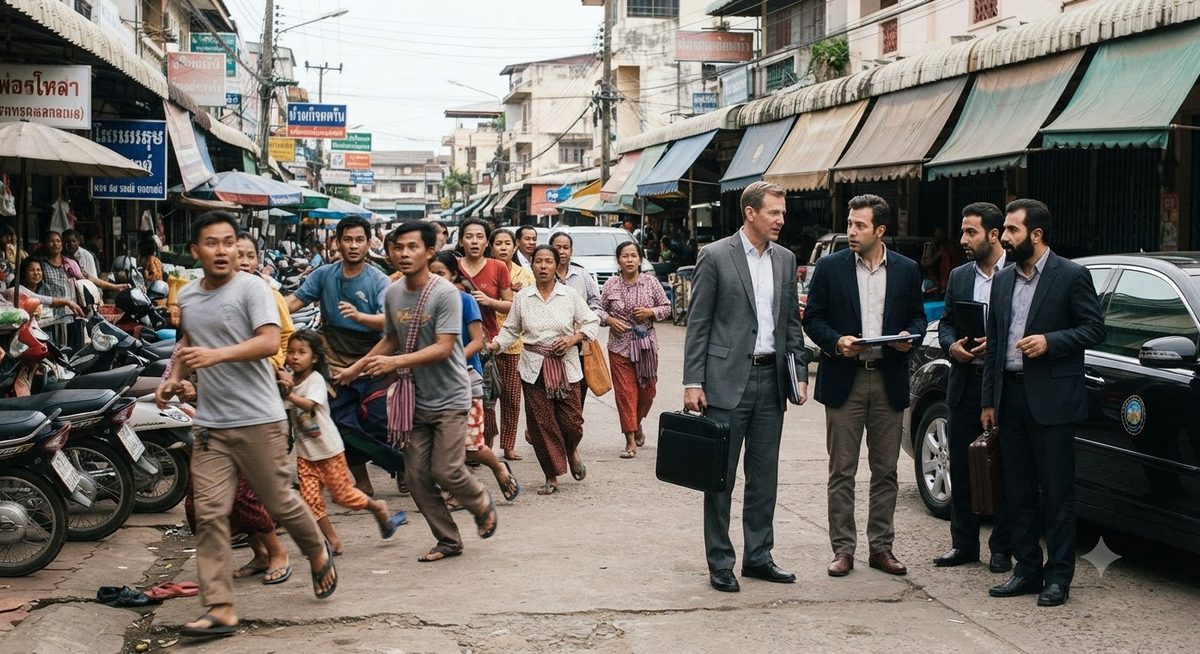
Image generated with Ai
The geopolitical landscape has drastically shifted, triggering a severe Thailand and Cambodia tourism fallout as of September 2026. Following the latest international escalation, global aviation networks have faced unprecedented disruptions, severely restricting the vital transit routes connecting Europe to Southeast Asia. Consequently, over thirty percent of international visitor confidence has eroded, leaving these vulnerable economies grappling with cancelled flights, surging fuel costs, and plummeting arrival statistics. As officials scramble to implement strategic countermeasures, understanding the deep economic and structural impact of this crisis is essential. The following comprehensive report details how global conflicts are reshaping the future of Asian travel.
The Genesis of the 2026 Geopolitical Tourism Crisis
The global travel landscape has been significantly altered as of early September 2026. The latest rounds of escalation in the ongoing US-Iran conflict have produced immediate and devastating ripple effects across international markets. While the political and military dimensions of the crisis have dominated front-page headlines globally, the secondary economic impacts are now becoming starkly apparent in Southeast Asia. For nations heavily reliant on international visitors, this geopolitical instability represents a critical macroeconomic threat. Historically, the summer and early autumn travel seasons represent a peak period of profitability for the hospitality and aviation sectors. However, the current situation has effectively crippled the established equilibrium of global travel. The conflict has forced the intermittent and sometimes total closure of crucial Middle Eastern airspace, severing the primary arterial flight routes that connect affluent European source markets to Southeast Asian destinations. Consequently, millions of potential holidaymakers have been forced to reconsider, delay, or entirely cancel their long-haul travel plans, driven by rising costs and a pervasive sense of insecurity.
Understanding the Breadth of the Thailand and Cambodia Tourism Fallout
This crisis has specifically coalesced into a profound Thailand and Cambodia tourism fallout, affecting the two nations that have traditionally served as the anchor destinations for Southeast Asian tourism. Both countries heavily leverage the tourism sector for gross domestic product (GDP) growth, foreign exchange earnings, and mass employment. In Thailand, tourism directly and indirectly accounts for nearly 13% of the national GDP, while in Cambodia, it remains one of the four foundational pillars of the entire national economy, alongside agriculture, construction, and garment exports. As the conflict continues to dictate global oil prices and airspace availability, these two nations find themselves at the epicentre of a collateral economic shock. The sudden disappearance of high-yield long-haul travellers has exposed the vulnerability of an industry that had barely managed to stabilise following the prolonged devastation of the COVID-19 pandemic. Instead of celebrating a robust post-pandemic recovery, policymakers and industry stakeholders are now engaged in frantic damage control, attempting to salvage what remains of the 2026 fiscal year.
Flight Disruptions and the Collapse of the Aviation Hub-and-Spoke Model
To comprehend the scale of the current downturn, one must first examine the mechanics of modern international aviation. The predominant model for transporting tourists from Europe to Southeast Asia relies heavily on the “hub-and-spoke” system. Under this framework, mega-carriers based in the Gulf states—specifically in cities such as Doha, Dubai, and Abu Dhabi—serve as the central transit points. European passengers fly into these Middle Eastern hubs before connecting to onward flights directed toward Bangkok, Phuket, Phnom Penh, or Siem Reap. The US-Iran escalation has directly compromised this vital plumbing of global travel. The airspace closures across the Persian Gulf have essentially cut off these indispensable layover locations, forcing airlines to entirely rethink their operational strategies overnight.
Advertisement
Advertisement
The Logistical Nightmare for Carriers and Passengers
Airlines are now being forced to execute complex and costly logistical manoeuvres. Commercial aeroplanes must take significantly longer, circuitous routes to safely bypass active conflict zones. This redirection requires vastly more aviation fuel at a time when global energy markets are already experiencing extreme volatility and price spikes due to the very same geopolitical conflict. Aeronautical Radio of Thailand Ltd (AEROTHAI) recently confirmed that the situation has severely impacted traffic volumes in Thai airspace. According to official reports, more than 1,000 flights operated by Middle Eastern airlines to Thailand have been categorically cancelled since the conflict intensified earlier this year. These cancellations represent an estimated 3% of total flight volumes, severely constraining the capacity for bringing international tourists into the region. Suvarnabhumi Airport in Bangkok alone witnessed over 600 cancellations, while the southern tourist hub of Phuket lost more than 400 crucial flights.
Advertisement
Advertisement
Surging Airfares and the Direct Impact on Visitor Confidence
The operational necessity of flying longer routes has directly translated into exorbitant ticket prices for the end consumer. Major international carriers have been compelled to implement sharp increases in fuel surcharges, sometimes doubling previous amounts, to maintain basic profitability. For the average European or North American traveller, the cost of a return ticket to Southeast Asia has surged beyond the threshold of affordability. Some flight routes have seen airfare hikes of up to 200%, rendering long-haul holidays financially unviable for middle-class families and budget-conscious backpackers alike. This sudden pricing crisis has effectively priced out a significant segment of the demographic that historically forms the backbone of Southeast Asia’s summer tourism rush.
The 30% Psychological Barrier and Eroding Trust
Beyond the sheer financial cost, the uncertainty surrounding the conflict has severely damaged visitor confidence. Current industry metrics indicate that over 30% of visitor confidence has evaporated, leading to a noticeable hesitation in forward bookings. Travellers are demonstrating a profound reluctance to commit to long-haul flights that might be subject to sudden cancellations, extensive delays, or rerouting due to unforeseen military escalations. Booking behaviours have fundamentally shifted; European guests who previously secured their itineraries six months in advance are now delaying their decisions until eight to ten weeks prior to departure, nervously monitoring the geopolitical news cycle. This shortened booking window creates immense forecasting difficulties for hoteliers and tour operators, who cannot accurately predict occupancy rates or adequately manage their staffing levels.
Statistical Reality: Thailand’s Lowered Tourism Forecasts for 2026
The macroeconomic consequences of this hesitation are now being officially quantified by national authorities. The Tourism Council of Thailand (TCT) recently issued a sobering revision of its fiscal projections. Initially, Thailand had aggressively targeted 34 million international arrivals for the 2026 calendar year, hoping to finally eclipse the shadows of the pandemic era. However, forced to acknowledge the harsh realities of the Middle East crisis, TCT President Chai Arunonchai has officially downgraded this forecast to 32.14 million. This projected shortfall of nearly 1.8 million visitors represents a massive blow to the national economy, threatening the livelihoods of countless citizens dependent on the hospitality sector.
Advertisement
Advertisement
Analysing the Disappearance of Key Source Markets
The granular data provided by the Thai Ministry of Tourism and Sports paints an even bleaker picture of the current landscape. Year-on-year statistics for the crucial spring and summer months demonstrate a stark contraction. In April 2026, the overall number of international visitors to Thailand fell by 7%. Crucially, the demographics that typically yield the highest revenue saw the most dramatic declines. European arrivals plummeted by almost 16%, while Middle Eastern arrivals collapsed entirely, sinking by a staggering 57%. Consequently, the total annual tourism revenue for Thailand is now projected to settle at 2.58 trillion baht, a figure that is highly contingent on the optimistic assumption that the geopolitical situation will stabilise in the near future.
Regional Strains: How Northern and Southern Thailand Are Suffering
The national-level statistics, while alarming, obscure the acute localised crises unfolding across different regions of Thailand. The southern provinces, globally renowned for their pristine beaches and luxury resorts, have been disproportionately affected by the sudden disappearance of specific national demographics. The Israeli tourist market, which has historically been a strong contributor to the economy of the southern islands, has virtually vanished overnight due to domestic mobilisation and regional insecurity stemming directly from the Middle Eastern conflict.
Advertisement
Advertisement
The Triple Crisis in Northern Thailand
In the northern regions, particularly around the cultural hub of Chiang Mai, operators are facing what industry leaders have dubbed a “triple crisis.” The geopolitical fallout and the corresponding loss of international visitors have coincided with severe environmental challenges. Hazardous PM 2.5 air pollution has blanketed the region, creating a public health hazard that actively deters both domestic and international tourists. During the traditional Songkran festival—a period that historically guarantees full occupancy—hotels in the north reported dismal occupancy rates hovering between 50% and 60%. Meanwhile, in Bangkok and the central plains, the lucrative Meetings, Incentives, Conferences, and Exhibitions (MICE) sector is experiencing a devastating delayed decision-making cycle, with numerous corporate events for the second half of 2026 remaining unconfirmed or indefinitely postponed.
Cambodia’s Stark Tourism Decline: A 47.9% Drop in H1 Arrivals
While Thailand possesses a sufficiently large domestic market to absorb some of the economic shock, neighbouring Cambodia finds itself in a far more precarious position. The Cambodian Ministry of Tourism recently released highly distressing figures for the first half of 2026. International arrivals plummeted by an astonishing 47.9%, falling to just 1.75 million visitors from the 3.36 million recorded during the exact same period in the previous year. This catastrophic decline underscores the extreme fragility of Cambodia’s international connectivity and its heavy reliance on the very transit routes that have now been compromised by the US-Iran escalation.
The Angkor Wat Deficit and Regional Vulnerabilities
The cultural epicentre of Cambodia, Siem Reap, which houses the UNESCO World Heritage site of Angkor Wat, has been severely impacted. Angkor Enterprise reported a 32% year-on-year drop in foreign visitors to the archaeological park during the first quarter of 2026, resulting in a corresponding 30% collapse in vital ticket revenue. Industry experts note that Cambodia is uniquely exposed to the current aviation crisis because its direct-flight network is inherently thinner than that of regional competitors like Thailand or Vietnam. European travellers, who form the backbone of Cambodia’s cultural tourism circuit, rely almost exclusively on the disrupted Gulf transit hubs. With those hubs rendered inaccessible or prohibitively expensive, the European market share has evaporated. Furthermore, regional issues such as lingering border disputes and widespread online scamming concerns have also deterred potential visitors from neighbouring Asian nations, compounding the effects of the Middle East conflict.
The Impact on Cambodia’s Ecotourism and Philanthropic Sectors
The sharp decline in European arrivals has particularly devastated Cambodia’s unique philanthropic and ecotourism sectors. Unlike mass tourism destinations, many Cambodian resorts operate on a social enterprise model, where tourism revenue directly funds vital humanitarian programmes. Smiling Gecko, an organisation operating a prominent farmhouse resort in Kampong Chhnang province, serves as a prime example of this vulnerability in the face of the overarching Thailand and Cambodia tourism fallout.
Social Consequences of the Tourism Drought
When long-haul European guests—who typically stay longer and spend significantly more per visit—stop arriving, the financial consequences are immediate and severe. Ho Shyn Yee, a board member of Smiling Gecko, noted that the drop in occupancy directly threatens the organisation’s ability to fund essential social initiatives. A school year cannot simply be paused, and vocational apprenticeships cannot be rescheduled merely because European bookings have slowed down. The current crisis highlights a structural flaw in the region’s tourism model: a heavy, almost existential dependence on a narrow band of long-haul source markets and a small number of volatile transit hubs.
Advertisement
Advertisement
Economic Implications: Jobs, Revenue, and Currency Volatility
The Thailand and Cambodia tourism fallout extends far beyond empty hotel rooms and deserted archaeological sites; it strikes at the very heart of these nations’ macroeconomic stability. The United Nations Development Programme (UNDP) has explicitly warned that the combination of higher airfares and weakened travel confidence can rapidly spill over into household livelihoods and deplete public revenues across the developing world.
The Trickle-Down Effect on the Grassroots Economy
At the grassroots level, the economic strangulation is already palpable. In tourism-dependent areas across Southeast Asia, the soaring costs of fuel are drastically squeezing the profit margins of taxi drivers, ride-hailing app operators, and local transport providers. Independent street vendors, tour guides, and small-to-medium enterprise (SME) owners are reporting significantly lower earnings since the conflict began. In times of crisis, consumer behaviour shifts aggressively; luxury travellers downgrade to mid-range options, mid-range tourists seek out budget accommodation, and the lowest tier of the market simply stops travelling altogether, leaving the entire industry deprived of essential cash flow.
Currency Challenges Compounding the Crisis
In Thailand, the situation is further exacerbated by currency volatility. In early 2026, the Thai baht strengthened to approximately 32.49 USD. When coupled with rampant global inflation, this currency appreciation makes Thailand a significantly more expensive destination compared to historical norms. Tourists who do brave the higher airfares arrive to find their purchasing power diminished, leading to reduced in-country spending on dining, excursions, and retail. This confluence of high transport costs and unfavourable exchange rates poses a formidable barrier to economic recovery, actively discouraging visitors from injecting discretionary capital into the local economy.
Government Responses: Thailand’s Pivot from Volume to Value
Faced with the undeniable reality of the crisis, government ministries are being forced to rapidly adjust their long-term strategies. The Tourism Authority of Thailand (TAT), under the leadership of Governor Thapanee Kiatphaibool, is spearheading a fundamental strategic pivot. Recognising that the sheer volume of mass tourism cannot be relied upon in an era of geopolitical instability, the TAT is aggressively shifting its focus from volume to value. This marks a definitive end to the decades-old strategy of pursuing unlimited tourist numbers regardless of their economic contribution.
Targeting High-Yield Demographics and New Markets
This new paradigm prioritises the attraction of high-yield segments, specifically targeting luxury travellers, wellness tourists, and long-stay expatriates who are less sensitive to incremental increases in airfare. To offset the devastating 50% loss in flight capacity stemming from Middle Eastern hubs, Thai tourism officials are actively courting emerging “rising star” markets that do not rely on Gulf transit routes. Nations such as Poland, Kazakhstan, and other Eastern European or Central Asian countries are being heavily targeted with aggressive marketing campaigns and streamlined visa processes. Furthermore, industry associations have proposed an eight-point survival plan to the government, advocating for crucial domestic interventions. These include calls for direct fuel subsidies to stimulate domestic “Thai-Teaw-Thai” travel, urgent governmental action to mitigate the northern smog crisis, and emergency liquidity support for struggling operators entering the traditionally stagnant low season.
Advertisement
Advertisement
Cambodia’s Strategic Shift: Focusing on Regional Markets and Charter Flights
Cambodia is similarly attempting to adapt to the new geopolitical realities, albeit with fewer resources at its disposal. With the traditional long-haul European market severely compressed, the Cambodian Ministry of Tourism is desperately attempting to stimulate demand from closer geographical neighbours. Recent statistics indicate a distinct shift in the geographic mix of visitors, with a heavier reliance on regional travellers hailing from China, Vietnam, Singapore, and Malaysia.
The Limitations of Regional Substitution
While regional arrivals provide a necessary baseline of activity, they fundamentally alter the economics of the local industry. Regional guests typically book shorter stays, spend less per day, and do not replicate the high-margin economics of long-haul European or American tourists. To counter this, Cambodia is aggressively pursuing new direct aviation links that bypass the Middle East entirely. For instance, the government has recently facilitated the launch of direct charter flights connecting Prague, Czech Republic, directly to the coastal city of Sihanoukville. By encouraging these point-to-point charter operations, Cambodia hopes to secure guaranteed visitor volumes without relying on the fragile global hub-and-spoke networks. Additionally, the Ministry of Tourism is actively drafting new master plans to boost domestic and regional appeal in secondary destinations like Phnom Kulen, attempting to diversify the country’s attractions beyond the Angkor complex.
Broad Industry Impact: Hospitality, MICE, and Local Businesses
The prolonged nature of this conflict guarantees that the structural damage to the hospitality sector will be long-lasting. The MICE (Meetings, Incentives, Conferences, and Exhibitions) sector, which relies on long-term planning and predictable global connectivity, is essentially frozen. Corporate travel planners are unwilling to risk stranding hundreds of employees in transit or facing sudden cancellations, leading them to relocate lucrative conventions to domestic venues within Europe or North America, entirely bypassing the Asian market. This represents a colossal loss of reliable, high-volume income for premier hotels in capital cities.
The Struggle for SME Survival
For local businesses, the focus has shifted entirely from growth to mere survival. Experts warn that the duration of the conflict will ultimately determine which enterprises possess the capital reserves necessary to weather the storm. Following the financial depletion caused by the COVID-19 pandemic, many SMEs lack the financial buffers required to survive another prolonged period of depressed demand. “This, happening within five years of each other, first the pandemic and now the war, is horrible for the tourism industry,” noted Jitsai Santaputra of The Lantau Group. Without significant government intervention or a sudden, miraculous resolution to the Middle East conflict, a wave of bankruptcies among smaller operators appears increasingly inevitable, which will further consolidate the industry into the hands of a few multinational corporations.
Official Statements and Institutional Perspectives
The gravity of the situation is consistently echoed in the official communications of regulatory bodies and state enterprises. AEROTHAI executives have publicly reaffirmed their commitment to managing air traffic efficiently, while simultaneously acknowledging the severe limitations imposed by the crisis. Surachai Nuprom, the acting president of AEROTHAI, highlighted the necessity of constantly monitoring route changes, airspace closures, and global economic pressures. This proactive monitoring is essential for maintaining the safety and efficiency of whatever air traffic remains in the region.
Advertisement
Advertisement
A Call for Resiliency and Adaptation
Similarly, Cambodian officials are focusing heavily on infrastructural and policy resilience. The China-ASEAN Studies Centre recently attributed the regional downturn to a complex matrix of factors, acknowledging the undeniable impact of Middle Eastern flight disruptions while also calling attention to the need for internal improvements. The prevailing institutional consensus is that the era of effortless, uninterrupted global travel has definitively ended. State tourism boards can no longer rely on the sheer, unguided momentum of post-pandemic revenge travel. Instead, they must actively engineer resilience into their national tourism frameworks, anticipating supply chain shocks and geopolitical disruptions as standard operating variables rather than unpredictable anomalies.
Shifting Demographic Flows: Intra-Regional Travel Replaces Long-Haul
The sudden vacuum created by the absence of European and American tourists is forcing a structural realignment of demographic targets. As long-haul travel becomes a luxury commodity, intra-regional tourism within the Association of Southeast Asian Nations (ASEAN) and the broader Asia-Pacific sphere is taking precedence. This demographic shift is not merely a temporary stopgap; it represents a fundamental rewiring of the Southeast Asian hospitality industry that may persist long after the current geopolitical crisis subsides.
The Rise of the Cautious ASEAN Traveller
Tourists from neighbouring countries, such as Singapore, Malaysia, and South Korea, are increasingly opting for short-haul destinations to avoid the prohibitive costs and geopolitical anxieties associated with intercontinental flights. While these regional travellers provide a much-needed lifeline to struggling local economies, their spending habits necessitate a rapid adaptation from local businesses. Regional tourists generally eschew prolonged stays in luxury resorts, preferring shorter weekend getaways, budget-conscious accommodations, and independent travel itineraries. Consequently, luxury hoteliers in Thailand and Cambodia are being forced to aggressively discount their premium inventory, repackaging their offerings to appeal to the regional middle class. This frantic repositioning often results in razor-thin profit margins, further stressing an already fragile economic ecosystem as overhead costs remain rigidly high despite falling revenues.
Environmental and Additional Domestic Challenges
It is crucial to acknowledge that the Thailand and Cambodia tourism fallout triggered by the US-Iran escalation is not occurring in a vacuum. It is actively compounding a multitude of pre-existing domestic challenges, creating a perfect storm of adversity for the tourism sector that threatens to derail years of progressive economic development.
Environmental Degradation and Border Frictions
As previously noted, the chronic issue of PM 2.5 air pollution in Northern Thailand severely damaged the crucial Songkran holiday revenues, a period traditionally immune to global economic fluctuations. The inability of regional governments to effectively regulate agricultural burning has resulted in an environmental crisis that actively repels health-conscious tourists. Similarly, in Cambodia, geopolitical tensions with neighbouring nations and a growing international reputation regarding online scamming operations have severely damaged the nation’s brand equity. When these domestic failures are combined with the external shock of exorbitant airfares and widespread flight cancellations, the resulting economic damage is exponentially magnified. Addressing the international aviation crisis is essential, but local authorities must simultaneously resolve these pressing internal issues if they hope to foster a sustainable and resilient tourism industry in the decades to come.
Advertisement
Advertisement
Future Outlook for Southeast Asian Tourism Post-Crisis
As the region looks toward late 2026 and beyond, the trajectory of recovery remains highly uncertain. The immediate future hinges almost entirely on the volatility of global oil prices and the diplomatic resolution of the US-Iran escalation. If airspace restrictions are lifted and fuel prices stabilise, a rapid rebound in visitor confidence is possible, though the structural damage to airline networks may take months to fully repair.
The Long Road to Rebuilding the Aviation Network
Aviation experts predict that overall flight growth in 2026 will be severely stunted, likely capped at a mere 3% increase over 2025 figures, a stark downgrade from previous optimistic projections. The fundamental lesson of this crisis is the inherent danger of over-reliance on singular transit corridors. For Southeast Asia to secure its future as a premier global destination, it must aggressively pursue aviation diversification. This entails incentivising direct flights from a broader array of source markets, developing robust domestic tourism networks to serve as economic shock absorbers, and relentlessly elevating the quality of the visitor experience to justify the permanently higher costs of international travel. Ultimately, the nations that successfully adapt to this turbulent new paradigm will emerge stronger, while those that wait passively for a return to the pre-2020 normal risk long-term economic stagnation.
Advertisement
