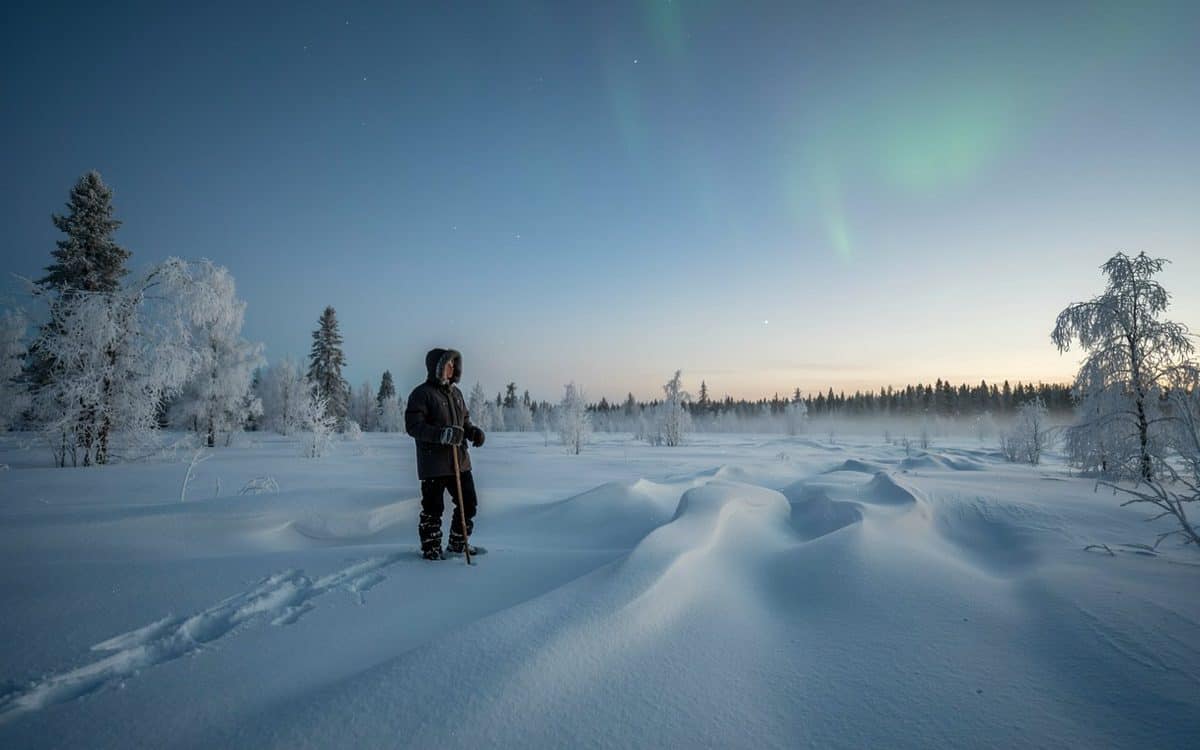
Image generated with Ai
Traveling around Finland’s Lapland provides an insight into a world of pure winter silent beauty that is far removed from the noisy modern world. This untouched wilderness has an appeal that is hard to resist for any avid adventurer. Lose yourself in the endless beauty of the frozen landscape and marvel at the deep peace and tranquility of these untouched winter expanses. This purity of sound and silence is what many people are now seeking and finding in their travels.
Acoustic and sonic heritage conservation travel is a rapidly burgeoning niche tourism sector that has been gaining ground as a means to help protect endangered natural sound landscapes from being overrun by the relentless advance of modern industrial noise encroaching on remote areas of wilderness that are still relatively untouched by the modern world, and which in turn serves to reshape and redefine the tourism experience in modern-day society.
Modern industrial expansion and relentless commercial aviation have turned natural quiet into a critically endangered resource across the globe. Human-generated noise pollution now disrupts vulnerable wildlife communication channels, altering reproductive habits and increasing chronic stress levels in protected ecosystems. Environmental researchers emphasize that acoustic degradation severely damages biodiversity long before visual landscapes show signs of physical collapse. This creeping industrial hum forces conservationists to treat natural silence as a fragile commodity requiring urgent legislative defense. Eco-tourists now actively seek out designated quiet zones to escape the constant sensory overload of modern urban environments.
The remote Hoh Rain Forest in Washington State hosts an officially monitored quiet zone designed to preserve baseline acoustic purity. Conservation advocates use small physical markers to measure how invading commercial aircraft noise damages the local wildlife habitat. Protecting this tiny designated square inch effectively safeguards thousands of acres of surrounding wilderness from sonic intrusion. Visitors stepping into this damp temperate rainforest must adhere to strict low-impact rules to keep human sounds at absolute zero. Maintaining this natural sanctuary allows researchers to study undisturbed animal behaviours that rely heavily on acute hearing.
Advertisement
Advertisement
The frozen expanse of Finnish Lapland offers a profound auditory reset characterized by deep winter stillness and snow-muffled pine canopies. Extreme sub-zero temperatures and wind-sculpted snow drifts absorb unwanted sound waves to create a remarkably pure acoustic environment. Travelers venturing into this remote northern territory experience a complete absence of mechanical hums and urban background noise. This pristine acoustic isolation gives visitors a rare chance to reconnect with the subtle audio cues of the polar winter. Preserving these frigid landscapes ensures that the delicate rhythms of arctic wildlife remain entirely free from human disruption.
Japan protects its rich intangible cultural history through a curated Ministry of the Environment list featuring one hundred distinct soundscapes. These protected locations range from the rhythmic splashing of ancient agricultural water wheels to the gentle rustling of bamboo groves in Kyoto. Cultural authorities legally manage these regional environments to maintain their historical auditory resonance against modern infrastructural sprawl. Visitors walking through these designated zones experience the exact acoustic harmony appreciated by previous generations centuries ago. This proactive heritage framework proves that sound can be successfully preserved as a national treasure just like architecture.
Plan your sustainable arctic journey through the official national portal at Visit Finland.
“This breathtaking destination completely revolutionizes how we think about sustainable travel and sensory preservation. Escaping the relentless hum of urban civilization feels remarkably liberating, especially when surrounded by the untouched, frozen beauty of the arctic north. Experiencing such profound, uninterrupted stillness allows you to reconnect with nature on a deeply spiritual level. It is truly inspiring to see conservationists fighting to protect these fragile soundscapes from industrial encroachment. Every modern traveler should experience this absolute peace at least once, as it forever changes your perspective on what a luxury holiday actually means.”
Advertisement
Advertisement
— Anup Kumar Keshan, Founder and Editor-in-Chief, Travel And Tour World
The ancient quartz dunes of the Namib Desert create a unique acoustics phenomenon when the wind interacts with them. The friction between the sand grains results in low-frequency humming noises vibrating through the air. The desert winds blow at specific angles to the highest slip faces of the dunes and cause this low rumbling. This acoustics miracle is only possible because of the local climate and the complete absence of any man-made structures in the desert. The sounds travel large distances and are perfectly heard by the visitors of the area. Such a unique opportunity is available to a limited number of people who wish to explore the region.
The Finnish wilderness has its wonders as well, providing the visitors with the ultimate silence in the dead of winter. Moreover, it seems that the most hectic cities are left far away in terms of sounds as well. In addition, the snow covers everything in a thick layer and muffles some of the most unpleasant noises. As a result, the complete quietness prevails in the Finnish wilderness. It is a real healing sound for the overworked mind.
Advertisement
Tags: arctic soundscapes, Finland winter silence, Lapland acoustic heritage, modern noise travel, pristine acoustic heritage
Advertisement
Advertisement











Wednesday, September 2, 2026

Tuesday, September 1, 2026

Wednesday, September 2, 2026

Wednesday, September 2, 2026

Tuesday, September 1, 2026

Tuesday, September 1, 2026

Tuesday, September 1, 2026

Tuesday, September 1, 2026



