
East Midlands Airport Unveils UK’s Passport-Free Airport E-Gates in 25% Faster Border Breakthrough

Published
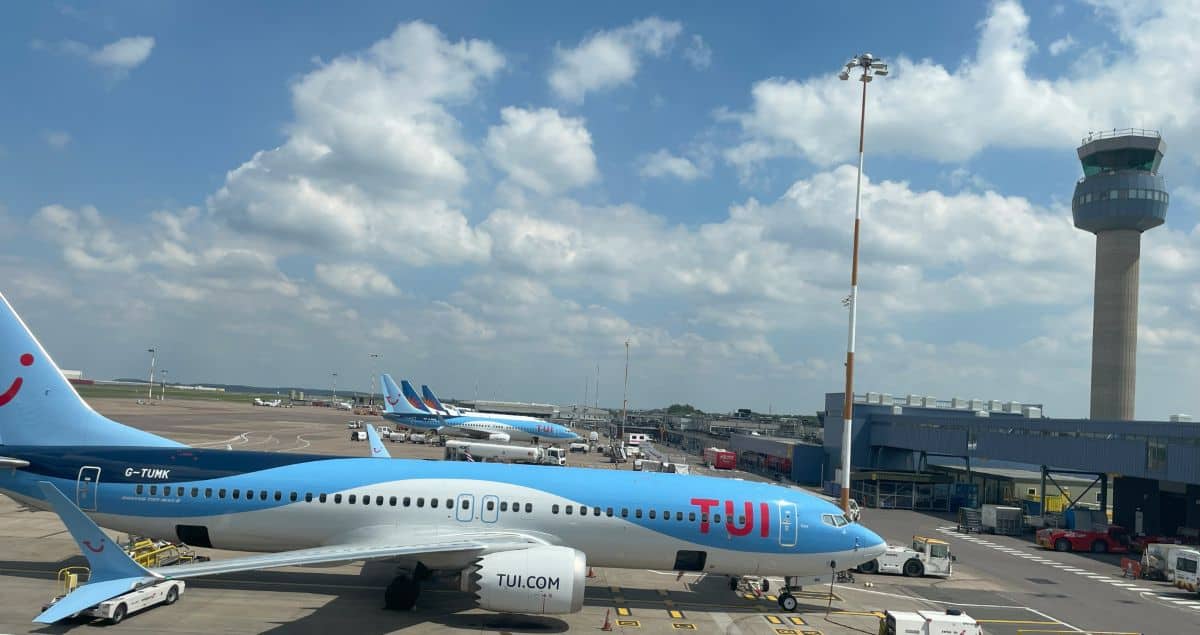
Passengers arriving in the UK are entering a new era of contactless border control. The Home Office has begun rolling out passport-free airport e-gates, starting at East Midlands Airport on 6 October 2026. The technology uses facial comparison to verify passengers against immigration, travel and passport records. Officials say testing showed the system can operate up to 25% faster than passport-based e-gate processing. However, travellers must still carry a valid passport throughout their journey. The initial phase is restricted to British citizens using British passports. Other eligible nationalities are expected to gain access as the programme expands towards early 2027.
East Midlands Opens the Digital Border
East Midlands Airport has become the first UK airport to introduce the new contactless system. The move marks a significant shift in how arriving passengers interact with border technology. Instead of placing a passport on the reader, eligible travellers approach the gate and face the camera.
Advertisement
Advertisement
The system captures a live facial image and compares it with verified immigration, travel and passport information. If the checks succeed, the barrier opens automatically. This removes one physical step from the existing e-gate process.
The Home Office says the change is designed to make border crossings smoother without weakening immigration controls. Border Force officers will continue supervising the gates and supporting passengers who require assistance.
Advertisement
Advertisement
Importantly, passport-free does not mean passportless travel. The government explicitly requires passengers to carry their valid passport. Officials can still request the document when additional checks become necessary.
Phil Douglas, Director General of Border Force, described the development as a win for travellers. He said the technology would make journeys smoother while maintaining robust UK border security.
Advertisement
Advertisement
Karen Dee, chief executive of AirportsUK, also welcomed the development. She said efficient borders had become an expectation for passengers arriving in the UK.
How the New Contactless System Works
The technology changes the physical interaction rather than removing border checks. Facial comparison becomes the principal verification step at the gate.
For travellers, the process should feel noticeably simpler. There is no requirement to remove a passport from its cover or place it against the reader when contactless processing succeeds.
| Stage | Existing e-gate process | New contactless process |
|---|---|---|
| Passenger approaches gate | Yes | Yes |
| Facial recognition | Yes | Yes |
| Passport placed on reader | Usually required | Not required if verification succeeds |
| Immigration checks | Continue | Continue |
| Border Force intervention | Possible | Possible |
| Passport required for journey | Yes | Yes |
| Automatic gate opening | Yes | Yes |
| Government-reported speed benefit | Baseline | Up to 25% faster |
The distinction matters because the system does not replace immigration control. Instead, it removes the passport-scanning step for passengers who clear automated verification.
If the system cannot complete the checks, the traveller may need to place the passport on the reader. Border Force can also refer the passenger for additional examination.
That fallback should reassure travellers who worry that facial recognition could create an inflexible border. The existing human intervention process remains part of the system.
Advertisement
Advertisement
Thirteen Airports Form the Rollout Network
The Home Office has identified 13 airports for the phased introduction of contactless e-gates. They span major international gateways and important regional airports.
| Airport | Location | Contactless rollout |
|---|---|---|
| East Midlands Airport | England | Initial deployment |
| Birmingham Airport | England | Phased rollout |
| Bristol Airport | England | Phased rollout |
| Cardiff Airport | Wales | Phased rollout |
| Edinburgh Airport | Scotland | Phased rollout |
| Gatwick Airport | England | Phased rollout |
| Glasgow Airport | Scotland | Phased rollout |
| Heathrow Airport | England | Phased rollout |
| London City Airport | England | Phased rollout |
| Luton Airport | England | Phased rollout |
| Manchester Airport | England | Phased rollout |
| Newcastle Airport | England | Phased rollout |
| Stansted Airport | England | Phased rollout |
The government expects contactless e-gates to become available across UK airports by early 2027. However, implementation will happen progressively rather than overnight.
This distinction is important for passengers planning journeys during the transition. Seeing an e-gate does not necessarily mean that every gate already offers contactless processing.
Who Can Use Contactless E-Gates Now
The biggest practical limitation is nationality. At launch, contactless processing is available only to British citizens travelling on valid British passports.
The government intends to extend the technology to other nationalities already eligible for conventional e-gates. That wider access is expected during the phased rollout towards early 2027.
Existing e-gate eligibility also remains unchanged. Travellers generally need a biometric passport and must meet the applicable nationality and immigration requirements.
Advertisement
Advertisement
| Traveller category | Current position |
|---|---|
| British citizens with British passports | Initially eligible for contactless |
| Other e-gate eligible nationalities | Wider contactless access expected |
| Children aged 8–17 | Eligible for e-gates if requirements are met |
| Children under 8 | Cannot use e-gates |
| Minimum height | 120cm |
| Valid passport | Still mandatory |
| Further checks required | Passport may be requested |
| Border Force referral | Still possible |
The government expanded conventional e-gate eligibility in July 2026. Children aged eight and above can now use the gates if they are at least 120cm tall and accompanied by an adult.
That reform was estimated to make around 1.5 million additional children eligible over a year. The contactless programme therefore arrives alongside a broader effort to simplify the arrival experience for families.
Why the 25% Speed Gain Matters
A claimed 25% improvement may sound modest at individual level. Its significance becomes greater when multiplied across thousands of passengers during busy arrival periods.
Border queues can build rapidly when several large aircraft reach an airport within a short period. Removing the passport-reading step could reduce transaction time at each eligible gate.
The benefit will not necessarily translate into a 25% shorter airport queue. Queue length also depends on aircraft arrival patterns, staffing, gate availability, security checks and passenger eligibility.
Nevertheless, faster individual processing can increase the effective capacity of existing border infrastructure. That could become particularly valuable during school holidays, Christmas and other peak travel periods.
Advertisement
Advertisement
The government’s current border guidance says there are already more than 290 e-gates across 15 air and rail ports. Millions of passengers use the system each year.
The contactless programme therefore represents an upgrade to an established network rather than a completely new border concept.
The Passport Still Matters for Every Traveller
The most important practical message is simple. Travellers should not leave their passports in checked luggage or assume the phone-based digital journey has replaced the document.
Passengers must continue carrying their passports. Border Force may request them if automated verification fails or further checks become necessary.
Travellers should also expect occasional manual intervention. Officials may need to verify identity, nationality, immigration status or other entry requirements.
A damaged passport can also create difficulties. Changes in appearance may sometimes trigger additional identity checks.
Advertisement
Advertisement
For that reason, the safest approach remains to keep the passport accessible throughout the arrival process. Travellers should also follow airport signage and Border Force instructions.
Families Could See Another Travel Benefit
Families have already received a major e-gate policy change this year. From July 2026, accompanied children aged eight and above became eligible, subject to height requirements.
The change removed an important bottleneck for families travelling with school-age children. Previously, younger children often required alternative processing arrangements at border control.
The new contactless technology could further streamline the process for eligible family groups. However, parents should not assume that every member of a family will receive identical treatment.
Children must meet the eligibility rules. Families travelling with children should also remain together and follow the prescribed e-gate sequence.
The government recommends that adults travelling alone with children use the e-gates first. Where several adults travel with children, the sequence is designed to keep the family group moving through the system efficiently.
Advertisement
Advertisement
Contactless Does Not Mean Checks Disappear
The language surrounding passport-free travel can create confusion. The new process removes the need to physically present a passport at the gate. It does not remove immigration or security checks.
The government says the facial image is checked against verified information. Border security checks continue as part of the process.
This distinction also explains why the system can operate without physically scanning the passport during every successful transaction. The relevant information already exists within the UK’s immigration and travel systems.
The move forms part of a wider digital transformation of UK border management. The government has also expanded eVisa use and introduced the Electronic Travel Authorisation system for eligible visitors.
Together, these changes are moving UK border control towards a more digitally integrated model. The airport gate is becoming the visible point where those systems interact with travellers.
What Changes Compared With Older E-Gates
The conventional e-gate has already reduced the need for many passengers to speak directly with Border Force officers. However, it normally requires the traveller to present the biometric passport to the machine.
Advertisement
Advertisement
The contactless model removes that physical interaction.
| Feature | Traditional UK e-gate | Contactless e-gate |
|---|---|---|
| Facial comparison | Yes | Yes |
| Passport reader interaction | Required | Removed when successful |
| Manual checks | Possible | Possible |
| Passport must be carried | Yes | Yes |
| Border Force oversight | Yes | Yes |
| Initial contactless eligibility | Existing e-gate rules | British citizens initially |
| Expansion | Established system | Phased through early 2027 |
The development therefore represents an evolution rather than a wholesale replacement of the border system.
That distinction should help travellers set realistic expectations. Contactless technology can reduce friction, but it cannot guarantee immediate passage through immigration.
Airport Capacity Could Gain More Flexibility
For airports, the attraction extends beyond passenger convenience. Faster processing can improve the utilisation of existing border facilities.
Airports have limited physical space around immigration halls. Expanding passenger numbers does not always allow operators to expand border halls at the same pace.
Technology can therefore provide additional operational flexibility. If each eligible passenger requires less time, the same infrastructure can potentially process more people.
Advertisement
Advertisement
East Midlands Airport said its new system complements recent improvements to its immigration hall. The airport expects the technology to make the arrival experience smoother and simpler.
Birmingham Airport has also welcomed the rollout. Chris Wilson, its Head of Terminal and Capacity Planning, said passengers would benefit from a faster and smoother arrival process.
The industry interest is understandable. Airports increasingly compete on the quality of the entire passenger journey, not simply the availability of flights.
What Travellers Should Do Before Arrival
The new system makes arrival simpler, but preparation remains important. Travellers should keep passports accessible and avoid placing them deep inside hand luggage.
Passengers should also remove sunglasses, hats and headphones when approaching facial recognition equipment. Phones and tablets should be put away when required.
Travellers should check their immigration permission before departure. Depending on nationality and circumstances, this may involve an ETA, eVisa or another digital status.
Advertisement
Advertisement
| Traveller action | Why it matters |
|---|---|
| Carry a valid passport | Contactless does not remove the passport requirement |
| Check immigration permission | Digital status can affect entry |
| Follow e-gate signage | Not every gate may be upgraded immediately |
| Keep your face visible | Facial comparison requires a clear image |
| Stay with children | Family processing has specific procedures |
| Allow extra time | Contactless processing does not guarantee zero queues |
| Follow Border Force instructions | Additional checks may still occur |
These steps remain relevant even after the rollout becomes widespread. The technology should reduce friction, but it does not eliminate the responsibilities attached to international travel.
A Digital Border With a Human Backstop
The UK’s latest airport reform signals a clear direction for future travel. Border processing is moving away from repeated document handling and towards biometric identity verification.
For travellers, the immediate attraction is convenience. For airports, the larger prize could be additional processing capacity without equivalent physical expansion.
Yet the system also retains a crucial human backstop. Border Force officers remain responsible for intervention when technology cannot complete the process or when additional checks are necessary.
The rollout begins with British citizens, then expands towards other eligible nationalities. By early 2027, the government expects contactless e-gates to be available across UK airports.
For passengers, the message is therefore straightforward. The passport may disappear from the gate reader, but it has not disappeared from the journey. The UK’s border is becoming more contactless, not less controlled.
Advertisement
Advertisement
Frequently Asked Questions
1. What are passport-free airport e-gates?
They use facial recognition to verify eligible passengers without requiring passport scanning at the gate.
2. Where have passport-free e-gates started in the UK?
East Midlands Airport is the first UK airport to introduce the new contactless system.
3. Are passports still required at UK airports?
Yes. Travellers must carry their valid passport, even when using contactless e-gates.
4. How much faster are the new e-gates?
Government testing found the system can be up to 25% faster than passport-based processing.
5. When will more UK airports get contactless e-gates?
The government plans to expand the technology across UK airports by early 2027.
Advertisement
