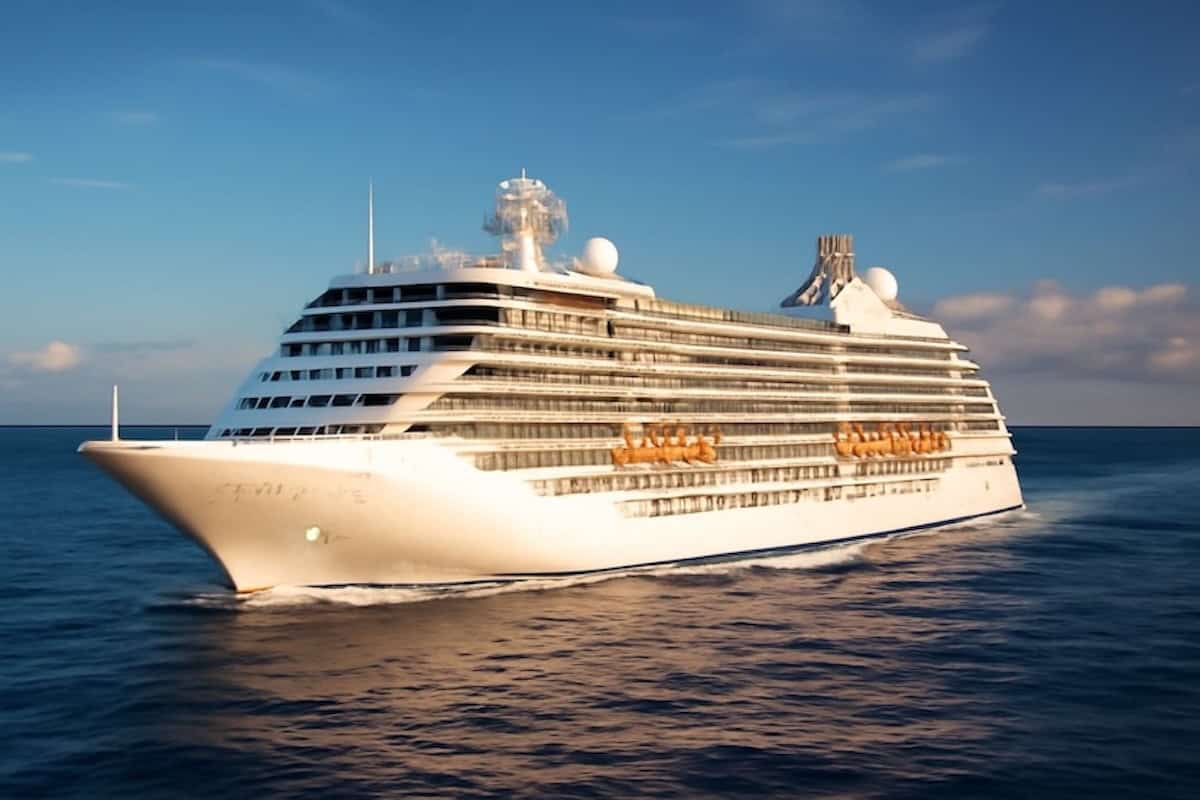
Image generated with Ai
Disney and these major cruise lines are building a new future at sea, creating bigger fleets, new ships and more exciting destinations for travellers worldwide. From Disney Cruise Line to Royal Caribbean, Carnival, MSC Cruises and Norwegian Cruise Line, the industry is entering an ambitious period of expansion. New ships will bring fresh experiences while bigger fleets can open more opportunities for exploring exciting destinations. Moreover, these developments could reshape how travellers plan future holidays at sea. Travel And Tour World urges readers to continue through the entire story to discover how Disney and these major cruise lines are building a new future with bigger fleets, new ships and more exciting destinations.
Disney Cruise Line is preparing to change the way travellers experience its fleet with a completely new class of cruise ships.
Advertisement
The first details were showcased at D23’s Horizons: Disney Experiences Showcase in August 2026. The new vessels are designed to sit between Disney’s classic and larger modern ships, giving the cruise line greater flexibility to reach destinations that bigger vessels may not serve.
The new class will initially contain three ships. They are currently scheduled to enter service from 2029 through 2030.
Advertisement
Advertisement
The latest timeline brings two of the new-class vessels forward into 2029. A third ship is expected in late 2030. This means Disney could add three new ships to its wider fleet during 2029, including its Japan-based vessel operated through Oriental Land Company.
The three new-class ships are being constructed by Germany’s Meyer Werft. Disney previously confirmed that the vessels were contracted with the German shipbuilder as part of its major fleet expansion.
For travellers, size is one of the most important details.
Each new ship is expected to measure approximately 100,000 gross tons and accommodate around 3,000 guests. That puts the vessels below Disney’s larger Dream and Wish-class ships while making them about 20% larger than the original Magic-class vessels.
This positioning could prove significant for destination-focused travellers.
Smaller ships can potentially access ports that cannot accommodate much larger cruise vessels. Disney has specifically linked the new design with its ambition to reach more destinations and introduce its cruise experiences to additional audiences.
The D23 presentation offered the first visual look at the new class.
The ships will retain recognisable Disney styling while introducing a fresh exterior design. Reports from the unveiling highlighted a three-deck-high glass area amidships, a traditional black-and-gold hull and two funnels.
The design also focuses on efficiency.
Meyer Werft says the ships will use industry-leading technology and design to support Disney’s environmental goals. Their optimised hull and lightweight construction are intended to improve efficiency while maintaining the size needed for approximately 3,000 guests.
The most important travel benefit may not be the ship itself.
The new vessels are being designed around destination flexibility. Their intermediate size could allow Disney Cruise Line to consider ports that are less practical for its biggest ships.
For global travellers, that could eventually mean more unusual itineraries and additional coastal destinations.
It could also give repeat Disney cruisers another reason to choose a new ship rather than simply selecting the newest large vessel.
The new class is part of a much larger expansion.
Disney Cruise Line originally announced plans in 2024 to grow from five ships to 13 by adding four vessels between 2027 and 2031.
Since then, the Disney Destiny and Disney Adventure have joined the fleet. Disney Adventure also represents the cruise line’s first ship based in Asia, with Singapore serving as its homeport.
Disney has also confirmed the Disney Believe for 2027. It will become another Wish-class ship.
A separate Disney-branded ship is being developed for Japan through Oriental Land Company. The vessel is expected to begin operations around 2029 and will expand Disney’s cruise presence in another major Asian market.
Disney’s expansion is increasingly becoming a global travel story.
The company is adding capacity while developing ships for different market sizes. Its existing fleet includes vessels ranging from the approximately 85,000-ton Disney Magic and Disney Wonder to the 140,000-ton Disney Wish and Disney Treasure.
The new 100,000-ton class will fill an important middle ground.
For travellers, that could eventually mean more departure choices, more ports and a wider range of cruise itineraries.
The names, detailed onboard attractions and specific routes for the new ships have not yet been fully announced. Travellers should therefore wait for Disney’s official itinerary releases before planning specific 2029 or 2030 sailings.
For now, the message from D23 is clear: Disney Cruise Line is building a fleet designed not only to carry more guests, but potentially to take them to more places around the world.
Disney Cruise Line is not alone in preparing a new generation of cruise ships. Across the global cruise industry, major operators are ordering new vessels, creating fresh ship classes, expanding homeports and targeting new destinations.
The common trend is significant: cruise companies are increasingly using new ships not simply to add capacity, but to reshape where travellers can cruise and what they can experience onboard. Royal Caribbean, Carnival Cruise Line, MSC Cruises, Norwegian Cruise Line and Princess Cruises all have major fleet programmes underway, although their strategies differ considerably. The comparison below focuses on the most relevant developments for travellers planning future cruises.
| Cruise line | Major new class or programme | Key delivery timeline | Approx. size/capacity | Traveller significance |
|---|---|---|---|---|
| Royal Caribbean | Discovery Class | 2029, 2032; options for 4 more | Details not yet fully disclosed | Potentially expands destination flexibility |
| Carnival Cruise Line | Ace Class | 2029, 2031, 2033 | 230,000 GT; almost 8,000 guests maximum | Ultra-large ships with new onboard concepts |
| MSC Cruises | World Class | 2026–2031 | World Class 5 & 6 ordered for 2029/2030 | Continued global and destination expansion |
| Norwegian Cruise Line | New-generation fleet | 2028–2032+ | Up to about 227,000 GT and 5,000 guests | Major capacity growth and new itineraries |
| Princess Cruises | Voyager Class | 2035, 2038, 2039 | Largest Princess ships by capacity | Destination-focused next-generation cruising |
Royal Caribbean Group is pursuing one of the industry’s most strategically interesting new-ship programmes through its Discovery Class. In January 2026, Royal Caribbean Group announced two firm orders with Chantiers de l’Atlantique in Saint-Nazaire, France, for the new class, while securing options for another four vessels. The first ship is scheduled for 2029 and the second for 2032. Unlike Royal Caribbean’s enormous Icon Class ships, the company has positioned Discovery Class around bringing travellers closer to the world through a design philosophy focused on destinations and purpose. The company has not yet released the final gross tonnage, guest capacity or complete itinerary network, so travellers should not assume these ships will replicate existing Royal Caribbean vessels. What makes the programme particularly relevant alongside Disney’s new mid-sized concept is the industry’s growing interest in ships designed around broader deployment flexibility rather than simply maximum size. Royal Caribbean is also actively repositioning ships geographically. Its Navigator of the Seas is moving towards year-round Asia-Pacific operations from October 2026, while Ovation of the Seas is scheduled for Brisbane from November 2027. This suggests future cruise planning may increasingly involve Asia-Pacific, Europe, Australia and other regional markets rather than concentrating only on traditional Caribbean hubs.
Carnival Cruise Line is taking a very different approach from Disney. Its next-generation Ace Class is designed around extremely large ships rather than a smaller intermediate platform. Carnival Destiny, the first Ace Class vessel, is scheduled for summer 2029 and will be followed by two additional ships in 2031 and 2033. Each vessel is planned at approximately 230,000 gross tons, with more than 3,000 guest staterooms and capacity approaching 8,000 people at maximum occupancy. Carnival says the platform will become the largest ship concept within its global fleet. The first vessel is also designed to provide substantially more ocean-facing spaces, including more balcony accommodation, a reimagined lanai area and more than 4.5 acres of glass. More than 70% of its venues and attractions are planned as new Carnival concepts, covering dining, bars, entertainment and outdoor areas. For travellers, the important difference is that Carnival is combining enormous capacity with destination development. Carnival Destiny is planned to operate within the company’s Paradise Collection, which covers exclusive destinations in the Caribbean, Bahamas and Mexico. Carnival is simultaneously expanding its Excel Class, with Carnival Tropicale scheduled for delivery in 2028 and planned to homeport in Galveston, Texas.
MSC Cruises is another major competitor expanding aggressively through a defined ship class. MSC ordered two additional World Class ships in 2025, taking the eventual World Class fleet to six vessels. World Class 5 is scheduled for delivery in 2029, while World Class 6 is planned for 2030. They will follow MSC World Europa, MSC World America, MSC World Asia and MSC World Atlantic. MSC World Asia is scheduled to enter service in November 2026, followed by Mediterranean sailings beginning in December. The World Class programme demonstrates how MSC is using common ship architecture while continuously extending the fleet into different markets. MSC is also expanding geographically in North America. In 2026, MSC Poesia began the company’s first Alaska season from Seattle, operating seven-night voyages visiting Ketchikan, Icy Strait Point, Juneau and Victoria, British Columbia, while also offering scenic cruising through Endicott Arm. That move is particularly important for travellers because Alaska represents a major change from MSC’s traditional Mediterranean strength. The company’s fleet strategy therefore combines new ships with new regional deployment, creating more choices for travellers who want to explore destinations beyond Europe’s core cruise markets.
Norwegian Cruise Line is pursuing another major expansion programme under parent company Norwegian Cruise Line Holdings. Norwegian Cruise Line’s current pipeline includes Norwegian Luna, which entered service in 2026 at approximately 156,000 gross tons and 3,565 passengers at double occupancy. The company’s future programme becomes considerably larger later in the decade. A next-generation Norwegian Prima Class vessel is planned for 2028 at approximately 170,000 gross tons and around 3,880 berths. Two much larger new classes are listed for 2030 and 2032, each at approximately 227,000 gross tons with about 5,000 berths. The strategy is not limited to simply increasing ship size. Norwegian Luna illustrates how new vessels are being deployed to different markets throughout their operating lives. The ship launched Caribbean operations from Miami in 2026, visiting destinations including Puerto Plata, St. Thomas and Great Stirrup Cay, before shifting towards Western Caribbean itineraries featuring Roatán, Cozumel and Harvest Caye. In 2027, Norwegian Luna is scheduled to move to New York for Bermuda cruises, including overnight stays at Royal Naval Dockyard. For travellers, that creates an important distinction: a new ship can provide not only new onboard experiences but also new opportunities to access destinations from convenient regional departure points.
Princess Cruises has announced an even longer-term fleet programme through its new Voyager Class. In April 2026, Princess signed three shipbuilding agreements with Fincantieri for vessels scheduled for delivery in late 2035, 2038 and 2039. The ships are planned as the largest-capacity vessels ever built for Princess Cruises and will develop ideas introduced by the existing Sphere Class. The new ships will include redesigned exterior decks, staterooms and Piazza spaces, while continuing to use newer marine and guest-facing technologies. Princess says the vessels will be dual-fuel powered, primarily using LNG, following the approach used by Sun Princess and Star Princess. The programme is particularly interesting because Princess is simultaneously expanding destination coverage. Its 2027–2028 Asia deployment includes 96 departures across 61 itineraries, visiting 55 destinations in nine countries, with two ships scheduled to homeport in Japan. The line has also expanded its Alaska programme, with Star Princess becoming the first Sphere Class ship to sail there. Star Princess itself measures about 177,800 tons and carries approximately 4,300 guests. This combination of new ship platforms and broader geographical deployment shows how cruise lines are increasingly treating ship design and destination strategy as connected parts of the traveller experience.
The wider cruise industry is clearly moving into another major fleet-expansion cycle. Disney’s upcoming class is distinctive because its approximately 100,000-ton ships are intended to occupy a middle position between the company’s smaller and larger vessels. Other operators are choosing different paths.
Royal Caribbean is developing Discovery Class, Carnival is building enormous Ace Class ships, MSC is extending its World Class platform, Norwegian is planning substantially larger vessels, and Princess is preparing Voyager Class for the mid-to-late 2030s.
For travellers, the biggest consequence could be more choice rather than simply more ships. New vessels are increasingly being connected with new homeports, regional markets, private destinations and previously less prominent cruise regions.
That means future cruise holidays may become easier to combine with wider international trips. Travellers could have more opportunities to begin voyages closer to home, choose ships suited to specific destinations and experience increasingly specialised onboard products.
The next decade therefore looks set to bring a much more diverse global cruise map, with fleet growth becoming a major driver of where travellers can go and how they experience the journey.
The cruise industry is entering an exciting new chapter as Disney and major cruise lines build bigger fleets, introduce new ships and expand towards more exciting destinations. From Disney’s new ship class to ambitious programmes from Royal Caribbean, Carnival, MSC Cruises, Norwegian Cruise Line and Princess Cruises, travellers can expect greater choice in the years ahead. These investments could also open new opportunities for regional departures and destination-focused itineraries. For travellers, the coming decade may bring more flexible ways to explore the world by sea. As these new ships gradually enter service, Travel And Tour World will continue tracking the developments shaping the future of global cruising.
Advertisement
Advertisement
Advertisement












Wednesday, September 2, 2026

Tuesday, September 1, 2026

Wednesday, September 2, 2026

Wednesday, September 2, 2026
Tuesday, September 1, 2026
Tuesday, September 1, 2026

Tuesday, September 1, 2026

Tuesday, September 1, 2026