
The Trans-Siberian Railway in Russia Holds the Record as the World’s Longest Train Journey, Traversing Expansive Landscapes and Crossing Eight Time Zones for an Extraordinary Adventure

Published
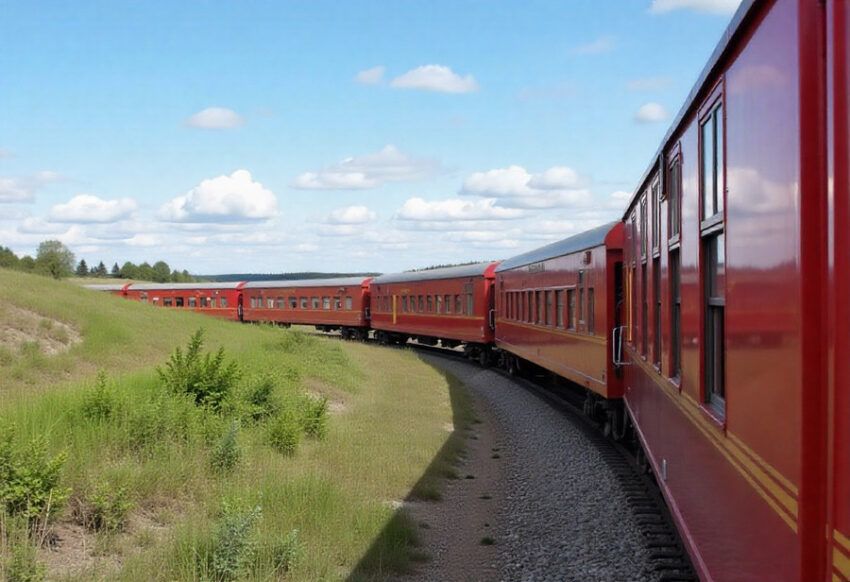 Image generated with Ai
The Trans-Siberian Railway in Russia holds the record as the world’s longest train journey, offering an unparalleled adventure for travelers. Spanning an impressive 9,288 kilometers, this legendary route connects Moscow to Vladivostok, crossing eight time zones and a range of landscapes that include dense forests, vast plains, and towering mountains. The journey not only showcases the immense size and beauty of Russia but also offers a once-in-a-lifetime experience that combines scenic vistas, cultural exploration, and the thrill of traveling across one of the most iconic railways in the world. From the bustling streets of Moscow to the remote expanses of Siberia, the Trans-Siberian Railway presents an extraordinary way to discover the heart of Russia and its diverse landscapes.
The route, which cuts through some of the most remote and rugged parts of Russia, offers travelers an immersive experience in the heart of Siberia. The train passes through a variety of landscapes—from the vast taigas and pristine lakes to the jagged peaks of the Ural Mountains—offering passengers sweeping views of untouched wilderness and bustling cities alike. Cities like Yekaterinburg, Irkutsk, and Novosibirsk lie along the Trans-Siberian’s path, blending modern Russian life with the remnants of a rich history.
The Trans-Siberian Railway isn’t just a transportation network; it’s an essential artery for Russia’s economy, playing a crucial role in connecting regions that would otherwise remain isolated. It serves as the primary route for both freight and passenger travel, facilitating trade across one of the world’s largest nations. Whether transporting industrial goods or tourists, the Trans-Siberian continues to be a lifeline for many of the country’s far-flung regions.
While the Trans-Siberian Railway holds the record for the longest railway line within a single country, other remarkable long-distance rail journeys span multiple countries and continents. One of the longest uninterrupted train routes in the world stretches an astonishing 18,755 kilometers, taking passengers on a 21-day journey across 13 countries. Starting in Portugal and ending in Singapore, this route combines rail systems from both Europe and Asia, providing travelers with a diverse cross-cultural experience. Along the way, they encounter a variety of languages, landscapes, and cultures, making it a truly one-of-a-kind adventure.
Advertisement
Advertisement
Other large-scale rail systems around the globe also contribute to international connectivity. For instance, the Beijing-Moscow train route links China and Russia, extending over 7,500 kilometers and facilitating the flow of goods and people between the two countries. This rail network plays a vital role in connecting Asia and Europe, reflecting the importance of rail travel in fostering economic ties across continents. The Beijing-Moscow line, like the Trans-Siberian Railway, offers travelers a rare chance to witness the evolving landscapes of both the industrial and natural worlds.
Long-distance trains are more than just a mode of transport—they are crucial to global trade, tourism, and cultural exchange. These rail routes provide important links to regions that are otherwise difficult to reach, boosting local economies by facilitating the movement of goods and people. In remote Siberian towns, for example, the Trans-Siberian Railway offers essential access to cities and communities that would otherwise be cut off from the rest of the country.
Advertisement
Advertisement
Despite the significance of long-distance rail routes, they come with their fair share of challenges. Coordinating the operations of trains that pass through multiple countries requires managing different rail systems, schedules, and regulations. Each country along the route has its own set of rules for cross-border transportation, which can complicate logistics and cause delays. Weather, too, plays a crucial role, particularly in the vast and harsh climates of Siberia, where snowstorms and freezing temperatures can disrupt travel plans.
Additionally, the sheer scale of these networks means that maintaining the rail infrastructure is an ongoing challenge. Whether it’s the extreme cold in Siberia or the heat in the deserts of Central Asia, the tracks must withstand a variety of harsh weather conditions, requiring constant maintenance to keep trains running smoothly. These challenges make long-distance rail journeys both an achievement of human engineering and a reminder of the unpredictable forces of nature.
Looking toward the future, the development of high-speed rail is set to change the landscape of long-distance travel. Several countries are already investing in high-speed rail systems, and integration with existing long-distance networks could drastically reduce travel times while preserving the comfort and scenic appeal that rail journeys offer. These innovations promise a future where trains are not only faster but also more efficient and comfortable, further cementing the role of rail in global travel.
For many travelers, the world’s longest rail routes represent a rare and profound way to experience the world. There’s something uniquely captivating about watching the landscapes of several countries unfold through a train window. Whether it’s the snowy expanses of Siberia or the vibrant cultural scenes in cities like Beijing and Moscow, train journeys provide an intimate and unhurried exploration of both nature and culture.
Traveling by train across long distances offers an entirely different experience from flying or driving. The slow pace allows travelers to truly absorb the landscapes, meet fellow passengers, and witness the gradual change of scenery. Whether traversing the Russian wilderness or crossing continents, long train journeys offer a window into the diverse and ever-changing world that surrounds us.
The Trans-Siberian Railway is the world’s longest train journey, stretching 9,288 kilometers across eight time zones and diverse landscapes, offering an extraordinary adventure through Russia’s vast terrains.
Ultimately, the Trans-Siberian Railway and other epic train journeys across the globe are more than just modes of transport—they’re experiences that allow travelers to see the world from an entirely new perspective. From the remote, unspoiled landscapes of Siberia to the bustling cities of Europe and Asia, train travel offers a window into the heart of different cultures, making each journey a memorable adventure in its own right.
Advertisement
