
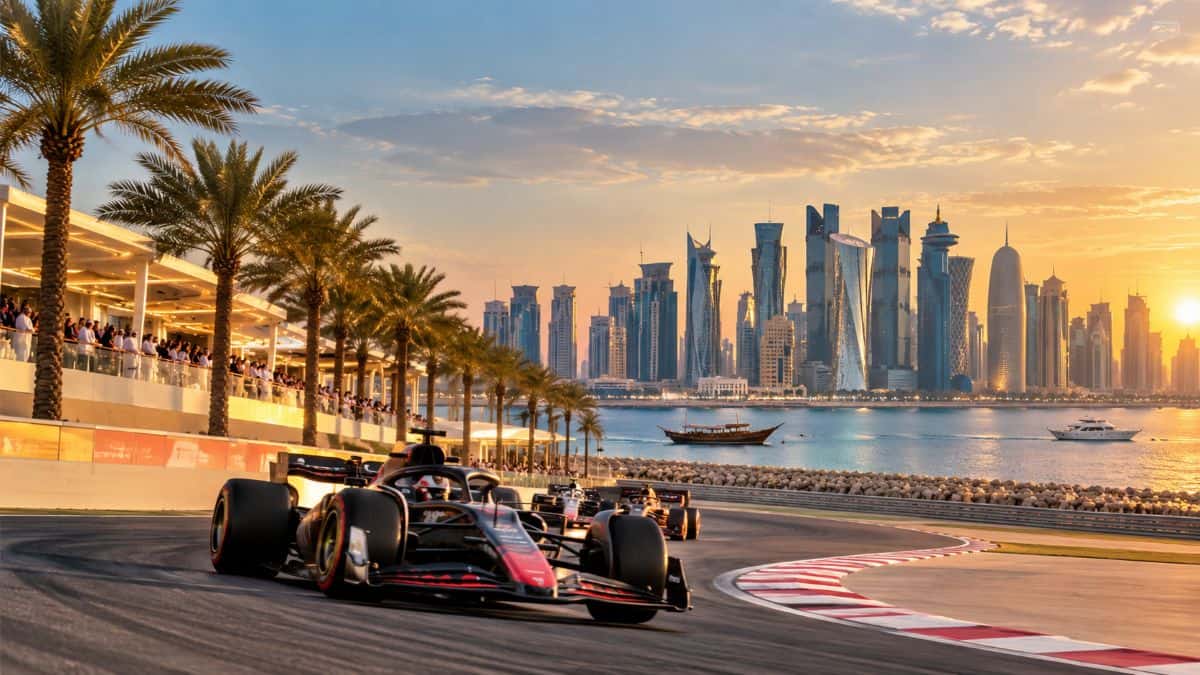
Image generated with Ai
Qatar’s tourism recovery is gaining momentum after a turbulent start to 2026, with international visitor numbers rising again during the summer and the country preparing for a potentially important final quarter. The latest figures show 303,000 visitors arrived through Qatar’s land, air and sea entry points in August, representing a 6.3% increase from the 285,000 recorded in July. However, the broader picture remains challenging, with 2.338 million visitors recorded during the first eight months of the year.
The figures underline both the resilience and vulnerability of Qatar’s travel sector. Visitor volumes remain below the previous year’s level, while regional conditions continue to influence travel demand and connectivity. At the same time, Qatar is entering its traditionally stronger cooler-season period with a major international sporting calendar ahead. The planned Formula 1 race at Lusail in November, alongside MotoGP and a wider programme of cultural and leisure activity, could provide an important stimulus for hotels, attractions, restaurants, transport providers and other tourism businesses.
Advertisement
August represented another step in the recovery of inbound travel. Visitor numbers increased from 222,000 in June to 285,000 in July before reaching 303,000 in August. The improvement is significant because arrivals had fallen sharply earlier in the year amid regional disruption.
Qatar recorded 1.13 million visitors during the first quarter, but the monthly pattern changed dramatically, with January accounting for 646,000 arrivals and March recording only 63,000. The subsequent recovery therefore demonstrates a substantial improvement in travel activity, although the market has not yet returned to its previous trajectory.
Advertisement
Advertisement
The first eight months produced a total of 2.338 million visitors. This remains approximately 30% below the 3.3 million recorded during the comparable period of the previous year, according to reported tourism data. Qatar welcomed 5.1 million visitors across the whole of 2025, highlighting the scale of the remaining recovery required.
Qatar’s geographical position continues to give it a strong advantage among Gulf travellers. Visitors from GCC markets represented 41% of total arrivals between January and August, accounting for approximately 958,000 visitors.
Asia and Oceania provided the second-largest visitor group with 489,000 arrivals, representing 20.9% of the total. Europe followed closely with 486,000 visitors, equivalent to 20.8%.Source Market Visitors Jan–Aug 2026 Share Of Arrivals GCC 958,000 41% Asia And Oceania 489,000 20.9% Europe 486,000 20.8% Americas 169,000 7.2% Other Arab Countries 162,000 6.9% Other African Countries 73,000 3.1%
The distribution shows that Qatar’s tourism economy is not dependent on a single international market. Strong GCC demand provides regional resilience, while substantial flows from Asia, Oceania and Europe demonstrate the importance of long-haul connectivity to Qatar’s tourism strategy.
The November Formula 1 weekend is emerging as one of Qatar’s most important opportunities to generate international tourism demand during the final months of 2026.
The race is scheduled for 29 November at Lusail International Circuit, while MotoGP is scheduled for 8 November at the same venue. Formula 1 is expected to make a final decision about the November event in mid-September because of continuing regional uncertainty. Qatar’s motorsport authorities have nevertheless said preparations are continuing.
The importance of the Formula 1 event extends beyond spectators attending the race. Major sporting occasions can stimulate demand for accommodation, aviation, restaurants, attractions, retail and local transport while encouraging visitors to extend short sporting trips into broader holidays.
Travel packages combining race access, flights and accommodation are also being promoted, making the event more closely connected with the wider visitor economy rather than functioning solely as a motorsport occasion.
Qatar’s approaching cooler season could provide another advantage for tourism recovery. More comfortable outdoor conditions traditionally make the period attractive for sightseeing, cultural experiences, desert excursions, beaches, shopping and major events.
For international travellers, the combination of a major sporting calendar and Qatar’s urban, cultural and leisure attractions creates an opportunity to turn event-led travel into longer stays.
The recovery will nevertheless depend on more than one major event. Sustainable growth requires dependable air connectivity, consumer confidence, competitive accommodation, diversified source markets and continued investment in visitor experiences.
The August improvement should therefore be viewed as evidence of recovery rather than proof that tourism has completely normalised.
The 2.338 million arrivals recorded through August represent a substantial visitor base, but the year-on-year deficit remains considerable. The final four months will be particularly important because Qatar needs to convert the stronger seasonal demand period into sustained visitor growth.
For travellers, the developing calendar could make late 2026 particularly significant. For Qatar’s tourism industry, the objective is broader: transform temporary event-driven demand into repeat visitation and longer-term destination loyalty.
The latest statistics provide encouraging evidence that visitor flows are moving upwards again. Whether that recovery becomes a stronger tourism rebound will depend heavily on regional stability, international connectivity and the performance of the crucial final-quarter travel season.
1. How many visitors did Qatar receive in August 2026?
Qatar recorded 303,000 visitors in August 2026.
2. How much did Qatar’s August visitor numbers increase?
Visitor arrivals increased 6.3% compared with July, when Qatar recorded 285,000 visitors.
3. How many visitors did Qatar receive during the first eight months of 2026?
Qatar recorded 2.338 million visitors between January and August 2026.
4. Which market supplied the most visitors to Qatar?
GCC countries were the largest source market, accounting for 41% of arrivals.
5. How many GCC visitors arrived in Qatar during the first eight months?
Approximately 958,000 visitors came from GCC countries.
6. How important are European travellers to Qatar tourism?
Europe accounted for 20.8% of Qatar’s arrivals during the first eight months, with approximately 486,000 visitors.
7. When is the Qatar Formula 1 race scheduled?
The Formula 1 Qatar Grand Prix is scheduled for 29 November 2026 at Lusail International Circuit, subject to the final decision on the event.
8. When is MotoGP scheduled in Qatar?
MotoGP is scheduled for 8 November 2026 at Lusail International Circuit.
9. Why is Formula 1 important for Qatar tourism?
The event can generate international demand for flights, hotels, restaurants, attractions, shopping and other visitor services while encouraging event-related travellers to explore Doha and the wider destination.
10. Has Qatar’s tourism sector fully recovered in 2026?
Not yet. August arrivals are improving, but visitor numbers for the first eight months remain below the corresponding period of the previous year, showing that the recovery is still incomplete.
Advertisement
Advertisement
Advertisement













Friday, September 4, 2026

Friday, September 4, 2026

Friday, September 4, 2026

Thursday, September 3, 2026

Wednesday, September 2, 2026

Friday, September 4, 2026
Friday, September 4, 2026