Image generated with Ai
Colombia has begun implementing community-based tourism practices in the department of Guaviare by creating biocultural tourism corridors based on rock art heritage sites such as Serranía La Lindosa and Cerro Azul and providing controlled entrance, local guides and locally based accommodation. This effort has been undertaken through the 2026 tourism planning strategy of the department within an area where the Amazon basin connects to the Orinoco plains. In addition, the region has archaeological sites, tropical forest, river systems, and rural communities, thus offering tourists an opportunity to visit an alternative tourist destination beyond the existing Colombian tourist destinations.
The Serranía La Lindosa is at the centre of Guaviare’s emerging tourism network.
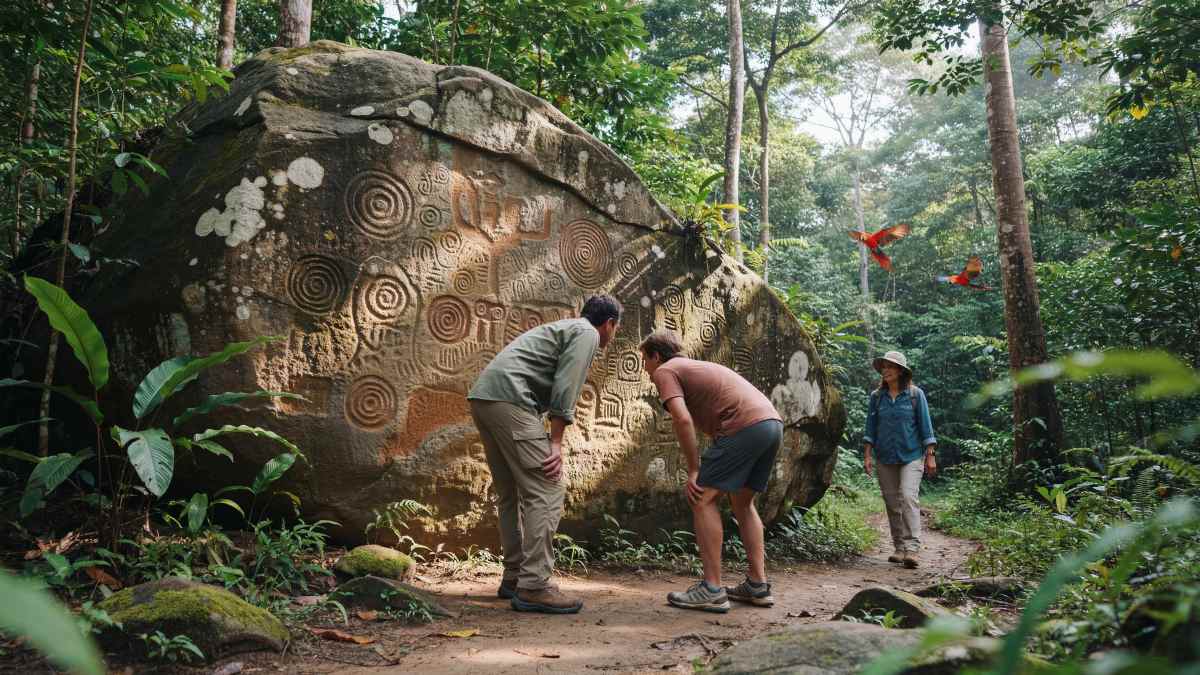
Its rock shelters and cliffs contain extensive prehistoric paintings depicting animals, people and other figures, creating one of the region’s most significant archaeological attractions.
The rock-art landscapes provide visitors with an opportunity to combine outdoor exploration with archaeological interpretation. Guided access allows travellers to reach selected sites while receiving information about the paintings, surrounding environment and cultural significance.
Advertisement
Advertisement
The development of structured routes is also helping organise tourism around a defined network of heritage locations.
Cerro Azul is one of the principal archaeological areas within the wider La Lindosa landscape.
The site is associated with extensive ancient rock paintings located across cliffs and rock shelters. The artwork forms part of a much broader archaeological landscape stretching across the Guaviare region.
For travellers, visiting Cerro Azul provides an opportunity to explore prehistoric heritage within its original natural setting rather than inside a conventional museum.
Community guides can lead visitors through the terrain while explaining the relationship between the archaeological sites and the surrounding Amazonian ecosystem.
Visitor management is becoming an important element of tourism development around the archaeological corridors.
Strict visitor limits can reduce pressure on sensitive rock-art locations and surrounding landscapes, particularly as international interest in Colombia’s ancient Amazonian heritage increases.
Mandatory community guides also provide a structured system for managing access.
Visitors therefore enter selected areas as part of organised experiences rather than moving freely across fragile archaeological terrain.
This approach can help protect the rock surfaces and surrounding ecosystems while creating consistent guiding opportunities for local residents.
Local campesino and Indigenous cooperatives are managing key elements of the visitor experience.
Community guides can accompany travellers along archaeological and nature trails, providing knowledge of local landscapes and cultural heritage.
The model also gives communities a direct role in tourism management rather than positioning them solely as service providers for outside operators.
For visitors, locally guided journeys can provide a more detailed understanding of the region’s environment, rural life and archaeological heritage.
Playa Güio is among the areas supporting the development of community-based accommodation.
Homestay-style lodges allow visitors to remain within rural landscapes rather than returning immediately to larger urban centres after excursions.
Overnight stays can extend the duration of visits and create additional local demand for meals, guiding, transportation and other tourism services.
This is particularly relevant in Guaviare, where the distance between individual attractions makes multi-day itineraries practical for travellers seeking to explore the wider region.
The archaeological attractions form only one part of Guaviare’s tourism proposition.
The region’s transition between Amazonian forest and Orinoco landscapes provides opportunities for nature-based travel, including hiking, wildlife observation and exploration of rivers and other natural environments.
Biocultural corridors can connect these experiences with rock-art sites, allowing visitors to move between ecological and archaeological attractions within the same itinerary.
This creates a broader tourism product rather than making the ancient paintings the region’s only visitor attraction.
Community tourism revenue is also being connected with local environmental activities.
Reforestation patrols and buffer-zone fire monitoring form part of the conservation work surrounding the emerging tourism corridors.
These activities provide a practical connection between visitor spending and landscape management.
Tourism therefore becomes linked to maintaining the forests, archaeological areas and rural environments that form the foundation of the destination’s visitor appeal.
Guaviare’s tourism development is creating new opportunities in an area with a complex recent history.
The department’s transition towards community-managed tourism is bringing archaeological heritage and ecological resources into a formal visitor economy while giving local families a greater role in guiding, accommodation and conservation.
For travellers, this provides access to a part of Colombia that remains less familiar internationally than destinations such as Cartagena, Medellín or Bogotá.
The new biocultural corridors in Serranía La Lindosa have made Colombia a unique archaeological and ecological place in Guaviare. Tourists can visit the ancient rock arts along with visiting the rainforest environment. With the model of controlled tourism, there are two sides: visitor management and conservation, with restrictions on visits and community guiding in order to preserve the fragile resources of archaeology and the environment. As the implementation goes on up to 2026, a network of tourism in Guaviare is being formed that will have a close connection between ancient rock arts, biodiversity of Amazonia, and community tourism.
Advertisement
Tags: Amazon tourism Colombia, Cerro Azul rock art, Colombia tourism, Colombian Amazon tourism, Community Tourism Colombia
Advertisement
Advertisement












Saturday, September 5, 2026

Saturday, September 5, 2026

Saturday, September 5, 2026

Saturday, September 5, 2026

Saturday, September 5, 2026

Saturday, September 5, 2026

Saturday, September 5, 2026