
Saudi Arabia and Others Drive a Middle East Eco Tourism Boom as High Altitude Winter Travel Surges Across the Region

Published
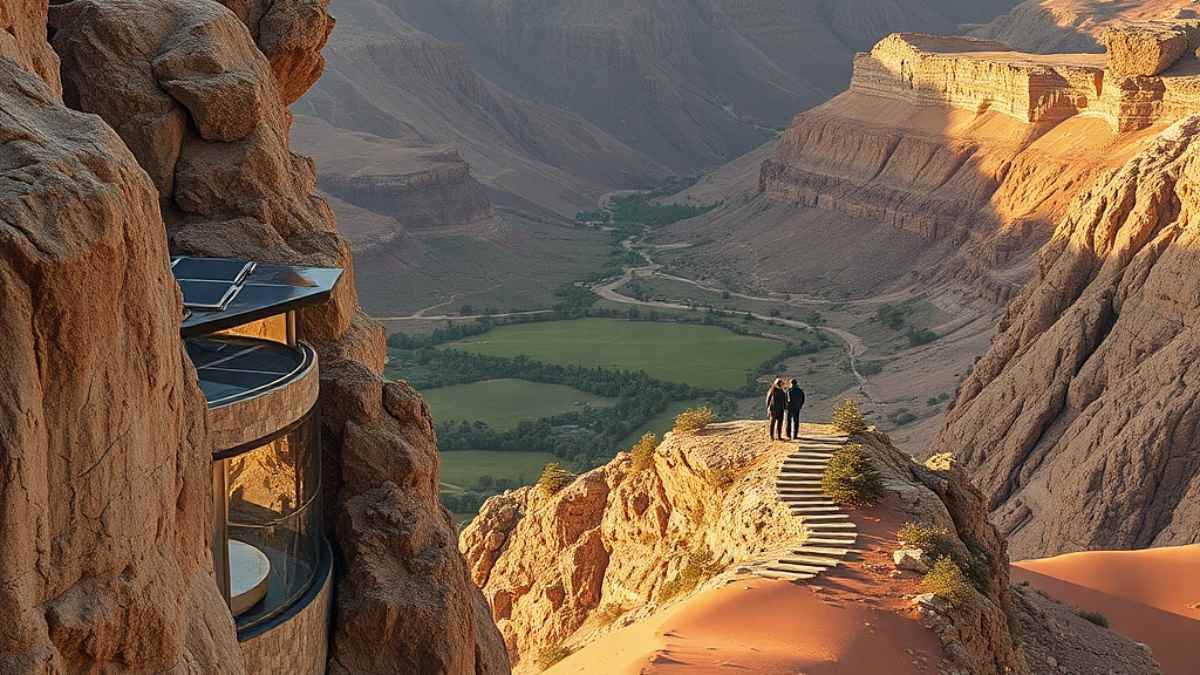
Image generated with Ai
Although travelers visiting the Middle East have always identified this region with hot deserts and coastal cities, an amazing geographical change is transforming the landscape of travel in the Middle East today. Through high altitude mountain chains and old farming valleys, eco tourism in the Middle East is establishing an economic framework that revolves around the microclimate of the highlands, culture, and environment. The development authorities and the investors are consciously investing in high altitude regions, reducing climate risk and putting the significant revenue of tourists directly into local farming cooperatives.
The Strategic Expansion of Middle East Eco-Tourism
For decades, the commercial paradigm of Gulf hospitality remained tethered to coastal urbanisation, ultra-luxury retail complexes, and capital-intensive artificial entertainment districts. While this concentration established global transit gateways in metropolitan centres such as Dubai and Doha, it also created pronounced seasonal vulnerabilities. The extreme heat of the Arabian summer historically triggered a severe domestic outbound exodus, with residents seeking temperate climates across Europe and East Asia. Conversely, peak winter tourism remained narrowly focused on coastal sun-seeking, leaving the subcontinent’s interior topographies, alpine microclimates, and agricultural valleys substantially underutilised.
Over the past decade, a profound structural realignment across the Gulf Cooperation Council (GCC) and the Levant has disrupted this legacy dynamic. Driven by national diversification mandates—such as Saudi Vision 2030 and Oman Vision 2040—alongside binding net-zero environmental pledges, regional policymakers have initiated a deliberate spatial pivot. Sovereign wealth funds and municipal planning bodies are deploying billions of dollars into high-altitude nature reserves, ancient agrarian terraces, and historical trading trails. This macro-level pivot mirrors global decentralisation strategies, such as European alpine rural frameworks and Scotland’s community trust models, where high-yield, low-density visitor infrastructure protects fragile habitats while yielding consistent economic returns.
This transition has been accelerated by intergovernmental alignment. During the 10th meeting of GCC tourism ministers held in Manama, member states resolved to advance joint tourism packages, coordinate unified international promotional campaigns, integrate statistical tracking frameworks, and implement unified regional tour guide licencing. By positioning elevated mountain ranges and desert wilderness reserves as primary destinations, regional tourism ministries are capturing European off-season travel flows and satisfying an expanding domestic demand for cold-weather nature exploration.
Advertisement
Advertisement
| Jurisdiction | Anchor Destination & Altitude | Governing Entity & Masterplan | Primary Conservation & Policy Benchmark | Targeted Capacity & Economic Trajectory |
| Saudi Arabia | Soudah Peaks, Asir Province (3,015 m) | Soudah Development (PIF) / Qimam and Shem Strategy | Sub-1% building footprint; afforestation of 1M+ indigenous trees | 2,700 keys; 2M annual visitors by 2033; SAR 29B cumulative non-oil GDP |
| Oman | Al Jabal Al Akhdar, Al Dakhiliyah (2,330–3,000 m) | Ministry of Heritage and Tourism / Oman Vision 2040 | UNESCO MAB candidacy; Aflaj water rights; strict agricultural zoning | 95 hotel establishments (1,060+ keys); 222,151 visitors; SME revenue retention |
| United Arab Emirates | Jebel Jais, Ras Al Khaimah (1,934 m) | Ras Al Khaimah Tourism Development Authority (RAKTDA) | EarthCheck Silver Certification; Balanced Tourism destination framework | Capped alpine lodge footprint; 3.5M emirate-wide visitors by 2030 |
| Jordan | Dana Biosphere to Petra, Jordan Trail (1,500 m to -400 m) | Jordan Tourism Board / Royal Society for Conservation of Nature (RSCN) | Strict reserve zoning; 100% off-grid solar mandates; trail dispersal | Multi-day trekking quotas; direct Bedouin cooperative equity and employment |
Saudi Arabia’s Asir Revolution: The Alpine Model at 3,000 Metres
Sovereign Investment and the Soudah Peaks Masterplan
The most heavily financed execution of the highland hospitality transition is unfolding across southwest Saudi Arabia. Formally unveiled by Crown Prince Mohammed bin Salman, Chairman of the Board of Directors of Soudah Development, the Soudah Peaks masterplan represents an extraordinary sovereign effort to establish an ultra-luxury mountain sanctuary set 3,015 metres above sea level on the Kingdom’s highest peak. Positioned as a core catalyst within the Public Investment Fund’s (PIF) regional strategy and the broader Asir development plan titled “Qimam and Shem”, the project redirects capital away from traditional urban mega-projects into a cool, mist-cloaked montane ecosystem.
Soudah Development was established with an initial capital infusion of SAR 11 billion (USD 3 billion) dedicated to core infrastructure, sustainable access roads, and ecological rehabilitation across Soudah and segments of the Rijal Almaa governorate. The project boundary encompasses 627 square kilometres of rugged mountainous terrain, organised into six specialised development zones: Tahlal, Sahab, Sabrah, Jareen, Rijal, and Red Rock.
Advertisement
Advertisement
Official development timelines released by the Saudi Press Agency (SPA) confirm that construction is phased across three distinct delivery horizons. Phase one, targeted for completion in 2027, comprises 940 hotel keys, 391 luxury residential units, and 32,000 square metres of artisanal commercial space. Full buildout is projected for 2033, delivering a total of 2,700 hospitality keys, 1,336 high-end residential chalets and villas, and 80,000 square metres of commercial real estate. The project authority projects that upon operational maturity, the destination will welcome two million annual visitors and generate a cumulative contribution exceeding SAR 29 billion (USD 7.7 billion) to Saudi Arabia’s non-oil gross domestic product, while creating thousands of permanent specialised jobs in ecotourism and conservation.
Strategic operational delivery is reinforced through global engineering and media partnerships. In February 2024, Soudah Development executed a comprehensive project and construction management consultancy agreement with Parsons Corporation to supervise environmental and spatial engineering across all six development zones. This was augmented in May 2024 by an international partnership with Warner Bros. Discovery to produce global documentaries showcasing the region’s unique biodiversity, high-altitude geology, and architectural legacy to international audiences. In October 2025, the developer partnered with the Future Investment Initiative (FII) Institute to drive institutional investment into responsible, ecosystem-restoring travel models ahead of the annual FII summit.
Environmental Stewardship and Architectural Vernacular
A defining attribute of the Soudah Peaks initiative is its strict environmental protection mandate. Designed to support the overarching goals of the Saudi Green Initiative, the masterplan legally restricts the permanent physical development footprint to less than 1% of the total 627-square-kilometre concession. The remaining 99% of the territory is permanently designated for ecological restoration, wildlife corridors, and sub-alpine afforestation.
Central to this ecological commitment is an extensive reforestation programme aimed at planting over one million native trees across the mountain range by 2030, contributing an estimated 4% carbon offset to regional emissions. Official progress assessments indicate that more than 165,000 indigenous trees have already been cultivated and planted, including wild juniper (Juniperus procera), wild olive (Olea europaea subsp. cuspidata, locally known as al-Atm), wild acacia, and Dodonaea. These afforestation corridors stabilise steep slopes against monsoon run-off, mitigate soil erosion, and safeguard habitats for threatened wildlife such as the Arabian leopard.
Concurrently, the master developer is restoring more than 200 documented cultural heritage assets, including ancient stone watchtowers, highland fortifications, and historic agricultural hamlets. Archaeological significance within the development was further highlighted in January 2026, when the Heritage Commission announced the discovery of 20 unprecedented ancient rock engraving sites in the Soudah Peaks area, dating back between 4,000 and 5,000 years.
The architectural guidelines for new construction reject generic glass facades in favour of traditional Asiri vernacular masonry, drawing inspiration from the nearby stone village of Rijal Almaa. Recognized by the United Nations World Tourism Organisation (UN Tourism) as one of the world’s “Best Tourism Villages”, Rijal Almaa features multi-storey stone dwellings adorned with local white quartz and preserved interior Al-Qatt Al-Asiri artwork, offering an established blueprint for culturally integrated rural development.
Advertisement
Advertisement
| Metric / Parameter | Phase 1 (Target: 2027) | Full Buildout (Target: 2033) | Official Source Reference |
| Hospitality Keys | 940 keys | 2,700 keys | Soudah Development / SPA |
| Residential Units | 391 units | 1,336 units | Soudah Development / SPA |
| Commercial Space | 32,000 sq m | 80,000 sq m | Soudah Development / SPA |
| Total Concession Area | 627 sq km | 627 sq km | Soudah Development / SPA |
| Built Development Footprint | Less than 1% of total area | Less than 1% of total area | Saudi Green Initiative / SPA |
| Target Annual Visitors | Scaled operational ramp | 2,000,000 visitors | Soudah Development / SPA |
| Cumulative GDP Contribution | Initial infrastructure yield | SAR 29+ Billion (USD 7.7B) | Public Investment Fund / SPA |
| Afforestation Target | 165,000+ native trees planted | 1,000,000+ native trees planted | Soudah Sustainability Report |
The Domestic and Regional Cold-Weather Pivot
The microclimate of the Asir highlands represents a stark climatic contrast within the arid Arabian Peninsula. Summer temperatures hover at a moderate 15 degrees Celsius, while winter months regularly bring near-freezing temperatures, heavy rain, and dense mountain mist that envelops the forested escarpment. Official reports from the Saudi Press Agency continuously chronicle extreme cold-weather events, such as consecutive days of heavy snowfall and severe hail blanketing the agricultural terraces of Soudah, drawing regional outdoor enthusiasts seeking sub-alpine winter conditions without leaving the GCC.
This unique meteorology has spurred the emergence of highland tourism as a distinct investment sector. Rather than travelling exclusively to traditional European mountain resorts during the winter, domestic and regional travellers are reserving boutique stone chalets, engaging in high-altitude trail running, and exploring marked hiking paths through the juniper canopies. Regional institutional capital is responding rapidly, redirecting private equity away from congested urban hotel pipelines toward high-altitude wellness retreats and low-impact eco-lodges that generate consistent year-round yields.
Oman’s Sustainable Agritourism Blueprint: Protectionism in the Al-Hajar Range
The Al Jabal Al Akhdar Model: Balancing Yield and Terraced Ecology
In contrast to the multi-billion-dollar sovereign interventions underway in Saudi Arabia, the Sultanate of Oman is pursuing a highly protective, carrying-capacity approach within its interior mountains. Rising between 2,330 and 3,000 metres above sea level in the Al Dakhiliyah Governorate, Al Jabal Al Akhdar (the Green Mountain) was formally designated as the “Capital of Gulf Tourism for 2025” by the GCC Tourism Ministerial Committee, recognising its pioneering integration of environmental preservation and rural tourism.
In accordance with the sustainable diversification targets of Oman Vision 2040, the Ministry of Heritage and Tourism (MHT) has implemented strict spatial and ecological planning controls. Official verified data released by the National Centre for Statistics and Information (NCSI) and the Ministry of Heritage and Tourism demonstrate steady, controlled growth in visitor footfall rather than unchecked mass tourism. The wilayat recorded 203,629 visitors in 2024, expanding by 9.1% to reach 222,151 visitors in 2025. During the first half of 2026, visitor arrivals exceeded 100,000, propelled by strong international interest in the annual Spring of Roses and mountain agricultural festivals.
To safeguard the delicate high-altitude environment, the Sultanate carefully manages accommodation capacity. Official data presented at the 10th GCC ministerial tourism summit confirmed that Al Jabal Al Akhdar operates 95 licensed hotel establishments providing 1,060 rooms, ranging from luxury stone eco-resorts perched on cliff edges to traditional village guesthouses. Environmental protection is expanding further through the official nomination of the Al Jabal Al Akhdar Sanctuary alongside the Jabal Samhan Sanctuary to UNESCO’s Man and the Biosphere (MAB) programme, establishing internationally audited conservation standards over the mountain’s karst hydrology and endemic vegetation.
| Metric / Indicator | 2024 Benchmark | 2025 Audited Performance | H1 2026 Milestone | Official Source |
| Total Annual Visitors | 203,629 visitors | 222,151 visitors (+9.1%) | 100,000+ arrivals | NCSI / MHT |
| Hotel Establishments | ~75 facilities | 95 establishments | 95+ establishments | MHT Official Releases |
| Total Licensed Hotel Keys | 734 keys (earlier baseline) | 1,060+ rooms | Controlled growth pipeline | NCSI / MHT |
| Primary Feeder Segments | Omani citizens / GCC | Foreign tourists & GCC | High-yield international | NCSI Statistics |
| Key Ecological Project | Trail planning & surveys | 2.4 km Ecotourism Trail | 90% trail construction done | MHT / Gov. of Al Dakhiliyah |
Ancient Aflaj Irrigation and Agricultural Cooperatives
The foundation of Oman’s highland appeal is sustainable agritourism, directly integrated into centuries-old agricultural systems. The communities of Al Jabal Al Akhdar have long farmed vertical limestone cliffs using intricate hand-carved stone terraces nourished by UNESCO-inscribed aflaj gravity-fed irrigation channels, such as Falaj Al-Kabiri, Falaj Al-Awar, and Falaj Al-Qanti. These mountain channels sustain prized seasonal crop cycles:
Advertisement
Advertisement
- Damascus roses (Rosa damascena), harvested by hand every March and April to fuel the traditional extraction of mountain rose water in clay distillation ovens.
- High-altitude pomegranates, olives, walnuts, apricots, and figs, which ripen between September and October and supply regional luxury food markets.
To enable visitors to experience this agrarian environment without degrading operational farming plots, the Ministry of Heritage and Tourism, in collaboration with the Governor’s Office of Al Dakhiliyah and the local municipality, invested RO 83,500 to construct a flagship 2.4-kilometre ecotourism trail connecting the cliffside villages of Al Ain, Al Aqr, and Ash Shirayjah, reaching 90% completion in 2026.
Paved with indigenous mountain stone, the pathway incorporates rustic retaining walls, shaded rest terraces, protective handrails, a stone flood protection dam, and a designated valley crossing between Al Aqr and Al Ain. Commercial activity along the corridor—including rose-water workshops, agricultural tastings, and artisanal guiding—is strictly reserved for local Small and Medium Enterprises (SMEs) and productive farming families licensed through the government’s digital “Tatweer” platform.
This community model is mirrored in the neighbouring wilayat of Al Hamra at the historic oasis village of Misfat Al Abriyeen. Designated by UN Tourism as a “Best Tourism Village”, Misfat Al Abriyeen avoided external real estate speculation by forming a community cooperative that restored ancient multi-storey mud houses into authentic heritage lodges and museums. All operating dividends are channelled directly into maintaining communal date palm groves and repairing ancient stone irrigation aqueducts, creating a completely self-sustaining rural micro-economy.
The Policy Blueprint: Carrying Capacity over Mass Influx
Oman’s mountain tourism strategy establishes a protective policy barrier against the negative consequences of unmanaged mass tourism. Police and municipal checkpoints at the base of the mountain enforce strict vehicular regulations, permitting only four-wheel-drive vehicles to ascend the steep switchbacks, which naturally throttles traffic volumes and curtails low-yield excursion buses.
Furthermore, strict planning quotas prohibit large-scale highway developments through historic quarters, ensuring that carrying capacity thresholds dictate the volume of overnight stays. For international tour planners and regional adventure agencies, these policies mandate a shift toward high-margin, extended-stay itineraries that partner directly with village agrarian trusts, guaranteeing that tourism revenue directly enriches local cooperatives rather than foreign corporate intermediaries.
Ras Al Khaimah’s Active Winter Playbook: Capturing European Adventure Flows
The Balanced Tourism Strategy and Environmental Benchmarking
While coastal emirates have built international renown through massive urban skylines and luxury shopping destinations, the northernmost emirate of Ras Al Khaimah (UAE) has successfully carved out an independent identity as the adventure and nature hub of the lower Gulf. Under the leadership of Raki Phillips, Chief Executive Officer of the Ras Al Khaimah Tourism Development Authority (RAKTDA), the emirate launched its foundational “Balanced Tourism” framework at the Arabian Travel Market.
Advertisement
Advertisement
The Balanced Tourism policy explicitly rejects unregulated visitor expansion, seeking to insulate the emirate’s delicate desert, mountain, and coastal biomes from over-tourism, overdevelopment, and heritage degradation. The policy governs investment across four comprehensive pillars:
- Cultural Conservation, prioritising the preservation of more than 65 historical forts and UNESCO tentative sites, including the 17th-century pearling town of Jazirah Al Hamra and the operational Suwaidi Pearls Farm.
- Attractions Built with Purpose, requiring strict low-impact materials and ecological architectural standards for all outdoor recreational projects.
- Community and Livability, expanding social equity and tourism workforce connectivity through the RAKFAM municipal programme.
- Sustainable Development, regulating the pace of hotel pipeline deliveries to maintain steady absorption and preserve open landscapes.
This governance structure culminated in Ras Al Khaimah becoming the first destination in the Middle East to earn the internationally audited Silver Certification under EarthCheck’s Sustainable Destinations programme. To maintain this status, RAKTDA continuously audits operations across ten sustainability benchmarks, including greenhouse gas emissions, energy efficiency, potable water consumption, and solid waste reduction. Through its affiliated “Responsible RAK” commercial initiative, over 20 major hospitality operators, outdoor excursion providers, and municipal assets have secured individual sustainability accreditations.
Jebel Jais Infrastructure: Commercialising Alpine Topography
The operational centre of Ras Al Khaimah’s active ecotourism strategy is Jebel Jais, the highest mountain in the UAE, ascending 1,934 metres within the rugged Hajar range. With mountain summit temperatures consistently 10 degrees Celsius cooler than coastal sea-level temperatures, Jebel Jais provides an ideal alpine microclimate for outdoor sports and nature tourism.
Rather than developing heavy urban infrastructure, RAKTDA has focused investment on high-adrenaline, low-impact assets that integrate into the raw limestone terrain:
- Jais Flight: Audited as the world’s longest zipline, stretching 2.83 kilometres across vast mountain gorges with virtually zero physical disturbance to canyon floor ecosystems.
- Jais Sledder: The region’s longest mountain toboggan, running along a track that follows the natural contours of the mountain slope.
- Bear Grylls Explorers Camp: An off-grid wilderness survival academy and low-density modular cabin lodge operating on closed-loop energy systems with certified erosion-controlled mountain trails.
- 1484 by Puro: The highest commercial restaurant in the UAE, engineered with advanced thermal insulation envelopes to reduce seasonal cooling loads.
To satisfy overnight accommodation demand on the mountain without creating permanent concrete footprints, RAKTDA prioritised modular and temporary eco-hospitality concepts. Developments such as Earth Hotels Altitude—a modular eco-concept—and the sustainably managed Saij Mountain Lodge feature timber structures that provide nature immersion while preserving the surrounding alpine topography.
| Performance Metric | Audited Benchmark (2023) | Audited H1 2025 Performance | 2030 Sovereign Target | Official Reference |
| Total Visitor Volume | 1.22 million arrivals | 654,000 arrivals (+6% YoY) | 3.5 million arrivals | RAKTDA |
| Tourism Revenues | Solid baseline | +9% year-on-year surge | Sustained revenue growth | RAKTDA |
| MICE & Event Yields | Baseline growth | +36% revenue increase | Doubling enterprise yield | RAKTDA |
| Rapid-Growth European Feeders | Steady growth | Romania (+65%), Poland (+56%) | Scaled direct European routes | RAKTDA |
| Established Key Source Markets | UK, India, Russia | India (+25%), UK (+5% record) | Market diversification | RAKTDA |
| Sustainability Accreditation | EarthCheck Silver achieved | Over 20 certified operators | 100% certified ecosystem | RAKTDA / EarthCheck |
Capturing the European Active Out-of-Season Migration
Ras Al Khaimah’s focus on outdoor adventure infrastructure has enabled the emirate to capture a growing share of European active-travel demand during the northern hemisphere winter. Audited performance indicators for the first half of 2025 confirmed record-breaking operational results: the emirate welcomed over 654,000 visitors, representing a 6% increase year-on-year, accompanied by a 9% rise in tourism revenues and a 36% surge in outdoor events and corporate gatherings. These metrics firmly position the emirate to reach its long-term sovereign objective of 3.5 million annual visitors by 2030.
Advertisement
Advertisement
The growth is driven largely by expanding direct charter and scheduled air connectivity with Central and Eastern Europe, where outdoor enthusiasts seek warm, active winter getaways. Year-on-year arrivals from Romania grew by 65%, Poland jumped by 56%, Uzbekistan rose by 47%, Belarus increased by 30%, and the United Kingdom posted record visitor volumes (+5%). European active travellers increasingly bypass traditional coastal luxury resorts, transferring directly to Jebel Jais to traverse extensive networks of technical hiking paths, gravel cycling routes, and canyon via ferratas.
Jordan’s Trans-Hinterland Corridors: Community-Led Trekking Economies
The Jordan Trail as a Dispersion Mechanism
In the northern Levant, the Hashemite Kingdom of Jordan has established an effective national strategy for mitigating monument saturation through long-distance trekking. For generations, the country’s tourism model faced extreme geographic concentration: international visitors arrived predominantly on rapid coach tours to the ancient Nabataean city of Petra, spent several hours visiting the Treasury and amphitheatre, and exited the region without generating meaningful revenue for surrounding rural hinterlands.
To address this structural imbalance, the Jordan Trail was formally mapped and established through an inter-institutional partnership linking the Jordan Tourism Board (JTB), the Ministry of Tourism and Antiquities, and the Royal Society for the Conservation of Nature (RSCN). Extending 650 kilometres continuously from the Roman ruins of Umm Qais in the north to the Red Sea port of Aqaba in the south, the trail links eight distinctive geographic regions across 75 rural towns and villages.
The most celebrated portion of the national corridor is the 80-kilometre wilderness section connecting the Dana Biosphere Reserve to Petra, recognized by National Geographic as one of the world’s finest multi-day hikes. By routing hikers through remote sandstone canyons and bringing them into Petra through the historic “back door” above the Monastery (Ad Deir), the trail redistributes visitor pressure away from the congested main Siq entrance, dispersing foot traffic across expansive wilderness landscapes and creating sustained economic demand for backcountry logistics, pack support, and local guiding services.
Dana Biosphere Reserve and the Bedouin Cooperative Lodging Network
The environmental anchor of Jordan’s trekking corridor is the Dana Biosphere Reserve, the nation’s largest protected wilderness, spanning 292 square kilometres. Overseen with scientific precision by the RSCN, the reserve encompasses an extraordinary 1,500-metre drop in elevation from mountain peaks down to the desert floor of Wadi Araba. This topographic variance sustains four distinct biogeographical zones—Mediterranean, Irano-Turanian, Saharo-Arabian, and Sudanian penetration—encompassing more than 2,000 documented plant species and one of the highest concentrations of biodiversity in the Levant.
| Operational / Ecological Pillar | Dana Biosphere Reserve to Petra Corridor | Institutional Source Reference |
| Total Route Length | 80–84 kilometres (multi-day trekking route) | Jordan Trail Association |
| Elevation Differential | Drops from +1,500 m (Dana) to below sea level in Wadi Araba | RSCN / Visit Jordan |
| Biodiversity Protection | 4 distinct biogeographical zones; 2,000+ plant species | Jordan Royal Conservation |
| Anchor Eco-Hospitality Asset | Feynan Ecolodge (26 rooms; 100% solar powered; zero grid draw) | RSCN / National Geographic |
| Local Economic Retention | 80%+ Bedouin employment; >200,000 JOD injected annually | Eco-lodge Audited Reports |
| Peripheral Enterprise Integration | Bedouin muleteers, candle workshops, breadmaking, homestays | Experience Jordan / JTB |
Deep within this reserve lies Feynan Ecolodge, an internationally recognized benchmark in sustainable, community-integrated hospitality. Designed by eco-architect Ammar Khammash, the 26-room facility operates completely disconnected from the municipal power grid:
Advertisement
Advertisement
- 100% of electrical energy is generated on-site through rooftop solar photovoltaic panels, and guest rooms are illuminated entirely by candlelight after dusk.
- Water is supplied directly from local springs via gravity feeds, with greywater treated on-site to irrigate native landscaping and herbs.
- More than 80% of lodge staff are hired directly from the three surrounding Bedouin clans (Rashaideh, Azazmeh, and Ammarin).
- The facility directly injects more than 200,000 Jordanian Dinars (JOD) annually into the local economy through payroll, transport, food supply chains, and cooperative services.
This financial transfer is expanded through home-based cooperative programs. In the nearby village of Qurayqira, a women’s artisan cooperative hand-moulds candles from surplus olive oil for use in the lodge, securing independent household income. Along the trail, local Bedouin pastoralists serve as licensed backcountry guides and manage baggage transfers using pack mules and camels, turning traditional desert tracking knowledge into profitable, dignified careers.
This decentralized approach is complemented in the north by Umm Qais, which was named a UN Tourism “Best Tourism Village” after training agrarian youth as Decapolis heritage guides and creating family-run guesthouse networks, ensuring sustainable revenue retention across rural Jordan.
Winter Trekking Dynamics and Highland Hinterland Resilience
The Jordan Trail experiences peak activity during the cool season from November through March. During this window, when the northern oak forests of Ajloun experience crisp mountain air and occasional snow flurries, the southern canyon stretches through Dana and the vast sands of Wadi Rum provide comfortable daytime trekking temperatures between 15 and 22 degrees Celsius.
This winter seasonality has stabilized the rural adventure economy. Instead of facing complete winter shutdowns, Bedouin tented camps, micro-lodges, and family homestays maintain steady booking revenue. Furthermore, independent multi-day trekking travellers generate higher per-capita local spending and demonstrate far greater resilience to broader regional travel disruptions than traditional package tourists, providing an essential economic buffer for vulnerable remote communities.
Cross-Regional Synthesis and Macroeconomic Policy Outlook
Macroeconomic Realignment Away from High-Carbon Footprints
The rapid growth of highland and rural ecotourism across the Middle East reflects a permanent realignment of sovereign capital deployment. Historically, regional tourism relied heavily on carbon-intensive assets: enclosed indoor ski facilities, massive artificial lagoons in desert depressions, and concrete-heavy luxury resorts. As global institutional capital increasingly demands verifiable environmental, social, and governance (ESG) compliance, sovereign allocators recognise that high-impact developments carry escalating operational expenditure risks and long-term climate vulnerabilities.
In contrast, temperate highland plateaus and historic trail networks offer natural climate shelters that require far less artificial cooling while providing unique authentic experiences sought by high-spending travellers. As a result, sovereign wealth funds and private investors are shifting capital allocations:
Advertisement
Advertisement
- Transitioning away from saturated coastal hotel developments into low-impact modular chalets, restored stone lodges, and off-grid desert wilderness camps.
- Directing investment into soft infrastructure—such as certified hiking paths, mountain bike singletracks, via ferratas, and local guide training academies—which requires minimal capital expenditure per hectare relative to concrete mega-resorts while delivering direct, localized economic returns.
- Enacting protective zoning regulations that cap land consumption, safeguard historic architecture, and ensure that indigenous rural communities retain permanent equity in local operations.
Navigating Systemic Ecological Vulnerabilities
Despite strong commercial momentum, the highland ecotourism model faces substantial structural and environmental challenges that require rigorous oversight. Montane ecosystems, desert canyons, and historic stone terraced villages are exceptionally fragile environments. Excessive four-wheel-drive traffic can cause severe slope erosion, unmanaged solid waste can compromise sensitive karst water tables, and uncontrolled tourist volumes risk alienating traditional farming communities.
Additionally, extreme weather events present operational hazards. In arid and semi-arid mountain ranges, severe winter convective storms can trigger rapid flash flooding through narrow canyons, while prolonged droughts can stress ancient mountain forests and agricultural terraces.
To manage these vulnerabilities, tourism ministries and protected-area authorities are enforcing strict administrative safeguards:
- Mandating comprehensive environmental impact assessments for any planned mountain structure, requiring strict adherence to global benchmarks such as EarthCheck and LEED Platinum.
- Enforcing seasonal closures on vulnerable canyon routes during periods of severe weather or wildlife breeding cycles, as implemented across RSCN reserves in Jordan.
- Requiring sovereign developers to adhere strictly to development footprints that safeguard natural biomes, mirroring Soudah Development’s 1% physical buildout ceiling.
| Strategic Dimension | Saudi Arabia (Soudah Peaks) | Oman (Al Jabal Al Akhdar) | UAE (Ras Al Khaimah – Jebel Jais) | Jordan (The Jordan Trail Corridor) |
| Peak Elevation | 3,015 m (Highest in KSA) | 2,330–3,000 m (Al-Hajar) | 1,934 m (Highest in UAE) | 1,500 m to -400 m (Great Rift) |
| Core Regulatory Policy | Sovereign Masterplan (PIF/SDC); Asir Qimam & Shem Strategy | Oman Vision 2040; Strict Wilayat carrying capacities | Balanced Tourism Strategy; Sustainable Destination Mandate | National Tourism Strategy; RSCN Protected Area Zoning |
| Environmental Safeguard | Sub-1% footprint ceiling; 1M native tree afforestation | UNESCO MAB candidacy; Aflaj water law protections | EarthCheck Silver Certification; Responsible RAK auditing | 100% off-grid solar mandates; trail erosion monitoring |
| Primary Feeder Demographics | Domestic KSA, GCC mist seekers, global luxury ecotourists | Regional GCC summer/winter, European botanists/hikers | European active sports travellers (UK, Poland, Romania) | European/American long-distance trekkers, cultural explorers |
| Local Community Integration | Rehabilitation of 200+ sites; Rijal Almaa cultural models | “Tatweer” platform; SME rose/pomegranate cooperatives | RAKFAM workforce initiative; Suwaidi pearl heritage | 80%+ Bedouin reserve employment; homestay networks |
| Target Economic Trajectory | SAR 29B GDP yield; 2,700 keys; 2M annual visitors by 2033 | Controlled yield (1,060 keys); 222,151+ annual visitors | 3.5M emirate-wide visitors by 2030; double hotel keys | 200,000+ JOD annual community injection per lodge node |
The 2030 Horizon: Toward a Unified Arabian Mountain Corridor
Looking toward 2030, the maturation of these four highland models will enhance the Middle East’s standing in international adventure and ecotourism markets. The rollout of the unified GCC tourist visa, alongside coordinated regional route planning confirmed at the 10th GCC ministerial tourism meeting, will enable travellers to easily book integrated multi-country mountain journeys. Visitors will soon be able to scale the limestone cliffs of Jebel Jais in the UAE, experience the rose-harvest terraces of Al Jabal Al Akhdar in Oman, explore the cloud-covered juniper forests of Soudah Peaks in Saudi Arabia, and complete a multi-day backcountry trek through Jordan’s Bedouin-guided reserves.
By positioning highland ranges and rural hinterlands as centers of natural heritage, biological richness, and community-led enterprise, the Middle East is fundamentally expanding its tourism narrative. Through disciplined conservation, localized wealth distribution, and the thoughtful commercialisation of temperate microclimates, the region is demonstrating that sustainable tourism and economic development can progress in complete harmony.
Conclusion
Structural decentralization of regional tourism serves as evidence that both ecological conservation and economic diversification have become two complementary policies for the country. Through the development of Middle Eastern ecotourism outside of coastal seasons, a consistent precedent has been created for high-altitude recreation, conservation and equitable wealth distribution. In Saudi Arabian mountains, Omani terraces of agriculture, Ras Al Khaimah ridges of adventure, and Jordanian treks of community, sovereign entities have managed to show that proper ecological stewardship can produce economic sustainability. While international tourists increasingly become more selective and value ecology more than commerce, these elevated havens guarantee that the entire region will prosper as a premier destination for outdoor travel throughout the year.
Advertisement
