
Montenegro Tourism Gets A Cable-Car Boost Linking Kotor’s Coast To Mountain Adventures

Published
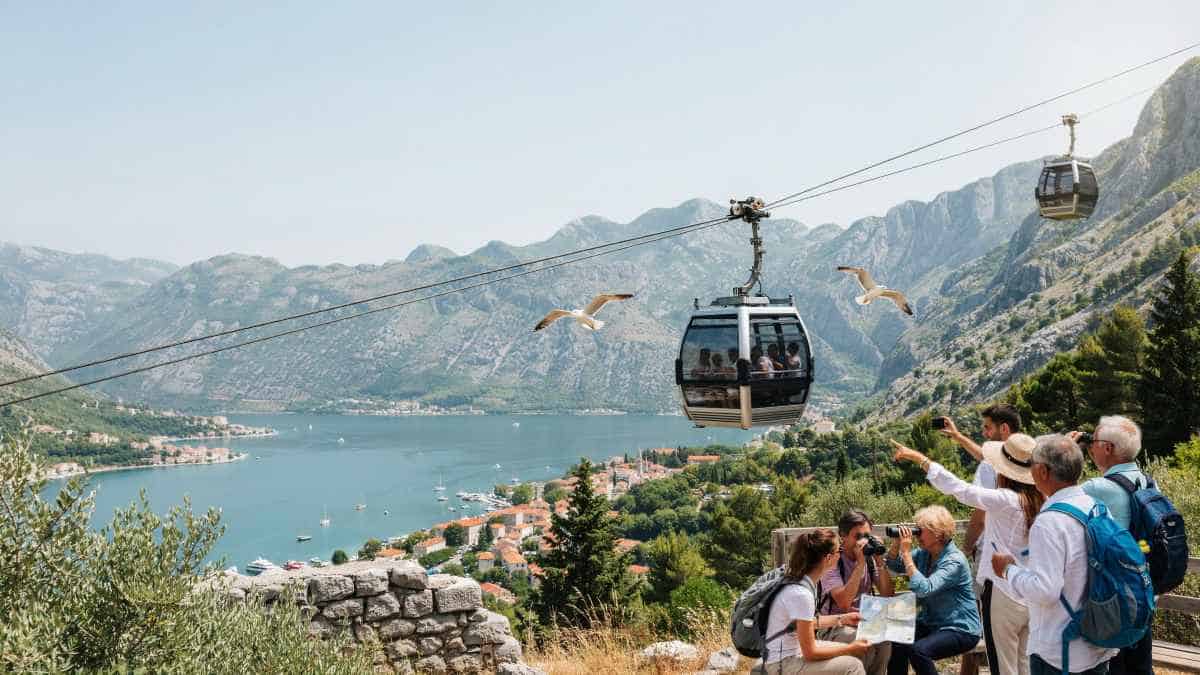
Image generated with Ai
Tourism in Montenegro has made it convenient for visitors to combine the country’s Adriatic coastal areas and its mountainous interior areas, and the Kotor-Lovćen Cable Car has been crucial in facilitating the connection. The connection provides the means by which the coastal areas of Kotor can be connected to the mountain slopes of Lovćen that were accessed by visitors through winding roads. There is more than the scenery since it allows the operator and the tourists to understand that Montenegro is supposed to be seen as a single destination experience and not as separate destinations between the coastline and the interior parts of the country. This means that a visitor can access Kotor, move from there via the cable car to Lovćen and into the mountains of Montenegro.
Kotor’s Coast Is Now Connected To Lovćen
The Kotor–Lovćen Cable Car connects the coastal area near Kotor with the Lovćen mountain region.
Advertisement
Advertisement
The journey takes only several minutes, dramatically reducing the time required to move from sea level towards the mountain.
The cable car covers approximately 3.9 kilometres and connects Dub Station near Kotor with Kuk Station on Lovćen. The ride takes around 11 minutes, depending on operating conditions.
Advertisement
Advertisement
For visitors, the attraction is both transportation and sightseeing.
Advertisement
Advertisement
The cabins provide elevated views across Kotor Bay, the surrounding mountains and the Adriatic landscape, turning the transfer itself into part of the tourism experience.
That distinction matters because scenic transport can become an attraction rather than merely a way of getting somewhere.
Lovćen Adds Nature And Heritage
At the mountain end, visitors gain access to the wider Lovćen National Park area.
Advertisement
Advertisement
Lovćen is closely associated with Montenegrin history and national identity, while its landscapes provide hiking routes, viewpoints and access to mountain villages.
The Njegoš Mausoleum, located near the summit of Jezerski vrh, is one of the best-known landmarks in the national park.
Advertisement
Advertisement
This gives the cable-car journey a useful combination of experiences.
A visitor can begin with medieval architecture and maritime heritage in Kotor before moving into mountain landscapes and historical sites within the same day.
The transition between environments is unusually rapid.
That is exactly what makes the coast-to-mountain model commercially attractive.
The Cable Car Is Changing Itinerary Design
Traditionally, visitors to Montenegro have often divided their holidays into coastal and inland segments.
Advertisement
Advertisement
Kotor, Budva and the Bay of Kotor have attracted large numbers of visitors, while destinations such as Žabljak and Durmitor require additional travel time.
The cable car creates a new bridge between these tourism zones.
Travel companies can build itineraries that start on the Adriatic before moving into the mountains, allowing visitors to experience contrasting landscapes without spending an entire day in transit.
For short-break travellers, this is particularly valuable.
A visitor with only a few days can combine Kotor’s heritage with Lovćen’s mountains without sacrificing an entire day to road travel.
Advertisement
Advertisement
Longer-stay travellers can then continue towards other national parks and mountain destinations.
Durmitor Takes The Mountain Journey Further
The connection with Durmitor National Park is less direct, but it forms part of the wider multi-destination opportunity.
Durmitor, in northern Montenegro, offers a dramatically different mountain environment, with glacial lakes, high peaks, hiking trails and the Tara Canyon.
The national park is a UNESCO World Heritage site and one of Montenegro’s most important nature destinations.
Travellers can therefore structure a broader itinerary that begins on the coast, moves through Kotor and Lovćen, continues into Montenegro’s central and northern mountains, and finishes around Durmitor and Žabljak.
Advertisement
Advertisement
The cable car does not physically connect Kotor with Durmitor in under an hour. Instead, its significance is that it reduces the coastal-to-mountain barrier at the beginning of such a multi-stop journey.
Tourism Infrastructure Is Following The Route
The success of the Kotor–Lovćen connection has encouraged greater attention to integrated tourism infrastructure.
The wider strategy involves connecting attractions through transport, accommodation and outdoor experiences rather than marketing each destination separately.
That can benefit smaller communities along the route.
Travellers stopping for food, accommodation, hiking, guiding or cultural experiences create economic activity beyond the main coastal centres.
Advertisement
Advertisement
It also allows Montenegro to encourage longer stays.
Instead of spending several days in one coastal location, visitors can build a sequence of experiences across different regions.
Travel Details For The Coast-To-Mountain Route
Visitors can begin in Kotor, exploring the Old Town and Bay of Kotor before travelling to the cable-car departure point.
The ride towards Lovćen takes approximately 11 minutes, providing panoramic views across the bay.
From the mountain station, travellers can continue towards Lovćen National Park, hiking areas and the Njegoš Mausoleum.
Advertisement
Advertisement
Visitors planning to include Durmitor should allow substantially more time because the northern park is several hours away by road.
The best approach is therefore to treat Kotor-Lovćen as one section of a larger itinerary rather than assuming that the entire coast-to-Durmitor journey can be completed within an hour.
Mountain weather can also change rapidly, so travellers should check operating conditions and prepare appropriately for higher elevations.
Key Stats And Tourism Indicators
3.9 km: Approximate length of the Kotor–Lovćen Cable Car.
11 minutes: Approximate cable-car journey time between the lower and upper stations.
Advertisement
Advertisement
Main coastal hub: Kotor.
Mountain destination: Lovćen National Park.
Major heritage attraction: Njegoš Mausoleum.
Northern mountain destination: Durmitor National Park.
Major nature attraction: Tara Canyon.
Advertisement
Advertisement
Tourism model: Multi-destination coast-to-mountain itineraries.
FAQ: Montenegro Coast-To-Mountain Tourism
1. How long does the Kotor–Lovćen Cable Car journey take?
The cable-car ride takes approximately 11 minutes under normal operating conditions.
2. Can visitors reach Durmitor from Kotor by cable car?
No. The cable car connects Kotor with Lovćen. Durmitor requires additional road travel and should be planned as a separate section of a wider mountain itinerary.
3. What can travellers do around Lovćen?
Visitors can explore mountain landscapes, hiking routes, viewpoints and cultural attractions including the Njegoš Mausoleum.
Timeline And Key Developments
Kotor: Coastal heritage remains the starting point for many Montenegro itineraries.
Advertisement
Advertisement
Lovćen: The cable-car connection creates faster access from the coast to the mountain region.
Current tourism strategy: Greater emphasis on combining coastal, heritage and mountain experiences.
Wider itinerary: Kotor and Lovćen can be combined with longer journeys towards Durmitor and northern Montenegro.
Conclusion
The “coast to mountains” tourism concept of Montenegro is taking hold because of the presence of the Kotor-Lovcen Cable Car, which has made the process of moving between two contrasting terrains much more convenient. Tourists can travel from the old town of Kotor on the coast to the mountains of Lovcen within just minutes, thus enjoying the journey itself and at the same time saving time that they would have lost in other transportation means. But even more important than the existence of the cable car is its potential to connect the coastal historical sites with Lovcen and further mountain destinations such as Durmitor.
Advertisement
