
Travelers Impacted at Billy Bishop Toronto City Airport as Porter Airlines and Jazz Aviation Ground 12 Flights and Face Multiple Delays, Disrupting Connections Across Canada and the US, Including Chicago, Montreal, Quebec City, Sault Ste. Marie, Ottawa, and More

Updated
Published
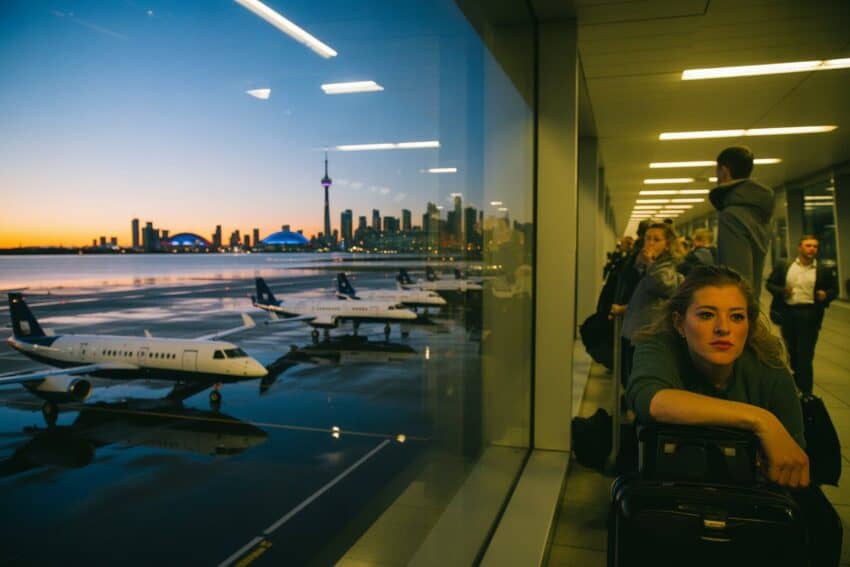
Image generated with Ai
Travelers were impacted at Billy Bishop Toronto City Airport as Porter Airlines and Jazz Aviation continued to face operational challenges, forcing the carriers to ground 12 flights and manage multiple delays across their networks. As a result, the disruptions affected vital connections across Canada and the US, creating uncertainty for passengers traveling for business and leisure. Meanwhile, delayed departures and cancellations spread across key markets, including Chicago, Montreal, Quebec City, Sault Ste. Marie, and Ottawa, while additional routes also experienced schedule disruptions. The operational strain reduced flight availability and increased waiting times throughout the day. Consequently, many travelers were required to adjust itineraries, rebook flights, or seek alternative transportation options. The situation highlights how even a limited number of grounded flights can ripple through regional and cross-border networks, impacting airport operations, airline schedules, and passenger travel plans across both Canada and the United States.
Affected Cities
Operations at Toronto City Centre were affected by disruptions involving flights to and from Toronto, Ottawa, Montreal, Chicago, Boston, Halifax, Quebec City, Thunder Bay, Nashville, Newark, Washington, and Sault Ste. Marie. The impacted network spans major business, tourism, and regional travel markets across Canada and the United States, highlighting the broad reach of the operational challenges. Toronto accounted for the largest share of cancellations and delays, while Ottawa and Montreal also experienced notable disruptions. Cross-border routes connecting Canadian cities with Chicago, Boston, Newark, Washington, and Nashville faced varying levels of delay, potentially affecting onward connections and travel schedules. Regional destinations such as Halifax, Quebec City, Thunder Bay, and Sault Ste. Marie were also impacted, underscoring how disruptions can ripple through both high-traffic metropolitan corridors and smaller regional markets throughout the day.
Advertisement
Advertisement
Flight Cancellations
| Airline | Cancelled Flights | Delayed Flights |
|---|---|---|
| Porter Airlines | 9 | 40 |
| Jazz Aviation (Jazz ACA) | 3 | 17 |
Overview of Flight Cancellations
As of June 19, 2026, flight cancellation data linked to operations at Billy Bishop Toronto City Airport shows that Toronto experienced the highest level of disruption, accounting for 6 cancelled flights, representing 5% of scheduled operations. Ottawa recorded 3 cancellations, with a significantly higher cancellation rate of 25%–27%, indicating a substantial impact on services between the two cities. Montreal reported between 1 and 2 cancelled flights, with cancellation rates ranging from 6% to 12%, while Boston saw 1 cancelled flight, affecting up to 25% of scheduled services. Additional isolated cancellations were recorded on routes serving Chicago Midway, where 1 flight was cancelled, representing 50% of scheduled operations on that route. No cancellations were reported for services linked to Halifax, Quebec City, Thunder Bay, Nashville, Newark, Washington, Chicago O’Hare, Montreal Metropolitan, or Sault Ste. Marie, although several of these destinations continued to experience operational delays. Overall, Toronto, Ottawa, and Montreal accounted for the majority of cancellations, making them the most affected markets in the network on June 19, 2026.
What to Do if Your Flight Gets Cancelled: A Quick Guide
Flight cancellations can be frustrating, but knowing the right steps to take can help minimize stress. Here’s what you can do if you find yourself in this situation:
Advertisement
Advertisement
Stay Updated
Monitor your email, phone, and the airline’s app for rebooking confirmation or further announcements.
Advertisement
Advertisement
Stay Calm and Check for Updates
As soon as you learn your flight is canceled, stay calm and check for updates. Many airlines will notify you via text, email, or their app. Visit the airline’s website for real-time updates on the situation.
Contact the Airline
Reach out to the airline’s customer service either in person at the airport or over the phone. If you’re at the airport, head to the service desk. If you’re not, try calling or using the airline’s online chat system to avoid waiting in long queues.
Know Your Rights
Familiarize yourself with the airline’s policies regarding cancellations. Many airlines offer rebooking options or compensation, especially if the cancellation is within their control. In the EU, for example, passengers are entitled to compensation under certain conditions.
Advertisement
Advertisement
Consider Alternative Flights
Ask the airline about the next available flight. If you can’t find a suitable option, consider booking a new flight through another airline, or check for other forms of transport like trains or buses.
The disruptions at Billy Bishop Toronto City Airport demonstrate how a relatively small number of flight cancellations can create wider operational challenges across regional and cross-border networks. Porter Airlines and Jazz Aviation were forced to adjust schedules as cancellations and delays affected travelers heading to destinations across Canada and the United States. Toronto, Ottawa, Montreal, Boston, and Chicago emerged among the most impacted markets, while delays continued to affect several other cities. As airlines work to restore normal operations, passengers are advised to monitor flight status updates closely and allow additional time for potential schedule changes and travel disruptions.
Advertisement
Advertisement
Authors Observation: All information is manually obtained from FlightAware’s official website, and all operations are subject to change based on real-time updates. In order to maintain safety, airlines actively modify schedules and itineraries. In order to get to their destinations safely, passengers are asked not to panic in such situations and to look for alternate travel choices. Relying on real-time updates, reviewing airline rebooking restrictions, and maintaining flexibility with travel plans are all highly recommended.
Source: FlightAware
Advertisement
