
South Korea’s Busan Travel Searches Jump 50% as Coastal City Eyes Longer Tourist Stays

Published
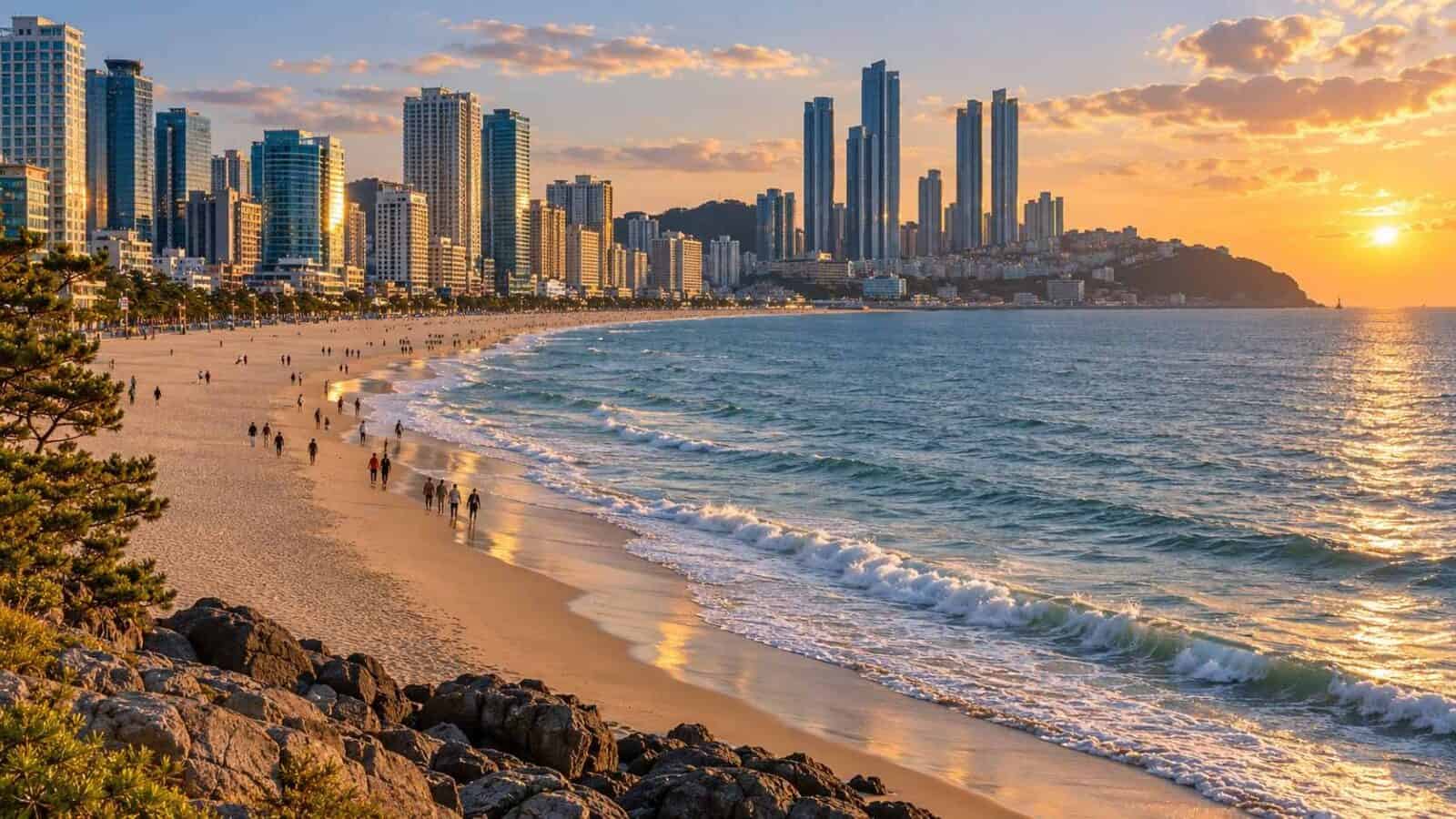
Busan travel searches have risen 50% on Expedia, giving South Korea’s coastal city fresh visibility as it works to encourage longer tourist stays. The company’s Unpack ’27 report places Busan fifth among its selected destinations ranked by search growth. Published ahead of 2027, the findings strengthen the city’s opportunity to turn online interest into overnight visits, restaurant spending and neighbourhood exploration. However, searches alone do not establish that holidays are getting longer. For Busan, the important question is how its existing tourism programmes can persuade international visitors to stay beyond a quick sightseeing stop and experience more of the city. Unpack ’27
What the rise in Busan travel searches reveals
According to Expedia’s official destination report, the comparison covers flight and accommodation searches between 1 September 2025 and 27 July 2026 against the equivalent period a year earlier.
Advertisement
Advertisement
That distinction matters. The increase measures interest on one travel platform, rather than confirmed bookings, visitor arrivals or hotel occupancy.
Busan’s position offers a useful marketing opportunity. Establishing whether that attention produces longer holidays requires separate evidence on overnight stays, visitor spending and booking behaviour. Unpack ’27
Advertisement
Advertisement
Longer stays were already part of the city’s plans
The ambition predates Expedia’s latest recognition. In June 2025, Busan Metropolitan City identified regional and longer-stay tourism as areas for further development.
Its official tourism announcement connected that work with culinary experiences, cruise marketing and digital services. The city also outlined plans to strengthen festival programmes and cooperation across neighbouring areas.
Advertisement
Advertisement
The commercial logic is straightforward. An additional night creates another opportunity for accommodation, meals and paid activities, although the amount retained locally depends on where visitors spend. busan.go.kr
Official figures provide a separate measure of tourism growth
Busan’s published visitor statistics show that international tourism was expanding before this search report.
The figures below are historical benchmarks, not a statement of the city’s latest 2026 performance.
| Indicator | Reporting period | Official figure |
|---|---|---|
| Foreign visitors | January–April 2025 | 1,061,284 |
| Visitor growth | January–April 2025 against the same period in 2024 | 24% |
| Inbound visitors | January–October 2025 | 3,019,164 |
| Foreign tourist spending | January–October 2025 | KRW859.2 billion |
| Spending growth | January–October 2025 against the equivalent previous period | 31.5% |
Busan Metropolitan City published the April figures in June 2025 and the October figures in December 2025. The spending measure should not be treated as tourism’s total economic contribution or an employment estimate. busan.go.kr
Giving visitors reasons to leave room in the itinerary
Expedia highlights Busan’s combination of temple visits, Haeundae Beach and Jagalchi Market. These experiences provide different reasons to explore, from coastal scenery to food and everyday commerce. Unpack ’27
For visitors, a longer stay can mean choosing fewer activities each day and allowing more time between them. For tourism businesses, it means designing experiences that justify another morning or evening.
Advertisement
Advertisement
The reporting test is whether travellers actually make that choice. Attraction popularity alone cannot demonstrate that average stays have increased.
Food and digital convenience support the visitor experience
Busan’s June 2025 announcement identified gastronomy as a central part of its tourism approach. It also highlighted the Visit Busan Pass and payment improvements among measures intended to make independent travel easier. busan.go.kr
These measures address practical decisions within a holiday. Visitors considering an extra day need clear information about what they can do, what it costs and how to organise it.
Travellers should compare any sightseeing pass with their intended itinerary. A pass offers value only when its current inclusions and validity match the attractions they genuinely want to visit.
Hotels and operators need booking evidence
For hotels, the relevant opportunity is additional occupied nights. For guides and tour operators, it is demand for experiences that extend beyond a standard sightseeing circuit.
Neither outcome follows automatically from a search increase. Businesses need evidence on stay length, cancellation rates, booking lead times and spending before treating attention as dependable demand.
Advertisement
Advertisement
The same discipline applies to aviation. Expedia’s destination figure does not establish a specific airline’s passenger growth, justify a new route or confirm additional airport capacity.
Responsible tourism needs local results
Busan also receives Expedia’s Smart Travel Health Check marker. Expedia describes this as its own framework, inspired by World Travel & Tourism Council principles; it is not independent WTTC certification. Unpack ’27
Longer stays deserve the same scrutiny. More nights may create commercial opportunities, but assessing the wider result requires evidence about neighbourhood conditions and the distribution of spending.
No verified employment or investment impact attributable to this search increase has been established in the sources reviewed.
Published targets set the direction
Busan’s December 2025 roadmap set targets of five million foreign visitors and KRW1.5 trillion in annual foreign tourist spending by 2028.
The city’s published strategy includes stronger air and port connectivity, regional cooperation and experiences built around food, nighttime tourism and maritime activities.
Advertisement
Advertisement
These are policy objectives. They should be distinguished from completed infrastructure, operating transport services and results already achieved. busan.go.kr
Traveller FAQs
Does the 50% increase mean Busan has become more expensive?
No. Search growth does not measure prices. Compare accommodation and transport costs for your actual dates before booking.
Does Expedia’s ranking mean Busan is the world’s fifth-best destination?
No. It places fifth within Expedia’s selected list ordered by search growth, rather than a universal assessment of destination quality.
Does this announcement change entry requirements?
Advertisement
Advertisement
The ranking is not an immigration announcement. Check the requirements applicable to your passport before making non-refundable arrangements.
The next measure is nights, not clicks
Busan’s next tourism milestone will be measured in the time visitors spend there, not simply the attention it attracts online. Expedia’s search increase gives the city a stronger platform, while its published strategies provide reasons to develop richer itineraries. The evidence does not yet establish longer average stays or a booking surge. For travellers, the opportunity is to explore beyond a compressed checklist. For hotels, guides and neighbourhood businesses, the priority is to turn that curiosity into worthwhile experiences. Progress will become clearer through verified guest nights, visitor expenditure and local outcomes, assessed alongside the city’s stated targets for 2028.
Official Sources
- Expedia — Unpack ’27 destinations and search methodology
- Busan Metropolitan City — Visitor performance and longer-stay tourism plans, June 2025
- Busan Metropolitan City — Visitor spending and 2028 tourism roadmap, December 2025
Advertisement
