
Jordan And Saudi Arabia Are Safeguarding Majestic Ancient Wonders To Inspire The Next Golden Era Of Heritage Travel

Published
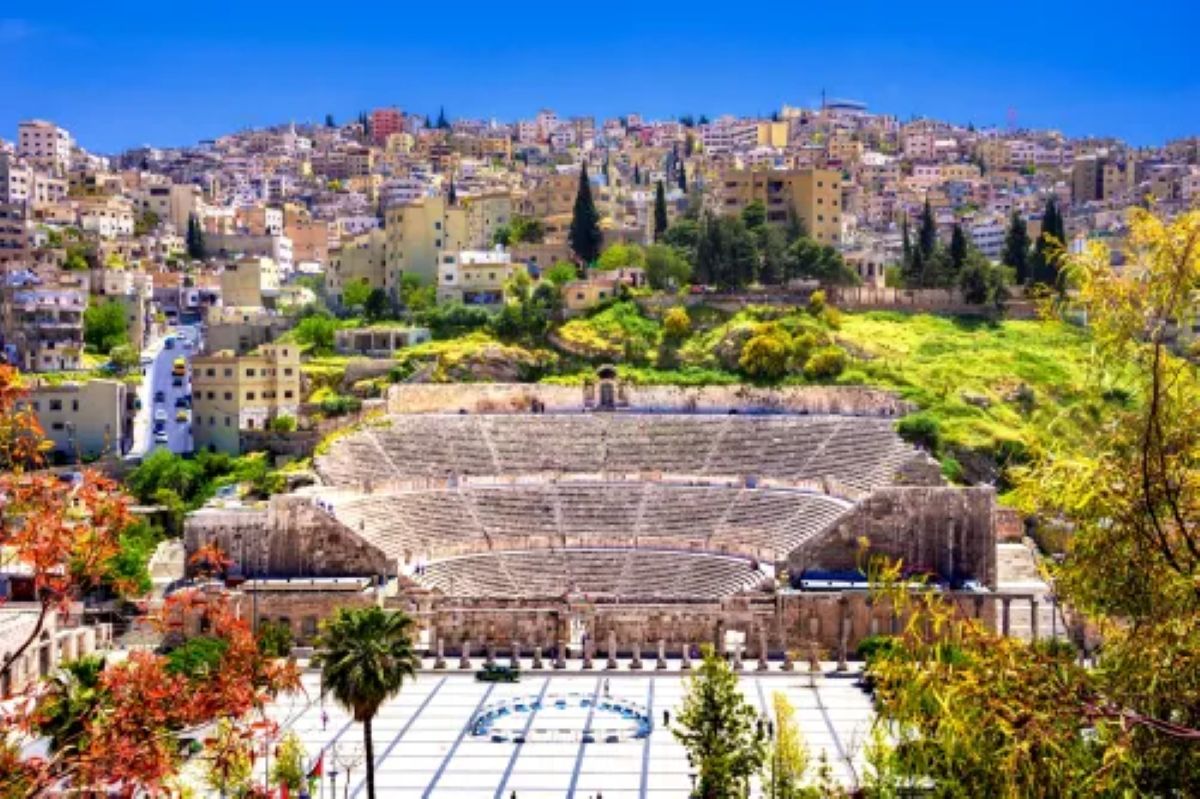
There is something deeply moving about standing before monuments carved in stone watching the desert light change over centuries of human history. Across the sands of Jordan and Saudi Arabia ancient history is not only, in textbook pages; it is breathing again. Through the lens of Vision 2030 and national preservation strategies, these timeless landscapes of Petra, AlUla and Diriyah are stepping into a bright new era. It is a revival where deep heritage meets modern discovery inviting modern travelers to slow down connect and lose themselves in Asia’s most enchanting desert sanctuaries.
Unearthing the Cultural Anchors of Asia
Advertisement
Advertisement
How are ancient desert civilizations reshaping modern travel across Asia? Guided by state-level development plans such as Saudi Arabia’s Vision 2030 and Jordan’s National Tourism Strategy both nations have systematically integrated major archaeological discoveries with global heritage campaigns. Driven by the Ministry of Culture and the Saudi Tourism Authority (STA), Saudi Arabia’s approach combines physical heritage conservation with global-scale brand campaigns. Managed by the Saudi Tourism Authority (STA), the umbrella destination brand “Saudi Welcome to Arabia” targets primary Asian markets. Meanwhile, the Diriyah Heritage Masterplan, backed by the Public Investment Fund (PIF) with an allocated budget exceeding 230 Billion SAR, centers around the UNESCO-listed At-Turaif district.
Furthermore, AlUla’s “Living Museum” Strategy, run under the Royal Commission for AlUla (RCU), blends Nabataean heritage at Hegra. Crucially, archaeological excavations in Northwest Arabia continue to reveal expansive pre-Islamic trade networks linking directly to southern Jordan. Additionally, architectural integration projects built directly into granite and sandstone formations mirror ancient Nabataean rock-cut masonry methods while meeting modern green building standards.
Advertisement
Advertisement
How Is Saudi Arabia Transforming Hegra and AlUla into World-Class Living Museums?
How does Saudi Arabia turn fragile desert antiquity into a modern global destination without losing its historical soul? Saudi Arabia’s national tourism strategy relies on turning ancient landscapes into active cultural hubs. The Royal Commission for AlUla (RCU) leads the transformation of AlUla and Hegra, the Kingdom’s first UNESCO World Heritage site, into a sprawling living museum that balances historical conservation with international luxury eco-tourism.
Advertisement
Advertisement
Archaeologists excavating northwest Saudi Arabia continue to uncover monumental tomb structures, pre-Islamic ritual sites, and expansive trade networks. These architectural integration projects carve modern eco-resorts directly into granite sandstone formations, faithfully mirroring ancient Nabataean rock-cut masonry while adhering strictly to top-tier LEED Platinum environmental standards.
What Role Does the Diriyah Heritage Masterplan Play Under Saudi Arabia’s Vision 2030?
How does the multimillion-dollar preservation of Diriyah fuel the wider economic diversification of the Gulf? Backed by the Public Investment Fund (PIF) with a budget exceeding 230 Billion SAR, the Diriyah Heritage Masterplan stands as a cornerstone of national identity. The development focuses on preserving the mud-brick architecture of the UNESCO-listed At-Turaif district in Diriyah, the ancestral home of the Saudi state.
The Ministry of Culture and the Saudi Tourism Authority (STA) leverage global campaigns like “Saudi – Welcome to Arabia” to position these sites before Asian and international travelers. By integrating traditional craft academies, high-end museums, and live heritage performance spaces, Diriyah exemplifies how historic conservation directly drives urban economic diversification.
How Is Jordan Using Digital Innovation to Preserve Petra and Promote Secondary Heritage Sites?
Can cutting-edge spatial technology and digital mapping save the rose-red city of Petra from the pressures of modern mass tourism? The Ministry of Tourism and Antiquities (MoTA) in Jordan utilizes cutting-edge spatial technology to manage tourism volume at fragile monuments. To prevent over-tourism and environmental degradation at Petra, MoTA deploys digital twins, 3D laser mapping, and precise visitor density limits to protect delicate sandstone facades.
Advertisement
Advertisement
Executed globally by the Jordan Tourism Board (JTB), the unified digital portal “Ahlan Jordan” redirects travel traffic toward lesser-known historical treasures. Travelers are systematically encouraged to explore northern archaeological gems like Jerash, Pella, and the Ottoman-era hillside architecture of As-Salt, redistributing economic benefits across regional communities.
Why Is the Recent UNESCO Listing of Umm Al-Jimāl a Milestone for Jordanian Archaeology?
What makes the basalt architecture of Umm Al-Jimāl a pivotal addition to the global map of ancient history? The official inscription of Umm Al-Jimāl onto the UNESCO World Heritage list marks a major triumph for Jordan’s national heritage expansion. Located in northern Jordan, Umm Al-Jimāl features remarkably preserved black basalt structures detailing the architectural transition from the Byzantine era to the early Islamic period.
State archaeologists have cataloged roughly 100,000 archaeological sites across Jordan, with 15,000 officially registered in state databases. By opening site museum centers and structured walking trails at Umm Al-Jimāl, MoTA expands the nation’s cultural footprint beyond classic ancient circuits.
How Does the Ancient Incense Route Unite the Heritage Tourism Strategies of Both Asian Nations?
In what ways do shared historical trade routes bridge modern tourism frameworks across Western Asia? The historical Incense Trade Route serves as the unifying narrative connecting Saudi Arabia and Jordan across Western Asia. Centuries ago, merchant caravans transported frankincense and spices from southern Arabia through AlUla and Hegra, traveling north toward the rock-cut city of Petra in Ma’an and onward to Mediterranean ports.
Advertisement
Advertisement
Today, both nations align their promotion strategies around this shared historical corridor. Saudi Arabia provides large-scale infrastructure investments under Vision 2030, while Jordan contributes extensive digital documentation and historical cataloging, creating a joint cultural travel narrative across Asia.
Environmental and Socio-Economic Impact of Tourism
| Dual-Nation Impact Metrics Matrix | Key Strategic Targets |
| Economic Target | >10% GDP contribution by 2030 (Saudi Arabia) |
| Employment Creation | 1.6 Million tourism jobs targeted across the sector |
| Sustainable Building Standards | LEED Platinum targets for rock-carved desert resorts |
| Site Conservation Mechanism | Digital twin visitor capping at Petra (Jordan) |
The expansion of cultural tourism across Saudi Arabia and Jordan creates profound socio-economic and environmental benefits. Under Vision 2030, tourism is projected to contribute over 10% to Saudi Arabia’s national GDP, targeting the creation of 1.6 million jobs across hospitality, tour operations, and site management. In Jordan, expanding tourism routes to secondary locations like As-Salt, Jerash, and Umm Al-Jimāl channels vital revenue directly into local rural economies.
Environmentally, both countries prioritize sustainable stewardship to protect fragile desert landscapes. Saudi Arabia enforces LEED Platinum green building standards on desert rock resorts in AlUla, while Jordan uses visitor capping and digital twin mapping at Petra to protect ancient sandstone structures from human footprint erosion.
How Capital Expenditure and Sovereign Wealth Deployment Drive Mega-Developments in Saudi Arabia and Jordan
Strategic financial deployment defines the core difference in how Saudi Arabia and Jordan expand their cultural tourism assets. Under the Public Investment Fund (PIF), Saudi Arabia executes an unprecedented sovereign investment strategy designed to build an entire physical tourism ecosystem from the ground up. Central to this financial engine is the Diriyah Heritage Masterplan, backed by an allocated budget exceeding SAR 230 Billion (over $61 Billion USD). This development revitalises the UNESCO World Heritage district of At-Turaif, surrounding it with world-class cultural institutions, hospitality districts, and public infrastructure. Furthermore, capital expenditure across the Kingdom’s hotel sector is projected to reach $45 Billion USD through 2030, fueling a pipeline designed to deliver approximately 320,000 new hotel keys. These capital commitments align directly with Saudi Arabia’s economic trajectory as its national GDP advances toward $1.31 Trillion USD during the final implementation phases of Vision 2030.
Advertisement
Advertisement
In contrast, Jordan adopts a targeted, high-efficiency capital allocation strategy focused on site preservation, urban infrastructure, and transport connectivity. Operating within tighter sovereign fiscal parameters, the Jordanian government channels over JD 1.08 Billion annually into civil infrastructure, highway upgrades, and heritage preservation zones. Rather than funding greenfield megaprojects, Jordan directs capital toward maintaining accessibility and structural integrity across existing archaeological treasures such as Petra, Jerash, and As-Salt. This dual dynamic demonstrates how sovereign wealth deployment in Saudi Arabia scales monumental new destinations, while Jordan’s focused municipal and state funding safeguards established global heritage monuments.
Macroeconomic Yield, National GDP Contribution, and Direct Employment Scalability
Cultural tourism has transitioned from a supporting service sector into a primary macroeconomic engine for both Asian nations. In Saudi Arabia, the strategic shift away from fossil-fuel reliance places tourism at the center of economic diversification. The state has set an ambitious target for the tourism sector to contribute over 10% to national GDP by 2030, building on progress that saw the sector generate approximately 7.1% of GDP (SAR 318 Billion). On the human capital front, the Kingdom aims to create 1.6 Million direct and indirect tourism jobs by the end of the decade, having already expanded employment in the sector beyond 1.07 million positions. High-yield international arrivals form the bedrock of this model, with international visitors averaging a spend of $1,840 USD per trip, reflecting Saudi Arabia’s focus on luxury cultural travel.
Jordan’s economy displays an equally deep reliance on heritage travel as a driver of national revenue and balance-of-payments stability. Tourism accounts for a direct and indirect GDP contribution of 14.6% in Jordan, generating between JD 5.5 Billion and JD 7.4 Billion in annual receipts. Because historical travel in Jordan relies on labor-intensive hospitality, tour guiding, and artisan trades, tourism spending flows directly into regional economies surrounding Ma’an, Aqaba, and Jerash. While Saudi Arabia leverages high capital expenditure to scale its workforce rapidly, Jordan relies on sustained international visitor yields to preserve foreign exchange reserves and support local employment across rural heritage corridors.
Inbound Visitor Demographics, Yield Volumetric Targets, and Source Market Dynamics
Understanding visitor composition across inbound international, regional Gulf, and domestic segments reveals how both nations optimize their destination yield. Saudi Arabia recently revised its overall Vision 2030 headline target upward to 150 Million total visits, building upon the initial target of 100 million visits achieved ahead of schedule. This goal targets a structural split of 70 million international visitors and 80 million domestic travelers. Total combined visits reached 122.6 Million, generating over SAR 300 Billion in direct spending. Interestingly, the inbound profile is shifting rapidly: leisure and cultural travelers now represent 41% of total visitors, while non-religious travel accounts for 52%, illustrating a diversification beyond traditional pilgrimage traffic.
Advertisement
Advertisement
Jordan maintains a highly targeted volumetric strategy that balances inbound traffic against ecological carrying capacity. The country achieved an annual peak benchmark of 6.35 Million inbound arrivals, with long-stay, overnight tourist counts consistently exceeding 4.17 Million travelers. European and Asian long-haul travelers make up the bulk of Jordan’s high-yield cultural market, seeking multi-day itineraries across Petra, Wadi Rum, and the Dead Sea. By tracking demographic origin points and length of stay, both Jordan and Saudi Arabia tailor their marketing campaigns to attract eco-conscious, high-spending cultural tourists from key source markets across East Asia, South Asia, and Western Europe.
Deployment of Advanced Digital Twins, Smart Conservation, and Spatial Carrying Capacity
Managing ancient sandstone and mud-brick structures requires high-tech spatial interventions to protect sites from environmental degradation and human footfall. The Ministry of Tourism and Antiquities (MoTA) in Jordan manages an extensive national archaeological catalog featuring over 100,000 cataloged sites, with 15,000 officially registered in state databases. To protect fragile monuments, MoTA uses millimeter-precision 3D laser mapping and digital twins at high-density locations like Al-Khazneh (The Treasury) in Petra. These digital models track structural stress and surface erosion in real time, enabling conservation teams to execute preventative maintenance without closing major monuments to the public.
In parallel, the Royal Commission for AlUla (RCU) in Saudi Arabia applies spatial monitoring across the rock-cut Nabataean tombs of Hegra. By deploying digital twins, remote sensors, and Augmented Reality (AR) interpretation layers, conservationists limit physical contact with ancient surfaces while offering visitors detailed historic contextualisation. Complementing these technical measures are enforced daily visitor capacity caps. By capping peak daily access at high-risk zones, both authorities systematically guide excess tour groups toward secondary heritage locations such as Jerash, Pella, and As-Salt in Jordan, protecting ancient sites while spreading regional economic benefits.
Architectural Preservation: Ancient Masonry Meets Modern Green Building Standards
The physical restoration of ancient monuments across Western Asia requires a careful balance between authentic traditional masonry and modern green building practices. In Saudi Arabia’s UNESCO-listed district of At-Turaif in Diriyah, restoration master masons employ 100% traditional Najdi mud-brick techniques. Using locally sourced clay, straw, and sun-dried brick formulations laid over limestone bases, engineering teams reconstruct historic palaces without synthetic binders, preserving structural authenticity and natural thermal insulation. Concurrently, modern hospitality infrastructure constructed nearby in AlUla and Northwest Arabia must meet strict LEED Platinum environmental standards, ensuring low carbon footprints, high energy efficiency, and zero visual disruption to desert landscapes.
Advertisement
Advertisement
Jordan faces unique structural challenges in preserving its newly listed UNESCO World Heritage site of Umm Al-Jimāl. Located in northern Jordan, this ancient city features complex black basalt architecture dating from the Byzantine and early Islamic periods. Restoration protocols focus on stabilizing mortarless basalt block masonry, using non-invasive structural grouting to protect dry-stone walls against seismic activity and weathering. By applying authentic conservation methods alongside modern environmental standards, both nations ensure that heritage infrastructure updates remain culturally authentic and environmentally sustainable.
Transnational Heritage Corridors: Re-Engineering the Ancient Incense Trade Route
The ancient Incense Trade Route serves as a primary cultural framework connecting Jordan and Saudi Arabia across Asia. Spanning over 1,500 Kilometers from the southern Arabian Peninsula through Hegra in AlUla, northward to Petra in Ma’an, and onward to Mediterranean ports, this historical passage facilitated the movement of frankincense, spices, and architectural styles for over a millennium. Today, both nations leverage this shared history to create an integrated transnational tourism corridor that encourages long-haul travelers to experience the connected legacy of Nabataean civilization across both borders.
To support this transnational travel narrative, Saudi Arabia and Jordan use dual UNESCO anchor hubs—Hegra as Saudi Arabia’s first UNESCO site and Petra as Jordan’s premier world heritage destination—as joint promotional pillars. This cross-border strategy is further backed by streamlined visa policies, including e-visa access across more than 60 nationalities and flexible 96-hour stopover visas. By simplifying border crossings and harmonizing marketing efforts, both countries position Western Asia as an interconnected cultural destination for global travelers.
Scaling Aviation Capacity, Regional Connectivity, and Hospitality Infrastructure
Absorbing millions of long-haul international visitors requires significant expansion of air travel networks and hotel accommodation capacity. Saudi Arabia is driving a large-scale infrastructure expansion anchored by a nationwide pipeline targeting 320,000 new hotel keys to expand its operational baseline of ~198,000 rooms. To ensure direct air connectivity from major Asian and European origin markets, the Kingdom established Riyadh Air to operate alongside Saudia and flynas. These airlines are expanding direct routes to major Asian hubs, including Beijing, Shanghai, Mumbai, and Delhi, connecting long-haul markets directly to heritage gateways in AlUla and Medina.
Advertisement
Advertisement
Jordan maintains a tailored accommodation infrastructure optimized for its long-stay visitor profile, featuring 38,186 operational hotel rooms across classified hotels, eco-lodges, and desert camps. Royal Jordanian, the national flag carrier, continues to expand its regional and long-haul network, coordinating flight arrivals with tour operators to ensure seamless transfers between Queen Alia International Airport in Amman and King Hussein International Airport in Aqaba. Together, these strategic air links and hospitality developments form the logistical engine powering cultural tourism growth across both nations.
Ecological Safeguards, Climate Resilience, and Desert Ecotourism Standards
Protecting hyper-arid desert ecosystems and fragile sandstone monuments from environmental strain is essential to sustaining long-term cultural tourism. Saudi Arabia integrates large-scale clean energy systems into its tourism infrastructure, drawing power from an expanding renewable grid targeting 64 Gigawatts of clean capacity. At eco-resorts in AlUla and nature reserves across Northwest Arabia, strict sustainability mandates operate alongside zero-single-use-plastic regulations, off-grid solar farms, and advanced closed-loop water recycling networks that protect local oasis agriculture.
Jordan relies on established biosphere reserves and strict zoning frameworks to protect its fragile desert environments. Protected wilderness allocations including the Dana Biosphere Reserve and the UNESCO-listed Wadi Rum Protected Area maintain clear spatial boundaries between active visitor trails and wilderness preservation zones. By enforcing strict environmental controls, monitoring groundwater extraction, and limiting construction footprints near sensitive ecosystems, both Jordan and Saudi Arabia preserve their iconic desert landscapes and ancient historical monuments for future generations.
The Final Verdict
After the desert dust settles the spirit of these lands stays inside every travellers tale. Jordan and Saudi Arabia have done more than build roads and fix sites; Jordan and Saudi Arabia have kept the beating of human history alive. When the sun goes behind the cliffs of Petra and the quiet tombs of AlUla you see that Petra and AlUla belong to everyone. Guided by Vision 2030 and a shared love of keeping nature safe Vision 2030 shows that these holy sands are ready to inspire, humble and welcome every searching soul for years to come.
Advertisement
Advertisement
Frequently Asked Questions
What are the main UNESCO World Heritage sites in Saudi Arabia and Jordan?
Saudi Arabia hosts key sites such as Hegra in AlUla, the historic At-Turaif district in Diriyah, and Al-Balad in Jeddah. Jordan features Petra, Wadi Rum, As-Salt, the Baptism Site (Al-Maghtas), and the newly inscribed Umm Al-Jimāl.
What is the significance of the Incense Trade Route for modern travelers?
The ancient Incense Trade Route historically connected caravan trade from the Arabian Peninsula through Hegra to Petra. Today, it acts as a shared historical framework allowing visitors to explore connected Nabataean and pre-Islamic architecture across both countries.
How does Jordan prevent damage to Petra caused by high visitor numbers?
The Ministry of Tourism and Antiquities (MoTA) utilizes digital twin technology, spatial mapping, and strict visitor capacity caps. Additionally, campaigns promote secondary destinations like Jerash, Pella, and Umm Al-Jimāl to balance visitor distribution.
Advertisement
