

Greece Leads Ireland and More as Aegean Tops 2026 European Airline Safety Index for Travellers

Updated
Published
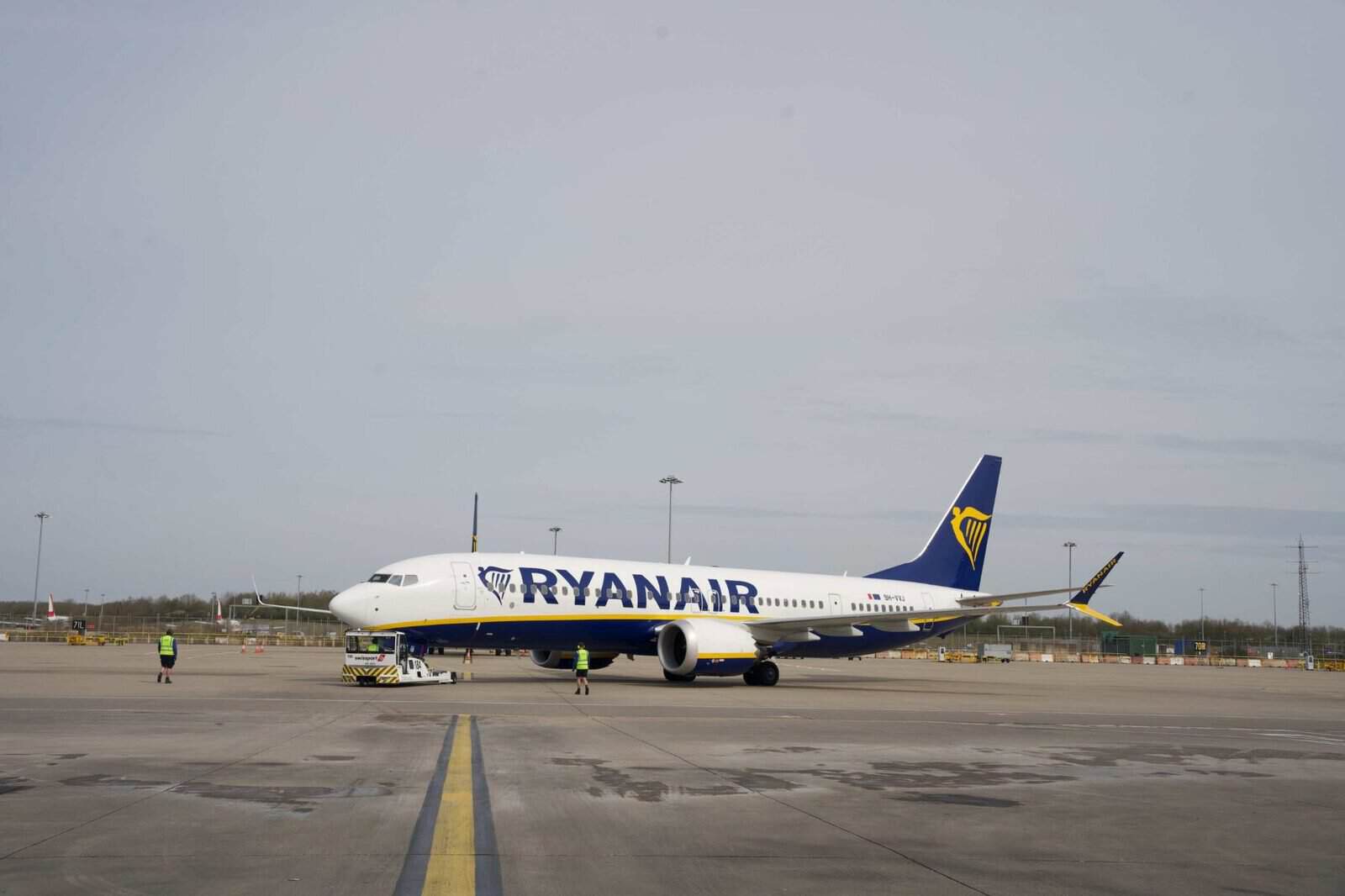
Greece leads Ireland, Austria, Norway, Türkiye and Germany in the 2026 European Airline Safety Rankings, placing European aviation standards and traveller confidence firmly in focus. Aegean Airlines leads the assessment, followed by Ryanair and Austrian Airlines, as travellers consider safety alongside fares, connectivity and airline reliability. The rankings examine accident histories, regulatory oversight, fleet characteristics and operational safeguards across leading European carriers. For international tourism, the findings highlight the importance of transparent aviation assessments and informed travel decisions. The results also provide a wider perspective on budget and traditional airlines, helping travellers understand how safety performance is evaluated across Europe.
European Airline Safety Rankings 2026: How the Continent’s Leading Carriers Compare
The European Airline Safety Rankings 2026, developed by AirAdvisor, evaluate 20 major European carriers using records covering 2016–2025. The assessment includes ten low-cost airlines and ten traditional carriers, selected using EUROCONTROL flight activity data. Each receives a composite score based on six weighted categories. Accident history carries the greatest weight, followed by certification, regulatory audits and operational safety management. Fleet characteristics, pilot training and financial stability complete the methodology. The research provides a comparative perspective rather than an official regulatory certification. Its principal value lies in explaining how different dimensions of aviation safety contribute to the overall assessment of major European airlines.
Advertisement
Advertisement
- Aegean Airlines leads with 89/100.
- Ryanair follows with 86/100.
- Austrian Airlines holds third position with 85.5/100.
- Norwegian and SunExpress complete the top five.
- Three of the five highest-ranked airlines operate low-cost business models.
Table: Top European airlines in the 2026 safety assessment
| Position | Airline | Associated country | Score |
|---|---|---|---|
| 1 | Aegean Airlines | Greece | 89/100 |
| 2 | Ryanair | Ireland | 86/100 |
| 3 | Austrian Airlines | Austria | 85.5/100 |
| 4 | Norwegian | Norway | 85/100 |
| 5 | SunExpress | Türkiye and Germany | 84.5/100 |
Greece Dominates the 2026 Airline Safety Assessment as Aegean Airlines Secures First Place
Greece takes the leading position through Aegean Airlines, which achieves the highest composite score among the carriers evaluated. Its performance reflects a strong accident-history assessment, established safety-management processes and favourable fleet characteristics. Greece’s location also gives aviation an important role in connecting mainland destinations with its island tourism network. Athens and regional airports support domestic and international travel across the country. For tourists considering Greece, the airline’s ranking offers additional information when comparing flights, although it does not independently establish passenger confidence or tourism growth. Aegean’s result illustrates how operational safeguards and organisational factors contribute to airline safety comparison.
Advertisement
Advertisement
- Aegean Airlines ranks first among the 20 airlines.
- The carrier achieves an overall assessment of 89/100.
- It earns 40/40 for its qualifying accident record during the study period.
- Its operational safety systems receive 13/15.
- Fleet characteristics contribute 9/10, while financial stability receives 5/5.
Table: Aegean Airlines’ safety assessment
| Safety indicator | Verified score |
|---|---|
| Overall safety assessment | 89/100 |
| Safety record | 40/40 |
| Operational safety | 13/15 |
| Fleet characteristics | 9/10 |
| Financial stability | 5/5 |
Ireland Strengthens Its European Aviation Position as Ryanair Leads the Low-Cost Category
Ireland occupies second place through Ryanair, the highest-ranked budget carrier in AirAdvisor’s assessment. Its result challenges the assumption that lower fares necessarily correspond to weaker safety performance. Ryanair’s extensive European operations make its inclusion particularly relevant to international holidaymakers, short-break travellers and passengers comparing affordable routes. EUROCONTROL’s January 2026 publication identifies the Ryanair operator group as Europe’s busiest by average daily flights during 2025. This operational scale illustrates the importance of consistent safety management across high-frequency schedules. The independent assessment considers accident history alongside training, reporting mechanisms and operational systems, rather than treating passenger fares as a measure of aviation risk.
Advertisement
Advertisement
- Ryanair ranks second overall, scoring 86/100.
- It leads the low-cost airline category.
- Its safety record receives 38/40.
- Operational safety systems receive 13/15.
- EUROCONTROL recorded an average of 3,184 daily flights for the Ryanair operator group in 2025.
Table: Ireland’s Ryanair safety and operational indicators
| Indicator | Verified finding |
|---|---|
| European safety ranking | Second |
| Overall safety score | 86/100 |
| Safety record | 38/40 |
| Operational safety systems | 13/15 |
| Average daily flights in 2025 | 3,184 |
Austria Secures Third Place as Austrian Airlines Reinforces Central European Travel Connectivity
Austria’s Austrian Airlines occupies third place in the European Airline Safety Rankings 2026, placing another established mainline carrier among the highest-scoring operators. Vienna’s position within Europe’s air transport network makes Austrian aviation relevant for leisure passengers, international connections and multi-country itineraries. The airline’s assessment reflects a combination of safety history, certification oversight, operational procedures and other organisational factors. The result provides travellers with an additional comparison point when selecting flights through Austria. It also demonstrates that traditional network airlines remain prominent within the ranking, even as budget carriers achieve strong results. The score should be understood as comparative research rather than a separate government safety endorsement.
Advertisement
Advertisement
- Austrian Airlines holds third place overall.
- Its composite score reaches 85.5/100.
- It is one of two traditional carriers in the top five.
- The assessment includes operational and regulatory criteria beyond accident records.
- Its position provides a comparative reference for passengers planning European connections.
Table: Austrian Airlines’ ranking profile
| Assessment indicator | Finding |
|---|---|
| Airline | Austrian Airlines |
| Country | Austria |
| Overall position | Third |
| Composite safety score | 85.5/100 |
| Airline category | Mainline |
Norway’s Norwegian Airlines Claims Fourth Position, Highlighting Budget Aviation Safety
Norway strengthens its presence in the European Airline Safety Rankings 2026 through Norwegian, which finishes fourth in the independent assessment. The airline’s position is significant for travellers seeking connections within Scandinavia and across European destinations. Norwegian operates within the low-cost segment, yet its score places it ahead of several established full-service carriers. The result underlines why airline safety comparisons require more than an examination of ticket prices or business models. For visitors planning Norwegian holidays, including journeys involving Oslo and other regional destinations, the ranking provides an additional research reference. It does not, however, demonstrate changes in bookings or visitor confidence.
- Norwegian ranks fourth in the assessment.
- The airline receives 85/100.
- It is the second-highest-ranked low-cost airline.
- Its score is half a point below Austrian Airlines.
- The assessment places Norwegian ahead of several major European mainline carriers.
Table: Norwegian’s European safety position
| Indicator | Finding |
|---|---|
| Country | Norway |
| Airline | Norwegian |
| Overall position | Fourth |
| Composite score | 85/100 |
| Business model | Low-cost |
Türkiye’s SunExpress Reaches Europe’s Top Five as Turkish Airlines Also Secures a Strong Position
Türkiye features prominently in the European Airline Safety Rankings 2026 through SunExpress and Turkish Airlines. SunExpress, a joint venture associated with Turkish Airlines and Germany’s Lufthansa, achieves fifth position, while Turkish Airlines shares ninth place with Lufthansa. SunExpress is particularly relevant to leisure aviation because of its connections between European departure markets and Turkish holiday destinations. Turkish Airlines plays a different role, supporting international connections through its Istanbul hub. The results demonstrate how carriers with different operating models can achieve competitive scores within the same assessment. For travellers planning Turkish holidays, the rankings provide comparative information without establishing a measurable increase in tourism demand.
Advertisement
Advertisement
- SunExpress ranks fifth overall.
- Its composite safety assessment reaches 84.5/100.
- Turkish Airlines shares ninth place with Lufthansa.
- Turkish Airlines receives 83/100.
- SunExpress is the third low-cost carrier in the top five.
Table: Türkiye-associated airlines in the assessment
| Airline | Operating category | Position | Score |
|---|---|---|---|
| SunExpress | Low-cost | 5 | 84.5/100 |
| Turkish Airlines | Mainline | =9 | 83/100 |
| Pegasus Airlines | Low-cost | 20 | 64.5/100 |
Germany’s Lufthansa and SunExpress Strengthen the Country’s Role in European Aviation
Germany has a substantial presence in the European Airline Safety Rankings 2026 through Lufthansa, Eurowings and its association with SunExpress. Lufthansa shares ninth place with Turkish Airlines, while Eurowings appears in joint thirteenth position. SunExpress also connects the German and Turkish aviation markets through its joint-venture structure. For international travellers, Germany remains an important aviation gateway for European connections, business journeys and leisure itineraries. EUROCONTROL identifies Frankfurt among Europe’s busiest airports, underlining the wider operational importance of German aviation infrastructure. These rankings provide information about selected carriers but should not be interpreted as a national safety score for Germany.
- Lufthansa holds joint ninth position.
- The airline receives 83/100.
- Eurowings shares thirteenth place with SAS.
- Eurowings receives 81.5/100.
- EUROCONTROL recorded an average of 1,261 daily arrivals and departures at Frankfurt Airport in 2025.
Table: Germany’s aviation assessment profile
| Airline or indicator | Position or figure |
|---|---|
| Lufthansa | =9, 83/100 |
| Eurowings | =13, 81.5/100 |
| SunExpress | 5, 84.5/100 |
| Frankfurt Airport | 1,261 daily arrivals and departures |
| Frankfurt airport figure reference year | 2025, published January 2026 |
European Union Aviation Safety Regulations 2026: How Official Oversight Protects Travellers
Independent airline rankings operate alongside Europe’s established aviation regulatory system. The European Union Aviation Safety Agency coordinates safety priorities with national authorities, while the European Commission maintains the EU Air Safety List. In June 2026, the Commission updated that list, identifying carriers prohibited from operating in EU airspace and others subject to restrictions. This regulatory mechanism differs from AirAdvisor’s ranking because it concerns compliance with international safety standards rather than comparative composite scores. EASA’s European Plan for Aviation Safety 2026 also identifies areas requiring risk mitigation, regulatory development and oversight. Together, these measures provide a framework for understanding the distinction between airline rankings and enforceable safety requirements.
- The European Commission’s June 2026 EU Air Safety List identifies 154 banned carriers.
- Two additional airlines face operational restrictions.
- Country-wide bans affect airlines certified in 16 states because of inadequate aviation oversight.
- EASA’s 2026 aviation safety plan contains 129 actions, including 15 newly introduced actions.
- The EU Air Safety List assesses regulatory compliance rather than assigning comparative safety scores.
Table: Verified 2026 European aviation safety data
| Official indicator | Figure | Authority |
|---|---|---|
| Airlines prohibited from EU operations | 154 | European Commission |
| Additional airlines with restrictions | 2 | European Commission |
| States subject to country-wide airline bans | 16 | European Commission |
| Actions in the 2026 European Plan for Aviation Safety | 129 | EASA |
| Newly introduced actions in the plan | 15 | EASA |
Budget Airlines Versus Full-Service Carriers: What the 2026 Safety Assessment Reveals
The difference between low-cost and traditional airlines is one of the assessment’s most important findings for European travellers. Across the selected carriers, traditional airlines achieve a higher average composite score, but both categories record identical averages for operational safety systems. Budget airlines perform better in the fleet assessment, while mainline carriers lead in certification and regulatory audits. These differences suggest that airline safety performance cannot be understood through ticket pricing alone. For consumers, the more useful approach is to examine a carrier’s operating conditions, regulatory compliance and documented safety processes. Neither a premium fare nor a comparatively inexpensive ticket establishes an airline’s safety level.
Advertisement
Advertisement
- Traditional carriers average 82.8/100 overall.
- Low-cost airlines average 79.2/100.
- Both categories average 10.6/15 for operational safety.
- Low-cost airlines average 7.8/10 for fleet characteristics, compared with 7.1/10 for traditional carriers.
- Mainline airlines lead certification and audit scores by 2.5 points on average.
Table: European airline safety assessment by business model
| Assessment category | Low-cost average | Mainline average |
|---|---|---|
| Overall score | 79.2/100 | 82.8/100 |
| Safety record | 34.3/40 | 35.5/40 |
| Operational safety | 10.6/15 | 10.6/15 |
| Certification and audits | 15.9/20 | 18.4/20 |
| Fleet characteristics | 7.8/10 | 7.1/10 |
European Travel and Tourism Impact: Why Airline Safety Transparency Matters in 2026
The European Airline Safety Rankings 2026 offer relevant information for international travel planning, particularly as tourists compare budget carriers, national airlines and multi-destination routes. Airline safety transparency can help passengers understand regulatory oversight, operational safeguards and assessment methodologies. Official European data also highlights the scale of the aviation network supporting tourism. EUROCONTROL recorded 11.12 million flights across its network in 2025, while the European Commission’s 2026 Eurobarometer survey examined passenger awareness and trust in the EU Air Safety List. These developments demonstrate the value of accessible information, although the available figures do not prove that AirAdvisor’s rankings have increased bookings, tourism revenue or traveller confidence.
- EUROCONTROL recorded 11.12 million flights in its area in 2025.
- European network traffic increased by 4% compared with 2024.
- The network averaged 30,474 flights daily.
- The European Commission’s 2026 survey found that 75% trusted the EU to update its Air Safety List independently.
- Only 12% of those surveyed checked the EU Air Safety List before flying.
Table: Official aviation data and potential travel relevance
| Verified indicator | Official figure | Relevance for travellers |
|---|---|---|
| Annual European flights | 11.12 million | Scale of air connectivity |
| Annual traffic growth | 4% | Network activity |
| Average daily flights | 30,474 | Frequency of aviation operations |
| Trust in independent EU safety-list updates | 75% | Regulatory confidence |
| Travellers consulting the EU Air Safety List | 12% | Passenger information habits |
Conclusion
Greece leads Ireland and more European countries in the 2026 European Airline Safety Rankings, with Aegean Airlines outperforming carriers from Austria, Norway, Türkiye and Germany in the independent assessment. The findings highlight the importance of operational safeguards, regulatory oversight and transparent airline comparisons for international travel. They also demonstrate that budget airlines can achieve competitive safety assessments alongside traditional carriers. For tourists, the practical benefit lies in understanding how aviation safety is measured rather than relying on ticket prices or rankings alone. European travel confidence depends on credible information, effective regulation and informed choices across the continent’s aviation network.
Advertisement
